
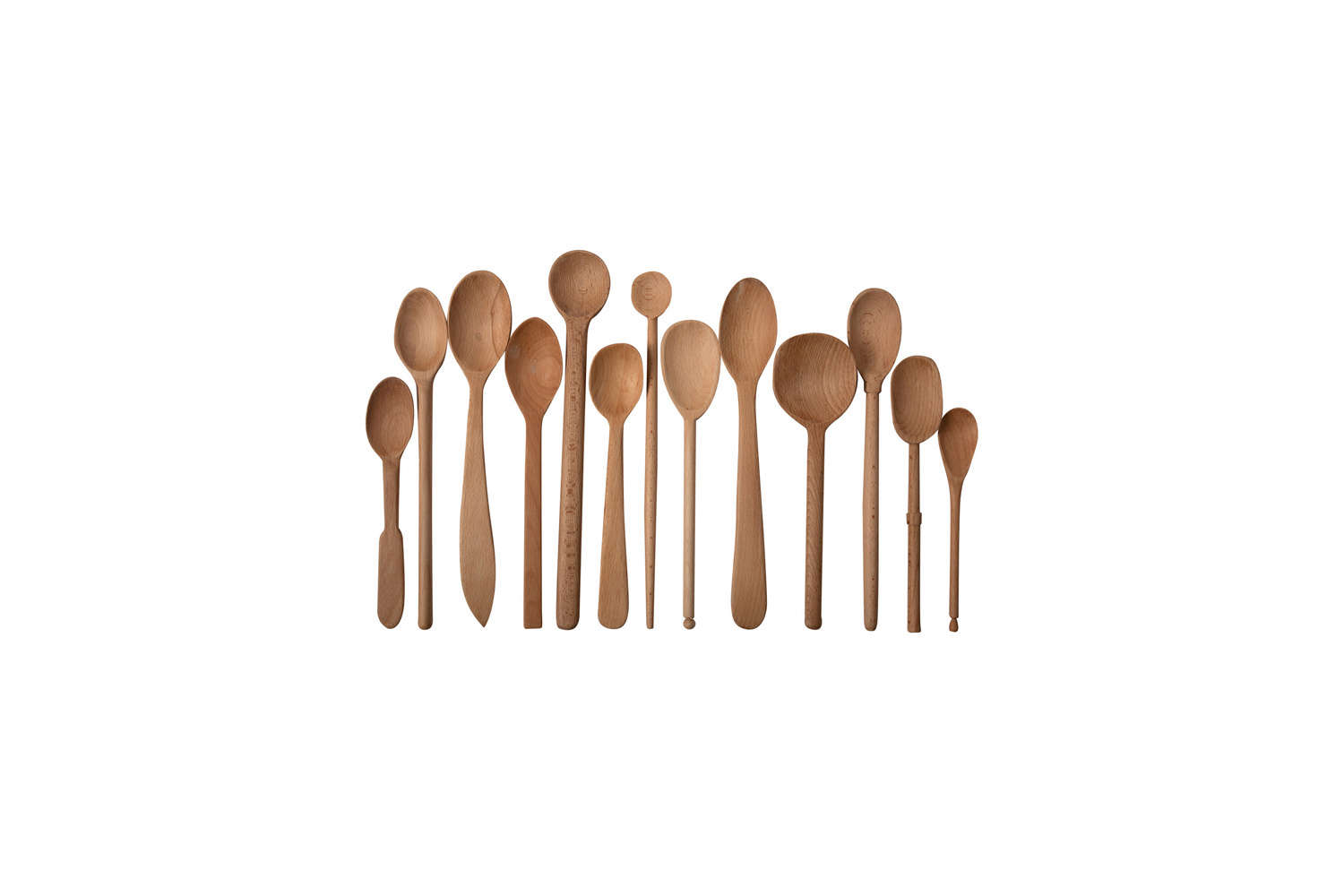
Some kitchen tools shout for attention. They arrive with buttons, apps, settings, warranties, tiny warning stickers, and enough packaging to shelter a family of raccoons. Then there is the wooden spoon: humble, quiet, and somehow always exactly where the real cooking happens. The Baker’s Dozen Wood Spoons concept takes that humble kitchen workhorse and turns it into something delightfully generous: thirteen assorted wooden spoons, each with its own shape, personality, and purpose.
At first glance, a set of thirteen wood spoons might sound excessive. After all, how many spoons does one person need to stir a pot of soup? But the answer, as every baker, sauce-taster, jam-maker, and midnight brownie-mixer eventually learns, is “more than one.” A deep-bowled spoon handles stew. A narrow spoon sneaks into spice jars. A flat-edged spoon scrapes fond from a pan. A petite spoon drizzles sauce without causing a maple-syrup landslide. Suddenly, thirteen does not feel indulgent. It feels prepared.
This guide explores what makes Baker’s Dozen Wood Spoons so appealing, how to use them, how to care for them, what to look for before buying a wooden spoon set, and why this old-fashioned kitchen staple keeps surviving every cookware trend thrown at it. Silicone had its moment. Plastic had too many moments. Metal remains useful but occasionally behaves like it is trying to start a fight with your nonstick pan. Wood, meanwhile, just keeps stirring.
What Are Baker’s Dozen Wood Spoons?
Baker’s Dozen Wood Spoons generally refers to a 13-piece collection of assorted wooden spoons, often hand-carved and intentionally varied so no two spoons are exactly alike. The phrase “baker’s dozen” means thirteen, a charming nod to the tradition of adding one extra item to a dozen. In kitchenware form, that extra generosity becomes practical: instead of buying one spoon and asking it to perform every culinary task like an underpaid stage actor, you get a small family of tools.
Many versions of these wooden spoon sets feature different lengths, bowl depths, handle shapes, and silhouettes. Larger spoons are useful for cooking, stirring, mixing, and serving. Smaller spoons shine when working with spices, sauces, condiments, jams, desserts, finishing salts, loose tea, coffee, or tiny bowls of “chef snacks” that mysteriously disappear before dinner.
Depending on the edition or retailer, the spoons may be made from hardwoods such as beechwood or black siris hardwood. These woods are popular for kitchen utensils because they offer a balance of durability, smooth texture, and natural beauty. Since many Baker’s Dozen-style spoon sets are handmade, natural variation is part of the appeal. Grain, tone, shape, and size may differ from spoon to spoon. That is not a defect; that is the whole point. A matching set is nice. A set with character is better.
Why Wooden Spoons Still Belong in Every Kitchen
Wooden spoons have lasted for centuries because they solve problems without making new ones. They are gentle on cookware, comfortable in the hand, quiet against pots, and naturally attractive enough to leave in a crock on the counter. They do not melt when you forget them on the rim of a pan for ten seconds, and they do not scrape the life out of your Dutch oven.
They Are Gentle on Cookware
One of the biggest advantages of wooden kitchen utensils is that they are kind to cooking surfaces. A wood spoon can stir tomato sauce in an enameled Dutch oven, fold pancake batter in a ceramic bowl, or move vegetables around a nonstick skillet without scratching the surface. Metal spoons are great for some jobs, but they are not always welcome near coated cookware. Wood is the polite dinner guest of utensils: useful, calm, and unlikely to damage the furniture.
They Stay Comfortable During Cooking
Wood does not conduct heat the way metal does, which means a wooden spoon handle usually stays comfortable even when the spoon is working in a hot pot. That makes it ideal for slow cooking, simmering, stirring risotto, making caramel, or pretending you are not nervous while making gravy for twelve people.
They Are Non-Reactive
A good wooden spoon will not react with acidic foods like tomato sauce, vinegar-based reductions, citrus curds, or fruit compotes. It also will not leave a metallic taste behind. For cooks who make jams, sauces, pickles, chutneys, and long-simmered dishes, that matters. The spoon should help the food, not audition as an extra ingredient.
They Look Beautiful Without Trying Too Hard
There is a reason wooden spoons show up in styled kitchens, farmhouse shelves, modern pantries, and serious chef spaces alike. They bring warmth. A crock filled with assorted wooden spoons instantly says, “Someone cooks here,” even if dinner is currently cereal eaten over the sink. Baker’s Dozen Wood Spoons are especially decorative because the mix of shapes creates a collected, lived-in look right away.
The Baker’s Dozen Advantage: Why Thirteen Spoons Make Sense
A single wooden spoon is useful. A baker’s dozen is a system. With thirteen spoons, you can assign tools to specific tasks, avoid flavor transfer, and keep cooking smoothly without stopping to wash the same spoon repeatedly. Anyone who has stirred garlic-heavy marinara and then used the same spoon for vanilla pudding understands the danger. Vanilla pudding with a whisper of garlic is not innovation. It is a cry for help.
Large Spoons for Cooking and Serving
The larger spoons in a Baker’s Dozen Wood Spoons set are perfect for everyday cooking. Use them to stir soups, sauces, stews, chili, oatmeal, risotto, pasta, scrambled eggs, sautéed vegetables, and braised greens. A deeper spoon bowl works well for lifting and tasting, while a flatter spoon is better for scraping browned bits from the bottom of a pan.
Large wooden spoons also make casual serving easier. They look natural beside roasted vegetables, grain bowls, pasta salads, mashed potatoes, stuffing, and family-style side dishes. Unlike a shiny metal serving spoon, wood feels relaxed. It says, “Come eat,” not “Please admire the tablescape from a respectful distance.”
Small Spoons for Spices, Sauces, and Desserts
The smaller spoons are where the set becomes surprisingly useful. Use them for scooping flaky salt, cinnamon, cocoa powder, loose tea, coffee, chili crisp, mustard, jam, honey, yogurt toppings, dessert sauces, and tiny portions of expensive ingredients you are trying not to spill. A small wood spoon is also ideal for condiment boards and cheese plates because it feels warm and handmade, not cafeteria-adjacent.
For bakers, small spoons can help portion extracts, sprinkle toppings, nudge fruit filling into pastry, or taste-test ganache. For hosts, they make jars and ramekins look intentional. Put a tiny wood spoon in a bowl of smoked salt and suddenly your dinner guests think you have your life together. Let them believe it.
Wood Types: Beech, Black Siris, Maple, Cherry, Olive, and More
Not all wooden spoons are made from the same material. Hardwood is generally preferred for kitchen utensils because it is dense, durable, and less likely to splinter than softwood. Many quality wooden spoon sets use woods such as beech, maple, cherry, walnut, olive wood, teak, or black siris hardwood. Each has its own look and feel.
Beechwood
Beechwood is a classic choice for wooden kitchen tools. It has a pale, clean appearance, a smooth grain, and a practical balance of strength and affordability. It is often used for everyday spoons because it feels lightweight but sturdy. Beechwood spoons are excellent for people who want a simple, traditional kitchen utensil that does not require museum-level protection.
Black Siris Hardwood
Some Baker’s Dozen Wood Spoons are described as hand-carved from black siris hardwood. This wood can show attractive natural color variation, which makes each spoon feel distinct. For a set designed around uniqueness, that variation is a feature. The spoons may not all match perfectly, but they coordinate in the way a well-loved kitchen does: naturally, warmly, and without trying to look like a showroom.
Maple and Cherry
Maple and cherry are popular in high-quality wooden utensils because they are durable, smooth, and beautiful with age. Cherry often darkens into a richer tone over time, while maple keeps a lighter, clean look. Both are excellent for spoons that will be used frequently and washed by hand.
Olive Wood and Walnut
Olive wood and walnut are often chosen for their dramatic grain patterns. They can feel more decorative and gift-worthy, though they still perform well in the kitchen when properly maintained. Olive wood, in particular, has a striking pattern that looks gorgeous in a utensil crock or on a serving board.
How to Use Baker’s Dozen Wood Spoons in Everyday Cooking
The easiest way to get value from a thirteen-piece wooden spoon set is to stop treating it like a precious object and actually cook with it. These spoons are not just for display, though they do display very nicely. Put them to work.
For Sauces and Soups
Wooden spoons are excellent for stirring tomato sauce, béchamel, gravy, soup, stew, curry, and chili. They move ingredients gently without tearing vegetables or scratching pans. A spoon with a rounded bowl works well for tasting, while a flatter edge helps scrape the bottom of the pot to prevent sticking.
For Baking
Bakers love wooden spoons because they offer control. Use them to mix muffin batter, stir cookie dough, fold fruit into cake batter, combine bread starters, or blend wet and dry ingredients without overworking the mixture. A strong wooden spoon can handle thick dough better than a flimsy spatula, and it gives your arm a workout. Who needs the gym when you have molasses cookie dough?
For Serving
Wood spoons make casual serving feel special. Place them beside salads, roasted potatoes, pasta, rice, couscous, beans, and desserts. Smaller spoons are especially charming with toppings bars: chopped nuts, sprinkles, chocolate chips, granola, chili flakes, herbs, and finishing salts.
For Styling and Gifting
Baker’s Dozen Wood Spoons are also a strong gift idea. They work for weddings, housewarmings, hostess gifts, birthdays, holiday baskets, and anyone building a first kitchen. Pair the set with a linen towel, food-safe mineral oil, a ceramic utensil crock, or a favorite cookbook. It is practical, beautiful, and unlikely to end up in the back of a closet beside an abandoned novelty popcorn machine.
How to Clean Wooden Spoons Properly
Wooden spoons are easy to maintain, but they do have preferences. Think of them as low-maintenance friends with one firm boundary: no dishwasher. High heat, harsh detergents, and prolonged water exposure can dry, warp, crack, or split the wood.
Daily Cleaning
After using a wooden spoon, wash it by hand with warm water, mild dish soap, and a sponge or cloth. Rinse it well, then dry it promptly with a towel. Let it finish air-drying completely before putting it away. Do not leave it soaking in the sink. A wooden spoon left underwater for hours is not “getting clean.” It is slowly becoming firewood with opinions.
Removing Odors
If a spoon picks up strong smells from garlic, onion, curry, or chili, rub it with a paste made from baking soda and a little water, then rinse and dry. Lemon and coarse salt can also help freshen the surface. Avoid using harsh chemical cleaners, and do not rely on bleach for routine cleaning because wood can absorb strong solutions and become damaged.
Deep Cleaning
Some people boil wooden spoons to draw out oils and residue, but this should be done sparingly, if at all. Boiling may remove buildup, but frequent high-heat soaking can shorten the life of the utensil. For most home kitchens, consistent hand-washing, thorough drying, and occasional conditioning are enough.
How to Oil and Maintain Wooden Spoons
Wood naturally dries over time, especially when exposed to water, heat, and frequent washing. To keep Baker’s Dozen Wood Spoons smooth and healthy, condition them occasionally with a food-safe oil or spoon butter. Food-grade mineral oil is widely used because it is odorless, tasteless, affordable, and resistant to rancidity. Some people also use specialized board creams that combine mineral oil and beeswax.
To oil wooden spoons, make sure they are clean and completely dry. Apply a small amount of food-safe oil with a cloth or paper towel, rubbing it into the grain. Let the spoons sit for several hours or overnight, then wipe away any excess. The wood should look refreshed, not greasy. If the spoon feels fuzzy or rough, a light pass with fine-grit sandpaper can smooth the surface before oiling.
How often should you oil them? That depends on use. A heavily used spoon may appreciate monthly care. A decorative or lightly used spoon may need conditioning only a few times a year. The spoon will usually tell you. If it looks dull, pale, or thirsty, give it a spa day. Cucumbers over the eyes are optional.
What to Look for Before Buying a Wooden Spoon Set
Whether you are buying Baker’s Dozen Wood Spoons for yourself or as a gift, a few details matter.
Comfortable Handles
A good spoon should feel balanced in your hand. Handles should be smooth, easy to grip, and long enough for stirring without placing your knuckles directly into steam. If the set includes varied sizes, check whether the smaller spoons are still easy to hold.
Useful Bowl Shapes
A rounded bowl is great for stirring and tasting. A deeper bowl helps serve saucy dishes. A narrow bowl fits small jars. A flat edge scrapes pans. The beauty of a thirteen-piece set is that it can include several shapes, giving you options for different jobs.
Smooth Finish
Look for spoons that feel smooth, not splintery. Handmade utensils may have natural variations, but they should not feel rough in a way that makes cooking uncomfortable. Minor roughness can often be fixed with fine-grit sandpaper and oil, but deep cracks are a warning sign.
Food-Safe Material
Choose spoons made from food-safe hardwood and finished appropriately for kitchen use. Avoid utensils with mystery coatings, strong chemical smells, or decorative finishes that are not intended for food contact.
Baker’s Dozen Wood Spoons vs. Silicone, Metal, and Plastic
Every utensil material has a role. Silicone is flexible and easy to clean. Metal is strong and precise. Plastic is cheap, though not always heat-friendly or long-lasting. Wooden spoons sit in the sweet spot between beauty, function, and durability.
Compared with silicone, wood feels firmer and better for scraping, mixing, and stirring thick foods. Compared with metal, wood is gentler on pans and more comfortable in hot cooking. Compared with plastic, wood feels more natural, attractive, and durable when properly cared for. The trade-off is maintenance: wooden spoons need hand-washing and occasional oiling. But that small effort pays off in longevity and charm.
Decorating With Wooden Spoons
A Baker’s Dozen set can be as decorative as it is useful. Store the spoons upright in a ceramic crock, stoneware pitcher, glass jar, or vintage tin near the stove. Mix them with a few wooden spatulas and tasting spoons for a collected look. In open shelving kitchens, wooden spoons soften the hard lines of tile, stone, stainless steel, and glass.
For entertaining, place small wooden spoons inside bowls of condiments, sauces, and toppings. They add texture to a table without stealing the spotlight. They also photograph beautifully, which matters if your dinner party includes someone who says, “Wait, don’t eat yet,” while standing on a chair with a phone.
Common Mistakes to Avoid
The fastest way to ruin wooden spoons is to treat them like stainless steel. Do not put them in the dishwasher. Do not leave them soaking overnight. Do not store them while damp. Do not use vegetable oil for conditioning, because many cooking oils can become sticky or rancid over time. Do not ignore cracks, deep splits, or dark crevices that cannot be cleaned.
Also, do not save your best spoons forever “for company.” Use them. Wooden spoons become more beautiful with age, developing patina from cooking, washing, oiling, and daily life. A pristine spoon is nice, but a seasoned spoon has stories. It has survived Thanksgiving gravy, birthday cake batter, emergency mac and cheese, and that one ambitious caramel sauce that almost became kitchen asphalt.
Are Baker’s Dozen Wood Spoons Worth It?
For cooks who love practical tools with personality, yes. Baker’s Dozen Wood Spoons offer more than quantity. They provide variety. Instead of one generic spoon, you get multiple shapes for multiple jobs. The set works for cooking, baking, serving, styling, gifting, and everyday kitchen rituals.
They are especially worth considering if you appreciate handmade kitchenware, natural materials, vintage-inspired design, and tools that look better with use. They may not be the cheapest option compared with buying a single spoon at a grocery store, but they offer a more complete, thoughtful collection. For anyone who cooks often, hosts occasionally, or wants a kitchen that feels warm and lived-in, a thirteen-piece wooden spoon set makes sense.
Experience Notes: Living With Baker’s Dozen Wood Spoons
The first thing you notice when using a Baker’s Dozen Wood Spoons set is that you stop reaching for the same tired spoon every time. The variety changes your habits. A long spoon becomes the soup spoon. A flatter one becomes the pan scraper. A tiny one moves into the salt cellar and suddenly looks like it was born there. Another small spoon ends up beside the coffee station for scooping sugar, and somehow the whole counter looks more intentional.
In everyday cooking, the real pleasure is rhythm. When making a simple tomato sauce, a wooden spoon feels steady and familiar. It stirs without clanging. It scrapes without scratching. It rests against the side of the pot without looking like industrial equipment. When the sauce thickens, the spoon gives feedback through the hand. You can feel whether the onions have softened, whether the bottom of the pan is catching, and whether the sauce is moving from watery to glossy. This is not technology, but it is information.
Baking with wooden spoons is even more satisfying. Thick banana bread batter, muffin mix, cookie dough, and brownie batter all feel manageable with a sturdy spoon. There is something wonderfully old-school about mixing by hand. It slows you down just enough to notice texture. The batter goes from streaky to smooth, the dry flour disappears, and you get the tiny reward of licking the spoon if raw eggs are not involved. If raw eggs are involved, you make your own adult decisions. This article is not your mother.
The smaller spoons become unexpectedly useful during entertaining. Put one in a jar of jam on a brunch board, another in honey, another in chili crisp, and another in grated Parmesan. Guests understand immediately what to do. No one has to ask whether they should use a dinner spoon in the mustard. Tiny wooden spoons make small foods feel special, which is a ridiculous sentence until you see it happen.
Care becomes part of the routine rather than a chore. After cooking, wash the spoons with warm soapy water, dry them, and stand them upright. Every few weeks, rub the busiest ones with mineral oil. The color deepens, the grain wakes up, and the spoon looks refreshed. It is a small ritual, like sharpening a knife or seasoning cast iron, but far less dramatic. No smoke alarm gets involved.
Over time, favorites emerge. One spoon may become the oatmeal spoon because it reaches the corners of the saucepan perfectly. Another may become the “company spoon” because it looks handsome in a serving bowl. One may develop a little dark mark from stirring jam or scraping a hot pan, and instead of looking ruined, it looks experienced. That is the charm of wooden tools. They age honestly. They do not stay showroom-perfect, and they should not have to.
The best experience of owning Baker’s Dozen Wood Spoons is realizing that beauty and usefulness do not need to compete. These spoons can sit in a crock and make the kitchen prettier, then immediately jump into a pot of chili. They can serve dessert, scoop spices, stir soup, and decorate a table. They are quiet multitaskers, which is more than can be said for most kitchen gadgets. If a kitchen is built from daily rituals, these spoons earn their place one stir at a time.
Conclusion
Baker’s Dozen Wood Spoons are more than a charming set of thirteen kitchen utensils. They represent the best kind of kitchen tool: practical, beautiful, durable, and personal. With assorted shapes and sizes, they can handle cooking, baking, serving, spice scooping, sauce tasting, and table styling. Their handmade character gives them warmth, while proper care helps them last for years.
If you want a kitchen that feels more inviting without adding another complicated gadget, wooden spoons are a smart place to start. They do not beep. They do not need charging. They do not require a software update before making soup. They simply work, and they get better with use. In a world of overdesigned kitchen products, that feels refreshingly delicious.













