
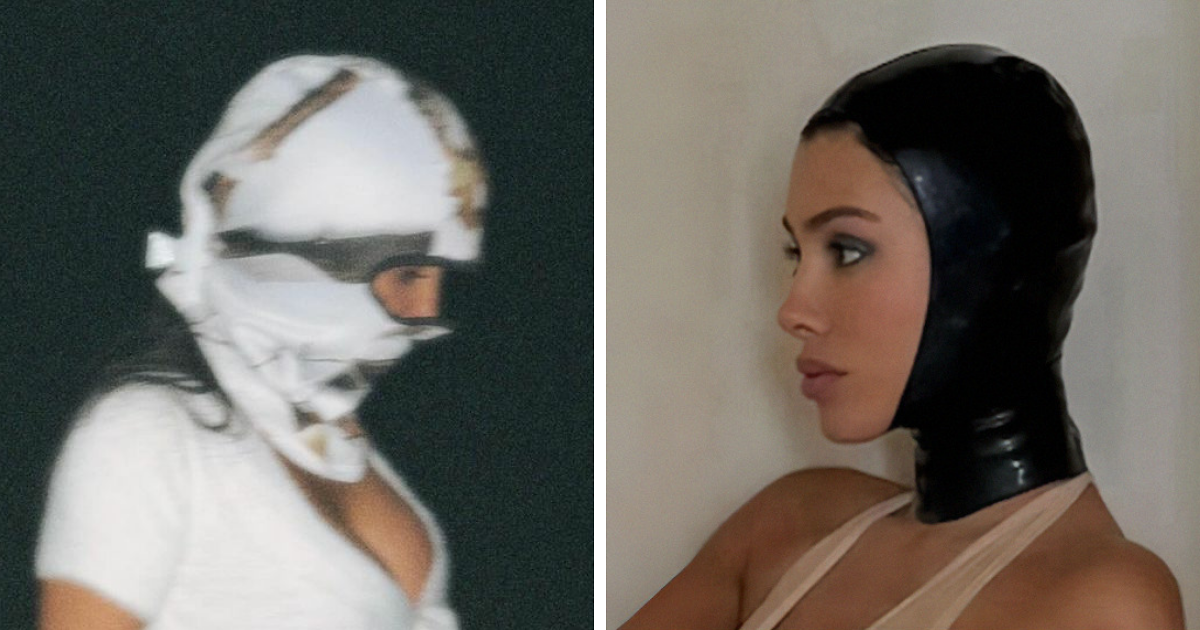
Editorial note: This article treats the “trying to look like Bianca Censori” claim as online commentary and fan speculation, not as a verified statement of Kim Kardashian’s intent.
Kim Kardashian has lived in the center of pop-culture conversation for so long that the internet sometimes reacts to her wardrobe changes like a national weather alert. This time, the forecast called for white fabric, a balaclava, boots, and a downpour of opinions.
After Kardashian posted a striking set of photos featuring a white crop-style look, bikini-cut bottoms, a face-covering balaclava, and brown mid-calf boots, social media users quickly drew comparisons to Bianca Censori, the Australian architect and Yeezy figure who married Ye, formerly Kanye West, after his split from Kardashian. The reaction was fast, loud, and very online. One comment that summed up the mood read: “Well Bianca is better.” Subtle? Not exactly. Internet restraint left the group chat years ago.
But beneath the jokes, side-by-sides, and “Kimca Censori” punchlines is a bigger celebrity-fashion story: how public image, post-divorce narratives, brand strategy, and the Kanye West style machine continue to shape the way people read every outfit connected to Kim Kardashian and Bianca Censori.
What Happened With Kim Kardashian’s Latest Look?
The controversy began when Kim Kardashian shared a bold photoshoot that immediately reminded many fans of Bianca Censori’s headline-making style. Kardashian’s outfit was minimal, monochrome, and slightly mysterious thanks to the balaclava. The outdoor nighttime setting added an eerie editorial mood, as if a luxury winter campaign wandered into the woods and forgot to ask permission.
Fans noticed the same ingredients that have defined many Bianca Censori looks since she entered the public spotlight: body-conscious styling, skin-toned or white palettes, unconventional head coverings, and a futuristic Yeezy-adjacent edge. Some praised Kardashian for experimenting. Others accused her of copying. A few simply wondered why anyone was wearing so little clothing in what looked like a forest at night. Fashion is pain, apparently, and sometimes bug bites.
Comments across social media leaned into the comparison. Phrases like “Bianca has multiplied,” “Giving Kanye,” and “Is this Bianca?” appeared in coverage of the reaction. The line “Well Bianca is better” became especially catchy because it turned the whole debate into a reality-show confessional in six words.
Why Fans Keep Comparing Kim Kardashian and Bianca Censori
The Kim Kardashian and Bianca Censori comparison did not come out of nowhere. Censori, who worked in architecture for Yeezy, became a constant subject of fashion coverage after her relationship with Ye became public. Her looks often lean avant-garde, minimal, sculptural, and intentionally provocative. She has appeared in sheer fabrics, bodysuits, dramatic footwear, headpieces, and other experimental outfits that feel closer to performance art than casual celebrity streetwear.
Kardashian, meanwhile, has her own long history with experimental fashion. She has worn full-face Balenciaga, latex silhouettes, archival couture, body-hugging neutrals, and plenty of looks that could stop traffic without needing a red light. The problem, at least for online detectives, is timing. Once Ye married Bianca, every similar color palette or silhouette became evidence in the internet’s imaginary courtroom.
The Kanye West Factor
Any honest analysis has to include Ye’s influence. Kardashian’s style transformation during her relationship with him is well documented. Her fashion moved from glossy reality-star glam toward high-concept luxury, with Givenchy, Balmain, Balenciaga, Yeezy, and monochrome minimalism becoming part of her visual language.
That history matters because Bianca Censori’s public image is also tied to Ye’s creative orbit. Whether people see Censori as a muse, collaborator, independent fashion risk-taker, or all three, her wardrobe is often interpreted through the Ye lens. So when Kardashian wears something that looks Yeezy-ish, fans do not just see a white outfit. They see a triangle: Kim, Bianca, and the designer-rapper whose visual fingerprints are all over both stories.
That does not prove Kardashian copied anyone. Fashion trends overlap constantly. Celebrities share stylists, brands recycle silhouettes, and minimal clothing in neutral tones has been a Kardashian-West universe staple for more than a decade. Still, the internet loves a pattern, especially when that pattern comes with exes, new wives, and luxury branding.
Is Kim Kardashian Really Copying Bianca Censori?
The short answer: nobody can prove intent from an Instagram post. The more interesting answer: Kardashian knows exactly how visual conversation works.
Kim Kardashian is not a random influencer posting outfit pictures while hoping the algorithm remembers her name. She is a media strategist, business founder, reality television veteran, fashion collaborator, and one of the most studied public figures of the social-media era. When she posts a look, she understands that people will dissect it from the boots to the background blur.
That does not mean the outfit was designed to imitate Bianca Censori. It may have been a SKIMS-adjacent experiment, a Balenciaga-flavored visual, a winter photo concept, or simply another entry in Kardashian’s long archive of body-focused minimalism. But because the public already connects Censori with revealing neutral looks and Ye-inspired styling, Kardashian’s photos landed inside that narrative whether she invited the comparison or not.
Fashion Copies, References, and Coincidences
Celebrity fashion is rarely created in isolation. One star’s “signature” look is often built from dozens of existing references: runway collections, vintage editorials, streetwear moments, designer archives, and yes, other celebrities. When a famous person wears a sheer dress, a bodysuit, a face covering, or a sculptural boot, it may echo someone else without being a deliberate copy.
In this case, the comparison is amplified by personal history. If Kardashian had never been married to Ye, and Bianca were not his current wife, the reaction might have been smaller. People might have called the outfit “Yeezy-coded” or “Balenciaga winter goblin chic” and moved on. But because the players are connected, the internet turned the look into a referendum on divorce, reinvention, and who owns a style.
Bianca Censori’s Style: Why It Became So Recognizable
Bianca Censori’s fashion stands out because it is consistent in its shock value and visual sharpness. Her outfits often use very little fabric but a lot of concept. She favors tight silhouettes, pale shades, architectural shapes, dramatic shoes, and styling choices that blur the line between clothing and performance.
As an architect, Censori also brings an interesting background to the conversation. Her public wardrobe often looks constructed, not just styled. Many outfits feel like wearable sketches: clean lines, unusual proportions, and a willingness to challenge what public clothing is “supposed” to look like. That does not mean everyone likes the results. Some viewers call the looks bold. Others call them too much. But either way, they generate attention, which is the oxygen of celebrity fashion.
That is why fans react so strongly when Kardashian appears in something similar. Bianca’s image has become distinctive enough that people recognize the formula immediately. White or nude tones, a barely-there silhouette, a headpiece, and Ye nearby? The public has already filed that under “Bianca Censori aesthetic.” Kardashian stepping anywhere near that file folder was bound to cause chaos.
Kim Kardashian’s Own Fashion Legacy Should Not Be Ignored
Still, calling Kardashian a copycat oversimplifies her influence. Kim helped make body-hugging neutrals, contour-forward beauty, shapewear-as-outerwear, and extreme monochrome styling mainstream years before Bianca Censori became a household name. Through SKIMS, Kardashian turned flesh-tone basics and solutionwear into a multibillion-dollar apparel empire. That is not a small footnote; that is the whole textbook.
Her fashion story includes reality-TV glam, high-fashion acceptance, Met Gala controversy, Balenciaga partnerships, archival designer moments, and a business model built on turning personal style into product. Kardashian may borrow from the fashion atmosphere around her, but she also helped create that atmosphere. In other words, the “who copied whom?” question may be too simple for a style ecosystem this tangled.
It is possible that both women are drawing from the same source: Ye’s long-running visual world of minimalism, body-conscious silhouettes, masks, dystopian streetwear, and futuristic neutrals. It is also possible that online viewers are projecting rivalry onto two women because celebrity culture loves putting women in competition. The comment “Well Bianca is better” may be funny in a blunt, chaotic way, but it also shows how quickly style analysis becomes a ranking game.
The Role of SKIMS in the Conversation
Another reason Kardashian’s looks attract attention is that her outfits often connect back to commerce. SKIMS is not just a brand; it is a highly polished extension of Kardashian’s visual identity. The company sells shapewear, underwear, loungewear, activewear, and basics with a focus on fit and neutral shades. Kardashian’s body-conscious style is part of the brand’s marketing language.
That makes the Bianca comparison more complicated. A white or nude-toned minimal look may remind fans of Censori, but it also fits perfectly into the SKIMS universe. Kardashian has spent years selling the idea that basics can be sensual, sculpting, and camera-ready. She does not need to borrow that from anyone. She has already monetized it with impressive efficiency.
At the same time, controversy can keep a brand visible. When people debate Kardashian’s outfit, they circulate the images, mention SKIMS, compare aesthetics, and keep her name trending. Kardashian has always understood that attention is not just attention; it is distribution. The internet may think it is dragging her, but sometimes dragging is just free advertising wearing a grumpy hat.
Why the Internet Loves the “New Wife vs. Ex-Wife” Narrative
The fascination with Kim Kardashian and Bianca Censori is not only about clothes. It is about roles. Kardashian is the famous ex-wife, mother of Ye’s children, business mogul, and reality-TV institution. Censori is the newer partner, the architect turned fashion lightning rod, and the woman now standing beside Ye in paparazzi photos. That contrast is irresistible to celebrity media.
Audiences often turn these stories into teams: Team Kim, Team Bianca, Team Nobody Please Let These Women Wear Boots In Peace. But real life is rarely that clean. Kardashian and Censori are not fictional characters written to oppose each other. They are public figures navigating fame, family, fashion, and a level of scrutiny most people would find exhausting before breakfast.
The comparison also reveals something about how society talks about women connected to powerful men. Ye’s influence is central to the conversation, yet the harshest comments often target the women’s appearances. That is worth noticing. A more thoughtful reading asks how fashion is being shaped, branded, controlled, sold, and interpretednot simply who “looks better.”
Public Reaction: Funny, Harsh, and Predictably Dramatic
Some fan responses were playful. Others were cutting. That is typical of Kardashian-related internet cycles. The family’s fame was built partly on being discussed, judged, memed, defended, and criticized at all hours. Still, the intensity of appearance-based commentary can become mean-spirited quickly.
The “Well Bianca is better” comment works as a headline because it is blunt and meme-ready. But it also reduces two very different women to a beauty contest neither publicly entered. A smarter takeaway is that Kardashian and Censori both understand visual impact. Whether people love or hate the looks, they remember them. In celebrity fashion, being forgettable is often the only true disaster.
What This Says About Celebrity Fashion in 2026
The Kardashian-Censori debate is a perfect example of modern celebrity fashion culture. Outfits no longer live only on red carpets or magazine pages. They become evidence, clues, memes, brand signals, and emotional triggers. A balaclava is no longer just a balaclava. It is a thesis statement with eye holes.
Fans now analyze celebrity images like detectives. They compare timelines, zoom in on accessories, track stylists, decode captions, and decide whether a look is homage, shade, coincidence, or marketing. Sometimes they are insightful. Sometimes they are reaching so far they need a chiropractor. But this participatory culture keeps celebrities in constant conversation.
For Kardashian, that conversation is familiar territory. For Censori, it has become part of her sudden public identity. For Ye, it reinforces his continued impact on fashion aesthetics, even as his personal controversies have made his public image far more complicated. Together, the three create a pop-culture loop that keeps generating headlines with every new outfit.
Experience-Based Commentary: What This Debate Feels Like From the Audience Side
Anyone who follows celebrity style for more than five minutes knows the pattern. A famous person posts a look. The internet pauses, squints, opens three tabs, and starts building a case. Within an hour, the outfit is no longer just clothing. It is a “message,” a “response,” a “copy,” a “rebrand,” or a “soft launch” of some emotional subplot nobody actually confirmed.
The Kim Kardashian and Bianca Censori comparison feels especially familiar because fashion inspiration is messy in real life, too. Most people have accidentally dressed like someone else. A friend buys silver boots, suddenly everyone in the group chat is wearing metallics. One person gets a bob haircut, and by spring the whole brunch table looks like a support group for scissors. Style spreads. It always has.
The difference is that regular people can try a look without becoming a global think piece. If someone wears a white outfit and boots to a party, their friends may say, “Cute fit.” If Kim Kardashian does it, thousands of strangers begin debating whether it is a coded message to her ex-husband’s new wife. That is the strange price of celebrity visibility: every outfit becomes public property for interpretation.
There is also something oddly human about the reaction. People understand the awkwardness of being compared to an ex’s new partner, even if their own version does not involve couture, paparazzi, and a billionaire shapewear company. Many have felt that tiny sting of comparison: Who moved on better? Who looks happier? Who changed more? Celebrity gossip magnifies normal emotions until they become entertainment.
From a style-watching perspective, the smartest way to read this moment is not to ask whether Kim or Bianca “wins.” That framing is fun for memes but shallow for analysis. The better question is: why do these visuals keep overlapping, and why do audiences care so much? The answer is a mix of branding, history, personal drama, and the fact that Ye’s fashion language is distinctive enough to make people see connections instantly.
It is also a reminder that online audiences reward boldness. A safe outfit disappears. A strange outfit gets quoted. Kardashian knows this. Censori knows this. Designers know this. Editors know this. Even your aunt who claims she “doesn’t follow celebrity nonsense” somehow knows this, because she saw the photo on Facebook and has opinions.
In everyday style terms, the lesson is simple: wear what makes sense for you, but understand that clothes communicate. A balaclava says something different than a cardigan. A white minimal set says something different than a floral dress. In celebrity culture, those messages are amplified, remixed, and sometimes completely misunderstood. Kardashian’s look may have been intended as edgy, wintry, and provocative. Fans read it as Bianca-coded. Both things can be true at the same time.
The healthiest response is to enjoy the spectacle without turning women into rivals for sport. Kim Kardashian and Bianca Censori can both be stylish, confusing, influential, over-the-top, and meme-worthy. Fashion is big enough for multiple dramatic white outfits. The internet, unfortunately, is also big enough for multiple dramatic arguments about them.
Conclusion
Kim Kardashian being accused of “trying to look like” Bianca Censori says less about one outfit and more about the celebrity machine around both women. Kardashian’s white, balaclava-accented photoshoot triggered comparisons because Censori has become closely associated with bold minimalist styling, and because Ye’s fashion influence connects both women in the public imagination.
Still, accusations of copying should be handled carefully. Kardashian has her own long-established fashion identity and a business empire built on neutral, body-conscious design. Censori has created a recognizable visual presence through experimental, architectural, headline-making looks. The overlap is real enough for fans to notice, but intent remains speculation.
In the end, the “Well Bianca is better” comment may be the internet doing what it does best: turning a complicated style conversation into a snackable insult. But the fuller story is more interesting. It is about fashion ownership, post-divorce narratives, branding, influence, and the way one outfit can become a cultural Rorschach test. Or, to put it less academically: sometimes a balaclava is just a balaclava, and sometimes it launches a thousand comments before lunch.











