
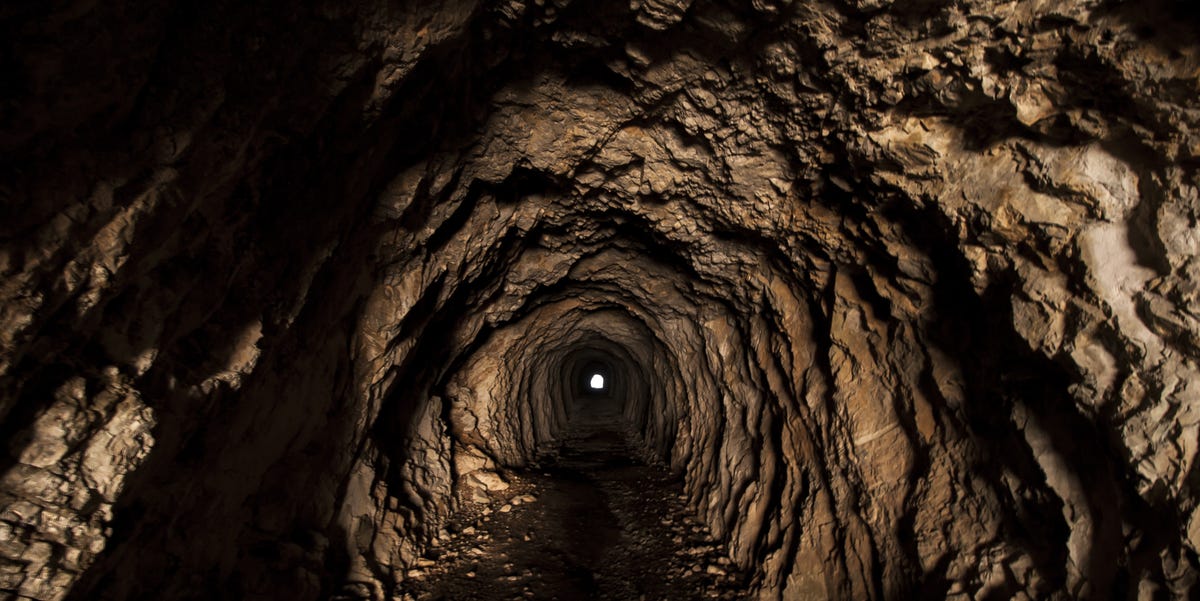
Imagine opening a hidden door under Romania and finding a world that missed the memo about sunlight, fresh air, and normal biology. That is Movile Cave: a sealed underground ecosystem near Mangalia, close to the Black Sea, where life has spent millions of years doing its own weird little science project in the dark. No plants. No photosynthesis. No cheerful sunbeam sliding across mossy stones. Just warm, humid air, low oxygen, toxic gases, underground water, bacterial mats, and creatures that look as if evolution asked, “Eyes? Pigment? In this economy?”
Movile Cave matters because it rewrites one of our most comfortable assumptions: life needs sunlight. On Earth’s surface, almost every food chain begins with plants or algae turning light into energy. In Movile Cave, the menu starts with microbes that feed on chemical reactions involving compounds such as hydrogen sulfide, methane, and ammonium. That process, known as chemosynthesis, supports a whole community of cave-adapted animals. In other words, the cave is not dead because it is dark. It is alive because chemistry is doing the heavy lifting.
That is why astrobiologists pay attention. Movile Cave is not proof of extraterrestrial life, and it does not contain aliens hiding behind a stalactite with a tiny clipboard. But it does show that life can survive in isolated, toxic, sunless places when water, energy, chemistry, and time come together. For scientists thinking about Mars, Europa, Enceladus, and other possible habitats beyond Earth, Movile Cave is a natural laboratory with a very dramatic lighting budget: zero.
What Is Movile Cave?
Movile Cave is a small but scientifically enormous cave system in southeastern Romania. It was discovered in 1986 during geological work near Mangalia. Unlike many caves that connect to the surface through cracks, shafts, streams, or animal traffic, Movile Cave had no natural opening. Its known entrance is artificial, which means the ecosystem inside developed in long-term isolation from the world above.
The cave is not large by tourist-cave standards. You will not find cathedral-sized chambers, souvenir magnets, or a guided path with handrails and a smiling brochure. Instead, Movile Cave is compact, difficult, and dangerous. It contains narrow passages, partially flooded zones, and air that can be hazardous to humans. Oxygen can be low, carbon dioxide can be high, and hydrogen sulfide gives the environment a chemical bite. It is the kind of place where even your lungs would like to file a complaint.
Yet the cave’s difficulty is exactly what makes it valuable. Movile Cave is a rare example of a land-based, chemosynthesis-driven ecosystem. Researchers have documented a food web supported by microbial communities that fix carbon inside the cave rather than importing food from sunlight-powered surface life. That makes Movile Cave one of Earth’s best-known examples of a self-contained underground biosphere.
A World Without Sunlight
Most ecosystems run on sunlight. Grass uses photosynthesis, insects eat the grass, birds eat the insects, and somewhere nearby a nature documentary narrator whispers about balance. Movile Cave does something stranger. Its primary producers are microorganisms that use chemical energy, not solar energy, to fix carbon and create biomass.
In the cave’s sulfidic groundwater and biofilms, bacteria and other microbes exploit reduced chemical compounds. Hydrogen sulfide, methane, and ammonium rise with thermomineral groundwater from deeper geological sources. Microbes oxidize these compounds, releasing usable energy. That energy allows them to build organic matter, which becomes the foundation of the cave’s food web.
This is chemosynthesis: life powered by chemistry. It is similar in principle to the ecosystems found at deep-sea hydrothermal vents, where sunlight never reaches but life still flourishes around mineral-rich fluids. Movile Cave shows that this strategy is not limited to the ocean floor. It can also work in a sealed terrestrial cave where the outside world contributes almost nothing.
Why Chemosynthesis Matters
Chemosynthesis matters because it expands the meaning of “habitable.” If life can exist without sunlight on Earth, then the search for life beyond Earth should not focus only on sunny planets with pretty skies and surface oceans. It should also consider dark environments below ice, beneath rock, or inside caves, where sunlight is absent but chemical energy remains available.
For astrobiology, that is a major shift. A planet or moon might look hostile on the surface but still contain hidden habitats underground. Mars, for example, has a cold, dry, radiation-battered surface, but its subsurface may preserve ice, brines, caves, or ancient chemical signatures. Europa and Enceladus are wrapped in ice, yet both are thought to contain subsurface oceans. If water interacts with rock and produces chemical energy, microbial life becomes a serious scientific possibility.
The Strange Residents of Movile Cave
Movile Cave contains a surprisingly rich community of invertebrates. Researchers have described more than 50 invertebrate species there, including worms, isopods, spiders, pseudoscorpions, centipedes, millipedes, springtails, diplurans, and beetles. Many are endemic, meaning they are known only from this unusual environment.
These creatures are not flashy. In fact, many have adapted to darkness by losing traits that would be useless underground. Eyes become less important when there is no light. Pigmentation becomes less useful when no one is checking your outfit. Instead, cave animals often rely more heavily on touch, chemical sensing, and slow, efficient movement. They are not “primitive.” They are highly specialized. Evolution did not forget them; it simply gave them a different job description.
The animals depend on the microbial base of the ecosystem. Some graze on biofilms. Others feed on smaller organisms or organic debris. Predators such as spiders and centipedes occupy higher positions in the food web. It is a compact ecosystem, but not a simple one. Even in darkness, life builds layers.
The Cave’s Microbial Engine
The real stars of Movile Cave are not the creepy crawlies, entertaining as they are. The stars are the microbes. Sulfur-oxidizing bacteria, methane-oxidizing bacteria, methylotrophs, nitrifying microbes, and other microscopic organisms form the biochemical engine of the cave. They transform raw chemical energy into living matter.
Scientific studies have found evidence that sulfur oxidation plays a major role in primary production. Other pathways, including ammonia and nitrite oxidation, also appear important. Methane and one-carbon compounds are part of the story as well. The result is not a single neat reaction but a busy underground economy, with microbes trading in sulfur, carbon, nitrogen, oxygen, and energy.
That microbial complexity is one reason Movile Cave is so valuable. If scientists want to understand how life might operate in hidden extraterrestrial habitats, they need to study real systems where biology survives under low light, low oxygen, chemical stress, and isolation. Movile Cave provides exactly that, with bonus spiders.
Why Movile Cave Feels Almost Alien
Calling Movile Cave “alien-like” is tempting, and honestly, fair. It is sealed, dark, toxic, humid, and populated by pale, specialized creatures. But the phrase should be used carefully. The cave is alien-like because it challenges surface-based expectations, not because it contains space creatures. Its lesson is scientific, not sensational.
The cave asks a profound question: if life can adapt to this, what else can it adapt to? Earth’s biosphere has already answered in many extreme places: boiling hot springs, acidic pools, deep ocean vents, Antarctic ice, salty lakes, and radioactive or mineral-rich environments. Movile Cave adds another example: a long-isolated underground system where sunlight is irrelevant.
That is the exact kind of thinking astrobiology needs. Scientists searching for life elsewhere are not looking for little green people first. They are more likely looking for microbial communities, biosignatures, metabolic chemistry, organic molecules, isotopic patterns, mineral changes, and environmental conditions that suggest life could survive. If extraterrestrial life exists nearby, it may be microscopic, hidden, and chemically powered. Not glamorous, perhaps, but biology has never promised to be red-carpet ready.
Connections to Mars
Mars is a prime target in the search for past or present life. Its surface shows evidence of ancient water, river channels, lakebeds, minerals formed in water, and chemical environments that may once have been habitable. Today, however, the Martian surface is harsh. Radiation, cold, dryness, and thin air make surface life difficult.
That is why caves and subsurface environments are so interesting. Underground spaces can shield organisms or biosignatures from radiation and temperature extremes. Lava tubes, buried ice, and mineral-rich cracks may preserve clues better than exposed surface rocks. Movile Cave helps scientists think about how life might persist in sealed or protected environments where sunlight does not reach.
The comparison is not perfect. Movile Cave has its own geology, chemistry, and water conditions. Mars is colder, drier, and far more extreme in many ways. Still, the cave demonstrates that isolation is not automatically a death sentence. If chemical energy and water remain available, underground habitats can become surprisingly lively.
Connections to Europa and Enceladus
Jupiter’s moon Europa and Saturn’s moon Enceladus are among the most exciting places in astrobiology because both are associated with subsurface oceans. Europa likely has a salty ocean beneath its icy crust, possibly in contact with a rocky seafloor. Enceladus ejects plumes of water vapor and icy particles into space, giving spacecraft a way to sample material from its hidden ocean without drilling through miles of ice. Convenient? Not exactly. But compared with landing a submarine on another world, a plume is practically curbside pickup.
The key question for both worlds is energy. Water alone is not enough. Life also needs chemical elements and usable energy. On Earth, deep-sea hydrothermal vents show that water-rock interactions can support chemosynthetic ecosystems. NASA research has highlighted possible hydrothermal activity on Enceladus and the potential for chemical nutrients on Europa. If those ocean worlds contain water, rock, chemistry, and energy, then the Movile Cave model becomes highly relevant.
Again, Movile Cave is not a direct twin of Europa or Enceladus. It is a cave in Romania, not an ocean under ice orbiting a giant planet. But its microbes prove a principle: sunlight is optional when chemistry can pay the energy bill.
What Movile Cave Teaches About Extraterrestrial Life
1. Life May Be Hidden, Not Absent
A barren surface does not guarantee a barren world. Life may retreat underground, under ice, or into protected microhabitats. Movile Cave remained hidden from humans until the late twentieth century, yet it contained an active ecosystem. That should make us humble when judging other worlds from orbit.
2. Microbes Are the Most Likely First Discovery
If we find extraterrestrial life, it will probably not wave. It may not even have a membrane we immediately recognize as familiar. Microbes dominate Earth’s extreme environments, and they are masters of metabolic creativity. Movile Cave reinforces the idea that microbial life can support entire ecosystems even under conditions that would make mammals pack up and leave.
3. Chemistry Is a Biosignature Clue
In a dark ecosystem, the important evidence may be chemical. Scientists look for molecules, energy gradients, unusual isotopic ratios, mineral patterns, and metabolic byproducts. Movile Cave shows how strongly biology can influence chemistry in a closed system. That helps researchers design instruments and missions for places where direct observation of organisms may be difficult.
4. Evolution Can Get Very Creative
Long isolation produces specialized life. The animals of Movile Cave show adaptations to darkness, limited resources, and chemical stress. On another world, evolutionif it existsmay produce organisms very different from anything on the surface of Earth. They may be slow-growing, sparse, chemically specialized, or deeply integrated with minerals and fluids.
The Caution: Movile Cave Is Not “Proof of Aliens”
Good science loves wonder, but it also keeps its seatbelt fastened. Movile Cave does not prove that life exists on Mars, Europa, Enceladus, or anywhere else. It proves that Earth life can thrive in an isolated, dark, chemically powered ecosystem. That is an important distinction.
The cave gives scientists a model, not a conclusion. It helps refine questions: What chemical energy sources should missions look for? How might microbial communities organize themselves without sunlight? What biosignatures survive in caves, sediments, ice, or hydrothermal settings? How can instruments distinguish life from non-biological chemistry?
These questions are more valuable than hype. Real astrobiology is not about shouting “aliens!” every time methane appears. It is about carefully testing whether an environment has water, energy, essential elements, stability, and possible biological patterns. Movile Cave keeps that search groundedliterally underground.
Why Protection Matters
Movile Cave is extremely sensitive. Its isolation is part of what makes it scientifically precious. Too much disturbance could alter the cave’s atmosphere, introduce outside microbes, damage fragile biofilms, or disrupt species that exist nowhere else. Access is strictly limited for good reason.
This has a direct connection to planetary protection. If humans send spacecraft to Mars or icy moons, we must avoid contaminating those worlds with Earth microbes. Otherwise, future scientists might detect life and then discover it came from us, which would be the most embarrassing “we found aliens” announcement in history. Studying Movile Cave reminds researchers that isolated ecosystems can be fragile and that contamination control is not bureaucratic fussiness; it is scientific hygiene.
Experience Section: What Movile Cave Makes Us Feel and Imagine
Because most people will never enter Movile Caveand honestly, that is probably for the bestthe experience of this place begins in the imagination. Picture standing above ordinary Romanian ground, not in a jungle or desert or volcanic wasteland, but near a coastal town where life on the surface looks normal. Cars pass. Birds move through daylight. People drink coffee. Beneath that everyday scene sits a sealed world that has been running its own biological program for millions of years. The contrast is almost funny. Earth is apparently very good at hiding its weirdest rooms under the carpet.
The first emotional response is wonder. Movile Cave makes the planet feel larger than it did a minute ago. Not larger in kilometers, but larger in possibility. It reminds us that life is not confined to postcard landscapes. It can exist where there are no trees, no sky, no green leaves, and no sunrise. The idea is both eerie and comforting. Eerie because the cave is dark, toxic, and crawling with pale organisms adapted to a world humans can barely tolerate. Comforting because life, at least on Earth, is stubborn. Give it chemistry, water, and enough time, and it starts negotiating.
The second response is humility. Humans tend to use our own comfort as a measuring stick for habitability. Too dark? Too smelly? Too low in oxygen? Too many centipedes? We call it hostile. Movile Cave quietly replies, “Hostile to whom?” For its microbes and invertebrates, this strange chemistry is not a disaster. It is home. That shift in perspective is essential when thinking about extraterrestrial life. A place that looks terrible to humans might be perfectly workable for organisms built around different limits.
The third response is curiosity. Movile Cave turns the search for alien life from a fantasy into a practical investigation. Instead of imagining cities under ice or dramatic movie monsters, we start asking better questions. Where is the water? What chemicals are available? Is there a steady energy gradient? Can carbon be fixed? Could microbial communities leave detectable traces? Suddenly the alien becomes less like a costume and more like a metabolism.
Finally, Movile Cave gives us a useful kind of patience. The cave’s ecosystem did not become fascinating overnight. It developed across deep time, shaped by isolation and chemistry. That is a valuable lesson for space exploration. The universe may not reveal life quickly, clearly, or theatrically. It may offer subtle clues: a mineral pattern, a plume sample, a chemical imbalance, a protected cave deposit. Movile Cave teaches us to pay attention to the quiet evidence. Sometimes the most important message from life is not a roar. Sometimes it is a microbial whisper in the dark.
Conclusion
Movile Cave is one of Earth’s most extraordinary reminders that life does not need to follow our favorite rules. Sealed away for millions of years, cut off from sunlight, and filled with harsh chemistry, it still supports a living food web built on chemosynthesis. Its microbes transform chemical energy into biological opportunity. Its invertebrates show how evolution can adapt to darkness and isolation. Its atmosphere and waters warn us that “habitable” does not always mean “comfortable.”
For the search for extraterrestrial life, Movile Cave is not an answer but a clue. It points scientists toward hidden worlds: Martian caves, icy moons, subsurface oceans, and environments where chemistry replaces sunlight as the engine of life. If life exists elsewhere in our solar system, it may not be standing in the open. It may be tucked away beneath ice, stone, or toxic water, quietly making a living in conditions that seem impossible from the surface.
That is the great gift of Movile Cave. It expands our imagination without abandoning science. It says the universe may be stranger than we expect, but not necessarily beyond understanding. Sometimes, to think clearly about alien life, we need only look beneath our own feet.













