
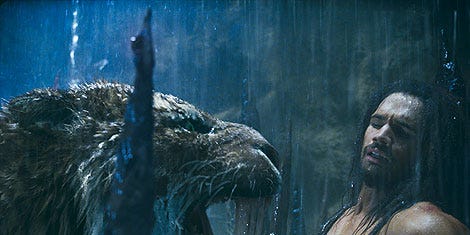
At first glance, de-extinction sounds like the most spectacular science project humanity has ever attempted. Imagine woolly mammoths thundering across Arctic grasslands, dodos waddling back into history with the confidence of birds that never learned to fear people, or a passenger pigeon flock so large it turns the sky into a feathery weather event. It sounds magical. It sounds cinematic. It sounds like someone finally gave biology a “restore from backup” button.
Unfortunately, nature is not a laptop, extinction is not a deleted file, and bringing back extinct animals is not quite the prehistoric petting zoo people imagine. The modern science of resurrecting extinct species is real, fascinating, and advancing quickly. But it is also messy, expensive, ethically complicated, and far less adorable once you start asking practical questions such as: Where will these animals live? Who raises them? What happens if they suffer? And are we saving natureor just building celebrity animals with very dramatic branding?
That does not mean de-extinction is useless. Far from it. Genetic engineering, cloning, ancient DNA research, and reproductive technologies may help protect endangered species that are still clinging to survival. But the dream of casually reviving lost animals comes with a long receipt. And, like most receipts, it is longer than expected and arrives right when you thought the fun part had started.
What Does “De-Extinction” Actually Mean?
De-extinction is the attempt to recreate, restore, or approximate an extinct species using biotechnology. In popular imagination, that means scientists find ancient DNA, assemble a perfect genome, place it into an embryo, and boom: baby mammoth. Someone names it Snowball. The internet melts.
In reality, most de-extinction projects are not creating exact copies of vanished animals. They are usually creating genetic proxies: living animals engineered to carry some traits of an extinct species. A mammoth project, for example, may involve editing Asian elephant cells to express mammoth-like features such as thick hair, cold tolerance, extra fat, or altered hemoglobin. A dire wolf-style animal may be a gray wolf with selected edits linked to dire wolf-like traits. That is impressive science, but it is not the same as opening a time portal and politely asking the Pleistocene to send representatives.
Clone, Edit, or Back-Breed?
Scientists generally discuss three main approaches. Cloning may work when preserved cells are available, as happened with the Pyrenean ibex, although that animal survived only briefly. Genome editing uses tools such as CRISPR to alter the DNA of a close living relative. Back-breeding uses selective breeding to recreate traits from extinct ancestors, as seen in attempts to approximate animals like the aurochs.
Each method has limits. Ancient DNA is usually fragmented. Soft tissue degrades. Closely related living species may not exist. Even if a genome can be partly reconstructed, genes do not operate like LEGO bricks. They interact with each other, with development, with the womb or egg, with the animal’s microbiome, and with the environment. Biology is less “copy and paste” and more “orchestra where half the sheet music got rained on.”
The Animals Would Not Be Perfect Copies
One reason resurrecting extinct animals will not be as fun as expected is simple: the animal that returns may not truly be the animal that disappeared. A woolly mammoth-like elephant would not have mammoth parents, mammoth herds, mammoth culture, or the same Ice Age environment. A passenger pigeon-like bird would not automatically know how to live in flocks of millions. A thylacine-like marsupial would enter a Tasmania that has changed dramatically since the last known thylacine died in the 20th century.
That matters because animals are not just genomes wearing fur. They are behaviors, relationships, migrations, learned survival skills, microbes, habitats, and ecological roles. A species is a living history, not merely a DNA sequence with legs.
The Dire Wolf Debate Shows the Problem
The recent debate around genetically engineered wolf pups illustrates the challenge. The animals were presented by some as a landmark in de-extinction, but many experts argued that they were gray wolves edited to resemble dire wolves in certain visible traits. Ancient DNA research has shown that dire wolves were deeply distinct from modern gray wolves, having split from living canids millions of years ago. So even a large, pale, muscular wolf with impressive jaws is not automatically a dire wolf in the full evolutionary sense.
This does not make the science meaningless. It may still teach researchers how to edit genomes, clone animals, and preserve endangered species. But it does mean the public should be careful with labels. “Dire wolf-inspired gray wolf” is not quite as thrilling as “the dire wolf is back,” but it is a lot more honestand honesty is useful when science starts looking like a movie trailer.
Habitats Have Moved On Without Them
Even if scientists could create a healthy proxy animal, the next question is awkward: where does it go?
Extinction usually happens for a reason. Sometimes humans hunted the species relentlessly. Sometimes habitat disappeared. Sometimes climate shifted. Sometimes invasive species, disease, or ecological disruption pushed the animal past the point of recovery. Bringing an animal back without fixing the cause of extinction is like refilling a bathtub without plugging the drain. Technically active, emotionally hopeful, and very wet.
Take the passenger pigeon. Once, these birds flew across North America in staggering numbers. Their extinction was driven largely by mass hunting and commercial exploitation, along with pressures on breeding colonies and habitat. If scientists someday create passenger pigeon-like birds from band-tailed pigeon relatives, they will not automatically recreate the ancient forests, social flocking scale, or ecological conditions that shaped the original species.
The Mammoth Question: Arctic Hero or Hairy Headache?
Supporters of mammoth de-extinction often argue that mammoth-like elephants could help restore Arctic grasslands by trampling snow, knocking down shrubs, and affecting soil processes in ways that might slow permafrost thaw. It is a bold idea and not ridiculous. Large herbivores can shape landscapes. However, the modern Arctic is not the Ice Age. It is warming, politically complex, and ecologically fragile. Introducing engineered megafauna would require enormous space, long-term monitoring, community involvement, veterinary care, and a serious plan for what happens if the animals do not behave as hoped.
Also, mammoths were social animals. Elephants are deeply intelligent, family-oriented, and emotionally complex. If mammoth-like calves are created using elephant surrogates or artificial wombs, scientists must consider not only whether they can be born, but whether they can live good lives. “Congratulations, you are the first of your kind in 4,000 years” is a lot to put on a baby with no herd manual.
Animal Welfare Is the Part Nobody Wants on the Poster
The cutest de-extinction headlines tend to skip the uncomfortable middle: failed embryos, miscarriages, developmental problems, surrogate risks, behavioral confusion, and animals born into experiments that may or may not succeed. Conservation science often involves difficult trade-offs, but de-extinction raises unusually sharp welfare questions because the animal being produced may have no natural parents, no established social group, and no proven habitat.
For large mammals, the welfare concerns multiply. Elephants have long pregnancies, complex pregnancies, and strong social bonds. Using endangered Asian elephants as surrogates for mammoth-like embryos could create ethical problems unless the process is extremely safe and carefully justified. Artificial womb technology might reduce some risks someday, but it is not a magic box labeled “no moral complications.”
Birds Bring Their Own Problems
Bird de-extinction may sound easier because birds are smaller, but avian reproduction is technically tricky. Unlike mammals, birds develop in eggs, and editing reproductive cells often requires specialized work with primordial germ cells. Projects involving dodos, passenger pigeons, or heath hens face challenges in genome reconstruction, embryo development, surrogate species, and raising animals that can behave naturally.
In other words, resurrecting a bird is not just “add DNA to egg and stir.” Please do not stir the egg. The egg has suffered enough.
De-Extinction Could Distract From Living Species
The biggest criticism of de-extinction is not that it is impossible. It is that it may pull attention, funding, and emotional urgency away from species that are still alive. Thousands of plants and animals are currently threatened by habitat loss, climate change, pollution, poaching, disease, and invasive species. Many do not need futuristic resurrection. They need land protection, clean water, anti-poaching enforcement, wildlife corridors, and people willing to stop treating ecosystems like disposable packaging.
Consider the red wolf, one of the most endangered canids in the world. Conservationists are still working to stabilize and recover a small wild population in the southeastern United States. Technologies developed in de-extinction labs, such as cloning or genetic rescue, may help animals like this. That is the strongest argument for the field: the tools might be more valuable for preventing extinction than reversing it.
But the messaging matters. If the public begins to believe extinction can be undone later, conservation loses one of its clearest truths: when a species disappears, something irreplaceable is lost. A proxy may be valuable, but it is not a full refund.
The Legal and Social Questions Are Huge
Suppose scientists successfully create a mammoth-like elephant. Who owns it? A company? A government? A conservation trust? Does it fall under endangered species law? Is it livestock, wildlife, a laboratory animal, or something entirely new? If a resurrected predator kills livestock, who pays? If an engineered bird spreads disease to wild relatives, who is responsible? If Indigenous communities or local residents object to releases on their lands, who gets the final say?
These are not boring paperwork questions. They determine whether de-extinction becomes conservation or chaos with better branding. The International Union for Conservation of Nature has published principles for creating proxies of extinct species, emphasizing conservation benefit, risk reduction, and protection of existing species and local livelihoods. That cautious framework is important because “we made one in a lab” is not the same as “we responsibly restored a species.”
Public Hype Can Outrun Reality
De-extinction has a public relations problem: the phrase is too powerful. It suggests finality has been defeated. It makes extinction sound temporary. It also attracts money, celebrity attention, and headlines faster than a dodo would attract confused tourists.
Scientists and companies working in this space often argue that big dreams inspire conservation. They may be right. People care about mammoths in a way they may not care about an endangered mussel, even though the mussel is doing important ecological work and asking for very little applause. But hype becomes harmful when it blurs the difference between saving biodiversity and manufacturing impressive biological look-alikes.
What De-Extinction Might Actually Be Good For
Despite all the caution, de-extinction research could produce real benefits. Genome editing may help endangered species resist disease. Biobanking may preserve genetic diversity. Cloning may reintroduce lost genetic variation into tiny populations. Ancient DNA studies can reveal how species adapted to climate stress, disease, or changing ecosystems. Reproductive technologies could support animals that struggle to breed in captivity.
The best version of de-extinction is not a theme park full of prehistoric celebrities. It is a toolkit for conservation biology. If the same technologies used to chase mammoths help living elephants survive disease, help red wolves regain genetic diversity, or help endangered birds avoid inbreeding, then the field may prove valuable even if no perfect extinct species ever returns.
The Right Question Is Not “Can We?”
The right question is “Should we, and under what conditions?” A responsible de-extinction project should have a clear conservation purpose, strong animal welfare standards, community engagement, habitat planning, disease assessment, genetic transparency, and long-term funding. It should not exist merely because an extinct animal looks excellent on a pitch deck.
Some candidates may make more sense than others. Recently extinct animals with close living relatives, well-preserved DNA, understood habitats, and clear ecological roles are more realistic than ancient animals with no suitable modern environment. Even then, success would require decades of work. Nature does not care about quarterly updates.
Why the Fantasy Falls Apart
The fantasy of resurrecting extinct animals is fun because it skips the maintenance phase. We picture the dramatic birth, the first shaky steps, the worldwide livestream, and the plush toy available by Friday. We do not picture the veterinary bills, the regulatory hearings, the failed pregnancies, the ecological monitoring, the local opposition, the disease screening, or the 40-year funding plan.
Real conservation is rarely glamorous. It involves fences, mud, public meetings, field notes, genetic sampling, habitat restoration, and people arguing about budgets under fluorescent lights. De-extinction does not remove those realities. It adds more of them, plus ancient DNA.
That is why resurrecting extinct animals will not be as fun as many people hope. It will be fascinating, yes. It may be useful. It may even produce animals that inspire awe. But it will not be simple, cheap, or morally tidy. The past does not come back unchanged just because humans finally learned to edit genomes.
Experience: What This Topic Feels Like From the Human Side
Reading about de-extinction can feel like standing in two museums at once. In one room, there is wonder: mammoths, thylacines, dodos, passenger pigeons, and dire wolves glowing in the imagination like nature’s lost legends. In the other room, there is grief: glass cases, preserved skins, faded labels, and the uncomfortable realization that many of these animals vanished because people treated abundance as permission.
The emotional experience is complicated. It is exciting to imagine science repairing old damage. Humans have caused so many extinctions that the idea of reversing even one feels like a moral victory. Who would not want to see a thylacine move through Tasmanian brush again? Who would not pause at the sight of a mammoth-like calf lifting its trunk into cold air? Even the most cautious conservationist can understand the pull of that image.
But the longer you sit with the topic, the less it feels like a miracle and the more it feels like a mirror. De-extinction asks whether we want to heal nature or simply prove we are clever. Those are not the same thing. A society that cannot protect living elephants, wolves, frogs, corals, bats, orchids, and birds may not be ready to responsibly manage resurrected ones. Bringing back a lost animal while its modern relatives decline would be like buying a new houseplant while the old one is actively begging for water.
There is also a strange loneliness in the idea of a resurrected animal. Imagine being the first passenger pigeon-like bird in a world without passenger pigeon skies. Imagine being a mammoth-like calf without a mammoth mother, without a herd memory, without thousands of years of social learning. Humans might cheer, cameras might flash, and scientists might celebrate a breakthrough. But the animal still has to live the life we made possible. That life deserves more than applause.
For writers, readers, and curious science fans, the best way to approach de-extinction is with double vision: keep the wonder, but do not let it erase the warning. The technology is remarkable. The ambition is enormous. The potential conservation tools are worth studying. Yet the most responsible lesson may be surprisingly old-fashioned: protect species before they become candidates for resurrection.
In that sense, de-extinction is not really about mammoths or dodos. It is about us. It asks whether humans can finally become careful enough to deserve the power we keep inventing. If we use these tools to support living ecosystems, restore damaged habitats, and prevent future losses, de-extinction research may become a valuable chapter in conservation. If we use it mostly to produce headline animals while ignoring the ordinary species disappearing outside our windows, then the whole project becomes a very expensive magic trick.
The fun version of de-extinction says, “Look what we can bring back.” The wiser version asks, “What are we willing to stop losing?” That second question is less flashy, but it may be the one that saves the most life.
Conclusion
Resurrecting extinct animals sounds like science fiction finally returning our calls, but the reality is far more complicated. De-extinction can produce powerful conservation tools, deepen our understanding of genetics, and maybe even create living proxies for vanished species. Still, it cannot fully restore lost ecosystems, ancient behaviors, or evolutionary history. A mammoth-like elephant is not a time machine. A dire wolf-like gray wolf is not a perfect resurrection. A passenger pigeon-like bird is not a billion-bird sky.
The best future for de-extinction is not replacing conservation but strengthening it. If biotechnology helps protect living species, restore genetic diversity, and make people care more deeply about extinction, then it has a meaningful role. But if it convinces us that extinction is reversible, we will have learned exactly the wrong lesson.
Bringing back extinct animals may be possible in limited ways. Making it ethical, ecological, and worthwhile is the real challenge. And unlike a movie monster, that challenge will not be solved before the credits roll.












