
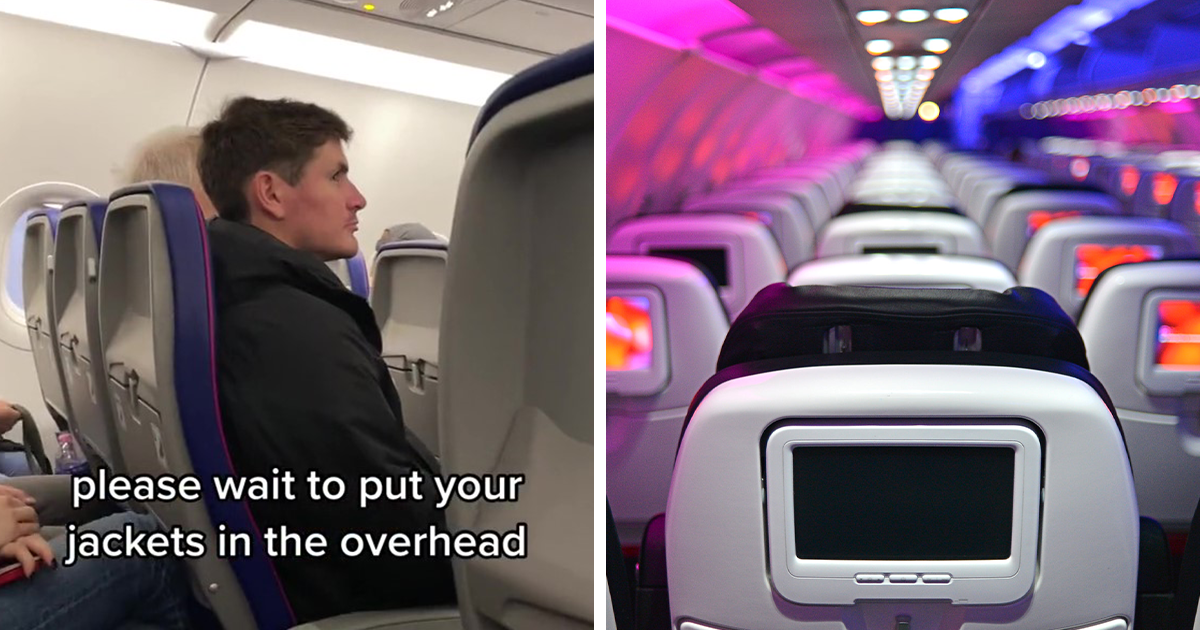
Air travel has a strange talent for turning ordinary people into philosophers, negotiators, and occasionally, silent enemies over two inches of plastic armrest. One minute you are calmly boarding a plane with a coffee and a dream. The next, you are defending your knee space from a stranger who has decided economy class is actually a yoga studio.
That is why a travel blogger’s criticism of passengers who ignore her unwritten “plane etiquette rules” struck such a loud nerve online. The debate began after a travel influencer shared her thoughts on what passengers should and should not do once they step inside the cabin. Her rules sounded simple: do not fill the overhead bin with jackets before everyone has stowed luggage, stay inside your own seat area, and let the middle-seat passenger have both armrests.
Simple? Apparently not. The internet reacted as if she had rewritten the Constitution at cruising altitude. Some viewers applauded the rules as basic common sense. Others argued that no passenger gets to invent private laws for a public cabin. And somewhere in the middle, millions of frequent flyers quietly nodded while remembering the time someone placed a winter coat, backpack, shopping bag, and emotional support hat in the overhead bin.
Why Plane Etiquette Became Such a Big Online Debate
Plane etiquette is not new, but social media has turned every cramped cabin moment into a courtroom drama. A short video about armrests or overhead bins can travel faster than a nonstop from New York to Los Angeles because almost everyone has a personal story. Flying is emotional. It is expensive, stressful, crowded, and full of tiny shared spaces that feel much larger when someone else is occupying them.
The travel blogger’s rules landed at the perfect cultural moment. Airplane seats feel smaller, flights are often full, carry-on space is precious, and passengers are more sensitive to comfort than ever. When people pay for a ticket, a seat assignment, luggage, snacks, Wi-Fi, and possibly the privilege of breathing near the front of the cabin, they arrive with expectations. Unfortunately, everyone else arrives with expectations too.
That is where “unwritten rules” enter the chat. Airlines publish official policies about carry-on size, seat belts, crew instructions, and safety. They do not usually publish a laminated guide titled “Who Gets the Left Elbow Zone When Row 22 Is Having a Bad Day?” So passengers create their own etiquette codes. Some are widely accepted. Some are controversial. Some are invented by the person currently losing the armrest battle.
The Three Rules That Sparked the Conversation
1. Jackets Should Not Hog the Overhead Bin
The blogger’s first complaint was about passengers putting jackets in overhead bins before luggage has been stowed. On a half-empty flight, this may not matter. On a packed flight, it can become the first domino in a boarding delay. Large carry-ons need overhead space. Personal items, coats, small backpacks, and tote bags usually belong under the seat, on your lap, or tucked away after the larger bags are settled.
This rule resonated with many travelers because overhead bins have become airplane real estate. People board early not for the joy of standing in a jet bridge, but because they want storage space. When someone uses an entire bin area for soft items that could fit elsewhere, it can force later passengers to gate-check bags or store luggage several rows away. That means more aisle traffic, more awkward reaching, and more people saying “sorry” while absolutely not being sorry.
There is nuance, of course. Some passengers may have medical items, mobility needs, or fragile belongings. Others may be tall and genuinely need foot room. But the general etiquette principle is practical: use only the overhead space you need, and do not treat it like your personal closet unless the flight is clearly underbooked.
2. Stay in Your Own Seat Space
The second rule was about keeping your body inside your assigned area. This includes knees, elbows, shoulders, hair, and any other body part attempting diplomatic expansion into neighboring territory. Economy seating is already tight enough without someone deciding to manspread across three postal codes.
This rule is less controversial in theory than in practice. Most people agree passengers should respect personal space. The debate begins when bodies do not fit neatly into shrinking seat dimensions, when someone falls asleep and drifts, or when a passenger believes their comfort matters more than the person beside them. The polite answer is not to shame people for existing in different body sizes. The polite answer is to be aware, adjust when possible, and avoid intentionally taking more space than the seat provides.
There is also a communication problem. Many travelers would rather endure discomfort for four hours than say, “Would you mind moving your knee a little?” That silence can turn mild irritation into a full online essay after landing. The better move is a calm, quiet request before resentment gets upgraded to first class.
3. The Middle Seat Gets Both Armrests
The third rule caused the most turbulence: the person in the middle seat gets both armrests. Supporters say this is the great consolation prize of the worst seat in the row. The window passenger has the wall and view. The aisle passenger has easier access and a little psychological freedom. The middle passenger has neither, so the armrests become a small act of mercy.
Critics disagree. Some say armrests are shared space. Others argue that passengers paid for one seat, not an elbow kingdom. Some believe the middle-seat passenger should choose one armrest, not both. And a few brave souls insist the correct system is “first elbow down wins,” which is less etiquette and more medieval warfare with beverage service.
The truth is that there is usually no formal airline rule assigning armrests. That is why this debate never dies. It survives because every flight creates a new test case. A reasonable compromise is to give the middle passenger priority while staying flexible. If the middle-seat traveler uses both armrests lightly, everyone survives. If someone is struggling for space, kindness beats rigid rule enforcement. The cabin is not a courtroom. It is a metal tube full of tired people and pretzels.
Why People Took the Blogger’s Rules Personally
One reason the discussion became heated is that etiquette sounds like judgment, even when it is framed as advice. Nobody likes being told they are “that passenger.” But everyone has met “that passenger.” The armrest hog. The barefoot bathroom explorer. The person who watches videos without headphones. The traveler who stands up immediately after landing and leans over an entire row like a human coat rack.
Airplane etiquette debates are rarely just about the specific behavior. They are about fairness. Passengers want to feel that everyone is playing by the same rules. If one person follows crew instructions, stores bags properly, keeps headphones on, and waits their turn to deplane, it is annoying to watch someone else ignore the social contract and benefit from it.
That is why online arguments about plane manners can become surprisingly emotional. They are small conflicts, but they represent a larger question: how do strangers share limited space without making each other miserable?
Official Rules vs. Unwritten Rules
It is important to separate safety rules from etiquette rules. When a flight attendant tells passengers to fasten seat belts, stow tray tables, put bags away, or follow landing procedures, that is not optional. Crew instructions exist for safety, and ignoring them can have serious consequences. Disruptive behavior, threats, refusal to comply, or interference with crew duties can lead to fines, removal from flights, or legal trouble.
Unwritten etiquette rules are different. Nobody will fine you for taking the wrong armrest, unless your elbow somehow files a federal complaint. But etiquette rules still matter because they keep the cabin functioning. They reduce arguments, speed up boarding, and make a stressful experience slightly less ridiculous.
The best passengers understand both categories. They follow official instructions immediately and treat unwritten norms as a courtesy system. Put big bags overhead and smaller items below. Recline carefully, especially during meal service. Use headphones. Keep shoes on unless there is a genuine reason not to. Avoid strong-smelling food. Do not clip nails, do skincare, or conduct a tuna-sandwich ceremony at 30,000 feet. Humanity has suffered enough.
The Overhead Bin Problem Is Bigger Than Jackets
The jacket debate is really about the larger carry-on problem. Airlines charge for checked bags, passengers try to avoid baggage claim, and overhead bins fill up fast. This creates a boarding race where people act as if the last available bin space contains buried treasure.
Flight attendants often encourage passengers to place roller bags wheels-first or vertically when the bin design allows it. Personal items usually belong under the seat. Coats can wait until larger bags are stored, then be placed on top if space remains. These small choices can help prevent delays and reduce the number of tense conversations in the aisle.
There is one etiquette myth worth busting: the bin directly above your seat is not always legally or officially “yours.” It is shared cabin space. Still, placing your bag near your row is considerate because it helps deplaning go smoothly. Stashing a bag near the front while you sit in the back may feel clever, but it creates traffic jams and dirty looks powerful enough to dim the cabin lights.
What About Reclining, Window Shades, and Deplaning?
The blogger’s rules focused on jackets, personal space, and armrests, but the discussion naturally expanded to other airplane etiquette classics. Reclining remains one of the biggest debates. The seat is designed to recline, but using it without checking behind you can crush a laptop, spill a drink, or ruin someone’s knees. A quick glance back is not required by law, but it is required by not being a chaos goblin.
Window shades are another modern battlefield. Some travelers want darkness for sleep or screen visibility. Others want daylight, scenery, or relief from claustrophobia. The window-seat passenger usually controls the shade, but polite requests are fair. A good rule is to consider the time of day, flight length, glare, and whether people around you are trying to sleep.
Then there is deplaning. Standing up the second the seat belt sign turns off does not make the door open faster. It only turns the aisle into a cramped museum exhibit called “Impatient People Under Bins.” If you have a tight connection, politely say so and ask for help. Otherwise, wait your row’s turn. The airport will still be there. Sadly, so will baggage claim.
Why the Middle Seat Is the Emotional Center of the Debate
The middle seat has become the symbol of air travel discomfort. It offers no wall, no aisle, no easy escape, and no guaranteed armrest peace. That is why so many travelers instinctively support giving the middle passenger both armrests. It feels like the smallest possible compensation for being wedged between strangers.
But not everyone sees it that way. Some passengers think paying for a seat means equal claim to shared fixtures. Others point out that basic economy fares and paid seat selection can complicate the idea of fairness. If someone voluntarily chose the middle seat to save money, should they still receive both armrests? Many travelers say yes, because discomfort is discomfort. Others say no, because the armrests are not a prize awarded by suffering.
The most workable answer is not absolute ownership but generous priority. The aisle and window passengers should avoid aggressively claiming both sides. The middle passenger should use the armrests without turning them into a fortress. Everyone should remember that the goal is not victory. The goal is arriving without becoming a story in someone else’s group chat.
How Passengers Can Handle Etiquette Problems Without Starting a Cabin War
Most etiquette problems can be solved with one sentence delivered early and politely. “Would you mind moving your bag so I can fit mine?” “Could I use a little of the armrest?” “Would you mind waiting to recline until after drinks?” These are not dramatic confrontations. They are normal human requests.
If the issue involves safety, blocked aisles, seat switching disputes, aggressive behavior, or refusal to follow crew instructions, passengers should involve a flight attendant. The crew is trained to handle cabin conflicts. What passengers should not do is escalate, shame, film strangers for entertainment, or turn a minor annoyance into a viral spectacle.
There is also value in assuming ignorance before malice. Some people fly rarely. Some are nervous. Some do not know the carry-on system. Some are traveling with children, medical stress, grief, or exhaustion. Courtesy does not mean letting rude behavior slide forever. It means starting with the least hostile interpretation before moving to the next step.
Experience Section: What This Debate Feels Like in Real Travel
Anyone who flies often has seen how quickly tiny etiquette choices shape the mood of a trip. Imagine boarding a full evening flight after a long workday. The gate agent has already announced that every seat is taken and bin space will be limited. You step into the aisle, and the first few bins are stuffed with coats, souvenir bags, and backpacks lying sideways like they paid for business class. Behind you, passengers are waiting. In front of you, someone is unpacking a novel, headphones, snacks, charger, neck pillow, water bottle, tablet, and possibly a small camping setup. This is the moment when etiquette stops being theoretical.
Good plane manners are not about being fancy. They are about rhythm. Boarding works best when people prepare before they reach the row. Take out what you need, stow the big bag quickly, keep the aisle moving, and sit down. It sounds simple because it is simple. Yet one person rummaging through a suitcase in the aisle can slow twenty rows of passengers and create the kind of collective sigh usually reserved for printer jams and group projects.
The middle-seat experience is another lesson in quiet compromise. A middle passenger who gently claims both armrests early often prevents awkward elbow wrestling later. But the best version of this rule is relaxed, not territorial. On a short flight, sharing may be easy. On a long flight, armrest access can become a real comfort issue. If the aisle passenger needs to shift during drink service or the window passenger needs a moment to adjust, cooperation is better than stubbornness.
Personal space also matters more than people admit. A knee pressing into your area for ten minutes is annoying. A knee pressing into your area for four hours becomes a personality test. The same goes for hair flipped over a seatback, bare feet near armrests, loud phone videos, and perfume applied mid-flight like the cabin is a department store sample counter. Most passengers do not want luxury. They want not to be touched, sprayed, kicked, or forced to hear someone’s comedy podcast through a phone speaker.
The biggest travel lesson is that etiquette is contagious. A passenger who smiles, moves efficiently, thanks the crew, and respects space can make a row feel calmer. A passenger who acts entitled can poison the mood before takeoff. The difference is rarely dramatic. It is usually a series of small decisions: waiting before putting a coat overhead, asking before moving someone’s bag, lowering your voice, using headphones, and letting the row ahead exit first.
The travel blogger’s rules stirred discussion because they named frustrations many people already had. Not everyone agrees with every rule, and that is fine. Airplane etiquette will always involve negotiation because cabins are shared spaces full of strangers with different needs. But the heart of the issue is hard to argue with: be aware of your space, follow crew instructions, and do not make your comfort depend on someone else’s discomfort.
Conclusion: The Real Rule Is Consideration
The viral debate over unwritten plane etiquette rules shows how strongly travelers feel about fairness in the air. Jackets in overhead bins, armrest rights, seat spreading, window shades, reclining, and deplaning all point to the same truth: flying works better when passengers remember they are sharing a limited space.
The blogger may not have issued official airline policy, but she did tap into a real frustration. Most people do not expect perfection from fellow passengers. They expect awareness. They expect people to notice when their choices affect others. In a cabin where everyone is tired, packed tightly, and hoping for an on-time arrival, small courtesies can feel surprisingly large.
So, does the middle seat get both armrests? In the court of public opinion, the jury is still arguing near Gate B12. But a generous passenger gives the middle seat a break. A smart passenger keeps coats out of the bin until bags are stowed. A civilized passenger uses headphones. And a truly heroic passenger waits their turn to deplane without turning the aisle into a standing-room-only drama club.
Note: This article is written as a fully original, publication-ready synthesis of public travel etiquette discussions, airline guidance, and expert commentary. It avoids copied source wording and does not include source links inside the article body.












