
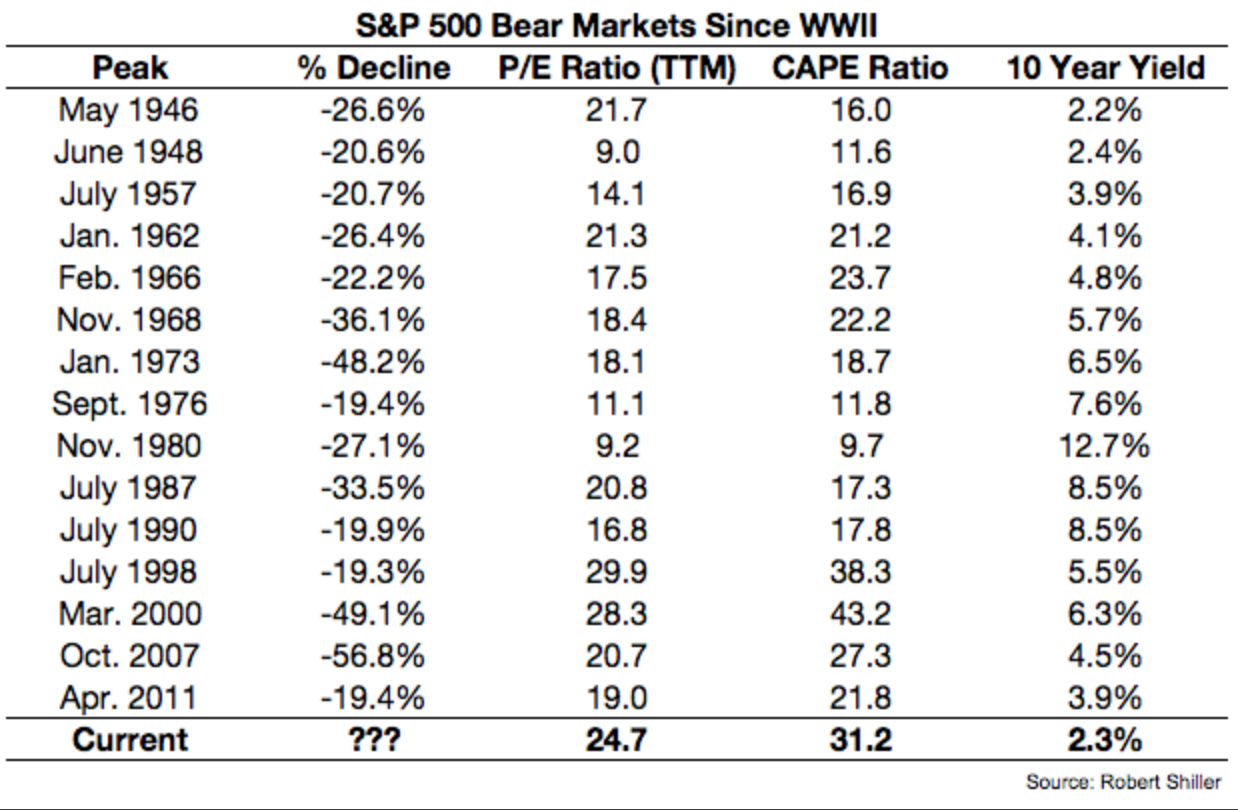
Stock market valuations are like a bathroom scale after Thanksgiving dinner: useful, honest, and deeply unpopular. They can tell you whether prices look stretched compared with earnings, sales, book value, dividends, or expected cash flows. What they cannot do is whisper, “The crash begins next Tuesday at 10:17 a.m., right after your second coffee.”
That distinction matters. Investors love clean signals. A high price-to-earnings ratio feels like a flashing red light. A low dividend yield feels like a warning siren. A historically elevated CAPE ratio can make even a calm investor stare suspiciously at their brokerage app. But while stock market valuations can help estimate long-term expected returns, they are poor tools for predicting the timing of the next market crash.
The uncomfortable truth is that expensive markets can get more expensive, cheap markets can get cheaper, and crashes often arrive for reasons that valuation models did not politely put on the calendar. Valuation is important. It is not magic. It is a compass, not a crash alarm.
What Stock Market Valuations Actually Measure
Stock market valuation is the process of comparing prices with fundamentals. The most common valuation tools include the price-to-earnings ratio, forward P/E ratio, Shiller CAPE ratio, price-to-sales ratio, price-to-book ratio, dividend yield, and equity risk premium. Each tries to answer a simple question: how much are investors paying for a dollar of business value?
The price-to-earnings ratio compares stock prices with corporate earnings. The forward P/E uses expected earnings, which makes it helpful but also vulnerable to analyst optimism. The Shiller CAPE ratio, also called the cyclically adjusted price-to-earnings ratio, smooths earnings over ten years to reduce the noise of recessions and boom periods. The equity risk premium compares the expected return from stocks with safer assets such as Treasury bonds.
These indicators can be useful because price matters. Paying too much for any asset lowers future returns. That is true whether you are buying a stock, a rental property, or a suspiciously expensive airport sandwich. The more you pay today, the more growth you need tomorrow to justify the price.
However, valuations are not clocks. They do not tell investors when optimism will fade, when liquidity will tighten, when earnings expectations will crack, or when a surprise shock will send everyone sprinting toward the exits like someone yelled “free snacks” in reverse.
Why Valuations Are Better at Predicting Long-Term Returns
Historically, starting valuations have had a meaningful relationship with long-term stock returns. When investors buy the market at very high valuations, future ten-year returns tend to be lower. When they buy at depressed valuations, future long-term returns tend to be stronger. This is not mysterious. If investors pay a high price for each dollar of earnings, the market needs strong profit growth, rising margins, or even higher multiples to deliver excellent future returns.
That is why valuation matters for financial planning. A retiree, long-term investor, pension fund, or wealth manager cannot ignore whether the broad market is priced for perfection. If stocks are expensive, expected returns may be more modest. If stocks are cheap, future returns may be more generous. Valuation can help set realistic expectations.
But “lower expected return over ten years” is not the same as “crash tomorrow.” This is where many investors get into trouble. A market can be overvalued for years before falling. It can also fall sharply from valuations that are not historically extreme. Valuation tells you about the odds and size of future rewards. It does not provide a countdown timer.
The Market Can Stay Expensive Longer Than Your Patience
One of the great annoyances of investing is that being right too early can feel exactly like being wrong. In the late 1990s, many valuation-based investors correctly argued that U.S. technology stocks had become wildly expensive. They were right in the long run. But for a while, the market kept rising anyway. Anyone who exited too early missed enormous gains before the dot-com bubble finally burst.
The same pattern appears in other cycles. Markets can remain expensive because earnings are growing, interest rates are low, liquidity is abundant, investor confidence is high, or a powerful narrative takes over. In recent years, artificial intelligence, mega-cap technology profits, and strong corporate margins have helped support elevated U.S. equity valuations. Whether those expectations prove fully justified is a separate question. The point is that a strong story can carry prices far beyond what traditional valuation models consider comfortable.
Valuation skeptics often forget that markets are not run by spreadsheets alone. They are run by people, institutions, algorithms, incentives, fear, greed, career risk, and the occasional financial commentator shouting into a webcam. Valuation is one ingredient in the stew. It is not the entire kitchen.
Why Crashes Usually Need a Trigger
High valuations can make a market fragile, but fragility is not the same as collapse. A tall stack of dishes is fragile, but it still needs a bump to hit the floor. Market crashes usually need a trigger or a combination of triggers: a recession, credit stress, inflation shock, monetary tightening, geopolitical crisis, earnings disappointment, forced selling, liquidity problem, or sudden loss of confidence.
The 2008 financial crisis was not simply about stocks being expensive. It involved excessive leverage, housing market speculation, weak lending standards, complex mortgage securities, and a banking system under severe stress. The 2020 market crash was not caused by traditional valuation ratios suddenly discovering gravity. It was triggered by a global pandemic and an abrupt economic shutdown. The 1987 crash happened in a different environment, with portfolio insurance, market structure issues, and panic selling playing major roles.
Valuations may explain why a market is vulnerable. They rarely explain why the selling begins on a specific day. That is why valuation-based crash predictions sound smart in advance and often look silly in real time. The market does not crash because a spreadsheet clears its throat. It crashes when enough investors suddenly decide that yesterday’s assumptions no longer work.
The Problem With Using P/E Ratios as a Timing Tool
The price-to-earnings ratio is popular because it is simple. Unfortunately, simple does not always mean reliable. Earnings are cyclical. During recessions, earnings can collapse, making P/E ratios look artificially high after prices have already fallen. During booms, earnings can surge, making stocks look cheaper than they really are. Forward earnings estimates can also be revised quickly when economic conditions change.
A market with a high P/E ratio may continue climbing if earnings growth accelerates. A market with a moderate P/E ratio may fall if investors lose confidence in future profits. A low P/E ratio may reflect genuine bargain prices, or it may reflect companies facing serious trouble. In other words, valuation ratios are useful, but they must be interpreted in context.
Interest rates also matter. When bond yields are low, investors may accept higher stock valuations because the alternatives look less attractive. When yields rise, stock valuations can face pressure because investors have more competition for their money. This does not mean interest rates perfectly predict crashes either. It means valuation is always part of a bigger picture.
High Valuations Can Signal Low Future Returns Without Signaling a Crash
A market does not need to crash to disappoint investors. Sometimes the punishment for high valuations is not a dramatic collapse but a long stretch of mediocre returns. Prices can move sideways while earnings catch up. Inflation can erode real returns. Leadership can rotate away from the most expensive stocks. Investors expecting fireworks may instead get a decade of financial oatmeal.
This is especially important for long-term planning. If valuations are high, investors may want to lower return expectations, diversify more carefully, rebalance regularly, and avoid assuming that recent returns will continue forever. But that is very different from selling everything and hiding in cash because a valuation chart looks scary.
Cash feels safe during market anxiety, but it creates its own risks. Investors who exit the market must make two correct decisions: when to get out and when to get back in. The second decision is often harder. Crashes are emotionally loud. Recoveries are usually born when the news still looks terrible. Waiting for “certainty” can mean missing a large part of the rebound.
Investor Psychology Turns Valuation Into a Drama Machine
People do not merely analyze valuations. They emotionally negotiate with them. When markets are rising, high valuations are explained away as justified by innovation, productivity, margins, global growth, or “this time is different.” When markets are falling, the same valuation level suddenly becomes proof that everyone was reckless. The data did not change as much as the mood did.
This is why valuation debates can become so theatrical. Bulls argue that strong earnings and dominant companies deserve premium multiples. Bears argue that trees do not grow to the moon, even if the tree has a cloud-computing division and excellent branding. Both sides can make reasonable points. The mistake is assuming that either side can precisely predict the next crash.
Investor sentiment can stretch valuation extremes. When investors are euphoric, they tolerate expensive prices. When they are fearful, they demand discounts. That emotional cycle is one reason markets overshoot in both directions. Valuation provides a useful anchor, but investors often ignore the anchor until the boat is already drifting toward rocks.
What Investors Should Watch Besides Valuation
Valuation is only one part of market risk. Investors should also watch earnings trends, profit margins, credit spreads, interest rates, inflation, liquidity, leverage, market concentration, investor sentiment, and economic momentum. A highly valued market with strong earnings, healthy credit conditions, and broad participation may behave very differently from a highly valued market with weakening profits and tightening financial conditions.
Market concentration deserves special attention. When a small number of mega-cap stocks drive most index gains, broad market valuation can hide very different conditions underneath. Some stocks may be extremely expensive while others are reasonably priced. This can create a market that looks calm at the index level but is fragile beneath the surface.
Credit markets can also reveal stress before equity investors fully react. Widening credit spreads, rising defaults, and tighter lending standards can signal that investors are demanding more compensation for risk. Liquidity matters too. When money is plentiful, valuation can stay elevated. When liquidity dries up, even high-quality assets may be sold quickly.
How to Use Valuation Without Becoming a Crash Prophet
The best use of valuation is not prediction. It is preparation. Investors can use valuation to shape expectations, adjust risk exposure, rebalance portfolios, and avoid emotional decision-making. If valuations are high, it may be wise to check whether your portfolio is too concentrated in the most expensive areas of the market. If valuations are low, it may be time to remember that panic often creates opportunity.
Valuation can also help investors avoid performance chasing. After a strong bull market, many people increase risk at exactly the wrong time because recent returns feel normal. After a crash, they reduce risk because losses feel permanent. A valuation-aware investor does not need to predict the next crash. They simply need to avoid acting as if today’s mood will last forever.
A practical approach includes diversification across asset classes, sectors, company sizes, and geographies. It also includes keeping enough cash or short-term bonds for near-term needs so that long-term stock investments are not forced to become emergency funds. Rebalancing can help investors trim assets that have grown too large and add to areas that have lagged.
Why “The Market Is Expensive” Is Not an Investment Plan
Saying “the market is expensive” may be true, but it is incomplete. Which market? Which sector? Which valuation metric? Compared with what interest rate? Based on trailing earnings or forward earnings? Over what time horizon? For what type of investor? A 30-year-old contributing monthly to a retirement account faces a different decision than a 70-year-old withdrawing from a portfolio.
Investment decisions should connect to goals. Someone saving for retirement decades away can usually tolerate more volatility than someone who needs cash next year. A long-term investor may respond to high valuations by diversifying and moderating expectations. A short-term trader may care more about momentum and risk controls. A retiree may focus on withdrawal rates, income, and downside protection.
The phrase “stocks are overvalued” often becomes a fancy way of saying “I am nervous.” Nervousness is not a strategy. It is a signal to review your plan. If your portfolio only works when markets go up in a straight line, the problem is not valuation. The problem is the plan.
Specific Examples: When Valuation Did Not Ring the Bell
Before the dot-com crash, valuations were clearly extreme, but they were extreme long before the final peak. Investors who sold solely because valuations looked stretched could have missed a major final leg of the bull market. The valuation warning was useful for long-term expectations, but it did not provide precise timing.
Before the global financial crisis, valuation was only part of the story. The deeper danger was leverage and fragile credit structures. Investors focused only on broad market P/E ratios could miss the enormous risk building in housing, banks, and structured finance. The crash was not merely a valuation event. It was a balance-sheet event.
In 2020, the market collapsed rapidly because of a sudden pandemic shock. Traditional valuation metrics did not predict the speed or timing of that decline. The market then recovered far faster than many investors expected, showing again that timing exits and reentries is brutally difficult.
These examples do not prove valuations are useless. They prove valuations are incomplete. They are better at saying, “Future returns may be lower from here,” than saying, “Here comes the next crash.” That difference can save investors from turning a useful tool into a financial fortune cookie.
What High Valuations Mean in Today’s Market
When valuations are elevated, investors should resist two extreme reactions. The first is complacency: assuming expensive stocks will keep rising because they have been rising. The second is panic: assuming a crash is inevitable simply because valuation ratios are above average. Both reactions are too simple.
High valuations mean the margin for error is thinner. Companies need to deliver earnings growth. Profit margins need to hold up. Interest rates need to remain manageable. Investor confidence needs support. If those conditions deteriorate, expensive markets can reprice quickly. But if earnings continue to grow and liquidity remains supportive, high valuations can persist.
That is why the smart response is disciplined humility. Investors should acknowledge that future returns may be lower, volatility may be higher, and leadership may shift. They should not pretend they know the exact date of the next downturn. The market has a long history of embarrassing people who confuse “eventually” with “immediately.”
Experience Notes: What Investors Learn the Hard Way
Many investors first discover valuation during a bull market. They see a chart showing that stocks are expensive, and suddenly every green day feels suspicious. The temptation is to sell everything, wait for the crash, and buy back at the bottom like a heroic financial ninja. In real life, this is much harder than it sounds. The market may keep rising for months or years. Friends may brag about gains. Headlines may celebrate new highs. Sitting in cash can start to feel less like discipline and more like watching a party through the window while holding a calculator.
Then, when a decline finally arrives, the emotional challenge changes. The investor who waited for lower prices may not feel excited. They may feel terrified. The same person who promised to buy during a correction now wants to wait until the news improves. But markets often bottom before the economy feels safe. By the time everything looks comfortable again, prices may already be much higher.
Another common experience is overconfidence after one successful prediction. An investor may avoid one downturn and conclude they have a special gift. Unfortunately, market timing success can be dangerous because it encourages bigger bets later. Predicting one storm does not make someone the weather. It may simply mean they happened to carry an umbrella on the right day.
Long-term investors often learn that preparation beats prediction. The most durable portfolios are usually built before panic arrives. That means holding an asset allocation that can survive bad markets, keeping emergency money outside stocks, avoiding excessive leverage, and rebalancing when emotions say, “Absolutely not.” A plan created during calm periods is easier to follow when markets become chaotic.
Investors also learn that valuation is more helpful when used gently. It can encourage caution after huge gains. It can remind people not to chase expensive trends blindly. It can help set realistic expectations for retirement planning. But when valuation becomes an all-or-nothing timing signal, it can create unnecessary stress and costly mistakes.
One practical experience stands out: people who admit uncertainty often make better decisions than people who demand certainty. Markets are complex adaptive systems. Earnings, rates, inflation, policy, technology, consumer behavior, and investor psychology all interact. No single indicator can capture the whole machine. Valuation is one dashboard light. If it glows, pay attention. But do not assume it tells you the engine will explode at the next intersection.
The healthiest investor mindset is not “I can predict the crash.” It is “I can survive the crash.” That shift changes everything. Instead of obsessing over the next downturn, investors focus on what they control: savings rate, diversification, costs, taxes, rebalancing, time horizon, and behavior. Those factors may sound less exciting than calling the top, but they are far more useful. Besides, excitement is overrated in investing. The best portfolio is often the one boring enough to let you sleep while the market does its usual circus routine.
Conclusion: Valuation Matters, But It Won’t Save You From Uncertainty
Stock market valuations are valuable, but they are not prophetic. They can help investors understand whether future returns may be rich or restrained. They can highlight vulnerability. They can encourage discipline when enthusiasm becomes excessive. But they cannot reliably predict the next crash.
The next market crash may come from high valuations, or it may come from recession, inflation, credit stress, policy mistakes, geopolitical shocks, liquidity problems, or a surprise nobody has modeled yet. That is why investors should respect valuation without worshiping it.
The better goal is not to forecast every downturn. The better goal is to build a portfolio and a mindset that can handle downturns when they arrive. Expensive markets deserve caution, not clairvoyance. Cheap markets deserve courage, not blind optimism. And all markets deserve humility, because the stock market has a PhD in making confident people look ridiculous.
Note: This article is for educational purposes only and should not be treated as personal financial advice. Investors should consider their goals, time horizon, risk tolerance, and professional guidance before making investment decisions.











