
Some board games ask you to roll dice and hope the universe likes you. Mastermind is not that game. This is a classic code-breaking challenge built on logic, memory, and the thrilling moment when you realize your opponent’s “brilliant” secret pattern is actually hanging by a thread. If you have ever enjoyed puzzles, riddles, or politely destroying your friend’s confidence with deduction, Mastermind is right up your alley.
In the classic version, one player creates a hidden color code and the other tries to crack it using a series of guesses. After each guess, the codemaker gives feedback to show how close the codebreaker came. It sounds simple, and it is. It also turns into a delicious little mental battle faster than you can say, “Wait, so blue was right but only emotionally?”
This guide explains exactly how to play Mastermind in 15 clear steps, along with examples, strategy tips, common mistakes to avoid, and a longer section on what the actual playing experience feels like. Whether you are teaching kids, hosting game night, or trying to become the Sherlock Holmes of colored pegs, this walkthrough will help.
What Is Mastermind?
Mastermind is a two-player deduction game. One player is the codemaker, and the other is the codebreaker. The codemaker secretly creates a pattern using colored pegs. The codebreaker then tries to guess that exact pattern in as few turns as possible.
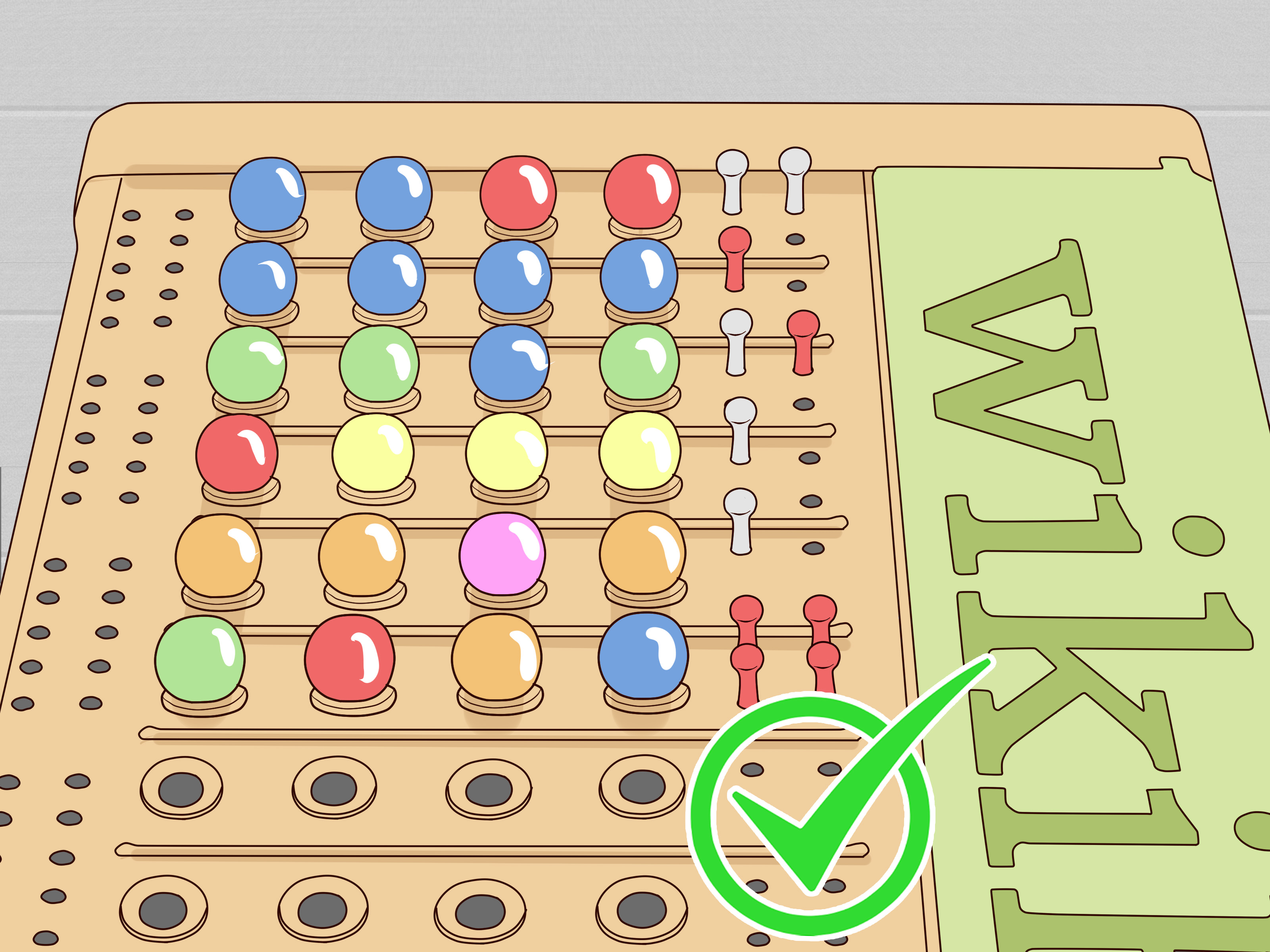
After each guess, the codemaker gives clue pegs:
- One dark or black clue peg means one color is correct and in the correct position.
- One white clue peg means one color is correct but in the wrong position.
The clues do not tell you which exact peg was right. They only tell you how many pegs were right. That is where the game gets spicy.
What You Need to Start
A classic Mastermind set usually includes a game board, colored code pegs, smaller clue pegs, and a hidden area where the codemaker places the secret pattern. Most standard versions use four code spaces and six possible colors, though some editions include variations. In many classic sets, duplicates are allowed, which means the same color can appear more than once in the code.
If your set uses four spaces and six colors with duplicates allowed, there are 1,296 possible secret codes. That is a lot of possibilities for such a small plastic board, which is honestly rude of it.
How to Play Mastermind: 15 Steps
Step 1: Choose who will be the codemaker and who will be the codebreaker
Start by deciding roles. The codemaker creates the hidden code. The codebreaker tries to solve it. In a full match, players usually switch roles after one game so everyone gets a chance to do both jobs. That is only fair. Also, the person who just got crushed usually wants revenge.
Step 2: Review the rules for your specific edition
Before the first round begins, confirm how your version works. Ask three quick questions: How many spaces are in the code? How many colors are available? Are duplicate colors allowed? Some sets also allow blank spaces, while others do not. Agree on the rules before anyone starts pretending “that was implied.”
Step 3: Let the codemaker secretly build the code
The codemaker selects a hidden pattern and places it in the covered area of the board. In the classic game, this is usually a sequence of four colored pegs. The code must remain hidden until the round ends. No peeking, no reflections in spoons, no suspiciously shiny phone screens.
Step 4: Understand what counts as a winning guess
The codebreaker is not just trying to guess the right colors. The goal is to guess the exact colors in the exact order. If the secret code is red, blue, yellow, green, then red, yellow, blue, green is still wrong. Painfully close, but wrong.
Step 5: Make a strong first guess
The codebreaker places four colored pegs in the first row as the opening guess. A good first guess gives you information, not just vibes. Many players like opening with two pairs, such as blue, blue, red, red, because it helps test multiple colors and possible duplicates right away.
Example: Suppose your first guess is red, red, blue, blue. The codemaker gives you two white clue pegs. That means two of those colors are in the code, but both are in the wrong places. You have already learned something valuable.
Step 6: Read the clue pegs carefully
After each guess, the codemaker places clue pegs beside that row. If you get one black clue peg and one white clue peg, that means one peg is exactly right and another peg is the right color in the wrong spot. The remaining pegs in your guess are either the wrong colors or extra duplicates that do not match the secret code.
This is the beating heart of the game. Every clue narrows the field.
Step 7: Remember that clue pegs show totals, not positions
This is the rule beginners mess up most often. If you receive two white clue pegs, the codemaker is not telling you which two pegs were correct colors. They are only telling you that two pegs somewhere in your guess belong in the secret code, but not where you placed them. You must figure out the rest through logic and testing.
Step 8: Use one change at a time when possible
As the codebreaker, resist the urge to change everything at once. If your guess earns useful feedback, tweak one or two variables at a time. That way, you can identify what actually caused the clue results.
Example: If your guess red, red, blue, blue gives one black clue peg, your next move might keep red and blue in play while changing the order or swapping in a new color. If you replace all four pegs, you just threw your evidence out the window.
Step 9: Eliminate impossible colors
Mastermind rewards detective work. If a guess containing green and yellow returns no clue pegs at all, those colors may be completely absent from the code. That lets you focus on the remaining colors. Good players are not just hunting for what works. They are also systematically removing what cannot work.
Step 10: Pay close attention to duplicates
Duplicates change everything. If the secret code contains two red pegs, then guessing only one red will not reveal the full story. Likewise, if you guess three yellows and receive only one clue peg, that suggests yellow appears only once in the secret code. This is where Mastermind shifts from fun puzzle to “I need a whiteboard.”
Step 11: Track order separately from color
Once you know several colors are correct, the next challenge is arranging them properly. Think in layers:
- First, discover which colors are in the code.
- Then, discover where they go.
This mental separation makes the puzzle easier. Do not try to solve color and order in one chaotic leap if the clues are still fuzzy.
Step 12: Work from strongest evidence first
Suppose you get two black clue pegs in one round. That is gold. Start there. Preserve the most promising part of your guess and experiment around it. Strong evidence should guide your next move, not get tossed aside because you felt “inspired.” Inspiration is nice. Logic wins more often.
Step 13: Keep your guesses organized
One of the sneaky skills in Mastermind is visual organization. Always read your previous rows before placing a new guess. Look for patterns:
- Did swapping two pegs improve the result?
- Did adding a new color reduce your clue count?
- Did a duplicate increase the number of matches?
If you treat the board like a notebook instead of just a battlefield, your win rate goes up.
Step 14: Keep guessing until you crack the code or run out of rows
Most classic boards allow around 10 to 12 guesses, depending on the edition. The round ends when the codebreaker guesses the full pattern correctly or uses every available row without solving it. If the code is cracked, the codebreaker wins that round. If not, the codemaker reveals the hidden code and gets to enjoy a brief, dramatic moment.
Step 15: Switch roles and improve your strategy
After one round, switch roles so the former codebreaker becomes the codemaker. This is part of the fun. You learn a lot about the game by doing both jobs. When you become the codemaker, you start noticing what kinds of secret codes are tricky. When you become the codebreaker again, you stop making random guesses and start thinking like a puzzle engineer.
Simple Strategy Tips for Winning More Often
If you want to get better at Mastermind, do not guess randomly. Use these practical habits:
- Open with a structured guess. Two pairs often reveal more than four unrelated colors.
- Test duplicates early. Repeated colors can be part of the answer.
- Change one element at a time. Controlled experiments beat chaos.
- Read clue totals carefully. A single clue can have multiple explanations.
- Think in probabilities. Which remaining arrangement best fits all previous clues?
In other words, Mastermind is less about lucky brilliance and more about disciplined deduction. Very glamorous. Very efficient. Very “I have become spreadsheet, destroyer of ambiguity.”
Common Mistakes Beginners Make
- Forgetting order matters. Right colors in the wrong positions do not win.
- Assuming clue pegs map to exact slots. They do not.
- Ignoring duplicate colors. The secret code might repeat a color.
- Changing too much between guesses. That makes clues harder to interpret.
- Not reviewing earlier rows. Your best evidence is already on the board.
Why Mastermind Still Holds Up
Mastermind has stayed popular because it is fast to learn and surprisingly deep. Kids can play it. Adults can obsess over it. Teachers can use it to introduce logic and pattern recognition. Families can bring it out for a quick game night challenge. It also scratches the same brain itch that makes people love puzzle apps, logic grids, escape rooms, and word games.
At its best, Mastermind feels like a conversation between two brains. One hides a secret. The other slowly corners it with evidence. There is no flashy theme required. Just color, logic, suspense, and the occasional smug grin.
Experiences Related to Playing Mastermind
One of the most interesting things about Mastermind is how differently it feels from the outside versus the inside. From the outside, it looks almost too simple. A few colored pegs, a small board, some tiny clue markers, and that is it. People often assume it will be a light, quick filler game. Then the first serious round begins, and suddenly everyone is leaning forward like they are decoding alien transmissions in a movie.
A typical first experience goes something like this: the codebreaker starts confidently, makes a bold opening guess, and receives a couple of clue pegs. At first, that feels encouraging. Then comes the second guess. And the third. Somewhere around the fourth row, the player realizes the game is not testing memory alone. It is testing patience, discipline, and the ability to avoid self-inflicted confusion. That is usually the moment when Mastermind stops being “that cute peg game” and becomes “okay, now I need to prove I am smarter than four circles of plastic.”
For many players, the most memorable games are the ones where the clues seem almost unhelpful until the very end. You stare at a row with one white peg. Then another row with one black peg. Then a later row with two white pegs and suddenly the entire board starts making sense. It is a satisfying mental click, the same kind of rush people feel when a crossword answer finally lands or when a mystery novel reveals the clue that was in plain sight all along.
Mastermind also creates funny social moments. Codemakers often try to look casual while secretly enjoying the codebreaker’s spiral into overthinking. Codebreakers, meanwhile, tend to become amateur lawyers, re-reading every clue as if they are cross-examining evidence. “Wait, if I got two whites there, and one black here, then that means yellow is innocent. Or guilty. Emotionally guilty.” The table talk can be half the fun.
Another common experience is improvement through repetition. The first few games may feel random, but after several rounds, patterns emerge. Players begin to use more deliberate opening guesses. They learn not to panic when a duplicate color appears. They stop treating each row like a fresh start and begin treating the board like a logic journal. That learning curve is one reason Mastermind has such lasting appeal. You can feel yourself getting sharper.
It is also a surprisingly good game for mixed ages. Kids often enjoy the colors and the hidden-code mystery, while older players appreciate the deduction and strategy. In classrooms or family settings, it can spark discussions about reasoning, probability, and problem-solving without feeling like homework. Sneaky educational game design is still game design, and Mastermind wears it well.
Most of all, playing Mastermind feels rewarding because every win feels earned. You do not usually stumble into victory by accident. You build toward it. Row by row, clue by clue, you reduce uncertainty until the answer has nowhere left to hide. And when you finally place the exact last peg in the exact last slot, the little burst of triumph is very real. It is a tiny detective story with a colorful ending.
Conclusion
Learning how to play Mastermind is easy. Learning how to play it well is where the fun begins. Once you understand the roles, clue pegs, and basic deduction process, each round becomes a satisfying puzzle of elimination and logic. Start with smart guesses, read the clues carefully, and avoid changing too much at once. Before long, you will stop guessing wildly and start cracking codes like it is your part-time job.
If you want a game that is quick to set up, endlessly replayable, and secretly excellent at making everyone at the table feel either brilliant or personally attacked, Mastermind is a classic for a reason.












