
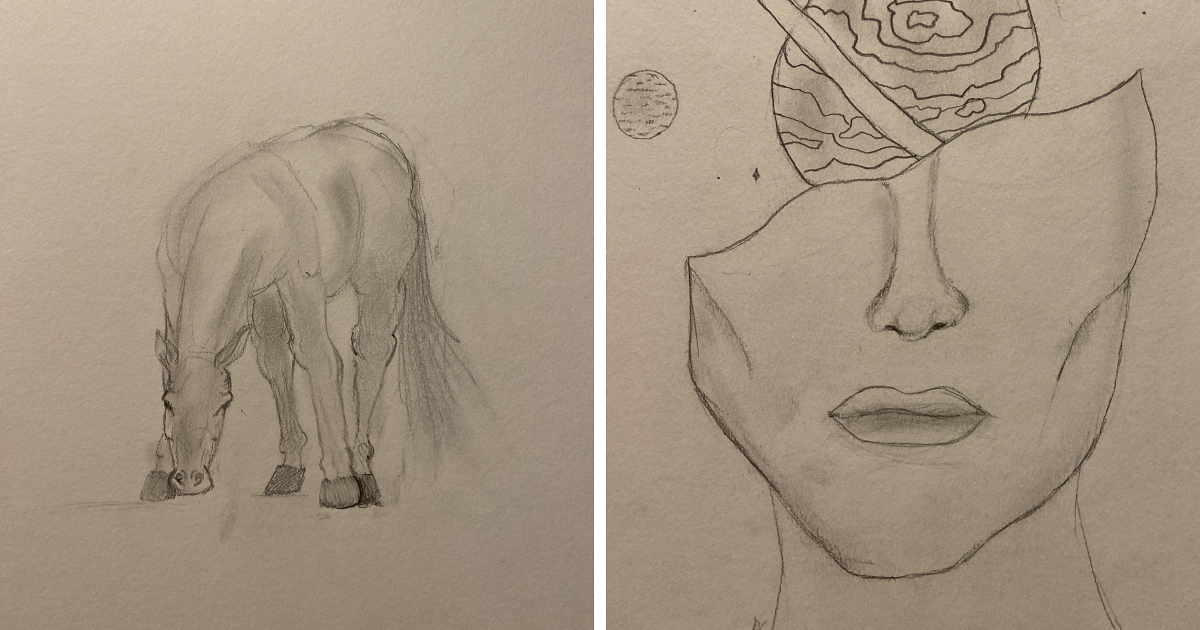
Being 14 is strange. One minute you are confidently shading an eye like a miniature Renaissance master, and the next minute you are staring at a blank page as if it personally insulted your entire bloodline. That, in a nutshell, is the teen artist experience. It is messy, funny, dramatic, and surprisingly brave. And honestly, that is what makes it so good.
This kind of post hits people right in the soft spot because it is not just about pretty drawings. It is about growth. It is about seeing a young artist figure out style, confidence, technique, and voice in real time. A strong teen art portfolio is rarely perfect, and that is exactly why it feels alive. The best work from a 14-year-old artist often carries a special kind of electricity: raw skill mixed with experimentation, ambition, and the fearless decision to try something just a little bigger than your current abilities.
That is what makes a showcase like this fun to read and even more fun to scroll through. You are not just looking at 12 pictures. You are looking at process, risk, personality, and the early signs of artistic identity. Some pieces may be polished. Some may be bold and weird. Some may look like they were made after a long day at school with three pencils, one eraser, and pure stubbornness. All of them matter.
So if you have ever wondered what makes young artists stand out online, or why people love seeing a teenage art collection come together, pull up a chair. Here is a closer look at what makes this kind of work compelling, memorable, and very easy to cheer for.
Why People Love Seeing a Young Artist’s Work
There is something refreshingly honest about teen art. It usually has fewer filters, fewer rules, and a lot less concern about whether it fits neatly into a trend. A 14-year-old artist is often still discovering what they love most: portraits, fantasy creatures, watercolor skies, digital illustration, character design, surreal collages, or maybe all of the above before lunch.
That variety is part of the charm. At this age, artists tend to experiment fast. One week it is graphite realism. The next it is ink doodles, acrylic color studies, and a chaotic but lovable attempt at dramatic lighting. Viewers connect with that energy because it feels real. You can see the learning happening. You can almost hear the internal monologue: “I do not fully know what I am doing yet, but I absolutely plan to find out.”
And that attitude is powerful. Great art is not always about age; it is often about observation. Teen artists notice tiny things adults sometimes skip over: the way a sleeve folds at the wrist, how a pet looks offended for no reason, the oddly cinematic lighting in a bedroom at 5:30 p.m. Young creators often turn everyday details into something emotional, funny, or unexpectedly beautiful.
That is also why a strong teen art portfolio does more than prove technical skill. It shows perspective. It shows how a young artist sees the world. And when that point of view comes through clearly, even a simple sketch can have more personality than a polished piece that says absolutely nothing.
What Makes These 12 Pics Stand Out
If this gallery were sitting in front of us right now, the strongest takeaway would not be “Wow, every piece is perfect.” It would be “Wow, this artist already has range.” Range matters. It tells people that the artist is not just copying what looks cool online but actively building a creative voice.
Good young artist work usually shines in a few specific ways: confident linework, curious composition, emotional expression, and a willingness to revisit ideas from different angles. In other words, the magic is often in the mix of skill and courage. A teen artist does not need to paint like a museum veteran to make an impact. They just need to show intention. If a piece feels like it came from a real thought, memory, obsession, joke, or emotion, viewers notice.
That is why these 12 pictures feel bigger than a casual social post. Together, they create a mini visual story about what it means to be young, serious about art, and just reckless enough to keep improving in public.
The 12 Pics That Say, “Yep, I’m Serious About Art”
Pic 1: The Portrait That Looks Back at You
Every young artist seems to reach a point where faces become irresistible. This piece likely anchors the collection because portraits are where observation and emotion collide. A strong portrait by a 14-year-old artist often reveals more than likeness. It shows patience, attention to value, and the guts to tackle one of the hardest subjects in art: humans, with all their inconvenient symmetry and suspiciously complicated noses.
Pic 2: The Sketchbook Page That Feels Like a Brain Dump in the Best Way
This is the kind of image that tells you the artist does not only make “finished” work. They think on paper. Tiny studies, half-formed ideas, quick expressions, arrows, notes, and experiments all suggest a healthy creative process. And yes, sketchbook pages can be wildly appealing because they show the engine under the hood.
Pic 3: The Fantasy Piece That Refuses To Be Boring
Teen artists often thrive when they get to invent worlds, creatures, costumes, or dramatic scenes that regular life simply does not provide. This kind of piece is where imagination flexes. It says the artist is not only observing the world but remixing it. That is a huge deal for artistic growth.
Pic 4: The Pet Drawing That Somehow Has More Personality Than Some Humans
Drawing animals well is harder than people think. Getting the fur right is one challenge. Capturing the expression is another. But when young artists nail both, the result is instantly lovable. A pet portrait usually reveals close observation and emotional connection, which is a combination audiences adore.
Pic 5: The Color Study That Shows Real Confidence
Maybe it is a painted still life, maybe a sunset, maybe a room with intense shadows. Whatever the subject, color studies reveal whether an artist is starting to understand mood. This is where a young artist moves beyond “nice drawing” territory and starts controlling atmosphere. That is not small progress. That is level-up behavior.
Pic 6: The Character Design That Looks Ready for a Graphic Novel
Character design is where storytelling sneaks into visual art. Clothes, posture, expression, and props all do narrative work. A good teen artist can suggest a whole backstory with one pose and one eyebrow shape. If this gallery includes original characters, that is a strong sign the artist is developing voice, not just technique.
Pic 7: The Messy Piece That Is Secretly Important
Not every standout work is the cleanest one. Sometimes the most memorable piece is a little rough around the edges but full of energy. Maybe the paint is loose. Maybe the proportions wobble a bit. Maybe it looks like it was made at 11:48 p.m. under intense emotional circumstances. And yet it works because it has momentum and feeling.
Pic 8: The Black-and-White Piece With Strong Contrast
Taking away color can be a bold move, especially for a young artist. Suddenly, value, form, texture, and composition have nowhere to hide. If this image is powerful in grayscale, it suggests the artist is learning one of the most important visual lessons of all: clarity beats decoration every time.
Pic 9: The Piece Inspired by Everyday Life
Art does not always need dragons, galaxies, or dramatic rainstorms to be interesting. A desk corner, a hallway, a pair of shoes by the door, or a sibling sitting under terrible kitchen lighting can all become great subjects. This kind of piece proves the artist can find meaning in the ordinary, which is a very grown-up artistic instinct.
Pic 10: The Digital Artwork That Shows Technical Curiosity
Many teenage artists move between traditional and digital art, and that flexibility is a strength. A strong digital piece often reveals control over layers, lighting, texture, and editing without losing the artist’s original personality. The best digital work does not look sterile. It still feels handmade, just with a different toolbox.
Pic 11: The Experimental Piece That Might Divide Opinions
Good. Let it. Some of the most promising art by young creators is the work that makes people pause. Maybe it is surreal. Maybe it is symbolic. Maybe it has an unusual composition or an odd visual metaphor. Not everyone needs to love every piece. A little risk is healthy. Safe art rarely becomes memorable art.
Pic 12: The Favorite Piece, Because It Feels the Most Personal
Usually, the “best” work in a collection is not just the most polished one. It is the piece where skill, subject, and emotion finally click together. That is the image viewers remember after they close the tab. It lingers because it feels like the artist was not merely drawing well. They were saying something.
What This Says About a 14-Year-Old Artist’s Creative Process
A collection like this suggests more than talent. It suggests habits. Behind every strong teen art showcase is usually a stack of invisible work: messy drafts, abandoned ideas, studies of hands that looked like haunted spaghetti, and repeated attempts at getting lighting right. In other words, the finished gallery is the highlight reel, not the whole season.
That matters because one of the biggest myths about young artists is that they are either “naturally gifted” or not. Real creative growth is much less dramatic and much more practical. It comes from making a lot of work, noticing what is weak, fixing what can be fixed, and making more work anyway. It comes from curiosity. It comes from repetition. It comes from being willing to look at a drawing and say, “Okay, this eye is on vacation. We need to bring it back.”
For a 14-year-old artist, the best work usually emerges when technical learning and personal interest finally meet. If the artist loves character design, they improve faster by drawing characters constantly. If they are obsessed with animals, they get better through repetition and genuine attention. The point is not to imitate everything. The point is to follow the subjects that keep pulling you back to the page.
That is also why artistic voice develops earlier than many people realize. It often starts small: certain colors, recurring facial expressions, favorite themes, repeated symbols, dramatic shadows, dreamy backgrounds, sharp humor, or a habit of turning ordinary moments into cinematic ones. Those patterns are not accidents. They are the beginnings of style.
Why Teen Art Feels So Refreshing Online
The internet can be a noisy place for artists. There are trends, tutorials, comparison traps, and enough speed-paint videos to make anyone question their life choices. But a post like “I Am A 14-Year-Old Artist, And Here Is My Best Work” cuts through that noise because it feels direct and human. It is not pretending to be a brand campaign. It is simply someone saying, “Here is what I made. I care about it. Maybe you will too.”
That honesty is magnetic. People love to witness effort, especially when it is paired with vulnerability. Sharing art at 14 takes confidence, even when the artist claims they are “just posting a few sketches.” No one is fooled. Putting your work in front of strangers is brave at any age. Doing it while still figuring out your style, your tools, and your own standards? That is elite-level courage with a side of graphite dust.
It also helps that young artists often bring a fresh visual language to the table. They are influenced by animation, games, social media aesthetics, comics, fine art, and meme culture all at once. Weirdly, that mash-up can produce work that feels surprisingly modern. It may not fit a single category, but that is part of its appeal. It feels current because it is not trying too hard to look “important.”
Advice for Any Young Artist Building a Portfolio
If this gallery inspires other teen creators, that is one of the best outcomes. The next step is not perfection. It is consistency. Make more work. Keep the sketchbooks. Save the digital drafts. Revisit old ideas. Try new materials. Learn composition. Study light. Notice what kinds of pieces make you lose track of time. That is often where your strongest art lives.
It also helps to think of a portfolio as a story rather than a random pile of decent images. A strong art portfolio for teens should show variety, yes, but it should also show intention. Include work that feels connected by mood, curiosity, skill growth, or subject matter. Show that you can draw, but also show what you care about.
And presentation matters. A great drawing photographed badly can lose some of its magic. Clean crops, decent lighting, thoughtful ordering, and short descriptions can make a huge difference. You do not need a museum wall or a dramatic spotlight. You just need to make it easy for people to see the work clearly.
Most importantly, do not wait to feel fully ready. Artists rarely do. Growth happens while making the work, not before it. The internet may reward polished results, but real artistic development comes from the awkward middle, the experiments, the revisions, and the quiet stubbornness to keep going.
The Experience of Being a 14-Year-Old Artist
Being a 14-year-old artist is a funny mix of confidence and chaos. Some days you feel unstoppable. You finish a drawing, lean back, and think, “Yes, this is the one. This belongs in the hall of fame.” Then you look at it again the next morning and wonder why the hand has six emotional support fingers. That emotional roller coaster is not a bug in the creative process. It is basically the creative process.
At this age, art becomes more than a hobby. It starts feeling like a private language. When school is loud, schedules are packed, and everyone seems to be asking what you want to do with your life before you have even finished your snack, art becomes a place to think. A sketchbook can be a laboratory, a diary, a joke folder, a plan for the future, and a rescue boat on bad days.
Young artists also learn something important very early: improvement is not always obvious while it is happening. Sometimes you only notice progress when you flip back three months and realize your old drawings looked like they were assembled during a mild earthquake. That is actually encouraging. It means the eye is getting sharper. You are seeing more. You are demanding more from yourself.
There is also a special thrill in making something that surprises people. Maybe friends knew you doodled in the margins, but they did not realize you could paint light, design characters, or build a full composition with mood and story. Sharing your best work online or in a gallery post can feel terrifying, but it can also be the moment everything shifts. Suddenly, people are not just saying, “Oh, that’s nice.” They are saying, “Wait, you made this?”
That reaction means a lot when you are young. It does not just boost confidence. It confirms that the hours mattered. The practice mattered. The weird obsession with getting eyelashes right mattered. Even the failed pieces mattered, because they were part of the climb.
And maybe that is the real reason a post like this resonates. It is not just about 12 pictures. It is about a young person taking their creativity seriously. It is about effort becoming visible. It is about the exciting stage where talent is no longer a vague possibility but something you can actually see taking shape. That stage is messy, brave, and full of potential. In other words, it is exactly the kind of art story people love to follow.
Conclusion
“I Am A 14-Year-Old Artist, And Here Is My Best Work (12 Pics)” is the kind of title that pulls people in fast, but the real reason it works is deeper than curiosity. It invites viewers to witness growth, personality, and creative risk. A strong young artist showcase is not just visually impressive; it is emotionally engaging because it captures a person in the middle of becoming.
That is what makes teen art so compelling. It is skill in motion. It is imagination learning how to speak more clearly. It is the beginning of a portfolio, a voice, and maybe even a future creative career. Whether the work is polished, experimental, funny, dramatic, or all four at once, the most memorable part is the honesty behind it. And that honesty is what keeps people scrolling, sharing, and rooting for the artist long after they have seen the last pic.














