
Note: This article discusses lawful repair, interoperability, and research at a high level. It does not include flashing instructions or other operational details for modifying safety-adjacent hardware.
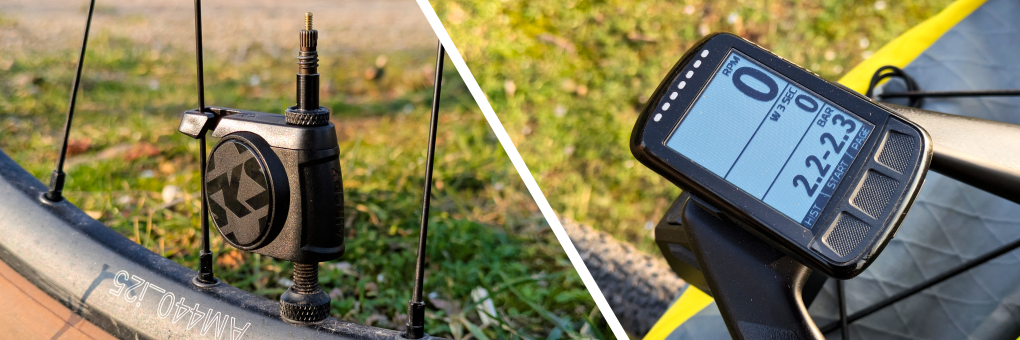
There are two kinds of bike gadgets in this world: the ones you install, forget, and happily use for years, and the ones that make you mutter, “Why does this thing need a proprietary app just to tell me my tire is a little sad?” The SKS AIRSPY sits right in the middle of that debate. On paper, it is a clever idea: a compact tire pressure sensor that watches your pressure in real time and sends readings to a phone or a compatible bike computer. In practice, it also lands squarely in a modern hardware dilemma. Riders love the sensor, but tinkerers love the hardware inside the sensor just as much.
That is why reverse-engineering SKS AIRSPY tire pressure sensors for custom firmware has become such a fascinating niche topic. It is not just about hacking a gadget for bragging rights. It is about interoperability, long-term ownership, cleaner data workflows, and the old-fashioned belief that if you bought a device, you should have some say in how it behaves. That belief gets even stronger when the hardware already appears capable of speaking standards-friendly wireless languages, but the shipping firmware keeps the device in a branded walled garden.
And yes, there is a certain irresistible charm to opening up a tiny bike sensor and discovering that the real villain was not physics, radio design, or tire pressure itself. It was software politics. Classic.
What the SKS AIRSPY Actually Is
The AIRSPY line is essentially a bicycle-focused tire pressure monitoring system. SKS markets it as a real-time pressure sensor for riders who want live pressure readings, alerts, and easier pressure management from a smartphone or Garmin-compatible workflow. In the U.S. market, the AIRSPY TL is described as a mobile digital pressure gauge for tubeless setups, with real-time pressure readout, smartphone and Garmin compatibility, and measurement accuracy up to 120 psi. That alone explains why riders are interested: pressure is not a cosmetic number. It changes ride feel, grip, comfort, rolling resistance, and flat risk.
That last point matters more than many riders admit. Too little pressure can increase the chance of pinch flats, tire wear, and drag. Too much pressure can make a bike ride harsh and reduce traction. Pressure is not just a “pump it and forget it” value anymore. Modern tire-pressure thinking is much more dynamic, with surface type, rider weight, speed, casing, and rim setup all affecting what “optimal” really means. That makes continuous monitoring genuinely useful, especially for gravel, mountain, endurance road, and riders who obsess over setup details in a perfectly healthy and totally not compulsive way.
Why Reverse-Engineer a Tire Pressure Sensor?
The short answer is custom firmware freedom. The longer answer is that reverse-engineering projects like this usually happen when hardware owners suspect the product is more capable than the factory software allows. Public community work around the AIRSPY suggests exactly that: the stock sensor ecosystem is functional, but limited by proprietary communication choices. For many technically minded riders, that creates a familiar question. If the hardware already includes a capable radio SoC and a dedicated pressure-sensing front end, why should it be locked to a narrow software path forever?
That question becomes even more reasonable when you realize how often modern electronics outlive their original apps. A device can still have perfectly good batteries, sensors, radio hardware, and mechanical parts, while its official app support becomes flaky, outdated, or annoyingly narrow. Reverse engineering, at its best, is not vandalism. It is a way of preserving value, improving interoperability, and extending the useful life of hardware that might otherwise become shelf decor.
Interoperability Is the Real Prize
In the AIRSPY story, the most attractive goal is not some cartoonish “unlock everything” fantasy. It is interoperability. Public community firmware work has focused on making the sensor behave more like an open ANT+ tire pressure device profile rather than a product that depends on a single branded software path. That matters because cyclists often mix devices from different ecosystems. One rider may want pressure on a Garmin screen. Another may want it on a different head unit. A third may want structured data for logging and experimentation. The stock experience can feel narrow where the hardware itself does not have to be.
What Public Research Reveals About the Hardware
The public record around the AIRSPY is surprisingly helpful. FCC filings show the AIRSPY as a 2.4 GHz device, with documentation and internal photos available through the certification trail. Community analysis built on that public material has identified a board architecture centered on two major chips: a Nordic nRF52832 for wireless communications and a TPMS-oriented sensor SoC from the NXP/Freescale FXTH87 family. That pairing makes technical sense. One chip handles the wireless and general control side, while the other specializes in pressure-related sensing duties.
This is where the project gets genuinely interesting. The nRF52832 is not some mystery brick. It is a well-known low-power SoC with support for Bluetooth Low Energy, ANT, and other 2.4 GHz applications, built around an ARM Cortex-M4F core. In other words, the radio/control side of the AIRSPY is based on a platform that embedded developers already understand pretty well. That lowers the barrier to research, at least conceptually. It does not make the overall job easy, but it does make it plausible.
The Two-Chip Story Is the Whole Story
If you want to understand why reverse-engineering SKS AIRSPY tire pressure sensors for custom firmware is appealing, focus on the division of labor. The pressure-sensing side is not just one bare transducer hanging off a wire. Community documentation indicates that the TPMS-oriented chip is involved in measuring pressure, temperature, and voltage, while also contributing motion or wake-related behavior. Meanwhile, the Nordic chip is the natural place for implementing more flexible communications and device behavior.
That means a custom firmware effort is not simply “rewrite the pressure math and call it a day.” It is about understanding how one chip talks to the other, how raw readings are packaged, how wake and sleep states are managed, how battery life is preserved, and how pressure data becomes something a cycling computer can use reliably. Tiny sensors are never as simple as they look. They are basically little negotiations between physics, radio budgets, and battery chemistry, all happening inside something smaller than many cyclists’ snack wrappers.
Why ANT+ Compatibility Matters So Much
One of the biggest motivations behind community firmware is the desire to escape proprietary app dependency. Public project material describes the stock AIRSPY behavior as proprietary, while the custom effort aims at a draft or non-certified ANT+ TPMS-style profile that more cycling devices can understand. That is a big deal because ANT has long been part of the cycling sensor landscape. Garmin’s own support materials for tire-pressure monitoring in other product categories also describe ANT as the connection method for TPMS sensors, which makes the protocol choice feel familiar rather than exotic.
At the same time, the interoperability dream is not completely tidy. Garmin forum discussions have noted that tire-pressure support in ANT+ has historically been awkward, with references to TPMS-related support not being fully ratified in the same clean way as heart rate or cadence profiles. So the custom firmware story is not just “switch on ANT and celebrate.” It is also about matching real-world device expectations, handling edge cases, and living in the fuzzy zone between standardization and vendor-specific implementation.
The Hard Part Is Not Writing Code
People outside embedded work often imagine custom firmware as a coding problem. That is only partly true. In projects like this, the hardest part is usually understanding the existing behavior well enough to replace it without breaking what matters. Public hardware notes around the AIRSPY describe the on-board communications between chips as a compact sensor data exchange carrying values such as pressure, temperature, voltage, and status information. Once that is understood, firmware development becomes more realistic. Before that, you are mostly doing detective work with extra solder fumes.
Sensor Decoding Comes First
Reverse engineering starts with identifying which bytes mean what. Pressure data has to be decoded correctly, temperature needs sensible interpretation, battery state must be tracked, and status flags must be handled without wishful thinking. A wrong assumption here does not merely create ugly graphs. It can create false confidence. For a tire pressure sensor, that is the kind of mistake that turns “neat project” into “why does this ride feel weird?” very quickly.
Power Management Is the Silent Boss Fight
Battery life is another huge challenge. These sensors are supposed to be small, light, weather-tolerant, and low-maintenance. That means any custom firmware has to respect wake logic, sleep behavior, radio duty cycles, and measurement cadence. Community analysis suggests the sensing side has an important role in waking or coordinating the radio side. That tells you everything you need to know: even if the radio firmware becomes better, battery life can become worse if the custom behavior is careless. Plenty of embedded projects look brilliant on a bench and ridiculous after three rides.
Validation Matters More Than Cleverness
A fancy protocol implementation is worthless if the pressure reading drifts, lags, or behaves unpredictably across temperature changes and riding conditions. A responsible firmware effort has to treat validation as part of the engineering, not the boring paperwork after the fun. Pressure values need comparison against known-good gauges. Temperature behavior needs sanity checks. Slow leaks and low-voltage warnings need realistic interpretation. The benchmark is not “the graph updates.” The benchmark is “the graph is trustworthy enough that a rider can act on it.”
What Responsible Custom Firmware Should Prioritize
First, measurement honesty. If the sensor cannot guarantee a condition, it should not imply it. Pressure, temperature, and battery reporting should be conservative and clearly defined.
Second, protocol simplicity. Overambitious features are fun until they create pairing bugs, timeouts, or phantom values. Reliability beats novelty in a device this small.
Third, battery discipline. A sensor that burns through a cell chasing “live” updates every few seconds is not a victory. It is a very expensive blinking toy.
Fourth, safe deployment habits. Modified firmware belongs on test hardware and in controlled validation first, not on the bike you trust during a long descent or remote gravel ride.
Fifth, documentation. Good community firmware is more than code. It explains assumptions, limitations, known issues, and the conditions under which data should or should not be trusted.
Legal, Practical, and Ethical Realities
Reverse engineering occupies a complicated but important space. Lawful repair, interoperability, and security research are legitimate goals, but they do not erase warranty concerns, safety risks, or the possibility of making a device less dependable than stock. The AIRSPY is not a toy LED badge. It is a sensor that influences riding decisions. That means the ethics are simple: if you modify it, you own the consequences. Public embedded-security guidance also makes a broader point here. Tools like Ghidra and JTAG workflows are powerful, but secure update practices, signing, and access control still matter. Custom firmware is freedom, yes, but freedom comes with a test plan.
The Bigger Lesson Behind the AIRSPY Story
The most interesting thing about this whole topic is not that someone managed to study a small bike sensor. It is that the project highlights how much value modern hardware leaves on the table when vendors choose proprietary lock-in over wider interoperability. The AIRSPY hardware appears to be much more capable than a narrow, app-first experience suggests. That is not unusual in consumer electronics. It is practically the business model.
What makes the AIRSPY case memorable is that the community effort feels practical rather than theatrical. It is not about turning a tire sensor into a crypto miner, a toaster, or a tiny weather station that also somehow tweets. It is about making the device do the job many riders assumed it should do in the first place: report tire pressure cleanly, reliably, and in a way that works with the rest of their gear.
Practical Experiences From the Bench and the Ride
One of the most relatable experiences in projects like reverse-engineering SKS AIRSPY tire pressure sensors for custom firmware is discovering that the glamorous part lasts about fifteen minutes. At first, it feels like a perfect hacker story: a clever bike sensor, a capable radio chip, a proprietary limitation begging to be challenged, and a neat goal involving open data and broader device compatibility. Then reality arrives wearing steel-toe boots. Suddenly the project is less “freedom!” and more “why is this tiny board making me question my life choices at 11:40 p.m. on a Wednesday?”
That experience is normal. Community hardware work usually begins with excitement and immediately transitions into patience. People expect the biggest breakthroughs to come from writing code, but the emotional roller coaster usually starts much earlier. You spend time just understanding what you are looking at. You compare public filings, stare at board photos, read chip documentation, and realize that even identifying the architecture clearly is a victory. The smallest insight feels enormous because every little clue removes one more layer of mystery.
Another common experience is learning that “wireless” projects are never only wireless projects. They are power projects, signal-integrity projects, data-format projects, and sometimes weather-proofing projects disguised as a fun weekend challenge. A tire pressure sensor lives in an ugly little world full of vibration, dirt, moisture, temperature shifts, and user expectations that border on supernatural. Riders want it to be light, accurate, invisible, long-lasting, quick to connect, and impossible to break. In engineering terms, that is what experts call “a lot.”
There is also a funny psychological shift that happens once data starts making sense. Early on, people chase the thrill of getting any response from the device. Later, they become picky in the best possible way. A reading is no longer exciting just because it exists. It has to be stable, believable, and repeatable. That is the moment a hobby hack starts maturing into engineering. You stop asking, “Can I make it talk?” and start asking, “Can I trust what it says after an hour, after a temperature swing, after a small leak, after a rough ride, and after the battery is no longer fresh?” Those are much better questions.
Builders also tend to report that the real satisfaction comes from compatibility, not from rebellion. Sure, it is fun to outsmart a locked-down gadget. But the deeper reward is watching a device become easier to live with. When a sensor fits into a standard-ish workflow, works with the rest of a rider’s gear, and stops demanding a special software ritual, the project starts to feel worthwhile. The hardware becomes less precious and more useful. That is the dream.
And finally, nearly everyone who spends serious time on projects like this comes away with more respect for boring things: documentation, validation, battery budgets, and failure modes. The breakthrough moment is not the flashy one. It is the quiet realization that the sensor behaves predictably, reports sane numbers, and does not need constant babysitting. In the world of embedded bike tech, that is about as romantic as it gets.
Conclusion
Reverse-engineering SKS AIRSPY tire pressure sensors for custom firmware is compelling because it sits at the crossroads of open hardware, embedded systems, and real-world cycling utility. Public research suggests the hardware is built on a genuinely capable foundation, with a known wireless SoC and a dedicated TPMS-oriented sensing platform. That makes the project technically credible. But credibility is not the same thing as simplicity.
The real work is not just swapping one firmware image for another. It is understanding the sensor pipeline, preserving battery life, validating pressure data, and building interoperability without sacrificing trust. Done responsibly, community firmware can turn a narrowly scoped gadget into a more durable, standards-friendlier tool. Done carelessly, it can turn a useful sensor into a very expensive lesson in why validation exists.
In other words, the AIRSPY story is not just about one bike accessory. It is about a larger truth in modern electronics: users increasingly want ownership that includes repair, transparency, and choice. And when hardware is already capable, custom firmware becomes less of a stunt and more of a conversation about what ownership should mean in the first place.













