
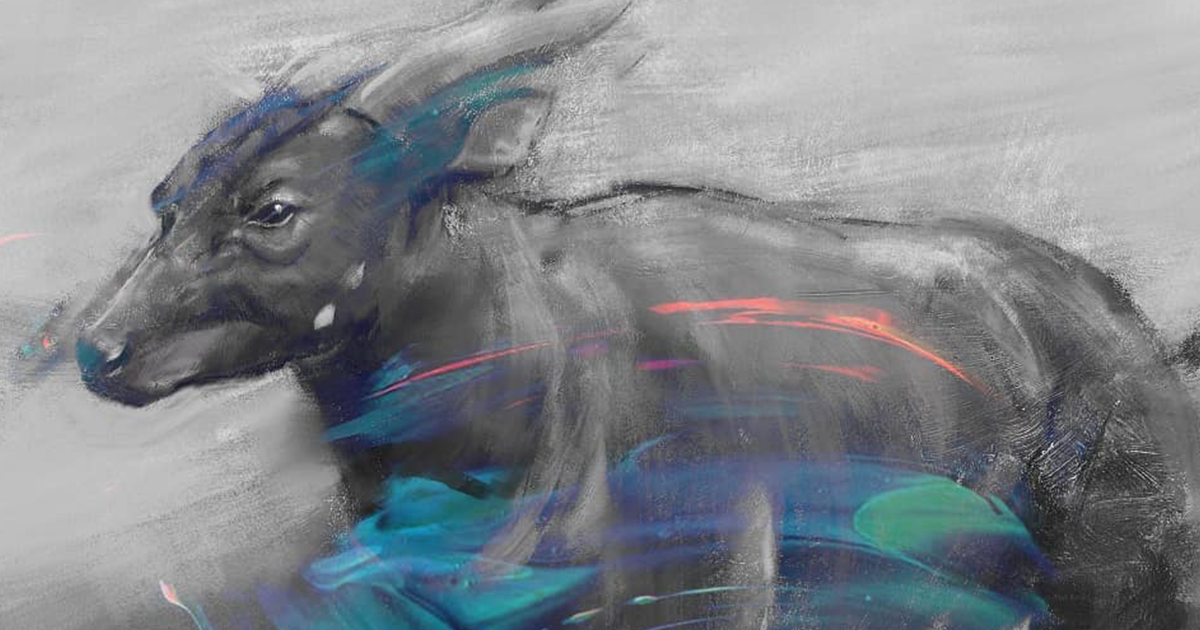
In 2019, I made a promise that sounded romantic, noble, and only slightly unhinged: I would draw one endangered animal every single day. Not “whenever inspiration strikes.” Not “after coffee, if the Wi-Fi behaves.” Every day. For a whole year.
At first, it felt like a cute creative challenge. A sketchbook, a pencil, a growing list of animals, and the wildly optimistic belief that I would never again be tired. By February, reality had joined the chat. Some nights I was drawing scales at 11:48 p.m. with one eye open. Some mornings I woke up to find yesterday’s pangolin looking like a pinecone that had received bad news.
But something changed as the project went on. Drawing endangered animals forced me to slow down and really see them. A vaquita was no longer just “a rare porpoise.” It became a shy, soft-faced little marine mammal with dark eye patches and a future balanced on the edge of a fishing net. A red panda became more than internet cuteness in scarf form. A Javan rhino became a living tank with fewer relatives than many people have unread emails.
This daily wildlife illustration project became a year-long love letter to creatures that deserve more than a footnote in a conservation report. Here are 25 of my best endangered animal drawings from that year, along with the stories, shapes, colors, and conservation lessons hiding behind the fur, feathers, shells, horns, flippers, whiskers, and occasionally ridiculous ears.
Why Drawing Endangered Animals Changed The Way I See Wildlife
When people talk about endangered species, the language can become heavy fast: habitat loss, illegal wildlife trade, extinction risk, population decline, climate change, bycatch, fragmentation. All of those words matter. They are real. They are urgent. But they can also sound distant, as if the animals live inside spreadsheets instead of forests, oceans, rivers, grasslands, and muddy little burrows.
Art sneaks past that distance. A drawing can make a viewer pause long enough to notice the curve of an elephant’s trunk, the strange elegance of a condor’s wings, or the little “smile” of an axolotl. Conservation art does not replace science, policy, habitat protection, or fieldwork, obviously. A watercolor cannot stop a chainsaw. A colored-pencil tiger cannot arrest a poacher, although I would watch that animated movie immediately. But wildlife illustration can help people care, and caring is often the first door people walk through before they act.
For this project, I studied animal anatomy, read conservation profiles, compared photographs, and tried to capture not just what each animal looked like, but what made it unforgettable. The goal was not to create perfect scientific plates. The goal was to make endangered animals feel personal, present, and impossible to ignore.
25 Of My Favorite Endangered Animal Drawings From 2019
1. Vaquita
The vaquita was one of the hardest drawings emotionally. It is tiny, shy, and almost ghostlike, living only in the northern Gulf of California. With its dark eye patches and small curved mouth, it looks like the ocean invented a gentle cartoon character and then forgot to protect it. The biggest threat to the vaquita is entanglement in gillnets, especially illegal nets set for totoaba. I kept the drawing simple: soft grays, delicate shading, and a lot of empty blue space around it. That empty space felt honest.
2. Amur Leopard
The Amur leopard is elegance with claws. Its thick winter coat, pale rosettes, and long tail make it a dream subject for an artist and a nightmare for anyone impatient with spots. I learned quickly that leopard spots are not dots; they are tiny irregular islands with personalities. This rare cat survives in the temperate forests of the Russian Far East and northeast China, where habitat protection and prey recovery are essential. My drawing focused on the eyes: calm, alert, and absolutely not interested in my deadlines.
3. Javan Rhino
Drawing a Javan rhino is like drawing a prehistoric boulder that has made several wise life choices. Their armor-like skin folds are wonderful, complicated, and extremely humbling. With only a small population remaining in one protected area in Java, the Javan rhino represents one of the most fragile survival stories on Earth. I used heavy lines for the plates of skin and softer shading around the eye to show that this “tank” is still a vulnerable living being.
4. Hawksbill Sea Turtle
The hawksbill sea turtle has one of nature’s most beautiful shells, which unfortunately helped make it a target for the tortoiseshell trade. Its sharp beak, patterned scutes, and graceful flippers made the drawing feel almost like stained glass. I placed mine among coral shapes because hawksbills are closely linked to reef ecosystems. The trick was making the shell detailed without turning it into a decorative handbag, which, historically speaking, is exactly the wrong vibe.
5. North Atlantic Right Whale
This whale is enormous, gentle, and still in trouble from vessel strikes and fishing gear entanglement. I drew it from below, letting the body become a huge dark silhouette with pale callosities on the head. The scale was the challenge. How do you show an animal that can grow longer than a school bus on a page smaller than a pizza box? I used tiny fish, wide negative space, and slow, sweeping lines to suggest mass and movement.
6. California Condor
The California condor is a comeback story with a wingspan. Its population once dropped to just a handful of birds, but captive breeding and reintroduction helped bring condors back to western skies. Lead poisoning remains a major threat, but the species proves that conservation can work when people refuse to give up. I drew mine mid-glide, wings spread like a dark cathedral. The bald head was tricky; condors are majestic from far away and slightly “ancient librarian” up close.
7. Axolotl
The axolotl looks like it was designed by a committee of children, scientists, and fairy-tale swamp spirits. External gills? Yes. Permanent baby face? Absolutely. Regeneration superpowers? Why not. Wild axolotls are critically endangered in their native Xochimilco habitat in Mexico, threatened by pollution, urban expansion, and invasive species. I made this drawing playful but not silly, using pinks and soft browns to show both the famous captive look and the wilder, earthier reality.
8. Black-Footed Ferret
The black-footed ferret has the face of a tiny masked bandit and the conservation history of a miracle. Once thought extinct, it was rediscovered in Wyoming and became the focus of a major captive breeding and reintroduction program. Because it depends heavily on prairie dog colonies, protecting this ferret also means protecting a whole grassland community. My drawing leaned into its curious posture: long body, little legs, big “Who, me?” energy.
9. Red Panda
Red pandas are dangerously cute. So cute, in fact, that you have to fight the urge to draw them as cinnamon rolls with tails. They are endangered due to habitat loss, fragmentation, poaching, and human disturbance across parts of the Himalayas and southwestern China. I used warm reds, rusty browns, and a curled tail composition to make the drawing cozy while still reminding viewers that cute does not mean safe.
10. Golden Lion Tamarin
The golden lion tamarin is basically a tiny forest monarch with a mane that says, “I have arrived, please admire responsibly.” Native to Brazil’s Atlantic coastal forest, it once fell to very low numbers but has benefited from intensive conservation work. This was one of my favorite color studies of the year. The orange-gold fur almost glows, and the small black face gives the expression a wonderfully serious contrast, like a judge wearing a fabulous wig.
11. Pangolin
Drawing a pangolin is an exercise in patience, because scales. So many scales. Pangolins are often described as the world’s most trafficked mammals, hunted for their meat and scales despite legal protections. I drew mine curled into a protective ball, which is their natural defense against predators but tragically useless against humans. The finished piece looked quiet and defensive, which felt right. Sometimes the most powerful pose is not a roar. Sometimes it is a curl.
12. Tiger
Tigers are iconic, which makes them surprisingly intimidating to draw. Everyone knows what a tiger looks like, so if the stripes go wrong, the whole thing becomes “large orange housecat with career ambitions.” Tigers face pressure from habitat loss, poaching, prey decline, and human-wildlife conflict. I chose a close-up portrait, using the stripes almost like a map of tension across the face. The eyes carried the piece: focused, bright, and uncomfortably aware of us.
13. Orangutan
The orangutan drawing was all about hands and eyes. Orangutans are intelligent, slow-growing great apes whose survival is tied to the forests of Borneo and Sumatra. Habitat loss, especially from logging, agriculture, and palm oil expansion, has pushed them into severe decline. I drew one holding a branch with long, thoughtful fingers. The expression was not sad exactly; it was observant, which somehow felt worse. It looked like the orangutan understood the assignment better than we did.
14. Mountain Gorilla
The mountain gorilla gave me a rare chance to draw hope. Thanks to long-term conservation work, its population has increased enough for its status to improve from critically endangered to endangered. That does not mean the danger is gone, but it does show that careful protection, veterinary care, anti-poaching work, and community involvement can change a species’ future. I drew a silverback in soft graphite, letting the strength come from stillness rather than drama.
15. Asian Elephant
Asian elephants are intelligent, social, and ecologically important, but they are threatened by habitat fragmentation, human-elephant conflict, and poaching in some areas. Their trunks are expressive, almost like a fifth limb with emotional subtitles. I drew an older female with softened edges and dust on her skin. Elephants are difficult because every wrinkle seems to have a biography. Mine looked gentle, tired, and wise enough to ignore most of Twitter.
16. African Forest Elephant
The African forest elephant is smaller than the savanna elephant, with straighter tusks and a deep relationship with tropical forests. By spreading seeds, it helps shape entire ecosystems. Sadly, it has suffered major declines from ivory poaching and habitat loss. For this illustration, I used dense greens and shadowy forms, letting the elephant emerge from the forest rather than stand in full view. It felt appropriate for an animal that is powerful but often hidden.
17. Sumatran Rhino
The Sumatran rhino may be small by rhino standards, but “small rhino” is still a magnificent phrase. It is hairy, ancient-looking, and critically endangered, with scattered populations under intense pressure. I loved drawing the fuzzy ears and textured skin. The final portrait looked like a creature from another era, which is partly true. Rhinos have been on Earth for millions of years; losing them now would be like deleting a whole chapter from the planet’s autobiography.
18. Snow Leopard
The snow leopard is a masterclass in subtle color. It is not white, not gray, not beige, but some magical mountain-cloud mixture of all three. Threats include habitat loss, prey decline, retaliatory killing, and climate-related changes in high mountain ecosystems. I drew it stepping across a narrow rock ledge, tail floating behind like a scarf with opinions. The paws were enormous, which made the animal look both powerful and slightly overdressed for winter.
19. Saola
The saola, sometimes called the “Asian unicorn,” is one of the most mysterious large mammals in the world. Native to the Annamite Mountains of Vietnam and Laos, it is rarely seen and seriously threatened by snaring and habitat pressure. For my drawing, I focused on the long parallel horns and delicate facial markings. It felt less like drawing a famous animal and more like sketching a rumor whispered by the forest.
20. Kakapo
The kakapo is a flightless, nocturnal parrot from New Zealand with a round body, mossy green feathers, and the general appearance of a bird who has read the snack menu twice. Once devastated by introduced predators, it survives through intensive management on predator-free islands. I drew it front-facing because the kakapo’s face has irresistible “I did not knock over that plant” energy. This was one of the most joyful pieces in the series.
21. Philippine Eagle
The Philippine eagle is dramatic in the best possible way. Huge crest, fierce eyes, powerful beak: it looks like a royal portrait subject that might also steal your lunch. This critically endangered raptor is threatened mainly by deforestation and habitat fragmentation. In the drawing, I used sharp ink lines around the crest feathers and softer shading on the chest. It needed to feel regal without becoming a fantasy dragon, although it was close.
22. African Painted Dog
African painted dogs are social, intelligent hunters with coats that look hand-painted by a very bold abstract artist. They are endangered due to habitat fragmentation, conflict with humans, disease, and shrinking wild spaces. I drew a pair instead of one individual because their pack life is central to who they are. The irregular patches were fun, but the ears stole the show. Nature gave them satellite dishes and said, “Good luck out there.”
23. Whooping Crane
The whooping crane is tall, elegant, and impossible to draw without feeling like you should improve your posture. Once reduced to a tiny wild population, it has become another conservation symbol of persistence. Wetland protection, captive breeding, and migration management have all played roles in its survival. I used a clean white body, black wing tips, and a red crown as the main visual notes. Minimalism suited it; cranes do not need accessories.
24. Blue Whale
The blue whale is the largest animal ever known to have lived, which makes drawing it on paper feel faintly ridiculous. Commercial whaling caused devastating declines, and today blue whales remain protected while facing threats such as vessel strikes, entanglement, ocean noise, and changing food availability. I drew a long, quiet blue form moving through deep water. The challenge was not detail but scale. The whale needed to feel less like an object and more like a weather system with a heartbeat.
25. Monarch Butterfly
The monarch butterfly added a different kind of delicacy to the project. Its migration is one of nature’s great spectacles, but its populations have been hurt by habitat loss, pesticide use, climate stress, and the decline of milkweed. The wings were pure pleasure to draw: orange panes divided by black lines, like tiny stained-glass windows that learned to fly. Ending the series with a butterfly reminded me that endangered animal art does not always have to roar. Sometimes it flutters.
What These 25 Drawings Taught Me About Conservation
The first lesson was that “endangered” is not a single story. Some animals are endangered because forests are being cut into smaller and smaller pieces. Some are caught accidentally in fishing gear. Some are hunted for body parts, fashion, food, or false medicine. Some are losing nesting beaches, prey, migration routes, or clean water. Some, like the California condor and black-footed ferret, show how close extinction can come before people manage to pull a species back from the edge.
The second lesson was that every endangered species is connected to a place. You cannot save the red panda without bamboo forests. You cannot save the hawksbill turtle without reefs and nesting beaches. You cannot save the black-footed ferret without prairie dogs and grasslands. You cannot save orangutans without forests large enough for them to live, feed, nest, and raise young. Wildlife conservation is never only about the animal in the portrait. It is also about the home outside the frame.
The third lesson was that hope must be specific. “Save animals” is a nice phrase, but it is too soft around the edges. Real hope looks like safer fishing gear, protected corridors, anti-poaching patrols, wildlife-friendly farming, better shipping rules, restored wetlands, responsible consumer choices, Indigenous and local community leadership, and science that keeps asking better questions. Hope is not a poster. Hope is a work schedule.
How I Chose The Animals For The Drawing Challenge
I tried to balance famous endangered animals with less familiar ones. Tigers and elephants matter, of course, and their recognition can bring attention to conservation. But I also wanted viewers to meet animals that rarely become plush toys or documentary celebrities. The saola, axolotl, pangolin, and vaquita deserve attention even if they do not have the public-relations budget of a tiger.
I also chose animals from different habitats: oceans, tropical forests, temperate forests, deserts, grasslands, wetlands, mountains, rivers, and coral reefs. This made the project visually richer and helped show that biodiversity loss is not happening in one faraway place. It is global. It is local. It is underwater, overhead, underfoot, and sometimes hiding in plain sight.
Finally, I chose animals that challenged me technically. Fur, feathers, scales, shells, horns, wet skin, wrinkled skin, translucent fins, patterned wings, and reflective eyes all require different drawing decisions. The project became a free art school taught by endangered animals, and the tuition was mostly sleep.
Of Personal Experience: What A Year Of Drawing Endangered Animals Felt Like
By the time the project reached its middle months, drawing endangered animals had become part of my daily rhythm. Some people journal. Some meditate. Some count steps. I apparently stared at reference photos of rare mammals and whispered, “Why do you have so many toes?” at midnight. It was strange, funny, exhausting, and deeply grounding.
The most surprising experience was how attached I became to animals I had never seen in real life. Before the project, I knew about many endangered species in the way most people do: vaguely, sympathetically, and usually after seeing a sad headline. But drawing requires a different level of attention. You cannot sketch a condor wing without noticing the architecture of flight. You cannot draw an elephant’s face without respecting the landscape of wrinkles around the eye. You cannot draw a pangolin quickly unless you are willing to lie, and the pangolin, frankly, has suffered enough.
Some days the research changed the mood of the drawing completely. I might begin with the intention of making a cute red panda illustration, then read about habitat fragmentation, disease risks from domestic dogs, and shrinking bamboo forests. Suddenly the cuteness felt more complicated. I still wanted the drawing to be charming, because charm invites people in, but I also wanted it to carry weight. That balance became one of the biggest creative challenges: how to make art that is beautiful without making the crisis look decorative.
There were also days when the discipline itself was the victory. Not every drawing was brilliant. Some were stiff. Some were overworked. One tiger looked like it had just received confusing tax advice. But finishing one animal each day taught me that creativity is not always lightning from the sky. Sometimes creativity is showing up with a pencil, a tired brain, and the willingness to draw another feather even though there are clearly too many feathers and birds should consider simplifying their brand.
The project also changed how I talked to other people about conservation. Instead of beginning with statistics, I could begin with a picture. “This is a vaquita.” “This is a saola.” “This is a black-footed ferret.” A drawing gave people a doorway into the conversation. They asked questions. They remembered names. They told me which animal surprised them. That felt powerful because awareness is not the whole solution, but it is often where responsibility begins.
At the end of 2019, I had a stack of drawings, a better understanding of wildlife anatomy, and a much deeper respect for conservation work. I also had permanent proof that small daily actions can accumulate into something meaningful. One sketch does not change the world. But one sketch every day can change the artist, and a changed artist can keep making work that nudges other people to notice, care, and act. That is not a bad return on a pencil.
Conclusion: Endangered Animal Art Is A Reminder, Not A Goodbye
Looking back, this project was never only about producing 25 favorite endangered animal drawings. It was about paying attention. Each illustration became a tiny act of witness: to the vaquita’s fragile silence, the Amur leopard’s winter camouflage, the Javan rhino’s lonely survival, the condor’s comeback, the axolotl’s strange magic, and the monarch’s delicate migration.
Endangered animal art can be playful, beautiful, emotional, and even funny, but at its heart it asks a serious question: what are we willing to protect while it is still here? The answer does not have to be perfect to matter. Learn about endangered species. Support credible conservation organizations. Reduce waste. Choose products more carefully. Respect wildlife habitats. Share stories that make biodiversity feel alive instead of abstract.
Because the best ending for endangered animals is not a beautiful drawing in an archive. It is a living creature in a living habitat, being gloriously inconvenient, weird, wild, and free.
Note: This original article was written for web publication and synthesized from reputable conservation information, including resources from IUCN, NOAA Fisheries, U.S. Fish & Wildlife Service, Smithsonian’s National Zoo, Cornell Lab of Ornithology, WWF, National Geographic Education, and Conservation International.











