At first glance, Play-Doh seems wildly unqualified for medical work. It is squishy, bright, slightly chaotic, and usually found under a couch cushion or fused to a plastic dinosaur. In other words, it does not exactly scream “clinical excellence.” And yet in pediatric care, that humble tub of dough can become a powerful bridge between fear and comfort, stress and coping, parents and children, patients and care teams.
That is because kids do not experience hospitals the way adults do. Adults see treatment plans, specialists, lab values, and discharge paperwork. Children often see bright lights, strange noises, unfamiliar faces, and a parade of objects that look suspiciously designed by a villain with a badge. Pediatric care has long understood that play is not an extra. It is part of how children process the world. And when that play is simple, sensory, familiar, and shared, it can do something remarkable: it can help families reconnect when illness is trying its best to pull them apart.
Play-Doh is not medicine. It does not replace surgery, antibiotics, therapy, or evidence-based mental health care. But inside hospitals, clinics, rehabilitation spaces, and therapy rooms, it can support the real work of healing. It gives children a sense of control. It helps them express feelings they cannot yet explain. It turns waiting time into connection time. It builds fine motor skills. It can even soften the emotional edges of scary procedures. Most importantly, it invites parents, siblings, and caregivers into the room as active participants instead of anxious bystanders.
Why Play-Doh works so well in pediatric care
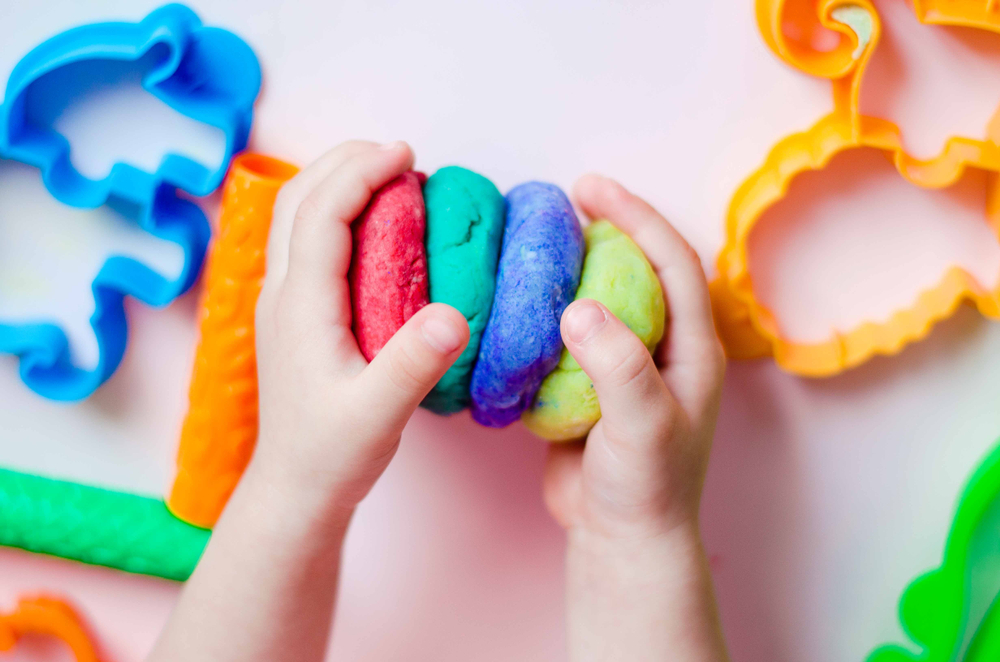
Play-Doh has one enormous advantage in pediatric settings: kids already understand it. No one has to explain the rules. There is no learning curve, no battery, no login, and no need for a TED Talk about how to use it. A child can squeeze it, roll it, smash it, pinch it, hide things in it, turn it into a snake, a pizza, a dinosaur, or a suspiciously lumpy “doctor.” That instant familiarity matters in health care, where so much else feels foreign.
Therapeutic play research has consistently shown that play in medical settings helps children cope with hospitalization, procedures, stress, and uncertainty. Child life specialists use play to normalize the hospital environment, prepare children for what is coming, and help them process what they have already experienced. Play is effective precisely because it speaks the language children are fluent in long before they can explain pain, fear, embarrassment, or loss of control in polished sentences.
Play-Doh also engages multiple senses at once. It is tactile, visual, creative, and physical. A child can feel the pressure in their hands, watch shape changes in real time, and experience the small but meaningful satisfaction of making something happen. In a medical setting, that feeling is not trivial. A child who cannot control the timing of an IV, blood draw, scan, or medication schedule can still control whether their Play-Doh becomes a cupcake, a race car, or an octopus with terrible posture. That tiny pocket of agency can make a huge emotional difference.
What the evidence around therapeutic play tells us
Play reduces distress and supports coping
The strongest evidence in pediatric care is for therapeutic play broadly, rather than for one specific brand-name toy. That distinction matters. The case for Play-Doh is compelling because it fits beautifully inside what hospitals already know about child life, sensory play, and family-centered care. Research and pediatric guidance have shown that therapeutic play can help lower emotional distress, reduce anxiety around procedures, improve cooperation, and support better coping before, during, and after medical experiences.
Hospitals use play because children learn and adapt through it. Through imaginative or structured activities, they can rehearse a procedure, handle pretend equipment, ask questions more freely, and process feelings in a safe, non-threatening way. A child who is terrified of a syringe may feel very different after using one to extrude Play-Doh “spaghetti.” The equipment has not changed. But the child’s relationship to it has. That is a big deal.
Play supports development, not just distraction
Play is often described as a distraction tool, but that undersells it. Good pediatric play does more than keep a child busy while adults do important things. It supports normal development during an abnormal experience. Hospitalization can interrupt routines, learning, movement, independence, social interaction, and family rhythms. Play gives children a way to keep practicing crucial developmental skills even when life feels upside down.
That is where Play-Doh shines. Rolling, pinching, pressing, and shaping all work the small muscles of the hands. Occupational therapists often use dough-like materials to support hand strength, dexterity, bilateral coordination, and fine motor control. For children recovering from injury, illness, or surgery, these playful movements can become low-pressure therapeutic work disguised as fun. Honestly, it is one of the best con jobs in medicine: “Here, make a pretend burger,” says the adult, while quietly cheering the hand-strength gains.
Play strengthens relationships, which also affects outcomes
Play is not only about the child’s inner world. It also builds connection. Pediatric organizations have repeatedly emphasized that play helps create strong, nurturing relationships between children and caregivers. In stressful moments, those relationships become a buffer. A parent’s calm presence matters. A sibling’s laughter matters. A shared moment of silliness matters more than many adults realize.
When a family joins a child in play, the emotional tone of the room changes. The parent is no longer just the person answering questions from clinicians. The child is no longer just the patient in the bed. For a few minutes, they are back to being a family doing a family thing. That sense of normalcy is not cosmetic. It is stabilizing.
How Play-Doh brings families together in real life
The phrase “family-centered care” can sound polished and impressive, which is usually a warning sign that it may end up on a brochure without touching real life. But Play-Doh is where family-centered care gets gloriously practical. It creates a shared task. It lowers the emotional temperature. It gives everyone something to do with their hands while emotions are doing somersaults in the background.
Picture a child waiting for a procedure. The parent is nervous but trying not to show it. The child senses everything anyway, because children have a special superpower for detecting grown-up panic through a single eyebrow twitch. A child life specialist places a small Play-Doh kit on the tray table and says, “Let’s make the silliest animal possible.” Now the child is choosing colors. The parent is rolling a lopsided tail. Maybe a sibling adds tiny ears. The room changes. Nobody is pretending the procedure is fun, but fear is no longer the only thing in the room.
Play-Doh also invites conversation without forcing it. Some children talk more when their hands are busy. Parents often do, too. A child may casually mold a little mask, a bed, or a doctor figure and begin asking questions they could not quite ask directly. A parent may find an opening to say, “Yes, that machine does look weird, but here’s what it does.” In this way, play becomes a soft on-ramp to honest, developmentally appropriate communication.
For siblings, Play-Doh can be especially helpful. Brothers and sisters are often the forgotten members of a medical story. They may feel scared, confused, jealous, guilty, or left out. Shared play gives them a role. They are not simply waiting in the corner while adults discuss things over their heads. They get to be part of the emotional life of the room. Making pretend food together or sculpting a family of colorful monsters may seem small, but it can restore a sense of belonging at a time when everything feels rearranged.
Where Play-Doh fits in hospitals, clinics, and therapy rooms
Before procedures
Play-Doh can be used before blood draws, IV placements, imaging, surgery, or therapy sessions as a calming, grounding activity. The goal is not to trick children. Pediatric care works best when it is honest and supportive. Instead, the dough gives the child a way to settle their body, focus attention, and enter the moment with more confidence and less helplessness.
During waiting periods
Waiting is one of the least glamorous parts of medical care and somehow also one of the longest. Play-Doh turns idle waiting into active coping. It can fill those awkward stretches before rounds, scans, discharge, or test results with something meaningful and human. That matters because boredom and anxiety tend to become best friends in hospital rooms.
During rehabilitation and occupational therapy
Here, Play-Doh becomes the overachiever of the toy world. Therapists can use it for squeezing, pinching, rolling, cutting, pulling, hiding small objects, and building shapes. These activities support hand strength, coordination, and control. Children usually experience this as play, not exercise, which is exactly why it works so well.
In emotional processing and child life work
Child life specialists often use creative materials to help children prepare for or process medical events. Play-Doh can be paired with medical play, storytelling, or simple conversation. A child may build a hospital room, shape a body part, or create a “worry monster” and talk about it. Not every child will want to do that, of course. Some just want to make a purple pancake and move on with their day. That counts too. Play does not always have to become a metaphor to be therapeutic.
Why parents love it, too
Parents in pediatric settings carry a heavy emotional load. They are absorbing information, making decisions, reassuring their child, managing logistics, and trying not to fall apart in front of the vending machine. Play-Doh gives them an immediate, accessible way to participate. They do not need special training. They do not need to say the perfect thing. They can simply sit down and make something with their child.
That matters because many parents feel helpless during hospitalization. Shared play restores a sense of usefulness. It says, “You can still comfort your child. You can still connect. You are still one of the most important healing forces in this room.” That message is powerful, and pediatric care should never underestimate it.
There is another bonus: Play shifts the interaction away from constant symptom-checking. Families dealing with illness can get trapped in an exhausting loop of “How do you feel?” “Does it hurt?” “Are you okay?” Those questions are important, but they cannot be the entire relationship. Making a Play-Doh taco with six pickles and zero structural integrity gives families another conversation to have. Sometimes that is exactly what everyone needs.
Important limits and practical cautions
Play-Doh is helpful, but it is not universally perfect. Some children dislike sticky textures or strong smells. Others may have sensory sensitivities that make dough play unpleasant instead of calming. Traditional Play-Doh also contains wheat, so allergy precautions matter. In medical settings, infection control matters too, which is one reason many hospitals prefer new, individual containers or bedside kits rather than one shared communal blob that has clearly lived too much life.
It is also worth saying plainly: if a child has significant distress, trauma, or ongoing mental health needs, they may need formal support beyond simple play activities. Child life services, mental health professionals, and the broader care team all have essential roles. Play-Doh is a tool, not a complete care plan. A very charming tool, yes. A complete care plan, no.
The bigger lesson for pediatric care
The real story is not that Play-Doh is magical. The real story is that pediatric care works better when it respects childhood. Children are not miniature adults with smaller socks and louder opinions. They process fear differently. They communicate differently. They cope differently. Pediatric care becomes more humane and more effective when it meets them where they are.
Play-Doh is powerful because it is ordinary. It does not announce itself as therapy. It does not feel clinical. It slips into the room carrying familiarity, creativity, and possibility. That can make a child feel safer, a parent feel more capable, and a family feel more like itself. For a few bright, squishy minutes, the hospital is no longer just a place where things happen to a child. It becomes a place where the child and family can still do something together.
And in pediatric care, that is not fluff. That is good care.
Experiences from the bedside: what this can look like in practice
One of the most striking things about Play-Doh in pediatric care is how often the meaningful moments are completely unglamorous. No dramatic soundtrack. No slow-motion montage. Just a child, a caregiver, maybe a nurse or child life specialist, and a little tub of colorful dough on a tray table that has seen better days.
In one real hospital example shared by pediatric teams, a young child used a syringe to push Play-Doh into long noodle shapes while recovering from serious injuries. To an outsider, it looked like ordinary play. But underneath that simple activity, the child was building fine motor control, becoming less afraid of medical tools, and regaining confidence in her own movements. That is the beauty of play in health care: progress often arrives wearing a silly hat.
In another example, a child life specialist supported a nervous child before an IV by using Play-Doh as part of distraction and comfort. Instead of staring at the equipment and bracing for the worst, the child could focus on shaping, pressing, choosing colors, and creating something with her hands. The procedure still mattered. The fear did not magically vanish. But the child was no longer alone with that fear. The activity gave the adults around her a way to stay connected and supportive without turning the room into a lecture hall.
Parents often describe these moments as surprisingly emotional. They come in expecting doctors, monitors, and medical explanations. They do not expect that rolling pretend cookies with their child might become the first time everyone has exhaled all day. Yet that is exactly what happens. The parent relaxes a little. The child laughs. A sibling joins in and insists the blue blob is definitely a giraffe, which is objectively incorrect but emotionally excellent. Suddenly the family is functioning like a family again instead of a crisis unit.
That shared experience matters after the activity ends, too. It becomes part of the story the family tells about the hospital stay. Not just “we were scared” or “we had to wait forever,” but “remember when we made the world’s ugliest Play-Doh pizza before your scan?” Those memories do not erase the hard parts, but they soften them. They add warmth and agency to an experience that can otherwise feel sterile and frightening.
For clinicians, these moments are valuable for another reason: they reveal the child behind the chart. A child making tiny animals might show humor, patience, frustration tolerance, imagination, or sensory preferences. A parent joining in might reveal how they comfort, communicate, and respond under stress. Play opens a window. It tells the team something human that a vital sign never could.
That is why the surprising power of Play-Doh is not really surprising at all once you understand pediatric care. Children heal in relationship. Families cope in relationship. Play is one of the fastest ways to create that relationship under pressure. And when the tool is affordable, familiar, low-tech, and easy to share, its impact can stretch far beyond the few ounces in the container.