History is packed with decisions that looked sensible in a government office, laboratory, or corporate conference roomand then escaped into the world wearing clown shoes. Leaders protected crops and triggered ecological chaos. A soda company improved its formula and reminded millions of customers that they loved the old one. A celebrity tried to hide a photograph and gave the internet a name for making hidden things famous.
These are more than amusing stories about bad judgment. They reveal how unexpected consequences emerge from incentives, feedback loops, public emotion, and the dangerous habit of treating complex systems like vending machines: insert policy, press button, receive desired result. Reality often keeps the change and releases a raccoon.
Why Unintended Consequences Happen
Major decisions operate inside systems with thousands of moving parts. Governments redirect behavior, companies disturb habits, and environmental programs alter relationships that may be poorly understood. The strangest outcomes often combine a narrow goal, an incomplete model, and a delayed reaction. By the time the damage becomes visible, reversal may already be expensive or politically embarrassing.
1. China Targeted Sparrowsand Helped Insects Target Crops
The decision
During the Great Leap Forward, China’s Four Pests Campaign labeled sparrows agricultural enemies because they ate grain. Citizens destroyed nests, broke eggs, and frightened birds until they dropped from exhaustion.
The unexpected consequence
Sparrows also ate insects. Removing a predator helped crop-damaging insects multiply, worsening agricultural losses. The campaign was not the sole cause of the Great Chinese Famine; disastrous policies, false production reports, procurement practices, weather, and broader disruption were also central. Still, the episode became a brutal lesson in ecological oversimplification: before eliminating a species, find out what invisible work it performs.
2. Australia Imported Cane Toads to Fight Beetles
The decision
In 1935, cane toads were released in Queensland to control beetles damaging sugarcane. Biological pest control sounded wonderfully efficient: hire a hungry amphibian and let nature manage payroll.
The unexpected consequence
The toads proved poorly suited to catching the target pests but extremely well suited to surviving. They spread, competed with native wildlife, and poisoned predators that tried to eat them. The experiment became a long-running invasive-species crisis. The toads did not read the project brief; they largely ignored the assigned beetles and expanded the department.
3. The United States Banned Alcohol and Expanded Its Black Market
The decision
National Prohibition began in 1920 with a serious social goal: reduce drinking and its links to violence, injury, poverty, and disorder.
The unexpected consequence
Demand did not vanish. It moved underground. Bootlegging, speakeasies, bribery, organized crime, and unsafe homemade liquor flourished, while courts and jails struggled with the caseload. Prohibition did reduce alcohol consumption, especially early on, so the history is not simply “the law did nothing.” Yet enforcement gaps created a spectacular criminal business opportunity. The government tried to remove a market and instead gave it a secret password and Al Capone.
4. Coca-Cola Improved Its Formula and Made People Miss the Old One
The decision
In 1985, Coca-Cola replaced its famous formula with the sweeter New Coke. Large taste tests suggested consumers preferred it. The research measured flavor but failed to measure identity, memory, habit, and nostalgia.
The unexpected consequence
Customers protested, hoarded the old product, and flooded company phone lines. Coca-Cola returned the original formula as Coca-Cola Classic after 79 days. The failure unexpectedly renewed affection for the brand. New Coke became a classic lesson in customer psychology: people do not buy products only for measurable attributes. Sometimes they buy continuityand the privilege of telling a giant company to put the furniture back.
5. Barbra Streisand Tried to Suppress a Photo and Made It Famous
The decision
In 2003, Barbra Streisand sued over an aerial photograph of her Malibu home that appeared in a coastal-erosion archive. The goal was privacy: remove the image and reduce attention.
The unexpected consequence
The lawsuit turned an obscure picture into a widely discussed internet object and inspired the term Streisand effect. Suppression can create a larger story than the information being suppressed. Curiosity, resistance to censorship, and effortless sharing do the rest. Online, “Please stop sharing this” can operate less like a command and more like a marketing campaign with free distribution.
6. Kodak Protected Film While Digital Photography Grew Up
The decision
A Kodak engineer built an early portable digital camera prototype in 1975. The familiar claim that Kodak simply invented digital photography and buried it is too neat: the prototype was primitive, no mature consumer market existed, and Kodak continued developing digital technology. However, its business remained deeply tied to profitable film, processing, paper, and chemicals.
The unexpected consequence
Digital photography eventually destroyed much of the recurring revenue model Kodak was protecting. Competitors gained strength as photography shifted toward screens, storage, software, and sharing; Kodak entered Chapter 11 bankruptcy in 2012. The problem was not one dramatic refusal but a long sequence of choices optimized for yesterday’s profits. Companies often see the future clearly, realize it threatens the present, and ask it to wait in the lobby.
7. Fire Suppression Made Some Forests More Flammable
The decision
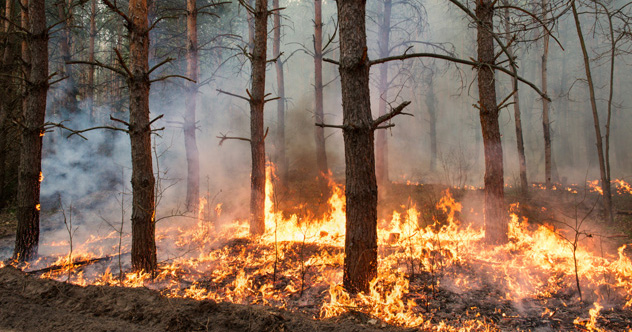
For much of the 20th century, U.S. policy treated wildfire as an enemy to extinguish quickly. Stopping fire appeared to protect forests, timber, homes, and wildlife.
The unexpected consequence
Many North American ecosystems evolved with recurring low-intensity fire that cleared brush, small trees, and dead material. Decades of suppression allowed fuels to accumulate in some landscapes, helping later fires burn more intensely. Climate change, drought, development, ignitions, and forest structure also matter, but the paradox remains: preventing every small fire helped create conditions for some enormous ones.
8. China Limited Births and Accelerated a Demographic Squeeze
The decision
China’s one-child policy, introduced around 1980 and enforced with varying rules and exceptions, aimed to slow population growth and support economic development.
The unexpected consequence
The policy contributed to an aging population, distorted sex ratios, smaller future workforces, and heavy family-care burdens. Later relaxation did not produce an easy baby boom because urbanization, housing costs, education, workplace pressure, delayed marriage, and changing preferences had transformed family life. A government can force fertility downward more easily than it can order it back up.
9. London Built Sewers to Defeat a Smelland Reduced Cholera
The decision
During the Great Stink of 1858, heat intensified sewage odors from the River Thames until Parliament could barely function. Many officials still blamed disease on foul air, so the political emergency centered on smell.
The unexpected consequence
Joseph Bazalgette’s sewer system moved waste away from central London and water-supply areas. Though driven partly by an incorrect disease theory, the project reduced exposure to contaminated water and helped end the city’s cholera epidemics. This is the cheerful exception: bad science accidentally hired an excellent civil engineer.
10. Sweden Switched Traffic Sides and Accidents Briefly Fell
The decision
On September 3, 1967, Sweden changed from left-side to right-side driving in a nationwide operation called Dagen H. The switch required years of planning, altered intersections, new signs, public education, and temporary restrictions.
The unexpected consequence
Instead of immediate carnage, accident numbers initially declined. Drivers were unusually cautious, speeds were reduced, and nobody trusted muscle memory. As people became comfortable, rates returned toward previous levels. Sweden made driving more confusing, and drivers responded by paying attentiona temporary triumph of fear over autopilot.
What These Decisions Have in Common
- Visible metrics hide invisible services. A grain-eating bird may also be an insect-control system.
- Demand reroutes. Banning a product can move trade into riskier channels.
- Emotion resists spreadsheets. Taste tests could not measure attachment to old Coke.
- Suppression creates attention. Forbidden information gains social value.
- Short-term protection can increase long-term vulnerability. Forest fuels and Kodak’s film profits tell similar stories.
- Complex systems remember. Ecological and demographic changes can persist long after a policy ends.
Practical Experience: How to Avoid Becoming the Next Cautionary Tale
Real-world decision-making becomes safer when teams stop asking only, “Will this achieve the goal?” and start asking, “What else will change if it works?” That second question is where the cane toads, black markets, fuel loads, and angry soda drinkers are hiding.
Map the system before moving the lever
Before changing a policy, product, or process, list the groups, behaviors, dependencies, and feedback loops connected to it. A retailer changing its return policy should model not only fraud reduction but also customer trust, support volume, employee discretion, and competitor messaging. A city restricting cars should examine delivery traffic, public transit capacity, disability access, parking spillover, and small-business effects. The map will never be complete, but even a rough one prevents tunnel vision.
Look for the behavior that will replace the behavior you dislike
People rarely stop wanting something because a rule makes it inconvenient. They substitute, hide, delay, relocate, or find a loophole. When a fee is added, users may abandon the service, split transactions, or move off-platform. When an organization creates a performance target, employees may improve the workor improve only the number being measured. Every restriction should be paired with one question: “Where will the pressure go?”
Test reversibly
New Coke replaced the flagship formula nationwide, making the experiment emotionally enormous. A limited rollout, parallel option, staged transition, or reversible pilot preserves information without burning the bridge behind the decision-maker. Reversibility matters most when customer identity, public trust, ecosystems, or long-term infrastructure are involved. The harder an action is to undo, the stronger the evidence and monitoring should be.
Invite a professional pessimist
Every important decision needs someone authorized to be annoying. That person should ask how the plan could be exploited, misunderstood, politicized, copied, or amplified online. The role is not to kill ideas; it is to expose assumptions before reality does so at full retail price. A premortemimagining the decision has failed and explaining whyturns criticism into useful analysis.
Measure delayed and indirect effects
Early results can mislead. Fire suppression looks successful when the fire goes out. A population policy looks successful when births fall. A technology strategy looks successful while the legacy product remains profitable. Monitoring should include second-order indicators and enough time to capture lagging effects. Otherwise, leaders may celebrate the first chapter of a disaster because the sequel has not shipped yet.
Build an exit ramp before launch
A good plan defines thresholds for stopping, changing, or reversing course. What evidence would show that the policy is harming the wrong group? Who may pause it? How quickly can the old process return? Organizations often continue failing programs because admitting error is politically harder than measuring it. An exit ramp turns reversal from humiliation into procedure.
The deepest practical lesson is not “never make bold decisions.” Boldness built London’s sewers and coordinated Sweden’s traffic switch. The lesson is to combine ambition with humility. Assume the system knows something you do not. Expect people to respond strategically. Expect customers to have feelings a spreadsheet cannot taste-test. And never release a poisonous amphibian unless someone has confirmed that it plans to eat the correct beetle.
Conclusion
Bizarre unexpected consequences are rarely random. They appear when a decision changes incentives, removes a hidden support, underestimates emotion, or solves a visible problem while enlarging an invisible one. The people behind these choices were not always foolish; many faced real threats with incomplete information.
That is why these cases matter. Good intentions receive no immunity from complex systems. The safest decision-maker is not someone who predicts everything, but someone who expects surprise, tests carefully, monitors broadly, and reverses course before the toads reach the next state.