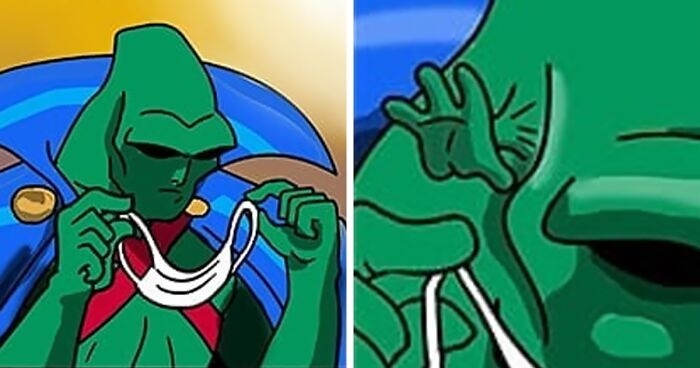
Superheroes are usually shown leaping across skylines, punching meteors, brooding on rooftops, or saving entire cities before breakfast. But what happens after the cape comes off, the villain is tied up, and the dramatic orchestral music stops? Brazilian artist Lucas Nascimento, better known online as Dragonarte, answers that question with a wonderfully silly series of funny comics that imagine superheroes and famous pop culture characters in their off-duty moments.
Instead of presenting heroes as flawless icons, these comics place them in the wonderfully awkward situations of everyday life. A character with godlike strength may still struggle with boredom. A masked vigilante may still have roommate-level problems. A web-slinger may be amazing in the air and deeply inconvenient around furniture. That is the charm of Dragonarte’s work: it takes legendary characters and gently pushes them into ordinary human chaos.
The result is a collection of superhero comics that feels light, clever, and instantly shareable. These are not long, dialogue-heavy stories. They are quick visual jokes built on recognition. The reader sees a familiar costume, understands the character’s power, and then gets hit with an unexpected twist. It is comedy with a cape, a utility belt, and probably a very confused insurance adjuster.
Who Is Dragonarte?
Lucas Nascimento is a Brazilian illustrator and designer who publishes under the name Dragonarte. His work is widely known for reimagining Marvel, DC, anime, movie, and cartoon characters in playful everyday situations. Rather than drawing another dramatic battle scene, he asks a much funnier question: what would these famous characters do when nobody is watching?
That simple idea gives him a lot of room to play. Superman, Batman, Spider-Man, Thor, Hulk, Deadpool, Goku, Darth Vader, and other recognizable characters become part of little visual sketches about parenting, chores, laziness, accidents, friendship, jealousy, and bad timing. In other words, they become a little more like usonly with better costumes and significantly more property damage.
Dragonarte’s comics often work without dialogue, which makes them easy for international audiences to understand. A good silent comic depends on facial expression, body language, timing, and a punchline that lands visually. That is why his work travels so well across social media: readers do not need a wall of text to get the joke. They just need to recognize the character and notice the twist.
Why Off-Duty Superhero Comics Are So Funny
The humor in these superhero comics comes from contrast. Superheroes are supposed to be larger than life. They lift buildings, stop aliens, defeat ancient evils, and make impossible decisions while wearing outfits no normal person could confidently wear to the grocery store. But Dragonarte pulls them down from the clouds and places them in normal situations: awkward social moments, family life, boredom, messy accidents, and tiny frustrations.
That contrast creates instant comedy. A character who can fly across the planet may still have no idea how to relax. A warrior from another world may be helpless in front of a modern appliance. A genius billionaire may still overcomplicate a simple problem because, apparently, building a robot suit is easier than admitting you misplaced the remote.
These jokes also work because audiences already know the rules of these characters. Spider-Man sticks to walls. Batman is serious and prepared. Superman is unbelievably strong. Hulk smashes. Deadpool breaks expectations. Dragonarte uses that shared pop culture knowledge as a shortcut. He does not need to explain the setup; the character’s reputation does half the work.
The Appeal of Seeing Famous Characters Act Human
One reason people love comics like these is that they make legendary figures feel approachable. Superhero stories have always balanced power with vulnerability. The best heroes are not interesting simply because they can win fights. They are interesting because they have flaws, routines, fears, relationships, and embarrassing moments.
Dragonarte’s illustrations lean into that human side. The characters may still look iconic, but the situations are small and relatable. Instead of another world-ending crisis, we get a joke about daily life. Instead of a dramatic villain monologue, we get a silent gag that says, “Even heroes have weird Tuesdays.”
This is especially refreshing in an entertainment landscape filled with serious superhero films, multiverse timelines, cosmic threats, and emotionally exhausted protagonists staring into the middle distance. Sometimes fans do not need another apocalypse. Sometimes they need Batman dealing with a ridiculous problem that no amount of darkness can solve.
How the Comics Use Visual Storytelling
Dragonarte’s funny comics rely on clear visual storytelling. Most of the jokes are built like tiny scenes: setup, expectation, surprise. The reader looks at the first image and immediately predicts what might happen. Then the final beat flips that expectation in a silly direction.
This is one of the oldest strengths of comics as a medium. A comic panel can freeze the exact second before a punchline, letting the reader’s imagination fill the gap. In silent or nearly silent comics, timing is everything. A raised eyebrow, a small prop, a background detail, or a sudden change in expression can carry the entire joke.
Dragonarte’s style is colorful, polished, and expressive. The characters are recognizable but filtered through his own playful cartoon language. That makes the art feel familiar without being stiff. The exaggerated reactions also help sell the humor. A superhero does not merely look surprised; he looks like he has just discovered that saving the universe was easier than assembling flat-pack furniture.
30 New Comics, 30 Tiny Escapes From Seriousness
The title promises 30 new comics, and the appeal of a numbered collection is simple: readers know they are getting a quick gallery of visual jokes. This format is perfect for modern web audiences. Each comic can be enjoyed in a few seconds, but together they create a larger theme: the secret everyday life of superheroes and famous characters.
Some comics imagine practical consequences of superpowers. What happens when a character’s ability is useful in battle but wildly inconvenient at home? Others focus on personality clashes. Put several famous characters in the same ordinary situation and their differences become the joke. A serious hero, a chaotic antihero, and an innocent cartoon figure do not respond to the same problem in the same wayand that is where the fun begins.
The best pieces in this kind of collection usually do three things well. First, they respect the character enough for fans to recognize the personality. Second, they exaggerate one trait just enough to make it funny. Third, they end with a twist that feels obvious only after you see it. That “of course!” reaction is the sweet spot of pop culture humor.
Why Fans Share These Comics
Shareable art needs to be fast, clear, and emotionally satisfying. Dragonarte’s comics check all three boxes. They are quick to understand, bright enough to stand out in a social feed, and funny without requiring a long explanation. They also invite fans to tag friends because each joke connects to a character people already love.
There is also a cozy nostalgia factor. Many readers grew up with superheroes, animated shows, anime, movie sagas, and video game icons. Seeing those characters in silly everyday settings feels like catching up with old friends after they clock out from saving reality. The humor is not cruel; it is affectionate. It laughs with the characters rather than simply mocking them.
That affectionate tone matters. The internet has plenty of jokes built on cynicism. Dragonarte’s work feels more like a playful fan letter. It says, “I love these characters so much that I want to imagine what they do on their lunch break.” Honestly, after years of saving the planet, they deserve snacks.
The Bigger Trend: Superheroes Behind the Scenes
Dragonarte is part of a larger trend in fan art and webcomics that explores superheroes outside their official stories. Artists often imagine heroes as parents, roommates, retirees, office workers, pets owners, or exhausted adults trying to survive errands. This behind-the-scenes approach works because it expands the emotional world of characters we already know.
Traditional superhero stories focus on conflict: hero versus villain, justice versus chaos, city versus giant sky beam. Off-duty comics focus on personality. They ask what remains when the battle is over. Is Batman still dramatic while ordering takeout? Does Thor understand normal weather reports? Would Spider-Man be invited to help decorate the ceiling, or would everyone immediately regret that decision?
These questions are silly, but they reveal why superheroes remain popular. Fans do not only care about powers. They care about identity, personality, friendship, and the tiny contradictions that make a character memorable. The more impossible a hero’s abilities become, the funnier it is to watch them fail at something ordinary.
What Content Creators Can Learn From Dragonarte
There is a practical lesson here for artists, bloggers, and content creators: a strong concept can be more powerful than a complicated one. Dragonarte’s idea is easy to describe in a single sentence: famous characters doing everyday things when they are not saving the world. That clarity makes the work easy to remember.
Another lesson is the value of visual economy. The comics do not need long backstories or heavy captions. The joke is usually built from one recognizable trait and one surprising situation. This makes the art accessible to casual viewers while still rewarding fans who understand the reference.
Finally, the series shows how humor can refresh familiar characters. Superheroes have been around for generations, and audiences have seen countless battles, reboots, origin stories, and dramatic sacrifices. A small joke can make the same characters feel new again. Sometimes creativity is not about adding more explosions. Sometimes it is about asking what happens when the explosion is over and everyone has to clean up.
Experience: Why These Comics Feel Like a Break for the Brain
There is a very specific kind of joy in opening a comic like this after a long day. You do not need to prepare yourself for emotional devastation, memorize a timeline, or understand twelve different cinematic universes. You simply look at the panel, recognize the character, and let the joke do its tiny cartwheel across your brain.
That is why off-duty superhero comics are such good comfort content. They take something huge and make it small. A hero who normally represents justice, sacrifice, destiny, trauma, or cosmic responsibility suddenly becomes part of an everyday gag. The stakes drop from “save the planet” to “please stop breaking the furniture,” and honestly, that is a healthy change of pace.
Reading these comics also feels like watching celebrities in behind-the-scenes bloopers. The official version of a hero is polished and dramatic. The off-duty version is messy, goofy, and more relaxed. We like seeing the mask slipnot because we want the hero to fail, but because imperfection makes them warmer. A perfect character can be impressive, but a ridiculous character can become beloved.
There is also a shared-fandom pleasure in these jokes. When you understand the reference, you feel included. If a comic uses Spider-Man’s webbing, Batman’s darkness, Superman’s strength, or Deadpool’s chaos as the punchline, fans get a small reward for knowing the character. It is the pop culture equivalent of an inside joke at a very crowded party where everyone is wearing capes.
For artists, this kind of work is a reminder that originality does not always mean inventing an entirely new universe from scratch. Sometimes originality means changing the angle. We have seen superheroes from below, above, across timelines, and through slow-motion battle scenes. Dragonarte looks at them from the kitchen, the couch, the sidewalk, the nursery, and the awkward corner of daily life where even legends become hilarious.
For readers, the experience is simple: laughter, recognition, and a small burst of nostalgia. These comics remind us why we fell in love with famous characters in the first place. Not just because they are powerful, but because they are flexible enough to survive parody, tenderness, and absurdity. A truly iconic character can save the world in one story and make us laugh in the next.
And maybe that is the secret superpower of Dragonarte’s comics. They do not replace the epic versions of these heroes; they give them a day off. They let fans imagine that after the final battle, someone still has to deal with laundry, snacks, parenting, boredom, awkward friendships, and the suspiciously high cost of repairing superhero-related ceiling damage. Saving the world is impressive. Being funny afterward? That might be even harder.
Conclusion
“Artist Shows What Superheroes And Other Famous Characters Do When They Are Not Saving The World (30 New Comics)” is more than a catchy title. It captures exactly why Dragonarte’s work is so enjoyable. These funny superhero comics turn legendary characters into playful, relatable figures without taking away what makes them iconic.
By focusing on off-duty moments, Lucas Nascimento creates a world where superpowers collide with ordinary life. The jokes are visual, accessible, and full of affection for pop culture. Whether you are a lifelong comic book fan or someone who simply enjoys a good internet laugh, these comics offer a cheerful reminder that even the strongest heroes need downtime.
Note: This article is written as an original SEO-friendly blog post based on publicly known information about Dragonarte, superhero comics, webcomic humor, and pop culture character parody. It contains no copied comic captions, no unnecessary source-code elements, and no external source links in the article body.