
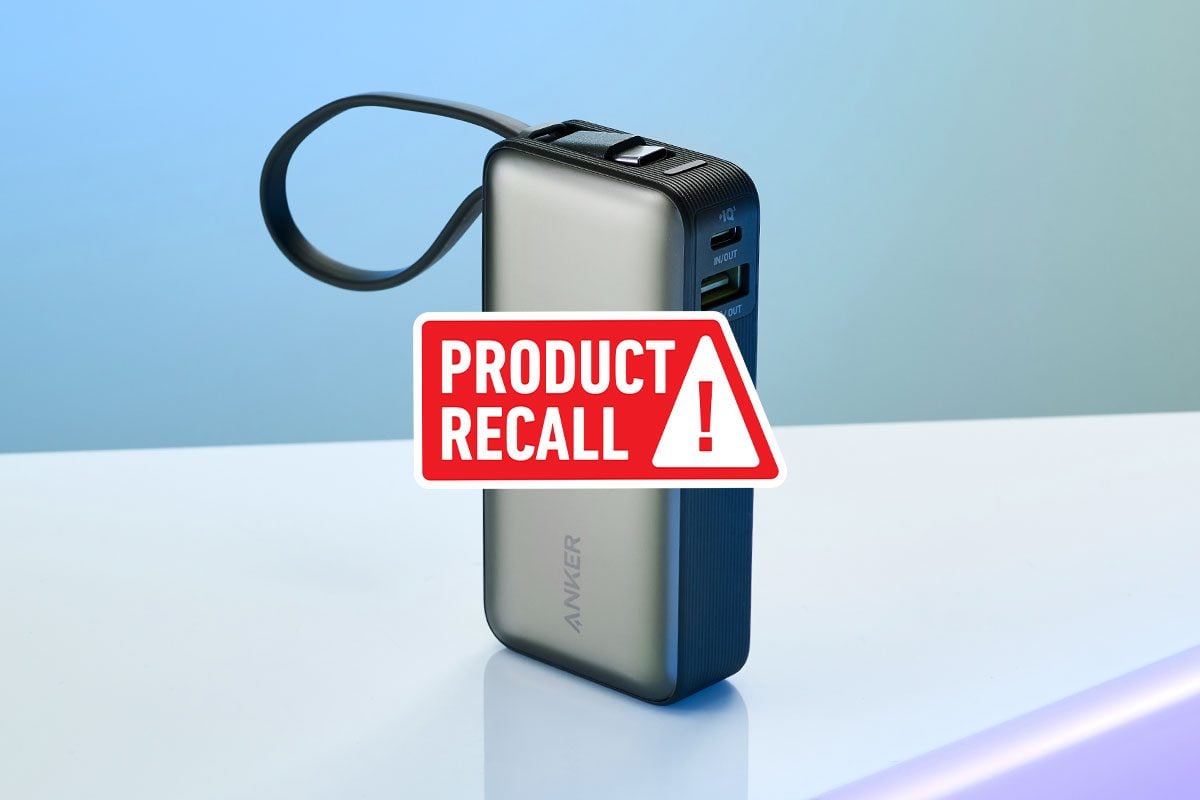
Portable chargers are supposed to rescue your dying phone at 4 p.m., not audition for a disaster movie in your backpack. But that is exactly why the Anker power bank recall grabbed so much attention. In June 2025, Anker and the U.S. Consumer Product Safety Commission announced a major recall affecting more than 1.15 million Anker PowerCore 10000 portable chargers sold in the United States. The issue was serious: certain batteries could overheat, creating a fire and burn hazard.
That kind of headline gets clicks for obvious reasons, but it also raises practical questions. Which power bank is affected? How dangerous is the burn risk? What should owners do right now? And what does this say about the way many of us use aging power banks without giving them a second thought? This article breaks down the Anker recall in plain English, with a little personality and zero panic-button drama. Think of it as a safety guide for the portable charger living in your desk drawer, glove box, or travel bag like it pays rent.
What Happened in the Anker Power Bank Recall?
The recall centers on the Anker PowerCore 10000, specifically model A1263. According to the official recall notice, the lithium-ion battery inside certain units can overheat, which creates a risk of fire and burns. More than 1,158,000 units were affected in the United States, making this one of the more notable consumer tech recalls of the year.
The recalled power banks were sold online in the U.S. between June 2016 and December 2022, including on Anker’s website and major marketplaces such as Amazon, eBay, and Newegg. Reports tied to the recall included 19 incidents involving fires and explosions, along with two minor burn injuries and 11 property-damage claims totaling more than $60,000. That is not the sort of user review anyone wants to leave.
Anker said the recall was launched out of an abundance of caution, but the risk described was still real enough to trigger a coordinated recall with federal regulators. In other words, this was not a routine “the label might peel off” situation. When lithium-ion batteries misbehave, they can get hot fast, and “hot fast” is usually where everyone’s day starts going downhill.
Which Anker Power Bank Is Affected?
Not every Anker charger is part of the recall. The affected product is the Anker PowerCore 10000 power bank, model A1263. The brand name “Anker” appears on the device, while the model number and serial number are printed on the bottom.
How to identify the recalled unit
If you have an older Anker charger, flip it over and inspect the label. You are looking for the words “PowerCore 10000” and the model number “A1263”. This recall applies only to qualifying units sold in the United States and only to units with affected serial numbers. So yes, your charger has officially entered the world of “please check the small print before coffee.”
Anker’s recall instructions also note that some of the eligible units were manufactured between January 1, 2016, and October 30, 2019, and were sold in colors including black, blue, red, and white. If your power bank matches the model and falls within the covered period, it is worth checking immediately rather than assuming you will remember later. Most people do not remember later. Most people remember six months later while packing for a flight.
Why the Burn Risk Is a Big Deal
The phrase burn risk can sound vague, but in the world of lithium-ion batteries it is not minor. Portable chargers store a surprising amount of energy in a compact shell. When something goes wrong inside the battery cell, that energy can turn into excessive heat. In real life, that can mean melting plastic, smoke, swelling, sparks, or fire.
This is why recalls involving power banks get treated differently from, say, a phone case recall or a cable recall. A defective cable may annoy you. A defective battery can damage a couch, a backpack, a countertop, or worse. That is also why federal guidance around lithium batteries is stricter than many consumers realize. These products are incredibly useful, but they are not casual junk-drawer items when they become damaged, defective, or recalled.
The Anker story also highlights a truth many people ignore: older chargers deserve more suspicion than blind loyalty. If a power bank is several years old, has been dropped a few times, lives in a hot car, or charges more slowly while running hotter than usual, it should not get the benefit of the doubt. Lithium-ion batteries do not improve with age like cast iron pans or your favorite pair of jeans. They age like milk with better marketing.
What Owners Should Do Right Now
If you think you have the recalled Anker PowerCore 10000, the first step is simple: stop using it immediately. Do not keep charging your phone with it “just until the weekend.” Do not lend it to your cousin. Do not tuck it back into your carry-on and hope optimism counts as a safety plan.
Step 1: Confirm the model number
Check the bottom of the power bank for A1263. If that model number is not there, this specific recall does not apply to that device.
Step 2: Check the serial number
Anker instructs customers to verify whether their serial number is included in the recall. That matters because not every A1263 unit is necessarily affected.
Step 3: Follow the recall process
If your unit qualifies, Anker directs customers through its recall process for a replacement power bank. Owners may need to provide identifying information and photos showing the product’s model number and serial number. If proof of purchase is unavailable, the company’s instructions explain what substitute documentation may be accepted.
Step 4: Do not toss it in the trash
This part matters more than people think. A recalled lithium-ion battery should not go in household trash, curbside recycling, or general battery drop boxes at stores unless the disposal location specifically accepts recalled lithium batteries. That is because recalled batteries pose a greater fire risk than ordinary used batteries.
How to Dispose of a Recalled Power Bank Safely
Safe disposal is where many consumers get tripped up. People are used to hearing “recycle batteries,” but a recalled power bank is not a normal recycling errand. The EPA says lithium-ion batteries should not go in household garbage or curbside recycling bins. Instead, they should be taken to appropriate recycling or household hazardous waste collection points.
For a recalled device like this one, the safest move is to follow Anker’s disposal instructions and use a certified facility or a local household hazardous waste center that confirms it accepts recalled lithium-ion batteries. Some locations may also recommend taping terminals or placing the device in a separate plastic bag to reduce the chance of accidental short-circuiting during transport.
If that sounds like a lot of rules for one little charger, welcome to modern electronics. Tiny device, big chemistry. The power bank may fit in one hand, but the safety consequences can easily exceed the size of your coffee table.
Why This Recall Matters Beyond Anker
The recall is not just a bad week for one brand. It is also a reminder that portable chargers have become everyday essentials, and many consumers use them with almost no awareness of battery safety. We take them to airports, toss them into purses, leave them on beds, wedge them under car seats, and sometimes forget them in direct summer heat. Then we act shocked when battery experts gently suggest that this may not be ideal.
The broader safety conversation matters because power banks are now part of daily life. Remote work, travel, streaming, navigation apps, mobile gaming, and emergency preparedness all rely on backup power. That convenience has a trade-off: when something goes wrong, it goes wrong in a category of product that people keep physically close to themselves.
There is also a travel angle. FAA guidance says spare lithium-ion batteries and power banks should be carried in carry-on baggage only, not checked luggage. So if you own multiple power banks, especially older ones, this recall is a good excuse to do a full audit before your next trip. Nobody wants to become the main character in a boarding delay because an ancient charger in their bag decided to get theatrical.
How to Shop Smarter for Your Next Power Bank
If your recalled Anker unit gets replaced or retired, you may be wondering how to choose your next portable charger more carefully. The recall does not mean power banks are bad products. It means they should be purchased and used with the same common sense you would apply to any battery-powered device.
Look for clear model information
Choose a power bank with clearly labeled model numbers, battery capacity, and safety documentation. If identifying the product feels like solving a treasure hunt, that is not a great sign.
Buy from established sellers
Purchase from reputable brands and authorized retailers when possible. That makes recalls easier to track and customer support easier to access.
Pay attention to heat
If a charger becomes unusually hot during use, starts swelling, smells odd, or shows physical damage, stop using it. “It still works” is not a safety certification.
Retire old chargers with dignity
Power banks are not family heirlooms. If yours is many years old and showing wear, replacing it may be smarter than squeezing every last drop of value out of it.
Experiences Related to the Anker Recall: What This Looks Like in Real Life
One reason the Anker recall resonated with so many consumers is that power banks are deeply woven into ordinary routines. They are not flashy gadgets for tech hobbyists only. They are commuter tools, airport tools, conference tools, parent tools, and “my phone is at 8% and I still have three hours left in this day” tools. So when a recall of this size happens, the impact feels personal very quickly.
A common real-world experience is the forgotten charger scenario. Someone reads the recall headline and suddenly remembers an old Anker power bank living in a drawer beside three mystery cables and a pen that has not worked since 2022. That moment feels small, but it is important. The recall pushes people to check devices they have not thought about in years, which is exactly when hidden battery risks can slip under the radar.
Another common experience is travel anxiety. Many people keep a power bank permanently packed in a backpack or carry-on because it is one of those items that feels too useful to leave behind. A recall changes that habit fast. What used to feel like a reliable travel companion now becomes a question mark. Is this the recalled model? Is it safe to bring to the airport? Do I need to replace it before my trip? Those are practical, not abstract, concerns.
Then there is the trust factor. Anker has long been a familiar name in charging accessories, which is part of why the story made such noise. Consumers often assume that buying from a recognizable electronics brand protects them from serious battery issues. In many ways, sticking with established brands is still a smarter move than buying no-name accessories from the digital equivalent of a mysterious folding table. But recalls like this show that even trusted brands can face manufacturing or battery-related problems. Brand reputation helps, but it is not a force field.
For some consumers, the biggest frustration is not the recall itself but the follow-through. They have to inspect the device, verify a serial number, document the product, and figure out proper disposal. None of that is impossible, but it is still a chore. And because recalled lithium-ion batteries require careful disposal, it is not as easy as tossing the old charger into a recycling bin on the way to buy groceries. This is where many people realize that battery convenience at the front end can become battery homework at the back end.
The recall also serves as a wake-up call about how casually people treat signs of battery aging. Many consumers have used power banks that run warmer over time, charge inconsistently, or look a little beaten up. They may joke that the charger is “getting moody” without recognizing that abnormal heat and physical wear deserve attention. The Anker case turns that vague concern into something more concrete: if a recalled battery can overheat while appearing mostly normal, it is worth being more cautious with every aging charger in the house.
In that sense, the experience surrounding this recall is bigger than one product. It reminds people to check model numbers, respect battery safety, and stop thinking of portable chargers as harmless little blocks of convenience. They are useful, yes. They are also energy-dense devices that deserve basic care. That lesson may not be as exciting as a shiny new gadget launch, but it is far more useful. And unlike a flashy keynote speech, it might actually keep your backpack from trying to cook itself.
Conclusion
The Anker recall over burn risk is a serious consumer safety story, but it is also a practical reminder about how we live with lithium-ion devices every day. If you own an Anker PowerCore 10000 model A1263, check the serial number, stop using it if it is part of the recall, and follow the official replacement and disposal instructions. More broadly, treat older power banks with a little more skepticism and a lot more care.
Portable chargers are incredibly useful, and most do their jobs without drama. But when a recall affects more than a million units, it is worth paying attention. Your phone can survive being at 12% for a while. Your nightstand, sofa, or carry-on would probably prefer not to test its luck.













