Asking a stranger to take your picture seems like one of civilization’s simplest exchanges. You hand over your phone, point toward the shutter button, strike a pose, and receive a perfectly framed memory in return. At least, that is the theory.
In reality, the arrangement can produce tilted horizons, missing heads, blurry fingers, accidental selfies, microscopic subjects, inexplicable close-ups, and photographs in which the landmark you traveled 3,000 miles to see has somehow disappeared. Sometimes the volunteer photographer takes one picture and walks away before you can check it. Sometimes they take 47 pictures, all during the two seconds when you were adjusting your pants.
Collections of stranger-taken photo fails have become popular online because the mistakes are instantly recognizable. The original “111 Times People Asked Strangers To Take Their Picture And Deeply Regretted It Later” gallery turned this everyday gamble into a parade of wonderfully unsuccessful photography.
These images are funny, but they also reveal something interesting about cameras, communication, trust, composition, privacy, and the optimistic belief that every person holding a smartphone automatically knows how to use one.
Why Asking a Stranger to Take Your Picture Is Such a Gamble
Most people understand the basic purpose of a camera. Aim it at the subject, press the button, and avoid covering the lens with a thumb. Unfortunately, understanding those three steps does not guarantee a good photograph.
The person you approach may be unfamiliar with your phone. They may normally use a different operating system, prefer a traditional camera, or take approximately two photographs per year. Even a familiar-looking camera app can become confusing when an impatient couple is waiting beside a fountain while pigeons conduct an air raid overhead.
The Instructions Are Usually Too Vague
“Can you get the whole building?” sounds clear until the photographer must decide whether “the whole building” includes the roof, the front steps, both people, the nearby statue, and the stranger selling novelty sunglasses on the sidewalk.
People often provide a long creative brief after handing over the phone: include the monument, keep the sunlight behind us, take one horizontal and one vertical, do not zoom, and wait until nobody is walking through the background. By the third instruction, the volunteer is no longer helping with a photograph. They are directing a low-budget fashion campaign without snacks or financial compensation.
Photography Is More Than Pressing a Button
A good photo depends on framing, exposure, focus, timing, lighting, perspective, and background awareness. Adobe identifies poor composition, incorrect exposure, camera shake, harsh lighting, distracting backgrounds, and failure to experiment with angles as common photography mistakes.
A stranger may press the shutter correctly while getting everything else spectacularly wrong. The result is technically a photograph, just not necessarily one that proves you were present.
The Most Common Stranger Photo Fails
1. The Accidental Selfie
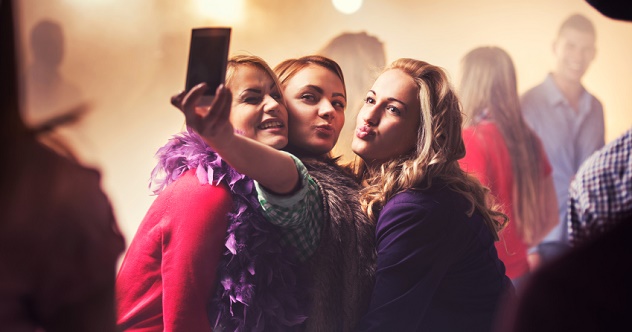
You pose beside a world-famous landmark while the stranger studies your phone with intense concentration. Seconds later, the gallery contains six enormous close-ups of their forehead.
This usually happens because the front-facing camera was already active or the volunteer tapped the camera-switching icon by mistake. The expression captured in these accidental portraits often progresses from confusion to determination to mild betrayal.
2. The Finger Over the Lens
The finger-over-the-lens photograph is a classic because it requires remarkable commitment. The photographer must ignore the giant pink blur dominating the screen, take the picture anyway, and hand the phone back with confidence.
The result may show half a mountain, one shoulder, and a fleshy sunset apparently caused by an enormous thumb entering Earth’s atmosphere.
3. The Missing Landmark
You ask for a picture in front of the Eiffel Tower, the Golden Gate Bridge, or a dramatic waterfall. The photographer moves closer and captures a flawless image of your facesand absolutely nothing else.
The landmark becomes a vague patch of color or disappears beyond the frame. You could have taken the same picture beside a grocery store freezer.
4. The Tiny Human Syndrome
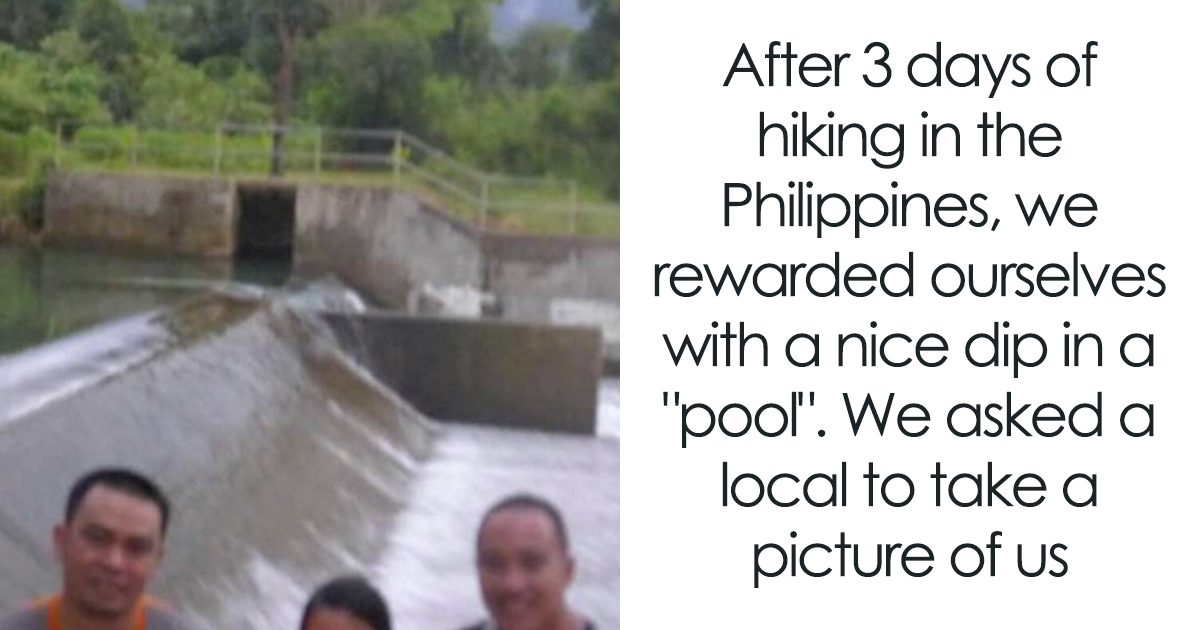
Some volunteers believe scenery should occupy 99 percent of the frame. You appear as two distant pixels standing near the bottom, identifiable only because you remember what you were wearing.
Wide compositions can be beautiful, but the subject still needs visual importance. Photography guides recommend balancing subjects with negative space and using grid intersections to create a deliberate composition rather than placing important elements randomly.
5. The Crooked Horizon
Nothing makes a calm ocean look more dangerous than a horizon tilted 25 degrees. In the resulting image, the beach appears to be draining into the Atlantic while everyone struggles to remain upright.
Modern phones often include optional grids and electronic levels specifically designed to prevent crooked framing. Apple, for example, provides grid and level tools that help users straighten and compose shots before pressing the shutter.
Of course, these tools only help when the photographer knows they exist and does not treat every photo like a scene from an action movie.
6. The Mid-Blink Masterpiece
You smile, hold the pose, and wait. The stranger waits too. Eventually, your eyes begin watering, your jaw trembles, and you blink. That is the exact moment the photographer chooses.
Some devices can capture multiple frames or recommend better expressions. Google’s supported Pixel features, for example, can select or combine stronger facial expressions from several images in compatible modes.
A stranger using one-shot-and-done photography gives you no such protection. They capture a single frame in which one person sneezes and the other appears to be negotiating with an invisible ghost.
7. The Surprise Zoom
You hand over a phone with the camera set to standard view. The stranger pinches the screen, activates digital zoom, and creates a grainy close-up of your nostrils.
Another version happens when the camera was already zoomed in. The photographer does not notice and takes a tightly cropped picture featuring three-quarter faces and no evidence of the surrounding location.
8. The Background Disaster
Excellent stranger photo fails often contain an unexpected supporting actor: a person changing clothes, a child making a face, a dog relieving itself, a bird stealing food, or another tourist posing directly behind the main subjects.
Photographers naturally focus on the people requesting the picture and may stop scanning the rest of the frame. Yet backgrounds can completely change the meaning of an image. A tree may appear to grow from someone’s head. A street sign may form an unfortunate caption. A passing stranger may become the emotional center of the composition.
9. The Camera Is Pointed Somewhere Else
This category includes photographs of shoes, pavement, ceiling tiles, benches, clouds, and the photographer’s torso. Sometimes the shutter is pressed while the phone is being raised. Sometimes it is pressed repeatedly while the volunteer tries to find the correct button.
The result is an experimental collection titled “Things Near the Ground, 4:17 P.M.”
10. The Photographer Becomes the Star
A bold volunteer may misunderstand the assignment and take a selfie with the phone owner posing in the distant background. Others intentionally leave a funny picture of themselves as a harmless surprise.
Although this does not produce the requested photograph, it may become a better travel story. Years later, you may forget the ordinary monument pose but remember the cheerful stranger who added a close-up of himself giving two thumbs up.
Why These Failed Photos Are So Funny
Stranger photo fails are built on the collision between expectation and reality. The people posing expect a polished souvenir. The image they receive looks as though it was taken during an earthquake by someone escaping a bear.
The mistakes are also innocent. In most cases, nobody intended to ruin the photograph. The volunteer was trying to help, the subjects were trying to preserve a moment, and the camera quietly decided to produce evidence of human limitations.
These pictures also expose the strange confidence created by smartphones. Because nearly everyone owns a camera, we assume nearly everyone understands composition. That is like assuming everyone with a kitchen owns a Michelin star.
Even professional travel photographers emphasize that successful images depend on observation, patience, human connection, and intentional framingnot simply access to equipment. National Geographic guidance recommends building rapport with people and taking time to understand the scene instead of rushing the interaction.
How to Ask a Stranger for a Better Picture
Choose the Right Person
Look for someone who is not rushing, arguing, eating soup, carrying six shopping bags, or attempting to control several small children. A person already taking pictures may be a better candidate because they are familiar with camera apps and understand why the landmark should remain visible.
Couples and other tourists can be helpful because you can offer to take their picture in return. This creates a tiny international treaty based on mutual photographic assistance.
Set Up the Camera First
Open the camera app, select the preferred lens, turn off unnecessary filters, adjust the exposure, and switch on the grid before handing over the phone. Do not expect the stranger to navigate your settings while you explain that the left side of your face is “more editorial.”
Clean the lens as well. A fingerprint can turn city lights into glowing blobs and make every image look like a dream sequence from a soap opera.
Give One or Two Clear Instructions
Use simple directions such as, “Please include our full bodies and the tower,” or, “Could you take three horizontal pictures?” That is usually enough.
Avoid giving a lecture about symmetry, focal length, negative space, and emotional storytelling. The volunteer did not apply for an internship.
Show the Desired Frame
Stand where the photographer will stand and quickly compose the image yourself. Then hand over the phone without changing the position. This visual demonstration is more useful than explaining the frame with frantic hand gestures.
Ask for Several Photos
Request three or four shots rather than one. Expressions change, people blink, pedestrians move, and focus can shift. Multiple frames increase the chance that at least one image will be usable.
Burst and Live Photo features can also preserve several moments around the shutter press on supported devices, giving you more options afterward.
Check the Result Politely
Review the image before the photographer leaves. If it is unusable, ask for another attempt without insulting the person who just provided free labor.
Try: “This is great, but could we get one slightly wider?” Do not say: “Why did you photograph only our knees?” even when that is an entirely reasonable question.
Should You Hand Your Phone to a Stranger?
Bad framing is not the only possible risk. A smartphone may contain private photographs, messages, financial apps, passwords, email accounts, and personal documents. The Federal Trade Commission recommends protecting phones with strong passcodes, current software, backups, and tools that can locate or remotely secure a lost device.
Travelers should be especially cautious in crowded tourist areas where distraction theft and pickpocketing can occur. U.S. government travel guidance notes that mobile devices are vulnerable to theft, compromise, and damage abroad, while CISA recommends considering both the physical and digital security of portable devices.
You do not need to treat every friendly tourist as an international criminal. Basic judgment is usually enough:
- Avoid handing over an unlocked phone when sensitive apps are visible.
- Remain close to the photographer.
- Do not choose someone positioned beside a running motorcycle or getaway boat.
- Use restricted camera access from the lock screen when available.
- Back up important travel photos regularly.
A compact tripod, Bluetooth remote, smartwatch shutter control, or self-timer can eliminate the need to hand over the device at all.
Photography, Consent, and the People in the Background
Stranger-assisted photography also raises questions about people unintentionally captured in the frame. In the United States, photography in genuinely public spaces is broadly protected, although rules can change on private property and when images are used commercially. The ACLU recognizes photography as an important protected activity, while privacy concerns become more serious where someone has a reasonable expectation of privacy.
Legal permission and good manners are not always identical. A person in the background may be uncomfortable appearing in a public post, particularly when the image reveals a sensitive location or activity. Research on multi-party image privacy has examined how background subjects can be unintentionally exposed when photographs are shared online.
Before posting a funny photo fail, consider blurring identifiable strangers, especially children or people shown in embarrassing situations. AARP’s social-media etiquette guidance recommends asking before posting identifiable pictures of friends or companions because people have different preferences about their online presence.
The funniest image is not always the one that should be uploaded without thought.
When a Bad Photo Becomes a Better Memory
Perfect vacation pictures are attractive, but they often resemble thousands of other carefully posed images. A failed photograph contains a story.
The crooked picture reminds you of the enthusiastic grandfather who accidentally activated panorama mode. The blurry photo recalls the windy cliff where nobody could stand still. The accidental selfie preserves the face of the stranger who laughed, apologized, and tried again.
Technical quality matters, but emotional value does not always require technical perfection. A photograph can be overexposed, badly framed, or invaded by a seagull and still become the image everyone remembers.
Sometimes regret is temporary. Today’s ruined portrait may become tomorrow’s favorite family joke.
More Experiences From the Unpredictable World of Stranger Photography
One of the most familiar experiences begins at a crowded observation deck. A couple waits patiently for the railing to clear, finds a friendly-looking tourist, and hands over a phone. The volunteer steps backward to fit everything into the frame. Then he steps backward again. By the third step, the couple is no longer watching the scenery. They are silently calculating whether their phone is about to disappear into a fountain.
The pictures are eventually returned. Every image includes a beautifully centered trash can. The couple is visible near the edge, where one person is partially cropped and the other appears concerned about the phone’s survival. The skyline, which was the entire point of the exercise, has been replaced by a bright white sky because the exposure favored the subjects’ faces.
Another common story happens at weddings. Guests dressed in their best clothing gather for a rare group portrait and recruit someone passing nearby. The stranger presses the shutter once, nods professionally, and vanishes. Later, the group discovers that the camera focused on a floral arrangement in the foreground. Every person is soft and blurry, while one decorative rose is sharp enough to qualify for its own magazine cover.
Theme parks create a different challenge. Families ask strangers to photograph them in front of a famous attraction, but the background is filled with moving people, strollers, balloons, and costumed characters. In one frame, everyone looks perfect except for a passerby whose raised arm appears to emerge from the father’s ear. In another, a child has stopped smiling and is staring at something terrifying outside the frame. The final photo captures a bird crossing directly in front of the lens.
Restaurants are equally dangerous. A group celebrating a birthday hands a phone to a server and crowds around the table. The server, already balancing several responsibilities, takes the picture quickly. The flash reflects from glasses, the candles disappear in a white explosion, and the birthday guest is hidden behind a decorative centerpiece. Everyone says the image is wonderful because the server is standing there.
Then there is the traveler who wants an adventurous picture near a beach, mountain, or waterfall. The photographer is asked to capture the natural scale of the landscape, but interprets this request as permission to stand half a mile away. The travelers become tiny specks. When they zoom in later, their faces contain roughly four pixels each.
Some failures occur before the photograph is taken. The stranger cannot unlock the camera, accidentally opens the calculator, or begins swiping through notifications. The phone owner attempts to explain from the posing location by shouting, “The white circle! Press the white circle!” Nearby tourists assume an emergency is underway.
Occasionally, the volunteer improves the situation through enthusiasm. They crouch, move sideways, direct the subjects, request a candid walking shot, and take both horizontal and vertical versions. The owners receive a miniature professional photo session from someone they met 30 seconds earlier. These unexpectedly excellent encounters are the reason people continue trusting strangers despite all evidence provided by the internet.
The most memorable experience, however, may be the completely failed image that captures something real. A child laughs because a parent loses balance. A dog jumps into the frame. A wave surprises everyone. The volunteer’s finger appears in the corner, the horizon is crooked, and nobody is posing correctlybut the happiness is genuine.
That is the strange charm behind these stories. Asking a stranger for a picture is a small act of trust. Sometimes that trust produces a polished keepsake. Sometimes it produces a photograph of the sidewalk. Either way, the exchange becomes part of the memory, and the worst picture may eventually tell the best story.
Final Thoughts
The 111 stranger photo fails are more than a collection of unfortunate angles and accidental selfies. They celebrate the unpredictable moment when technology, good intentions, limited instructions, and questionable composition skills collide.
To improve your odds, prepare the camera, choose a calm volunteer, demonstrate the frame, give simple instructions, and request several shots. Protect your device, respect the privacy of background subjects, and remember that no landmark is worth handing an unlocked phone to someone already stretching for a sprint.
Most importantly, keep the failures. A perfectly composed picture may earn likes, but a photograph featuring half your face, a stranger’s thumb, and a confused pigeon will provide entertainment for years.
Note: The scenarios in this article represent recurring types of publicly shared photography mishaps and common travel-photo experiences. Details are generalized rather than attributed to private individuals.