A widow’s peak sounds less like a hairstyle and more like a cliff where a Victoriaome people have at the center of the frontal hairline. The dramatic name grew from old mourning fashions and a superstition that tried to turn a harmless patch of hair into a forecast of marital tragedy. Here is how the term developed, what science says about the hairline itself, and why the feature still attracts so much attention.
What Is a Widow’s Peak?
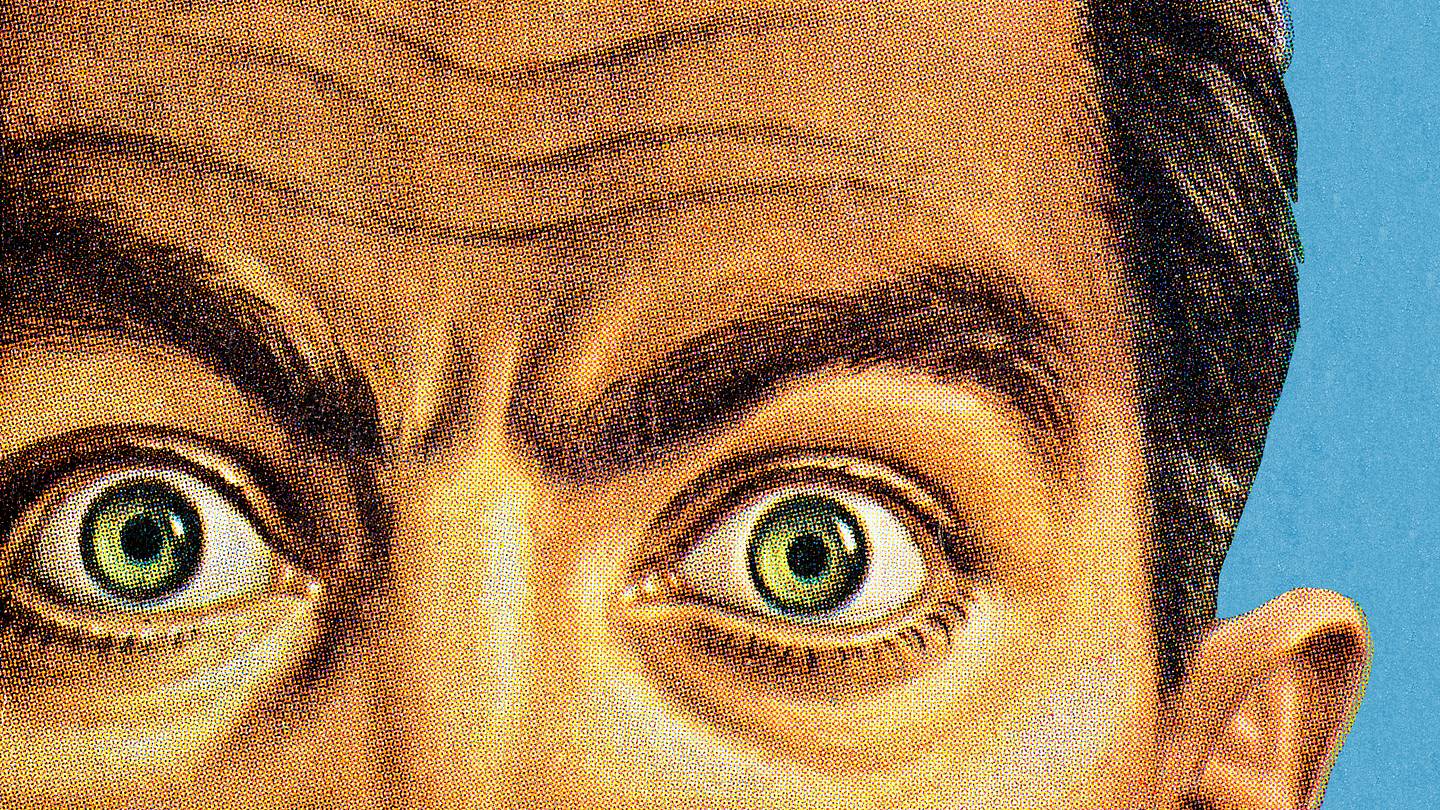
A widow’s peak is a frontal hairline that curves downward to a noticeable point in the middle of the forehead. The point may be sharp and theatrical, or so subtle that it appears only when the hair is combed straight back. Medical morphology references describe it as two arcs of the frontal hairline meeting at a lower central point. In plain English, the hairline makes a small V instead of running straight across or forming a broad, rounded curve. ture occurs in people of all genders. It can be present from childhood, become more noticeable as a person changes hairstyles, or appear more prominent when nearby hair thins. A natural widow’s peak is usually a normal variation in appearance, not a disease, warning sign, or supernatural telegram from the universe. A 2021 dermatology review described it as a morphogenetic trait and noted that it is a normal variant in most cases.
Why Is It Called a Widow’s Peak?
The Shape Resembled a Pointed Mourning Hood
The most widely accepted explanation begins with European mourning clothing. Widows once wore formal mourning garments that could include black hoods, caps, or veils. Some of these headdresses formed a pointed projection over the center of the forehead. A natural V-shaped hairline resembled that downward point, so people began describing the hairline as a widow’s peak.
Historical accounts often connect the image with a pointed hood sometimes called a biquoquet, as well as with caps associated with Mary, Queen of Scots. The exact family tree of hats, hoods, and terminology is not perfectly tidy. Fashion history rarely behaves like a labeled storage closet. Still, etymological references consistently connect the expression with the peak of a widow’s mourning hood. rstition Made the Name More Dramatic
The name was reinforced by an old belief that a woman with this hairline was destined to become a widow early. There was never credible evidence for that claim. It belonged to the long tradition of reading fate into ordinary physical features—the same imaginative hobby that assigned personalities to dimples, moles, palm lines, and eyebrows.
The logic ran backward: a pointed hairline looked like a widow’s pointed hood, so folklore turned the resemblance into an omen. That made the term memorable, even though the prediction was nonsense. The hairline did not cause widowhood, predict widowhood, or secretly audition anyone’s spouse for a tragic novel. pression Appeared in the 19th Century
The phrase entered documented English usage in the mid-1800s. Dictionary.com places its first recorded use in the 1840–1850 period, while other word histories cite 1849. The word peak had already been used for a pointed section of hair at the forehead by the 1830s. Adding widow’s supplied the gloomy fashion reference and gave the expression its staying power.
What Actually Causes a V-Shaped Hairline?
A person’s hairline reflects development, follicle placement, age, hormones, and patterns of hair growth or loss. The center point of a widow’s peak forms because hair extends farther down the forehead at the midline than it does on either side. Researchers have proposed developmental explanations involving how hair-growth boundaries form across the forehead, but the complete biology is still more complicated than a one-sentence diagram in a school workbook. idow’s Peak Genetic?
Family resemblance suggests that biology matters, but the popular claim that a widow’s peak is controlled by one simple dominant gene is not supported by strong evidence. For decades, classroom exercises treated the feature like a basic Mendelian trait: one version of a gene supposedly produced a peak, while another produced a straight hairline. Human appearance is rarely that cooperative.
A University of Delaware review of the evidence found no solid basis for the single-gene story, and modern research on facial traits describes the genetic background of widow’s peaks as incompletely understood. Consumer genetic research also indicates that both genetic and non-genetic factors may influence whether the feature is visible. The most responsible answer is that inheritance may contribute, but the trait should not be used as a neat demonstration of simple dominant inheritance. e Shape Change Over Time?
Yes. A childhood hairline can mature, and aging may change the density and outline of frontal hair. Hormonal shifts, hereditary hair loss, traction from tight hairstyles, and certain forms of alopecia can also alter the hairline. That means a modest central point may become more obvious when the temples recede, even if the person did not have a striking peak when younger.
Widow’s Peak vs. Receding Hairline
A widow’s peak and a receding hairline are not the same thing. A natural widow’s peak is a shape. A receding hairline is a change, usually involving progressive loss or thinning near the front or temples.
Signs of a Natural Widow’s Peak
- The V-shaped point has been present since childhood or adolescence.
- The hair around the point has normal density.
- The shape remains fairly stable in photographs taken over several years.
- There is no unusual shedding, irritation, scarring, or rapid thinning.
Signs That the Hairline May Be Receding
- The temples are moving backward or becoming uneven.
- The central point looks more isolated than it did before.
- Hair density is decreasing near the front or crown.
- The change continues from month to month or year to year.
Hereditary male-pattern hair loss often begins with a receding hairline or thinning at the crown. Other conditions, including traction alopecia and frontal fibrosing alopecia, can also affect the front of the scalp. A dermatologist can distinguish a stable hairline shape from active hair loss, especially when changes are sudden, patchy, itchy, painful, or accompanied by eyebrow loss.
Why the Widow’s Peak Became a Pop-Culture Shortcut
A sharply pointed hairline frames the face, creates visual symmetry, and draws the eye toward the eyebrows. Costume designers and illustrators have often used it to make characters look intense, aristocratic, mysterious, or slightly dangerous. Count Dracula is the classic example, but comic-book villains, vampires, detectives, romantic leads, and even cheerful cartoon characters have all worn versions of the shape.
This repeated use gave the widow’s peak a theatrical reputation. It can suggest a gothic castle, a tuxedo, and suspicious organ music before the character has said a word. Yet the same hairline can look soft, elegant, youthful, or completely ordinary depending on the haircut, face shape, and styling. The feature itself has no personality. Hair, regrettably, has never completed a psychological evaluation.
How to Style a Widow’s Peak
The easiest approach is usually to work with the point rather than wage a daily border dispute against it. A center part can emphasize symmetry, while a side part softens the V and shifts attention across the forehead. Textured crops, swept-back styles, pompadours, loose waves, and slicked-back looks can all turn the peak into a deliberate feature.
For Short Hair
A textured fringe can blend the center point into the rest of the hairline. A close crop makes the outline look clean and graphic, while a swept-back top highlights it. The best option depends more on hair density and face shape than on the peak alone.
For Medium or Long Hair
Soft curtain bangs, side-swept bangs, waves, and layered face-framing pieces can make the hairline less prominent without hiding it completely. People who enjoy the shape can pull their hair back and let the point act like a natural design detail.
Should You Remove or Reshape It?
Some people tweeze, wax, shave, use lasers, or choose cosmetic procedures to create a straighter hairline. Shaving may produce visible stubble and requires frequent maintenance. Overplucking can create an uneven line that is harder to correct than the original peak. Anyone considering permanent hair removal, transplantation, or scalp micropigmentation should consult a qualified professional and discuss how the new outline will age with the rest of the hairline.
Common Questions About Widow’s Peaks
Do Only Women Have Widow’s Peaks?
No. The term refers to the old widowhood association, not to who can have the trait. Men, women, and children can all have V-shaped hairlines.
Does a Widow’s Peak Mean You Will Lose Your Spouse?
No. That idea is folklore, not biology. A hairline cannot predict relationship outcomes, life expectancy, or whether someone will eventually own an alarming amount of black clothing.
Is a Widow’s Peak Rare?
It is not exceptionally rare, although estimates vary because researchers do not always use the same definition. A subtle peak may be classified differently from a dramatic one, and aging can blur the distinction between a natural point and a receding hairline. Population studies have found the feature in both men and women. a Sign of a Medical Condition?
Usually, no. A widow’s peak by itself is generally a normal physical variation. It has been reported as one feature in a small number of rare genetic syndromes, but a common hairline shape alone does not diagnose anything. Medical evaluation is more relevant when the hairline changes rapidly or appears with other symptoms.
Everyday Experiences With a Widow’s Peak
The following scenarios are composites based on common experiences, not quotations from specific individuals.
The Childhood Nickname That Eventually Became a Compliment
One common experience begins in school, where any visible difference can become a nickname before lunch. A child with a strong V-shaped hairline may hear comparisons to Dracula, a comic-book character, or a cartoon villain. At first, the attention can make the feature feel like something that needs to be hidden under bangs. Years later, the same person may discover that photographers, barbers, or stylists consider the hairline striking and memorable. What once seemed like an awkward point becomes part of a recognizable face. The physical feature did not change much; the meaning attached to it did. That shift is a useful reminder that appearance is often judged through fashion, confidence, and context rather than through any fixed rule of attractiveness.
The Bangs Experiment
Another familiar story involves bangs and an optimistic bathroom mirror. Someone decides that the peak must disappear, cuts a fringe, and learns that hair growing from the center of the forehead may have strong opinions about direction. The bangs split, lift, or form a tiny curtain exactly where concealment was planned. After trying more product than a reasonable economy should permit, the person visits a stylist. The solution is often not heavier control but a different cut: longer side-swept bangs, softer layers, or a fringe shaped around the growth pattern. The experience can be mildly annoying, but it teaches a practical lesson. Styling tends to work better when it cooperates with follicle direction instead of treating the hairline as a hostile engineering problem.
The Hair-Loss Scare
A third experience occurs when someone notices that the V looks sharper than it used to. A few old photos show a softer outline, and suddenly every shower drain seems like evidence in a crime investigation. Sometimes the explanation is simple: a shorter haircut, brighter bathroom lighting, or hair pulled tightly away from the face. In other cases, the temples really are thinning. Comparing dated photographs, checking density around the point, and consulting a dermatologist can replace guesswork with an actual assessment. The important distinction is between a stable shape and progressive change. A widow’s peak is not hair loss, but recession around it can make the central section appear dramatically more pointed.
Choosing to Feature It
Many people eventually stop trying to flatten or erase the peak and make it the centerpiece of a haircut. A barber may sharpen the surrounding line while keeping the natural center point. A person with long hair may use a slicked-back ponytail, center part, or vintage wave that turns the V into a deliberate focal point. The result often feels more polished because it looks intentional. Confidence does not require loving every hair day, of course; even excellent hairlines occasionally wake up committed to chaos. Still, treating the widow’s peak as a design element rather than a defect can simplify styling and reduce unnecessary grooming. The most successful look is usually the one that suits the person’s hair texture, density, routine, and taste.
Conclusion: A Dramatic Name for an Ordinary Trait
A V-shaped hairline is called a widow’s peak because it resembles the pointed front of historical mourning headwear associated with widows. An old superstition then claimed that the feature predicted early widowhood, giving the term its dark and memorable flavor. The phrase became established in the 19th century and survived long after the clothing custom and superstition faded.
Scientifically, a widow’s peak is usually just a normal variation in the frontal hairline. It may reflect a mix of developmental, genetic, age-related, and environmental influences, but it is not a proven single-gene trait and it does not predict anyone’s fate. In other words, the hairline is real; the prophecy is not.