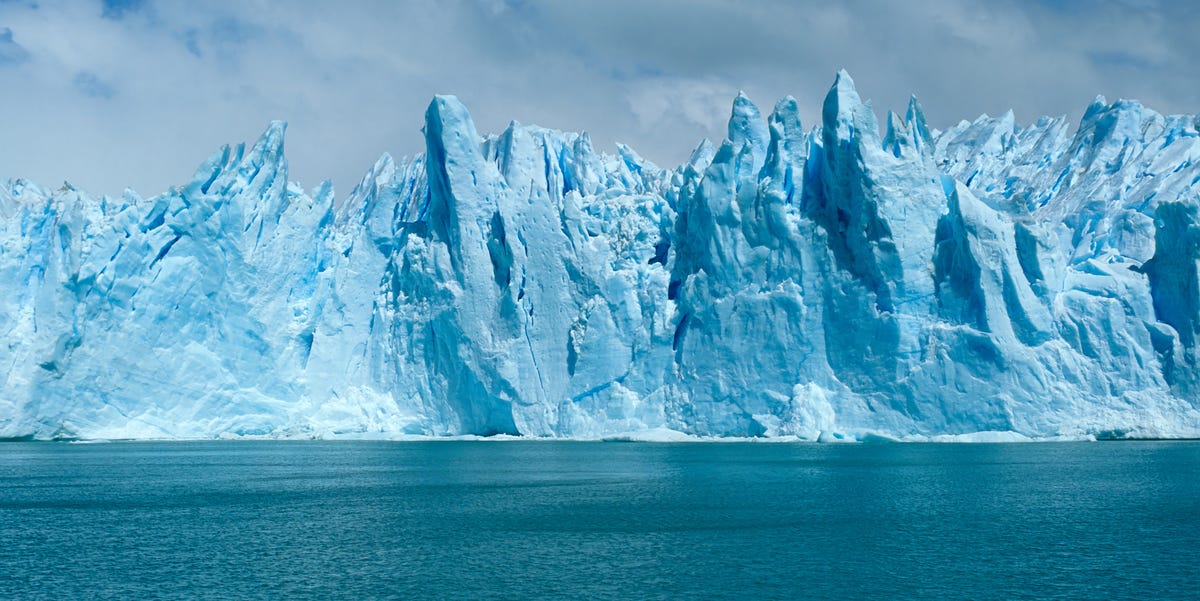
Imagine the planet’s emergency plan involves building a giant underwater wall in Antarctica. It sounds like the kind of idea a movie villain would announce while standing beside a hologram of Earth. But the concept is real, serious, and being studied by scientists who are worried about one of the most dangerous climate feedbacks on the planet: warm ocean water sneaking beneath floating ice shelves and melting glaciers from below.
The idea is often described as a giant underwater wall, seabed curtain, artificial sill, or glacier barrier. The basic goal is simple enough for a refrigerator magnet: block warm water before it reaches vulnerable glacier bases. The execution, however, is less “weekend DIY project” and more “largest civil engineering challenge in human history, but make it icy.”
This proposal is especially linked to Thwaites Glacier in West Antarctica, sometimes nicknamed the “Doomsday Glacier.” That name is dramatic, but the concern behind it is not hype. Thwaites is enormous, unstable, and connected to a much larger part of the West Antarctic Ice Sheet. If it retreats too far, it could help unlock enough inland ice to raise global sea levels dramatically over time. Coastal cities, ports, wetlands, military bases, beaches, and millions of homes would all be forced into a very wet conversation.
So, could a giant underwater wall really stop glaciers from melting? The honest answer is: it might slow the most dangerous kind of melting in specific places, but it would not replace cutting greenhouse gas emissions. Think of it as a possible emergency brake, not a license to keep flooring the climate gas pedal.
Why Glaciers Are Melting from Below
When most people picture glacier melting, they imagine sunshine beating down on ice like a cosmic hair dryer. That happens, especially in Greenland and mountain glacier regions. But in West Antarctica, a major threat comes from below. Relatively warm ocean water flows along the seafloor and reaches the underside of floating ice shelves. These ice shelves act like frozen doorstops, slowing the flow of inland ice into the ocean.
When warm water melts the bottom of an ice shelf, the shelf becomes thinner and weaker. Cracks spread. The grounding linethe place where the glacier stops resting on bedrock and starts floatingcan retreat inland. If the bed beneath the glacier slopes downward toward the interior, retreat can become self-reinforcing. In plain English: once the glacier starts backing up, the slope may invite it to keep backing up, like a shopping cart rolling downhill while everyone argues about who was supposed to hold it.
This process is one reason Thwaites Glacier receives so much scientific attention. It is grounded below sea level, exposed to warm deep water from the Amundsen Sea, and already losing large amounts of ice. Its collapse alone could eventually add roughly two feet to global sea level, and its retreat could destabilize neighboring ice systems that hold much more water.
What Is the Giant Underwater Wall Idea?
The “wall” is not necessarily a concrete wall like something built around a backyard pool. Scientists have discussed several designs. One is an artificial sill made of rock, gravel, or other material placed on the seafloor. Another is a flexible seabed-anchored curtain that rises from the ocean floor and blocks or redirects warm deep water. A curtain sounds delicate, but this would not be your grandmother’s living room drape. It would need to survive crushing pressure, freezing temperatures, icebergs, storms, currents, corrosion, and a neighborhood where maintenance crews cannot exactly pop by after lunch.
The most widely discussed versions aim to block warm water from reaching the grounding zone of glaciers like Thwaites and Pine Island. In theory, if the warmest deep water is kept away, basal melting slows. A stronger ice shelf could continue buttressing the inland glacier. That would reduce the rate at which ice flows into the ocean, slowing sea level rise and buying coastal communities more time to adapt.
Early modeling studies explored artificial sills and pinning points. More recent work has examined flexible curtains that could be anchored to the seabed. Some proposals imagine structures tens of miles long and hundreds of feet high. The goal is not to freeze Antarctica back to some postcard-perfect past. The goal is to interrupt a very specific ocean pathway that is delivering heat to the glacier’s most vulnerable underside.
Why Thwaites Glacier Gets So Much Attention
Thwaites Glacier is about the size of Florida or Great Britain, depending on which comparison you prefer and how much you enjoy geography trivia. It helps drain a large part of West Antarctica into the ocean. Scientists have found that it is retreating, thinning, and being attacked from below by warm water. Underwater robots, satellites, radar surveys, ice-penetrating instruments, and ocean sensors have all helped reveal a glacier that is more complicated than a simple block of ice sliding into the sea.
One surprising finding is that melt rates are not uniform. Some flatter areas under the ice shelf may melt more slowly than expected, while cracks, crevasses, terraces, and steep ice surfaces can melt quickly. This matters because cracks are like shortcuts for trouble. Warm water entering them can weaken the ice shelf from the inside, creating structural damage even when average melt rates look less alarming.
Thwaites also matters because of its position. It is sometimes described as a cork holding back part of the West Antarctic Ice Sheet. Remove the cork, and inland ice may flow more easily toward the sea. The timing is uncertain, and scientists are careful not to claim that collapse will happen overnight. But the long-term risk is large enough that researchers are asking uncomfortable questions, including whether humans may eventually need to intervene directly at the glacier-ocean boundary.
How an Underwater Barrier Could Work
1. Blocking Warm Deep Water
The first job of a seabed wall or curtain would be to reduce the flow of warm, dense ocean water toward the glacier. Around Antarctica, relatively warm deep water can move through troughs and channels in the continental shelf. If a barrier is placed in the right channel, it could act like a bouncer at a very exclusive ice club: cold water may pass, but warm water gets redirected.
2. Protecting the Ice Shelf
Ice shelves slow inland glaciers by providing resistance. This is called buttressing, which sounds like medieval architecture because, emotionally, it kind of is. The ice shelf braces the glacier. If the shelf thins or breaks apart, the glacier behind it can speed up. A barrier that reduces melting beneath the ice shelf could help preserve that buttressing effect.
3. Encouraging Regrounding
Some artificial sill concepts imagine giving the ice shelf a new place to touch down, or “reground.” When floating ice contacts a raised structure on the seabed, it can regain resistance and slow the flow of ice from land to sea. This is one reason artificial sills have been studied in computer models. The structure would not need to hold back the entire ocean. It would need to change the physics at the right choke point.
4. Buying Time
The best-case purpose is not permanent victory over melting. It is time. Time for emissions cuts to matter. Time for coastal defenses to be built wisely. Time for communities to plan instead of panic. Time for scientists to improve projections. In climate adaptation, time is not a luxury item; it is the difference between a planned relocation and a disaster headline.
The Engineering Challenge Is Absolutely Huge
Building an underwater wall in Antarctica is not like installing a fence. There is no hardware store aisle labeled “Doomsday Glacier accessories.” Any project would face extreme cold, remote logistics, moving sea ice, iceberg impacts, deep water, strong currents, limited working seasons, and environmental rules designed to protect one of the least disturbed regions on Earth.
Materials would need to resist fatigue, tearing, corrosion, and mechanical stress. Anchors would need to hold on the seabed. The structure would have to perform for decades, perhaps longer. It would require ships, robotics, monitoring systems, international governance, emergency repair plans, and enough funding to make ordinary infrastructure budgets blush.
Even testing is complicated. Scientists cannot simply experiment on Thwaites Glacier the way a chef tests soup. Smaller trials would likely begin in more accessible Arctic or sub-Arctic waters, such as fjords, where engineers can study materials, anchoring, currents, ecological effects, and maintenance methods. Only after years of research could anyone responsibly consider whether Antarctic deployment is technically, legally, and ethically possible.
Environmental Risks and Scientific Uncertainty
A giant underwater wall could have side effects. Ocean circulation is connected. Redirecting warm water away from one glacier might send it somewhere else. That could increase melting at neighboring ice shelves or change local marine ecosystems. Sediment disturbance, noise, construction traffic, and long-term changes in water flow could affect Antarctic habitats that are still poorly understood.
There is also the risk of false confidence. If politicians or industries treat glacier geoengineering as an excuse to delay emissions cuts, the idea becomes dangerous. Scientists involved in this research repeatedly stress that glacier intervention would not solve global warming. Carbon dioxide would still accumulate. Oceans would still warm. Heat waves, droughts, storms, coral bleaching, and other climate impacts would still worsen. A glacier wall would address one symptom in one region, not the whole disease.
Another uncertainty is performance. Computer models can estimate possible benefits, but models are only as good as the data and assumptions behind them. Antarctica’s underside is hard to observe. Seafloor shape, water temperature, salinity, turbulence, ice fractures, and changing winds all influence outcomes. A barrier could work better than expected, worse than expected, or work for a while and then require major redesign.
Why Not Just Let Nature Handle It?
That question is fair. Antarctica is remote, beautiful, and not exactly asking for human construction crews. But sea level rise does not stay in Antarctica. It visits Miami, New York, Norfolk, Charleston, New Orleans, Boston, San Francisco, Honolulu, and thousands of smaller coastal communities. It pushes saltwater into drinking supplies. It raises the starting point for storm surge. It turns rare floods into regular annoyances and regular annoyances into insurance nightmares.
Global average sea level has already risen significantly since the late nineteenth century, and the rate has accelerated as oceans warm and land ice melts. U.S. federal sea level assessments project additional rise along American coastlines in coming decades, increasing the frequency of coastal flooding. Even a foot of sea level rise can make storms more destructive because water starts higher before the wind even gets dramatic.
That is why targeted glacier intervention is being discussed. It is not because scientists are bored and looking for the world’s hardest construction project. It is because the cost of unchecked sea level rise could be measured in trillions of dollars, lost ecosystems, forced migration, cultural loss, and permanent changes to coastlines.
Could This Stop All Glaciers from Melting?
No. This is a very important no. A giant underwater wall could not stop all glaciers from melting. It would not help mountain glaciers in the Rockies, Alps, Andes, or Himalayas. It would not stop surface melting from heat waves. It would not restore sea ice. It would not reverse ocean warming. It would not persuade carbon dioxide to pack its bags and leave the atmosphere.
The concept applies mainly to marine-terminating glaciers where warm ocean water melts floating ice from below and where the seafloor has channels that can be strategically blocked. That means only a small number of glaciers may be realistic candidates. The good news is that a small number of glaciers may contribute disproportionately to future sea level rise. The bad news is that these glaciers are in some of the hardest places on Earth to reach.
The Moral Question: Should Humans Engineer Glaciers?
Glacier geoengineering raises serious ethical questions. Who decides whether to build such a structure? Which countries pay? Who is responsible if it fails? What happens if it protects some coastlines while harming ecosystems or changing ocean conditions elsewhere? Antarctica is governed by international agreements, and any major intervention would require broad scientific, legal, and diplomatic review.
There is also intergenerational responsibility. A barrier might need maintenance for decades or centuries. Starting such a project could create obligations for future people who did not vote for it, budget for it, or ask to inherit humanity’s giant underwater curtain subscription plan.
On the other hand, doing nothing is also a decision. If preventable ice loss leads to severe sea level rise, future generations may ask why earlier societies refused to study possible emergency tools. The responsible path is not reckless construction. It is careful research, transparent governance, public debate, and continued commitment to emissions reduction.
What Would a Responsible Research Plan Look Like?
A serious plan would start small. Researchers would improve ocean and ice models, map seabed channels in greater detail, test materials in controlled environments, and run experiments in accessible fjords. Engineers would study anchoring systems, flexible curtain behavior, ice impact risk, and maintenance needs. Marine scientists would examine possible ecological changes. Legal experts would evaluate Antarctic treaty obligations and international approval processes.
Public communication would also matter. The phrase “giant underwater wall” grabs attention, but it can also mislead. The project is not a magic shield. It is one possible tool for reducing ocean-driven melt at certain glaciers. Clear language can prevent both panic and overconfidence.
Most importantly, research should be paired with aggressive climate mitigation. If global warming continues unchecked, any barrier would be fighting a worsening ocean. That is like mopping the floor while the bathtub is still overflowing and the dog has learned to turn the faucet back on.
Experiences and Practical Reflections on the Giant Underwater Wall Idea
When people first hear about a giant underwater wall to stop glacier melting, the reaction usually falls into one of three categories: amazement, skepticism, or nervous laughter. All three make sense. The idea is bold enough to feel inspiring, strange enough to sound fictional, and serious enough to make everyone sit up a little straighter.
One useful way to experience this topic is through comparison. Visit any coastal city during a king tide, and sea level rise stops being abstract. Water bubbling through storm drains or spilling onto streets on a sunny day can feel almost polite compared with a hurricane, but it sends a message: the ocean does not need drama to cause trouble. Now imagine that baseline rising higher year after year. A glacier thousands of miles away suddenly feels less remote.
Another experience comes from looking at engineering history. Humans have built sea walls, storm surge barriers, tunnels, offshore platforms, floating bridges, and artificial islands. The Netherlands has spent generations learning how to live with water. New Orleans has levees and pumps. Venice has movable flood barriers. These projects prove that large water-control systems are possible. They also prove that they are expensive, politically complicated, and never truly finished. Maintenance is part of the bargain.
The glacier wall idea pushes that experience into a far harsher setting. Antarctica is not a friendly construction site. There are no nearby supply chains, no easy rescue routes, and no forgiving weather windows. If a bolt fails, a sensor freezes, or a curtain tears, repairs could be dangerous and slow. Anyone imagining this project must replace the phrase “build it and forget it” with “build it, monitor it, repair it, argue about it internationally, and repeat.”
There is also a psychological experience attached to glacier intervention. Climate change often feels too large for individuals to grasp. A seabed curtain gives the mind something concrete to picture. That can be helpful. People understand barriers, currents, and protection. But it can also oversimplify the issue. The wall is not the hero riding in at the end of the movie. At best, it is one member of a very large rescue team that must include clean energy, coastal adaptation, ecosystem protection, smarter infrastructure, and better risk planning.
For students, writers, engineers, and climate-curious readers, this topic is a reminder that the future will require imagination as well as discipline. Some climate solutions are beautifully ordinary: insulation, solar panels, public transit, wetland restoration, efficient buildings. Others are astonishingly ambitious, like protecting glaciers with underwater barriers. The trick is to study bold ideas without letting them become excuses for avoiding obvious ones.
My practical takeaway is this: the giant underwater wall should be treated like a fire extinguisher behind glass. We should know whether it works. We should test it responsibly. We should understand the risks before the emergency gets worse. But nobody should look at the fire extinguisher and decide it is fine to keep tossing matches around the room.
If the research eventually shows that a seabed curtain can safely slow the retreat of a glacier like Thwaites, it could become one of the most important adaptation tools ever considered. If the research shows it is too risky, too costly, or ineffective, that knowledge is also valuable. Either way, studying the idea now is better than making panicked decisions later when seas are higher, coastlines are stressed, and the bill has grown teeth.
Conclusion
A giant underwater wall could potentially slow the melting of certain glaciers by blocking warm ocean water from attacking their undersides. For glaciers like Thwaites, where ocean-driven melt threatens ice shelf stability and long-term sea level rise, the idea deserves serious research. It is not science fiction, but it is not a simple fix either.
The concept faces enormous engineering, environmental, legal, and ethical challenges. It may help buy time, but it cannot replace the urgent need to cut greenhouse gas emissions. The smartest approach is not choosing between mitigation and intervention. It is doing the hard work of reducing warming while studying whether targeted glacier protection could reduce the worst sea level risks.
In the end, the underwater wall idea tells us something important about this century: climate solutions will need to be both practical and imaginative. Some will fit on rooftops. Some may sit beneath the Antarctic Ocean. All of them will require honesty, cooperation, and the courage to act before the water reaches the doorstep.