
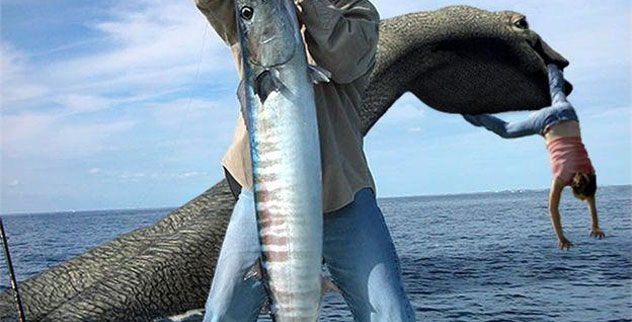
If regular wildlife documentaries aren’t doing it for you anymore, welcome to the wonderfully weird world of cryptids. These are the creatures people swear they saw, heard, photographed badly, or described so passionately that entire towns decided, “You know what? Let’s build a festival around it.” From red-eyed winged terrors to walking pants with attitude, cryptids live in that sweet spot between folklore, fear, pop culture, and late-night road-trip storytelling.
To be clear, cryptids are not scientifically confirmed animals. That is part of the charm. They belong to the borderland where regional legends, misidentifications, hoaxes, memory glitches, and genuine mystery all mingle like strangers at a gas station at 2 a.m. The best cryptid stories are not just about monsters. They are about place. They tell you what a town fears, what it laughs about, and what it proudly puts on a T-shirt.
Below are 10 of the most bizarre cryptids ever to stomp, glide, skitter, or allegedly moonwalk through American folklore. This list is not ranking the “most believable” creatures. Frankly, that would be a very different and much less entertaining article. This is a celebration of the strangest, most memorable, and most gloriously odd legendary beasts in cryptid culture.
1. Fresno Nightcrawlers
If Bigfoot is the heavyweight champion of cryptids, the Fresno Nightcrawlers are the tiny avant-garde art-house darlings. These California legends look less like animals and more like two pairs of ghostly white pajama pants that learned how to walk and never looked back. Their fame exploded after grainy security footage from Fresno circulated online, turning a short clip into one of the internet’s favorite cryptid debates.
What makes the Fresno Nightcrawlers so bizarre is their total refusal to follow normal monster rules. They are not scary in a classic fang-and-claw way. They are eerie because they are absurd. They move with an awkward little stride, as if a laundry basket became sentient and decided to take an evening stroll. And yet that very silliness has given them staying power. They are creepy, cute, and deeply meme-able all at once.
Unlike many cryptids, these little guys are not tangled up in centuries of old folklore. They feel modern, digital, and viral. In other words, they are the perfect cryptid for the age of security cameras and “enhance that blurry footage” internet culture.
2. Loveland Frogman
Ohio’s Loveland Frogman sounds like the kind of thing you’d invent after eating convenience-store sushi at midnight, but the legend has been hopping around for decades. The creature is usually described as a humanoid frog standing upright near the Little Miami River. Some stories say early sightings date back to the 1950s, and the tale got even more attention in the 1970s when police reports became part of the legend.
The Frogman earns a high spot on this list because it is gloriously specific. A frog person is already wonderfully weird, but a frog person tied to one Ohio community? That is the kind of local flavor cryptid fans live for. Even better, Loveland has embraced the legend so enthusiastically that the Frogman now functions almost like a civic mascot. That is the cryptid dream: start as a mystery, end as branding.
There is also something delightfully theatrical about the Frogman. Bigfoot trudges. Mothman looms. The Frogman? The Frogman feels like he should be carrying a tiny wand and muttering swamp spells. He may not be the most famous cryptid in America, but he is definitely one of the most charmingly bizarre.
3. Dover Demon
In April 1977, several teenagers in Dover, Massachusetts, reported seeing a small, strange humanoid with glowing eyes, a huge watermelon-shaped head, and long spindly limbs. That description alone guarantees the Dover Demon a seat at the bizarre cryptid table. This is not your standard hairy forest beast. It sounds more like an alien intern who took a wrong exit.
The Dover Demon remains memorable because the sightings were clustered, the witness sketches were surprisingly similar, and the creature itself was so oddly designed. It was not huge. It was not winged. It was not even especially beast-like. It was more uncanny than monstrous, which often makes a legend stick harder. You can laugh at a giant ape-man. You are less prepared for a small peach-colored thing with a head like a Halloween decoration from another dimension.
Possible explanations have ranged from misidentified animals to teenage imagination running wild. But none of those theories has killed the legend. The Dover Demon still has that priceless cryptid quality: it sounds too weird to forget.
4. Flatwoods Monster
The Flatwoods Monster, also known as the Braxton County Monster, is one of the most visually dramatic cryptids in American lore. Reported in West Virginia in 1952 after witnesses saw a bright object streak across the sky, the creature was described as tall, floating or gliding, with a glowing face and a strange, hood-like shape around its head. In some retellings, it looks like a robot pope from outer space. I say that with respect.
This legend sits at the crossroads of UFO panic and hometown monster mythology. That is part of what makes it so fun. It is not just a beast in the woods. It is a full mid-century sci-fi fever dream. The witnesses also reported a nasty odor and physical discomfort, which only added to the sense that something deeply abnormal had wandered into Flatwoods.
Skeptics have suggested a much less cinematic explanation involving a meteor, shadows, and an owl. That sounds reasonable. It also sounds tragically less exciting than “We met an alien bishop in the hills.” Unsurprisingly, the town leaned into the exciting version.
5. Beast of Bray Road
Wisconsin contributes one of America’s best werewolf-adjacent legends with the Beast of Bray Road. Sightings near Elkhorn in the late 1980s described a shaggy, wolf-like creature walking upright, lurking by roadsides, and generally behaving like it had wandered out of a horror movie and into dairy country.
The Beast of Bray Road is bizarre because it sits between categories. It is not quite a dogman, not quite a wolf, not quite a classic werewolf, and not quite anything zoologists would like to discuss over lunch. It feels stitched together from old European werewolf traditions and modern American roadside panic. The result is a cryptid that is deeply cinematic. You can almost hear the tires screeching as a witness rounds a dark bend and spots something standing where no ordinary animal should be standing.
Elkhorn has embraced the weirdness, because once your town gets a famous werewolf road, you might as well own it. At that point, resisting the legend would just be rude.
6. Jersey Devil
The Jersey Devil is old-school American cryptid royalty. Said to haunt the Pine Barrens of southern New Jersey, this creature has been described with wings, hooves, a horse-like head, claws, and an unforgettable scream. Depending on the storyteller, it is either a monster, a curse, a cautionary tale, or the worst wildlife brochure imaginable.
Part of the legend’s power comes from its roots in regional folklore. The creature is often tied to the infamous “Leeds Devil” tradition, with stories stretching back centuries and gaining major momentum during a 1909 wave of sightings. That is a long shelf life for one extremely rude flying horse-bat situation.
The Pine Barrens are the perfect setting for a cryptid. They are vast, wooded, and close enough to crowded parts of the East Coast to create a delicious contrast: modern life on one side, shadowy folklore on the other. The Jersey Devil is not just a strange creature. It is a symbol of how place can manufacture mystery. Also, aesthetically, it looks like several bad ideas merged at once, which is exactly why it belongs here.
7. Hopkinsville Goblins
If you ever wanted proof that cryptid lore occasionally crashes straight into UFO territory, the Hopkinsville Goblins are here for you. In 1955, a Kentucky family reported being besieged by little silver or greenish creatures with large eyes and strange movements around their farmhouse. Gunfire was involved. Panic was involved. Sleep was probably not involved.
These entities are often discussed more as aliens than traditional cryptids, but they have absolutely earned a place in the broader American monster hall of fame. They were small, unsettling, and weirdly athletic, which is a combination no one likes to confront in the dark.
One popular skeptical theory suggests the witnesses may have encountered owls under highly stressful conditions. Owls, to be fair, do look like they know something terrible. But even if you accept the owl explanation, the Hopkinsville Goblins remain one of the strangest creature cases in American folklore. Their legend has lasted because it feels too chaotic and too specific to fade away quietly.
8. Skunk Ape
Florida looked at Bigfoot and said, “What if we made him smell worse and put him in a swamp?” Thus, the Skunk Ape legend thrives. Usually described as a large, hairy, foul-smelling humanoid lurking in the Everglades, the Skunk Ape is basically Bigfoot after a summer of bad decisions and zero deodorant.
Yes, the similarities to Sasquatch are obvious. But the Skunk Ape has its own regional personality. The Everglades already feel prehistoric and mysterious, filled with sawgrass, gators, humidity, and the constant sense that nature is not especially worried about your comfort. A smelly swamp primate fits right in.
The Skunk Ape’s bizarre appeal lies in how aggressively Floridian it is. Everything about it sounds like it should be accompanied by mosquitoes, airboat noise, and one guy insisting he saw something huge move through the reeds and he is definitely not changing his story. The legend has become such a fixture that it now supports roadside attractions and tourist curiosity, which feels exactly correct.
9. Chupacabra
The chupacabra may have started in Puerto Rico in the 1990s, but it quickly sank its fangs into the American imagination, especially in the Southwest and Texas. The name means “goat-sucker,” which is already doing a lot of heavy lifting. Early descriptions painted it as a reptilian, red-eyed nightmare with a taste for livestock blood. Later American sightings often shifted toward hairless, dog-like creatures that turned out, in many cases, to be canines with mange.
What makes the chupacabra so bizarre is its identity crisis. Is it a reptilian vampire beast? A mangy coyote? A pop-culture creature born from media panic and eyewitness cross-pollination? Somehow, the answer seems to be all of the above, depending on the decade and the county line.
The chupacabra also feels modern in a way older cryptids do not. It spread fast, evolved quickly, and fed on headlines as much as goats. That makes it one of the best examples of how cryptid folklore still develops in real time.
10. Mothman
Mothman may be one of the most famous cryptids in America, but popularity has not made him any less bizarre. First reported in Point Pleasant, West Virginia, in 1966, Mothman was described as a large winged humanoid with glowing red eyes. Witnesses linked sightings to a wave of fear and ominous feelings, and the legend became even darker after the collapse of the Silver Bridge in 1967.
What separates Mothman from many other cryptids is mood. He is not merely odd. He is apocalyptic. He feels less like an undiscovered animal and more like a warning wearing wings. That emotional intensity has helped the legend survive, inspiring books, documentaries, a museum, a statue, and a festival. Very few monsters become tourism infrastructure. Mothman did.
He also wins points for style. There is something unforgettable about a giant red-eyed flying figure in the Appalachian night. Mothman is weird, dramatic, and impossible to ignore. In the cryptid universe, that is star quality.
Why Bizarre Cryptids Never Really Die
The weirdest cryptids endure because they are not just claims about unknown animals. They are stories people use to explain a place, thrill a friend, spook a tourist, and keep a local identity alive. A town can lose factories, diners, and movie theaters, but a good monster legend? That sticks around. Better yet, it can be turned into a statue, a museum, a mascot, or a weekend festival where everyone buys a T-shirt and pretends not to be delighted.
And that is the secret of cryptid culture. Belief is only part of the engine. Community does the rest. You do not have to be fully convinced that the Jersey Devil is doing laps over the Pine Barrens to appreciate the story. You just have to admit that life is more fun when a forest might be hiding something impossible.
The Experience of Chasing Cryptid Legends
What keeps people coming back to bizarre cryptids is not just the creature itself. It is the experience that surrounds the story. The moment you enter “cryptid country,” the atmosphere changes. A normal road becomes a legendary stretch of pavement. A patch of woods becomes a stage set. A small local museum suddenly feels like a portal between folklore and tourism. Even the gift shop starts looking suspiciously magical.
That experience begins with anticipation. You do not visit a cryptid town the way you visit an ordinary town. You arrive looking around more carefully. You notice tree lines, abandoned lots, swamp edges, empty bridges, old newspaper clippings framed on walls. Your brain starts doing what human brains have always done: connecting dots, inventing possibilities, and politely ignoring the fact that the “ominous figure” by the roadside is probably just a mailbox with bad posture.
Then there is the social thrill. Cryptid stories are best when shared. Someone at a diner says their uncle saw strange eyes by the river. Someone at a festival sells stickers and says they are not saying the creature is real, but they are definitely not saying it is fake either. A guide on a night tour points into the dark and pauses just long enough for everyone to stop breathing for a second. It is theater, folklore, local pride, and group psychology rolled into one highly entertaining package.
There is also a surprising sweetness to the experience. For all the eerie branding, cryptid culture is often playful. Families pose next to statues. Kids collect plush monsters. Adults who would never admit to believing in anything supernatural suddenly become very interested in witness sketches from 1977. That mix of irony and sincere wonder is part of the magic. People enjoy being scared a little, but they enjoy belonging to the story even more.
And if you actually go looking for these legends in person, the landscapes do a lot of the heavy lifting. The Everglades feel endless enough for a Skunk Ape. The Pine Barrens really can make you believe something winged could disappear between the trees. Point Pleasant has the kind of river-town mood that makes Mothman feel less like a joke and more like a local celebrity with unresolved issues. Place matters. Without the right setting, a cryptid is just a strange description. With the right setting, it becomes folklore with a pulse.
That is why cryptid experiences linger even when no monster appears. The reward is rarely proof. It is the delicious uncertainty. The strange roadside statue. The story you tell on the drive home. The blurry photo you jokingly defend for the next five years. Cryptid hunting, at its best, is less about finding a beast and more about briefly stepping into a world where mystery still gets to roam around without a leash.
In a culture that explains nearly everything instantly, that feeling is powerful. Bizarre cryptids give people permission to wonder, laugh, speculate, and get goosebumps in equal measure. Honestly, that might be their most supernatural trick of all.
Conclusion
The top bizarre cryptids are memorable not because they are proven, but because they are unforgettable. The Fresno Nightcrawlers wobble through internet folklore like haunted trousers. The Loveland Frogman gives Ohio a fairy-tale amphibian. The Jersey Devil screams over centuries of Pine Barrens lore. Mothman broods dramatically like the goth king of American cryptids. Together, they show that monster stories still matter, not as science, but as living folklore shaped by landscape, community, and imagination.
So, are any of these creatures real? Science would like a body, some DNA, and several peer-reviewed papers before answering yes. Folklore, on the other hand, is doing just fine without those things. And maybe that is enough. Sometimes the most important thing a monster can do is make a place feel bigger, stranger, and a little more enchanted than it did the day before.













