The kitchen sink rarely gets glamorous billing. It does not roast a turkey, chill a bottle of wine, or make espresso with dramatic clouds of steam. Yet it handles everything those appliances leave behind. That makes the ZLINE Farmhouse Single Bowl Sink with Bottom Grid more than a decorative basinit is the kitchen’s cleanup headquarters.
This article focuses primarily on the 33-inch ZLINE Vail farmhouse sink, model SAS-33, which most closely matches the product name. ZLINE also sells related farmhouse models, finishes, and accessory packages, so buyers should always confirm the exact SKU before ordering. Tiny differences on a specification sheet can become very large differences when a countertop has already been cut.
What Is the ZLINE Farmhouse Single Bowl Sink?
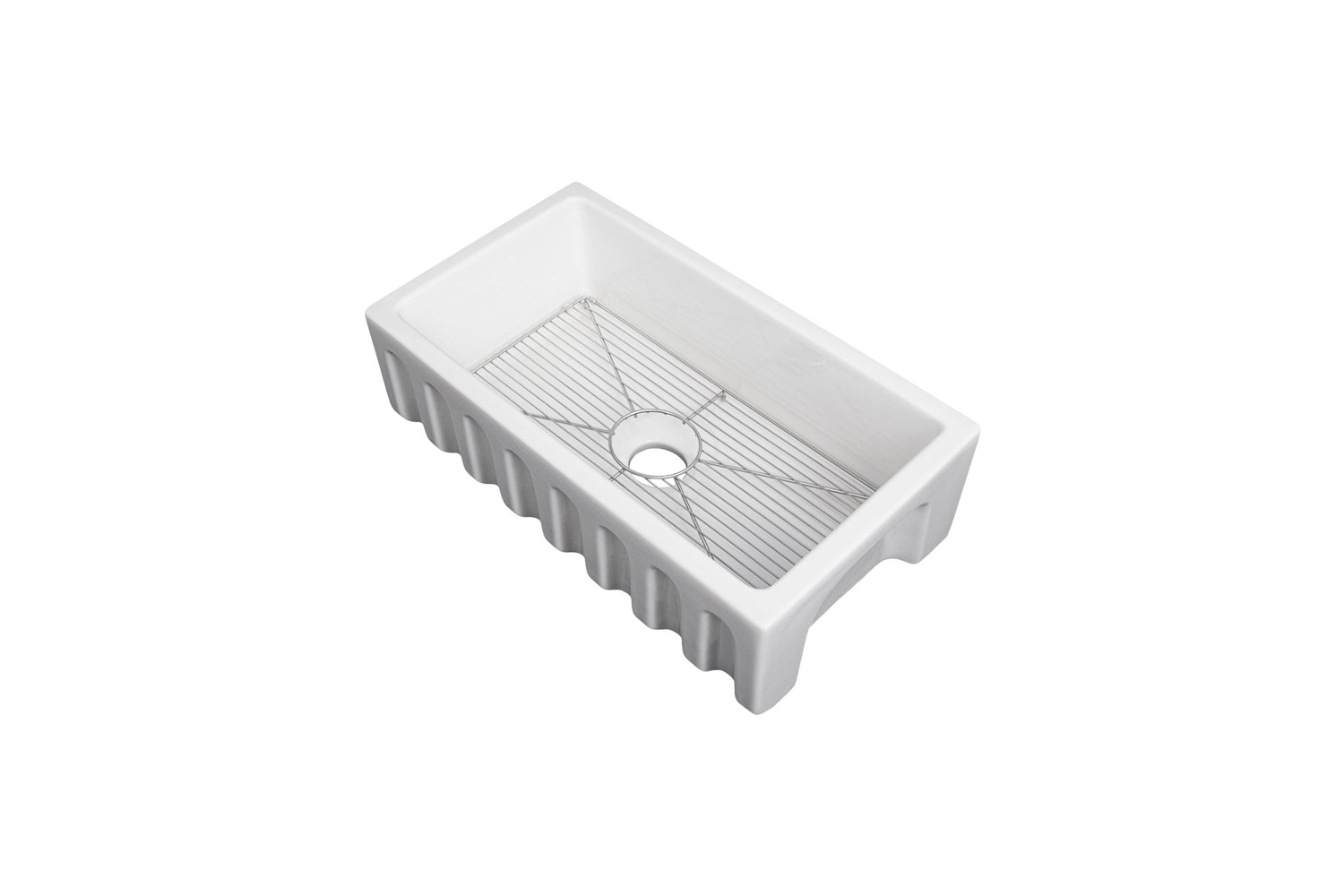
The ZLINE Vail SAS-33 is an apron-front, single-bowl kitchen sink made from 16-gauge, 304-grade stainless steel. Its exposed front gives it the recognizable farmhouse appearance, while the stainless steel construction keeps the design closer to a professional kitchen than an old country washroom.
The sink measures approximately 33 inches from side to side, 21 inches from front to back, and 10 inches deep. Its interior basin is roughly 30 by 16 inches with a 10-inch depth. That is enough space for stockpots, baking sheets, roasting pans, cutting boards, and the mysterious collection of cups that appears five minutes after the dishwasher finishes running.
Key specifications at a glance
- Farmhouse or apron-front installation
- One large, undivided bowl
- Approximately 33 by 21 by 10 inches
- Approximately 30-by-16-inch interior basin
- 16-gauge, 304-grade stainless steel construction
- Bottom grid included
- Compatible with a garbage disposal
- Standard 3.5-inch drain connection
- Limited lifetime manufacturer warranty
- Approximately 50 pounds before plumbing and accessories
ZLINE also packages the sink with practical accessories, including a basket strainer, utility rack, and microfiber cloth. Related Moritz models may add items such as a rolling mat and fitted cutting board, but shoppers should not assume every ZLINE farmhouse sink includes the same bundle.
Why the 16-Gauge Stainless Steel Matters
Stainless steel gauge numbers work backward: the lower the number, the thicker the steel. A 16-gauge sink is therefore thicker than an 18- or 20-gauge model. Thickness alone does not guarantee a perfect sink, but it can improve resistance to denting and give the basin a more substantial feel.
ZLINE uses 304-grade stainless steel for the Vail sink. This common kitchen-grade alloy is valued for corrosion resistance, durability, and compatibility with frequent cleaning. It also avoids the chipping risk associated with glazed sink materials. Drop a heavy skillet into stainless steel and you may create a mark; drop one into some ceramic-style materials and you may create a family meeting about the renovation budget.
Sound control and daily use
Large stainless steel bowls can amplify running water, rattling utensils, and garbage-disposal vibration. ZLINE describes the basin geometry and insulation as designed to limit noise. Owners should still expect some metallic sound because this is, after all, a steel container being introduced to forks, pans, and enthusiastic faucet pressure.
Sound-dampening pads and undercoating are useful, but installation also matters. A properly supported basin, correctly mounted disposal, and secure drain assembly can reduce unwanted vibration. A loose component beneath a large metal sink can turn an ordinary rinse cycle into experimental percussion.
The Single-Bowl Layout: Spacious but Not Perfect for Everyone
The greatest advantage of a single-bowl farmhouse sink is uninterrupted space. There is no center divider blocking a large roasting pan or forcing a long baking sheet to balance at an angle. Families who cook with oversized cookware often appreciate being able to lower an entire pot into the basin rather than wash half of it while the other half hangs over the counter.
A deep bowl can also conceal dirty dishes below the counter line. This does not technically clean anything, but it can make the kitchen appear calmer while guests are present. Strategic invisibility remains one of the unsung achievements of modern interior design.
When a double bowl may be better
A single bowl does not create separate washing and rinsing zones. If one side of a double sink normally holds soapy water while the other side handles rinsing, the ZLINE layout may require a removable dishpan or over-sink rack. The large basin can also use more water when filled deeply.
The best configuration depends on workflow. Frequent bakers, large families, and people who wash bulky cookware may favor the single basin. Someone who hand-washes delicate dishes in organized stages may miss a divider more than expected.
What the Bottom Grid Actually Does
The fitted bottom grid raises dishes and cookware slightly above the sink floor. This creates space for water to move underneath and toward the drain while reducing direct contact between the basin and heavy pots.
It can help protect the finish from hard impacts and obvious drag marks. It also prevents plates from completely blocking the drainage path. When a large pan is soaking, water can still circulate around and beneath it instead of forming a stubborn puddle.
The bottom grid needs cleaning too
A grid is useful, but it is not a self-cleaning force field. Food particles, grease, and soap residue can collect around its feet and crossbars. The grid should be lifted regularly so the sink floor and both sides of the accessory can be washed.
Check that the protective feet and bumpers remain in place. Bare metal rubbing against the basin can create scratchesthe exact plot twist the grid was hired to prevent. For easier maintenance, rinse the grid after messy food preparation and give it a more thorough cleaning at least weekly.
Drainage and Basin Geometry
The ZLINE farmhouse sink uses sloped surfaces and creased channel lines to guide water toward the drain. This design is important in a broad, relatively flat-looking basin. Without enough slope, droplets and scraps may remain in the corners until the owner introduces them to the pull-down sprayer.
ZLINE promotes its drainage system as faster than competing designs, but buyers should treat that as a manufacturer performance claim rather than an independent laboratory conclusion. In ordinary use, the more practical question is whether the slope reduces standing water without making dishes unstable. The design appears intended to balance usable floor space with directed drainage.
No large sink drains every droplet without help. Water pressure, installation level, food debris, surface tension, and the position of the bottom grid all influence the result. A quick rinse toward the drain will still be part of the routine.
Farmhouse Appearance Without the Fragility of Fireclay
The exposed apron is the defining visual feature. Traditional white fireclay sinks emphasize cottage character, while ZLINE’s stainless steel version blends farmhouse form with commercial styling. It works especially well in transitional, industrial, contemporary farmhouse, and modern kitchens.
Stainless steel also coordinates easily with appliances, cabinet hardware, and many faucet finishes. Brushed nickel and stainless create a consistent look. Matte black adds contrast. Brushed brass can warm the composition and prevent the room from looking like a very attractive laboratory.
Countertop and cabinet combinations
White quartz creates a clean, modern pairing. Dark stone produces stronger contrast, while butcher block adds warmth and reinforces the farmhouse theme. Whatever the material, water-sensitive countertop edges must be sealed correctly around the sink opening.
The apron interrupts the front of the sink cabinet, so this is not a simple substitute for every conventional drop-in basin. The cabinet must be designed or modified to expose the front panel while supporting the sink from below.
Installation Requirements You Should Not Ignore
Farmhouse sink installation requires more planning than sliding a lightweight basin into a standard opening. The ZLINE Vail weighs about 50 pounds before a garbage disposal, water, dishes, or a cast-iron skillet enters the equation. The countertop should not be expected to carry that entire load.
A supporting frame or platform is generally built inside the cabinet. The final support design depends on the cabinet, countertop, plumbing, and local building practices. A 33-inch sink commonly requires at least a 36-inch sink base, but the actual ZLINE template and cabinet measurements should control the project.
Measure the physical sink, not just the box
Measure the delivered unit before cutting cabinetry or stone. Confirm its width, apron height, bowl depth, corner radius, drain location, and reveal preference. Countertop fabricators may install the edge flush with the bowl, slightly overhanging it, or leaving a small positive reveal.
The faucet normally mounts through the countertop or a deck behind the basin because the sink itself has no faucet ledge. Check that there is enough room for the faucet base, backsplash, soap dispenser, air gap, window trim, and handle movement.
Because the installation involves cabinet cutting, structural support, plumbing, and precise countertop fabrication, professional installation is the safer choice for most households. A farmhouse sink is an unfortunate place to discover that “approximately level” and “actually level” are different concepts.
Garbage Disposal and Under-Sink Storage
The sink accepts a standard garbage disposal, but its 10-inch depth moves the drain connection lower than it would be beneath a shallower basin. Adding a disposal lowers the plumbing assembly even further.
Before installation, verify the height of the wall drain and the route of the P-trap. In some remodels, existing plumbing may be too high for the deeper sink and disposal combination. Correcting that issue after the countertop is installed is possible, but discovering it earlier is considerably better for morale.
A large sink and disposal also occupy cabinet space. Water filters, instant-hot-water tanks, pullout trash systems, and cleaning-supply organizers should be planned around the finished plumbing rather than ordered through pure optimism.
Cleaning and Maintaining the Stainless Steel Finish
Routine care is straightforward. Rinse away food and soap, wipe the basin with a soft cloth or nonabrasive sponge, and dry it when practical. Drying reduces mineral spots, especially in homes with hard water.
Clean in the direction of the stainless steel grain. Mild dish soap is usually sufficient for daily maintenance. For stubborn residue, use a cleaner specifically approved for stainless steel and test it in an inconspicuous area.
Products and habits to avoid
- Steel wool and harsh abrasive pads
- Leaving chlorine bleach in prolonged contact with the surface
- Allowing salty or acidic foods to sit for long periods
- Storing wet cast-iron cookware in the basin
- Dragging heavy pans across the exposed sink floor
- Leaving metal cans or utensils in standing water
Minor surface scratches are normal in working stainless steel. Over time, they tend to blend into a more uniform patina. The bottom grid reduces direct abuse, but it cannot guarantee a permanently untouched finish. A sink used every day will eventually look like a sink used every day, which is less tragic than it sounds.
Advantages and Potential Drawbacks
Main advantages
- Generous space for oversized pots, pans, and baking sheets
- Durable 16-gauge stainless steel construction
- Apron-front design creates a strong visual focal point
- Included bottom grid protects the basin and improves circulation
- Deep bowl keeps splashes and dirty dishes better contained
- Compatible with garbage disposals
- Useful accessory package and limited lifetime warranty
Potential drawbacks
- Cabinet modification and structural support are usually required
- Professional installation may increase project cost
- The deep bowl can reduce under-sink storage
- Shorter users may find the 10-inch depth less comfortable
- The grid adds another component that must be cleaned
- Stainless steel will develop water spots and fine scratches
- A single basin does not provide separate wash and rinse zones
Who Should Buy the ZLINE Farmhouse Sink?
This sink is a strong candidate for homeowners who regularly use large cookware, want an apron-front focal point, and prefer stainless steel over fireclay or cast iron. It is particularly appealing in a full kitchen renovation where the sink base and countertop can be designed around it from the beginning.
It may be less suitable for a quick, low-cost replacement project. Buyers with laminate counters, narrow cabinets, high wall drains, limited under-sink space, or a strong preference for divided washing zones should evaluate the installation carefully.
Value depends on the entire project rather than the purchase price alone. Cabinet work, countertop fabrication, faucet placement, disposal installation, and plumbing adjustments can cost as much asor more thanthe basin. The sink is the star, but the supporting cast still expects to be paid.
Extended Real-World Experience: What Daily Ownership Is Like
The first noticeable change after moving from a divided sink to a deep ZLINE single bowl is freedom of movement. A full-size sheet pan can lie flatter, a Dutch oven can soak without balancing on a divider, and a large cutting board can be rinsed with less water landing on the surrounding counter. For people who cook frequently, that extra usable width is not a decorative bonus; it changes the rhythm of cleanup.
The depth is equally important. A 10-inch bowl keeps a pile of breakfast dishes below the countertop line and contains splashing from a high-arc faucet more effectively than many shallow sinks. However, depth has an ergonomic tradeoff. Reaching the bottom repeatedly can be tiring for shorter users or anyone with back discomfort. Keeping a removable basin or rack near the upper part of the sink can reduce bending during light washing tasks.
The bottom grid quickly becomes part of the normal workflow. Hot cookware can be placed in the basin without resting directly on the visible finish, glasses remain elevated above food residue, and water can move beneath a crowded load. The grid is especially helpful when a large pan covers most of the sink floor.
Then comes grid-cleaning day. Crumbs and vegetable scraps inevitably find the spaces below it, while grease collects around the rubber feet. Lifting the grid, rinsing the underside, wiping the sink, and replacing it adds a few minutes to maintenance. The task is not difficult, but skipping it for several weeks produces the kind of discovery that encourages immediate ownership of a long-handled brush.
The stainless finish is forgiving in some ways and honest in others. It does not require the cautious handling associated with a glossy white apron sink, and a dropped utensil is unlikely to chip it. Yet water spots, fingerprints on the apron, and fine scratches appear under strong lighting. Drying the exposed front and basin after the final evening cleanup keeps the sink looking polished. In busy homes, accepting a natural working patina is the more realistic strategy.
Noise performance is generally better when the sink is mounted on a rigid support and the disposal is installed correctly. Even with damping material, a handful of silverware dropped into a steel basin will announce itself. A protective grid softens some impacts, though it cannot transform stainless steel into a library.
The apron front changes how the sink feels physically. Because the basin sits close to the user, there is less countertop between the body and the washing area. This can reduce forward reaching when cleaning large pots. The same exposed apron also becomes a highly visible surface, so streaks that would remain hidden on a conventional sink may deserve a quick wipe.
Storage beneath the sink requires deliberate organization. A deep bowl, disposal, drain trap, and supply lines leave fewer uninterrupted spaces for tall bottles or sliding organizers. Compact bins and organizers designed around plumbing work better than one oversized caddy. Measuring after installation prevents the classic experience of buying an elegant storage system that fits everywhere except the cabinet where it is needed.
Overall, the daily experience favors serious cooking and large-item cleanup. The sink rewards owners who appreciate open basin space and are willing to perform modest stainless steel and grid maintenance. Its strengths are practical rather than theatrical: more room, fewer awkward angles, easier pan washing, and a farmhouse profile that makes the busiest fixture in the kitchen look intentionally designed.
Final Verdict
The ZLINE Farmhouse Single Bowl Sink with Bottom Grid combines the visual presence of an apron-front sink with the durability and lower-maintenance character of stainless steel. Its 16-gauge construction, deep basin, large washing area, included grid, and disposal compatibility make it well suited to demanding kitchens.
Its disadvantages are largely connected to the farmhouse format itself: cabinet modification, structural support, careful countertop fabrication, lower plumbing, and reduced storage. Buyers who plan those details correctly receive a spacious and attractive workstation. Buyers who order first and measure later may receive an expensive lesson in cabinetry.
The best reason to choose this ZLINE sink is not simply that it looks impressive in photographs. It makes oversized cookware easier to manage, places everyday cleanup in a generous single basin, and gives a modern kitchen a strong architectural centerpiece. That is a lot of responsibility for something that spends much of its life meeting dirty plates.