
Note: This article is written for web publication, based on real historical events, and keeps the storytelling vivid without unnecessary battlefield gore.
France has a funny reputation in pop culture. Mention French military history in a casual conversation, and someone will probably recycle the same tired joke they heard in a sitcom from 1998. The problem is that the joke collapses the moment history opens its enormous, slightly dusty filing cabinet. France has won major battles across the Middle Ages, the Hundred Years’ War, the Revolutionary era, the age of empires, and World War II. In fact, French military victories helped shape modern Europe, strengthen royal authority, change battlefield technology, and rescue national morale when things looked bleak.
The most famous examplesAusterlitz, Verdun, and the liberation of Parisget plenty of attention. This article goes somewhere more interesting: the victories that deserve a larger spotlight. These are not all “unknown” to historians, of course. Historians know them very well. But to general readers, they are often overshadowed by more cinematic battles, more famous commanders, or bigger wars with better public relations departments. So grab your metaphorical baguette of knowledge. We are marching through ten awesome French military victories you may not have heard ofbut absolutely should.
1. The Battle of Bouvines, 1214: The Medieval Win That Helped Build France
If medieval politics had group chats, the one before Bouvines would have been pure chaos. In 1214, King Philip II of France faced a powerful coalition that included Holy Roman Emperor Otto IV, King John of England, and several angry French vassals. Their goal was simple: stop Philip from expanding royal power and undo his gains against the Angevin Empire.
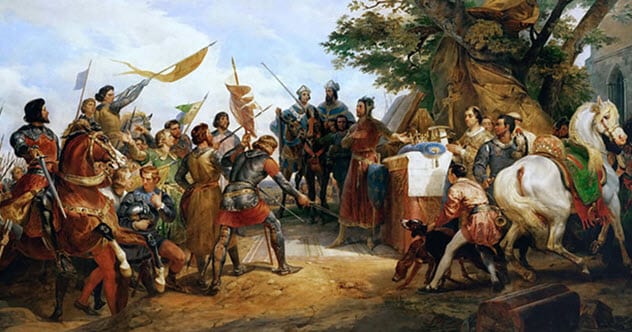
Instead, Bouvines became one of the most important French military victories of the Middle Ages. Philip’s army defeated a larger international coalition near the town of Bouvines in northern France. The result strengthened the Capetian monarchy and confirmed France as a rising power. It also weakened King John so badly that English barons soon forced him to accept Magna Carta in 1215. Not bad for a battle most people never discuss unless they accidentally wander into a medieval history seminar.
Why It Matters
Bouvines was more than a battlefield success. It helped transform the French crown from one powerful lord among many into the central authority of a stronger kingdom. It also showed that medieval battles, though often smaller than modern wars, could produce huge political consequences.
2. The Battle of Taillebourg, 1242: Saint Louis Sends England Packing
Louis IX of France is often remembered as “Saint Louis,” the pious king who went on crusade and became one of the most admired medieval monarchs in Europe. But before the halo, he had to handle a very earthly problem: rebellion in western France backed by King Henry III of England.
At Taillebourg in 1242, Louis IX confronted English and rebel forces near the Charente River. The encounter at the bridge became a decisive French success. Henry III’s campaign collapsed, and English hopes of restoring broad influence in western France took a serious hit. The battle did not involve the giant armies of later centuries, but its political meaning was enormous. France had once again proven that English kings could not simply stroll back into continental possessions and expect the welcome mat to be out.
Why It Matters
Taillebourg reinforced Capetian control and helped stabilize royal authority in regions that had long been contested. It was the kind of victory that does not always make dramatic movie posters but does quietly redraw the power map.
3. The Battle of Patay, 1429: Joan of Arc’s Momentum Becomes a Hammer
Everyone knows Joan of Arc lifted the siege of Orléans. Fewer people know what happened next at Patay. In June 1429, French forces caught the English before their famous longbowmen could properly prepare their defensive position. That mattered because English longbow tactics had devastated French armies at battles like Crécy, Poitiers, and Agincourt.
At Patay, the story changed. French cavalry struck quickly, the English formation fell apart, and several important English commanders were captured. The victory came soon after Orléans and helped clear the road for Charles VII to reach Reims for his coronation. In morale terms, Patay was rocket fuel. France had spent years absorbing bad news. Suddenly, the French army had proof that the English were not unbeatable.
Why It Matters
Patay was a psychological turning point in the Hundred Years’ War. It reversed the aura of English battlefield superiority and amplified the momentum created by Joan of Arc’s campaign.
4. The Battle of Formigny, 1450: When French Artillery Changed the Game
By the mid-1400s, the Hundred Years’ War was entering its final act, and France was learning fast. At Formigny in 1450, French and Breton forces faced an English army in Normandy. The result was a decisive victory that destroyed the last major English field army in the region.
Formigny is especially fascinating because it showed the growing importance of artillery in open battle. Cannon had already been used in sieges, but here they helped shape a field engagement in a way that pointed toward the future of European warfare. The French victory opened the way for the reconquest of Normandy, including Caen and Cherbourg. If the Hundred Years’ War were a long, exhausting TV series, Formigny would be the episode where the ending finally becomes obvious.
Why It Matters
Formigny combined military innovation with strategic impact. It helped France reclaim Normandy and demonstrated that disciplined artillery use could break old battlefield patterns.
5. The Battle of Castillon, 1453: The Final Curtain for English France
Castillon is one of the most underrated battles in European history. Fought in 1453 near the Dordogne River, it effectively ended the Hundred Years’ War. French commander Jean Bureau organized a fortified artillery position that proved disastrous for the English army under John Talbot, Earl of Shrewsbury.
Talbot attacked without fully understanding the strength of the French position. The French artillery did the rest. Castillon shattered English hopes in Gascony and left England with little territory in France beyond Calais. The battle also marked a powerful shift from medieval cavalry heroics toward gunpowder warfare. The age of the knight was not over in one afternoon, but it definitely received an alarming memo.
Why It Matters
Castillon was both a French victory and a technological milestone. It helped close the Hundred Years’ War and confirmed artillery as a force that could decide battles, not just knock holes in castle walls.
6. The Battle of Rocroi, 1643: The Day Spain’s Military Aura Cracked
In 1643, France was fighting Spain during the wider Thirty Years’ War. Spain’s infantry formations, known as tercios, had dominated European battlefields for generations. They were disciplined, respected, and intimidating. Then came Rocroi.
The French army was led by the young Duke of Enghien, later known as the Great Condé. Despite his age, he commanded with remarkable energy and flexibility. French cavalry success on the flanks helped isolate the Spanish infantry, and the final result was a major French victory. Rocroi did not instantly destroy Spain as a great power, but it cracked the myth of Spanish battlefield invincibility. For France, it signaled the rise of a new military era.
Why It Matters
Rocroi is often seen as a symbolic passing of the torch from Spanish dominance to French ascendancy in Europe. It was the kind of win that announced, very loudly, “There is a new heavyweight in town.”
7. The Battle of Denain, 1712: France’s Comeback When Things Looked Grim
The War of the Spanish Succession had been brutal for France. By 1712, the kingdom was exhausted, its finances were strained, and its enemies seemed to have the upper hand. Then Marshal Claude-Louis-Hector de Villars found an opportunity at Denain.
Villars attacked an exposed Allied position and disrupted enemy communications. The French victory at Denain changed the mood of the war. It did not magically solve every French problem, but it improved France’s bargaining position and helped prevent a harsher settlement. In modern sports language, Denain was the late-game interception that keeps the season alive.
Why It Matters
Denain proved that timing and nerve can matter as much as raw strength. It restored French confidence at a moment when defeat seemed dangerously close.
8. The Battle of Fontenoy, 1745: Marshal Saxe’s Masterclass
Fontenoy took place during the War of the Austrian Succession, near Tournai in the Austrian Netherlands. France’s commander, Marshal Maurice de Saxe, was ill during the campaign but still managed to design a strong defensive position and outlast a determined Allied attack.
The battle became one of the most famous French victories of the 18th century. French troops, supported by Irish Brigade units in French service, repelled Allied attacks and secured control of the field. The win helped France dominate the Austrian Netherlands for a time, though later diplomacy would give back many territorial gains. That is history’s way of reminding everyone that winning the battle and keeping the prize are two different hobbies.
Why It Matters
Fontenoy highlighted the skill of Maurice de Saxe and the effectiveness of disciplined defensive planning. It remains a powerful example of French tactical success in the age of line infantry.
9. The Battle of Fleurus, 1794: Revolutionary France Takes FlightLiterally
The Battle of Fleurus in 1794 was a major victory for Revolutionary France during the War of the First Coalition. French forces under Jean-Baptiste Jourdan defeated an Austro-Dutch army and helped secure French control over Belgium. The battle was a turning point in the Low Countries and strengthened France’s position during a dangerous phase of the Revolutionary Wars.
Fleurus also has a wonderfully unusual detail: the French used a military observation balloon, one of the earliest examples of aerial reconnaissance in warfare. Imagine being an 18th-century soldier and looking up to see the future floating overhead like a very nosy cloud. The balloon did not win the battle by itself, but it symbolized France’s willingness to experiment with new tools.
Why It Matters
Fleurus helped secure Belgium for France and showed that Revolutionary armies could be innovative, resilient, and strategically dangerous. It was both a military and technological milestone.
10. The Capture of Kufra, 1941: Free France Finds Its Voice in the Desert
After France fell in 1940, Free French forces needed more than speeches. They needed proof that the fight continued. In 1941, Colonel Philippe Leclerc led Free French forces from Chad against the Italian-held oasis of Kufra in southeastern Libya. With British support, the Free French forced the garrison to surrender.
Kufra was not a giant battle by the standards of World War II, but symbolically it was enormous. After the victory, Leclerc and his men made the famous Oath of Kufra, pledging not to lay down arms until the French flag flew again over Strasbourg. In 1944, that oath was fulfilled when Leclerc’s 2nd Armored Division helped liberate Strasbourg. History rarely offers such neat narrative arcs, but Kufra delivered one with cinematic confidence.
Why It Matters
Kufra gave Free France an early military victory and a powerful symbol of national resistance. It showed that even after disaster, French soldiers were still fighting, organizing, and aiming for liberation.
Bonus Mention: Narvik, 1940, and the French Role in an Early Allied Victory
Although Narvik was an Allied victory rather than a purely French one, French troops played an important role in the campaign. Norwegian, British, Polish, and French forces fought in harsh Arctic conditions and recaptured Narvik in May 1940. The success was short-lived because Germany’s offensive in France forced the Allies to withdraw, allowing Germany to reoccupy the area. Still, Narvik stands as one of the first Allied land victories against Nazi Germany, and French mountain troops and Foreign Legion units contributed to that achievement.
What These Victories Teach Us About French Military History
The biggest lesson from these overlooked French military victories is that military history is rarely as simple as national stereotypes. France’s record is not a straight line of triumph, and neither is anyone else’s. But France repeatedly produced strong commanders, adaptive institutions, battlefield innovation, and remarkable recoveries from crisis. At Bouvines and Taillebourg, the French crown consolidated medieval authority. At Patay, Formigny, and Castillon, France reversed the long trauma of the Hundred Years’ War. At Rocroi and Fontenoy, French armies showed tactical excellence against major European powers. At Fleurus and Hohenlinden, Revolutionary France proved it could survive and expand under pressure. At Kufra and Narvik, French soldiers fought on even when the national situation seemed almost hopeless.
Another lesson is that “awesome” does not always mean “largest.” Some of the most meaningful victories were not the biggest battles by numbers. Kufra mattered because of morale and symbolism. Taillebourg mattered because it stabilized royal power. Formigny mattered because it helped finish the English position in Normandy. A battle’s importance depends on what it changes afterward. In that sense, these victories punched far above their weight.
Experiences and Reflections Related to These Forgotten French Victories
Reading about these battles is a little like visiting a museum where the best rooms are hidden behind an unmarked door. Most people walk straight toward Napoleon or World War II, and that is understandable. Napoleon has the drama, the portraits, the hats, and the kind of confidence that could probably make a weather forecast sound like a military proclamation. But once you step away from the greatest hits, French military history becomes even more interesting.
One experience that stands out when studying these victories is the surprise of continuity. France did not suddenly become a major military power in one period. Its strength developed across centuries. Bouvines strengthened the monarchy in the 1200s. Castillon demonstrated artillery innovation in the 1400s. Rocroi announced a shift in European power in the 1600s. Fleurus showed Revolutionary France experimenting with technology in the 1790s. Kufra proved that national military identity could survive defeat and exile in the 1940s. These events are separated by enormous gaps of time, yet they all reveal a country repeatedly adapting to crisis.
Another fascinating experience is noticing how many French victories are tied to morale. Patay was not only about defeating English forces; it was about convincing French soldiers and civilians that the impossible had become possible. Denain was not only a tactical success; it gave exhausted France breathing room. Kufra was not only an oasis captured in the desert; it became a promise. The emotional meaning of a victory can sometimes travel farther than the army itself.
For writers, teachers, and history lovers, these battles offer excellent storytelling material because each has a built-in hook. Bouvines connects to Magna Carta. Castillon connects to the end of the Hundred Years’ War and the rise of artillery. Fleurus connects to early military aviation. Narvik connects to Arctic warfare and the first Allied successes of World War II. These are not dry dates floating in a textbook. They are doors into bigger stories about politics, technology, leadership, and national survival.
There is also a useful reminder here for modern readers: reputations can be lazy. France’s military image in popular culture often ignores the complexity of real history. Every major country has victories, defeats, brilliant commanders, bad decisions, lucky breaks, and unlucky disasters. France is no exception. But when you look closely, the record is rich, dramatic, and full of moments that changed the direction of Europe.
Finally, these victories are enjoyable because they reward curiosity. The best-known battles are easy to find, but lesser-known ones make history feel like discovery. You begin with a name like Formigny or Denain, perhaps expecting a footnote, and suddenly you are looking at the collapse of English Normandy or a dramatic French comeback in a continental war. That is the fun of historical digging: sometimes the footnote is secretly the main event wearing a smaller hat.
Conclusion
The story of French military victories is far deeper than the handful of famous battles most people recognize. From medieval bridge crossings to artillery revolutions, from royal consolidation to Free French resistance, these ten victories reveal a military tradition marked by resilience, adaptation, and strategic impact. They also remind us that history is usually more interesting than the jokes made about it.
Bouvines helped strengthen France. Taillebourg checked English ambition. Patay restored momentum. Formigny and Castillon helped end a century-long conflict. Rocroi shook Spanish prestige. Denain rescued France from a dangerous position. Fontenoy showcased disciplined command. Fleurus pushed Revolutionary France forward with a balloon in the sky. Kufra gave Free France a symbol of defiance in the desert. Together, they prove that the overlooked corners of French military history are packed with drama, innovation, and consequences worth remembering.











