
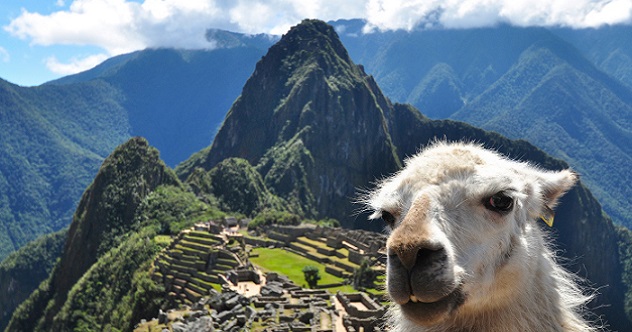
Machu Picchu is famous enough to appear on travel post nine million bucket lists. Yet the postcard version tells only a fraction of the story.
Perched about 7,970 feet above sea level in Peru’s eastern Andes, the Inca site combines royal architecture, agricultural terraces, religious spaces, sophisticated waterworks, and a dramatic cloud-forest landscape. It was built during the 15th century, occupied for roughly a century, and then largely abandoned as the Inca Empire collapsed during the Spanish conquest. makes Machu Picchu remarkable is not merely that it survived. It is how carefully the Inca adapted the settlement to steep slopes, intense rainfall, unstable geology, and a sacred mountain environment. Beneath the familiar photographs are engineering secrets, historical misunderstandings, and unanswered questions that continue to keep archaeologists pleasantly busy.
1. Machu Picchu Was Never Truly “Lost”
The phrase “Lost City of the Incas” is wonderfully dramatic. It also needs a fairly large historical asterisk.
When Yale historian Hiram Bingham reached the ruins in July 1911, people living in the region already knew the site existed. Local farmers were using some of its terraces, and earlier visitors had left evidence of their presence. Agustín Lizárraga, a resident of the Cusco region, reportedly visited the ruins years before Bingham and marked his name there.
Bingham’s major achievement was not discovering a place unknown to humanity. He brought Machu Picchu to international attention through expeditions, photography, academic publications, and support from Yale University and the National Geographic Society. In modern terms, the locals knew about the restaurant; Bingham gave it a global marketing campaign. “Machu Picchu” May Not Be Its Original Name
Even the name on all those souvenir T-shirts may be historically questionable.
Researchers examining 17th-century records, 19th-century maps, and Bingham’s own field notes found little evidence that the famous citadel was called Machu Picchu before 1911. Their research suggests the Inca settlement may have been known as Huayna Picchu, or simply Picchu.
The confusion probably arose because Machu Picchu and Huayna Picchu are neighboring mountains. Machu Picchu means “old mountain” in Quechua, while Huayna Picchu means “young mountain.” Bingham asked a local landowner for the site’s name and recorded what he understood from the answer.
Changing the name now would be difficult. Hotels, guidebooks, documentaries, and search engines might collectively suffer an identity crisis. Still, the research reminds us that famous archaeological sites often inherit modern labels that do not perfectly match their original identities. The Site May Be Decades Older Than Scholars Once Thought
For years, historians estimated that Machu Picchu was constructed after Inca ruler Pachacuti came to power in 1438. That chronology relied heavily on accounts written after the Spanish invasion.
Modern radiocarbon research has complicated the story. Scientists used accelerator mass spectrometry to study human remains recovered during early excavations. The results indicated that Machu Picchu was in use from approximately 1420 to 1530, potentially making it at least 20 years older than traditional estimates.
This finding has consequences beyond one archaeological site. If Machu Picchu was already operating around 1420, Pachacuti may have begun expanding Inca power earlier than colonial-era records suggest. It also shows why archaeologists combine written history with scientific dating instead of trusting one source simply because it owns a very old piece of paper. It Was Probably a Royal Estate, Not a Giant Inca Capital
Machu Picchu is often described as an ancient city, but it was not a sprawling capital comparable to Cusco. The leading interpretation is that it functioned as a royal estate associated with Emperor Pachacuti.
The complex likely accommodated the ruler, nobles, religious specialists, attendants, craftspeople, and agricultural workers. Members of the royal court may have visited seasonally, especially during the drier months, while a permanent staff maintained the buildings, terraces, fountains, and surrounding land throughout the year.
The estate also had ceremonial importance. Structures such as the Temple of the Sun, the Temple of the Three Windows, sacred rocks, plazas, and the carved Intihuatana suggest that religion and political authority were woven into daily life.
Scholars continue to debate the precise balance among palace, retreat, pilgrimage center, astronomical observatory, and sacred landscape. Machu Picchu may have served several purposes simultaneously. The Inca were under no obligation to make future historians’ categories tidy. Much of Machu Picchu Is Hidden Underground
The polished walls receive most of the attention, but the invisible construction may be even more impressive. Civil engineer Kenneth Wright estimated that approximately 60 percent of the work at Machu Picchu lies underground.
The Inca had to transform a narrow, rain-soaked mountain ridge into stable ground. They excavated unsuitable material, created deep foundations, installed layers of stone and gravel, and built subsurface drainage systems. These hidden features allowed water to move through the site instead of collecting beneath buildings and terraces.
This was essential because the region receives heavy seasonal rainfall. Without adequate drainage, saturated soil could have caused walls to shift, terraces to collapse, and portions of the settlement to slide downhill in a spectacular but deeply inconvenient archaeological avalanche.
The famous skyline survived because the Inca invested enormous effort in foundations visitors cannot see. It is one of history’s finest examples of glamorous architecture being supported by extremely unglamorous drainage. Its Water System Could Supply a Mountain Community
Machu Picchu was not constructed beside a convenient lake. Its residents depended on a natural spring located on the mountain’s northern slope.
Inca engineers developed spring headworks, canals, drainage channels, and a sequence of 16 fountains that carried water through the settlement. Gravity did the pumping, which was fortunate because electrical utility service in the 1400s was somewhat limited.
The fountains were arranged so water flowed from higher-status areas toward lower portions of the complex. Their design provided reliable access while controlling speed and minimizing erosion. Agricultural terraces, roof runoff, plazas, and stairways were also integrated into the drainage plan.
The system reflects an understanding of hydraulic engineering, slope management, soil behavior, and long-term maintenance. Original Inca water features can still carry spring water today, demonstrating that the network was not merely clever in theory. It was durable in practice. The Famous Stonework Was Designed to Handle Earthquakes
Machu Picchu’s finest walls were built from carefully shaped stones fitted together without mortar. The joints are so precise that even a thin card cannot easily be pushed between many of the blocks.
The technique was attractive, but beauty was not its only benefit. Peru is seismically active, and rigid masonry can crack when the ground moves. Inca walls often leaned slightly inward and incorporated irregular, interlocking blocks. During tremors, individual stones could shift subtly and then settle back into position.
Researchers have also proposed that Machu Picchu was deliberately constructed where geological faults intersect. Fractured bedrock may have provided easier access to building stone, while the natural cracks helped channel rain and melting water through the mountain.
Building on fault lines sounds like a terrible real-estate decision until one notices that the structures have remained on the ridge for more than five centuries. The Inca were not ignoring the geology; they were using it. Its Permanent Residents Came From Across the Inca Empire
Machu Picchu was home to a far more diverse community than researchers once imagined.
Ancient DNA analysis of people buried at the site found ancestry connected to regions across the Inca Empire, including the coast, the Andean highlands, and Amazonia. About one-third of the studied individuals had substantial Amazonian ancestry. Most were not closely related to one another.
These residents were probably attendants assigned to maintain the royal estate. The Inca government relocated people for administrative, political, and economic purposes, bringing individuals with different languages, traditions, and skills into imperial service.
Analysis of their remains found relatively little evidence of severe malnutrition, warfare, or punishing physical labor. Some lived to advanced ages. Their experiences should not be romanticized, since researchers cannot determine how voluntarily they moved. Nevertheless, the evidence presents Machu Picchu as a multicultural community rather than an isolated settlement populated by one local group. The Surrounding Mountains Were Part of the Design
Machu Picchu cannot be understood by studying its walls alone. In Inca belief, mountains, rivers, rocks, springs, and celestial events could possess sacred meaning. Important mountains were known as apus and were treated as powerful spiritual beings.
The citadel sits within a dramatic curve of the Urubamba River, which the Inca regarded as a sacred river. Major structures and sightlines appear to relate to nearby peaks and features of the horizon. The Intihuatana, Temple of the Sun, sacred stones, and windows may have helped connect ritual activity with seasonal solar observations and the wider landscape.
Researchers debate exactly how individual structures were used, so claims that every stone functions as a perfect astronomical instrument should be treated cautiously. What is clear is that the Inca did not separate architecture from nature. Buildings, mountains, water, agriculture, and religion formed one planned environment.
The view was not decorative scenery added after construction. The view was part of the architecture. Machu Picchu Is Both a Cultural and Natural Treasure
Many people assume UNESCO protection applies only to the central ruins. The Historic Sanctuary of Machu Picchu actually covers approximately 32,592 hectares, or more than 80,000 acres, of mountains, valleys, cloud forest, and archaeological remains.
UNESCO recognizes it as a mixed World Heritage property, meaning it possesses outstanding cultural and natural value. The sanctuary lies where the Andes meet the upper Amazon Basin, creating habitats with rich plant and animal diversity.
The surrounding ecosystem is also essential to the site’s character. Moist forests rise around granite peaks, clouds move rapidly through the valleys, and the Urubamba River circles far below. The citadel would feel entirely different on a flat, dry plain next to a parking lot and a suspiciously expensive snack kiosk.
Its mixed status also makes conservation complicated. Authorities must protect archaeological structures while managing erosion, tourism, transportation, forest health, development, and the needs of neighboring communities. Preserving Machu Picchu means protecting an entire cultural landscape, not merely keeping moss off a few photogenic walls. t Visiting Machu Picchu Can Feel Like: A First-Time Experience
The experience of visiting Machu Picchu often begins long before the ruins appear. Many travelers arrive through Cusco, the former Inca capital, where stone streets, colonial buildings, and high altitude immediately slow the pace. Cusco stands around 11,150 feet above sea level, considerably higher than Machu Picchu, so spending time acclimating can make the rest of the journey more comfortable. eling toward the sanctuary reveals an extraordinary environmental transition. The broad, dry-looking highlands gradually give way to deeper valleys and greener slopes. Mountains crowd closer to the railway, the Urubamba River becomes a constant companion, and the air grows warmer and more humid. The journey helps explain why the Inca treated geography as something to work with rather than flatten, straighten, and cover with concrete.
From the gateway town below the ruins, the final ascent climbs through dense vegetation and sharp switchbacks. Photographs may have prepared visitors for the shape of the site, but they rarely communicate its vertical scale. Machu Picchu does not sit politely on top of a mountain. It occupies a narrow ridge surrounded by peaks that seem to rise in every direction.
Weather can transform the first view. On a clear morning, the terraces appear almost theatrical, with Huayna Picchu standing behind them like a carefully positioned stage backdrop. On misty mornings, sections of the citadel emerge slowly from the clouds. Visitors may initially see little more than wet grass and gray air, only to watch an entire mountain appear several minutes later. The clouds apparently understand dramatic timing.
Walking through the complex changes the experience again. From the classic viewpoint, the site looks orderly and compact. At ground level, it becomes a maze of stairways, plazas, retaining walls, drainage channels, agricultural terraces, temples, and residential buildings. The constant climbing makes the intelligence of the design physically obvious. Every level had to be stabilized, supplied with water, connected by steps, and protected from runoff.
A knowledgeable guide can make the stonework far more meaningful. A doorway is no longer simply a doorway when its inward-sloping sides reveal Inca design principles. A narrow channel becomes part of a carefully managed water network. A carved rock may echo the outline of a nearby peak. Details that look accidental begin to reveal relationships among engineering, ceremony, authority, and landscape.
The resident llamas provide a less academic form of entertainment. They graze on terraces, wander across carefully framed photographs, and maintain the confident body language of animals that know the ruins were built for them personally. Visitors should still keep a respectful distance; a llama’s expression can move from charming to judgmental with remarkable efficiency.
Practical preparation improves the day. The weather may switch quickly between cool mist, strong sun, wind, and rain, so light layers and dependable rain protection are useful. Comfortable shoes matter because polished stone, irregular stairs, and steep paths are less forgiving than they appear on social media. Water, sun protection, and patience are more valuable than carrying half a photography store.
The most memorable moment may arrive after the excitement settles. Standing quietly beside a terrace or looking down toward the river, visitors can appreciate how improbable the place is. Thousands of workers shaped a difficult ridge without iron tools, motorized equipment, or wheeled construction vehicles. They built foundations, moved stone, managed water, cultivated slopes, and created ceremonial spaces that still influence how people experience the mountain hundreds of years later.
That realization is more powerful than the standard “lost city” story. Machu Picchu is not fascinating because a foreign explorer found it. It is fascinating because generations of Andean people planned, built, inhabited, maintained, remembered, and eventually protected it.
Conclusion
Machu Picchu remains mysterious, but it is not an unexplained fantasy produced by a vanished civilization. Archaeological research reveals a carefully planned Inca royal estate supported by advanced drainage, hydraulic engineering, seismic design, agricultural terraces, and a diverse permanent community.
Its story also demonstrates how historical narratives change. The site was known locally before Bingham arrived, its familiar name may be relatively modern, and scientific dating has pushed its occupation earlier than scholars once believed. Even its most recognizable buildings represent only the visible portion of a much larger engineering achievement.
Perhaps the most important Machu Picchu fact is that the citadel cannot be separated from its environment. The surrounding peaks, river, cloud forest, springs, faults, and terraces were all part of the Inca vision. It survives not because its builders conquered the mountain, but because they understood how to build with it.













