Some hobbies announce themselves properly. Woodworking requires tools. Gardening requires dirt. Baking requires at least one pan that will mysteriously disappear when you need it.
Wordplay is sneakier. It begins with one innocent thought“Wait, can I rearrange those letters into something funny?”and ends forty-five minutes later with twelve browser tabs open, a notebook full of nonsense, and the sudden realization that dinner was supposed to happen.
Wordplay is the playful manipulation of sounds, spellings, meanings, letter patterns, and linguistic expectations. It appears everywhere from poetry and comedy to advertising, hip-hop, crossword puzzles, and everyday conversation. Some forms deliver a joke in seconds. Others invite you into a tiny linguistic maze and quietly lock the door behind you.
Here are ten wonderfully time-sucking types of wordplay that can turn “just one more” into an entire evening.
1. Puns: The Gateway Drug of Wordplay
A pun exploits multiple meanings of a word or the similarity between two words that sound alike. It is probably the most recognizable form of wordplayand arguably the form most likely to make another human being groan loudly.
Imagine a bicycle shop advertising, “We’re wheelie good at repairs.” That is not sophisticated comedy. It is, however, extremely difficult not to understand.
Puns become time-consuming because once your brain notices one possible double meaning, it starts hunting for others. Restaurant names, headlines, birthday cards, business slogans, and social media captions suddenly become playgrounds.
Why puns are so addictive
The pleasure comes from expectation and reinterpretation. Your brain initially understands a sentence one way, then discovers a second meaning hiding underneath it. That tiny surprise produces the mental equivalent of finding a five-dollar bill in an old jacket.
Then you try to create a better pun. Then a worse one. Then one so terrible it circles back around to greatness.
That is how twenty minutes disappear.
2. Anagrams: Letters Refusing to Stay in Their Assigned Seats
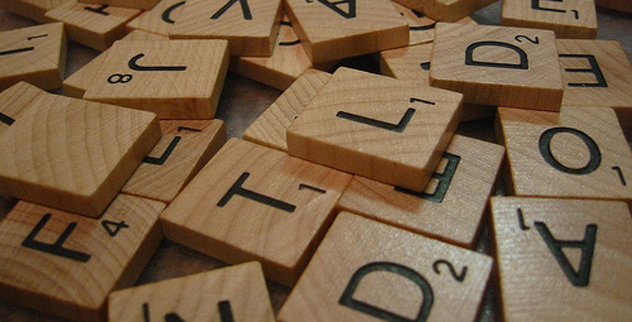
An anagram rearranges the letters of a word or phrase to create another word or phrase. Every original letter must report for duty; you simply reorganize the troops.
For example, listen can become silent. Suddenly six ordinary letters have performed a small magic trick.
Anagrams have fascinated language lovers for centuries because the rules are simple while the possibilities can be enormous. Short words are manageable. Long names and phrases are where productivity goes to die.
The dangerous question: “Can I make another one?”
Once you start solving anagrams manually, you develop rituals. You separate vowels. You hunt for common endings. You move letters into little groups. Eventually you are staring at something like RTAEPNL as though it personally owes you money.
Anagram games add additional pressure by imposing timers, scoring systems, or minimum word lengths. The result is linguistic Tetris: everything feels obvious immediately after somebody else finds the answer.
3. Palindromes: Language Looking in a Mirror
A palindrome reads the same forward and backward when spacing, punctuation, and capitalization are handled appropriately. Simple examples include words such as level, radar, and civic.
These symmetrical words feel strangely satisfying. Humans generally enjoy patterns, and palindromes offer an unusually neat linguistic one.
Creating longer palindromic phrases, however, is where the trouble begins.
Palindrome building becomes a puzzle
Suppose you start with a short reversible structure. Each additional word must preserve the backward sequence. Grammar complains. Meaning complains. Your remaining free time quietly leaves the building.
Serious palindrome enthusiasts sometimes build surprisingly long constructions by working outward from a central point and constantly checking letter symmetry.
The process feels less like ordinary writing and more like assembling furniture while looking at the instructions through a mirror.
And naturally, when you finally create one that works, you immediately wonder whether it could be longer.
4. Spoonerisms: When Sounds Swap Jobs
A spoonerism occurs when soundsoften the beginnings of nearby wordsswitch places. Instead of saying “funny bone,” someone might accidentally produce “bunny phone.”
The term is associated with the Reverend William Spooner, whose reputation for verbal mix-ups became famous enough to give the phenomenon its name.
Accidental spoonerisms are funny because speech briefly rebels against the speaker. Deliberate spoonerisms are dangerous because they invite experimentation.
Try making one and watch the clock
You begin swapping consonants in ordinary expressions. Some combinations produce nothing. Others accidentally produce new meanings. Occasionally you discover something ridiculous enough to repeat to everyone in the room.
The best deliberate spoonerisms preserve enough of the original phrase to remain recognizable while creating a completely different image.
That balance is harder than it appears, which is exactly why someone who intended to spend thirty seconds making a joke can still be rearranging sounds fifteen minutes later.
5. Malapropisms: Almost the Right Word, Spectacularly Wrong
A malapropism happens when someone uses an incorrect word that sounds similar to the intended one, often producing an unintentionally comic result.
Imagine somebody proudly announcing that a complicated problem requires “a very pacific solution” when they mean specific. The sentence remains grammatically alive, but semantically it has wandered into the ocean.
The name comes from Mrs. Malaprop, a character in Richard Brinsley Sheridan’s eighteenth-century comedy The Rivals, whose confident misuse of vocabulary became her defining joke.
Why writers love deliberate malapropisms
Malapropisms are excellent tools for characterization. A fictional person who confidently substitutes impressive-sounding but incorrect words can instantly seem nervous, pretentious, confused, or charmingly chaotic.
Inventing them becomes addictive because the replacement must be close enough in sound to seem plausible while being wrong enough in meaning to be funny.
It is linguistic precision disguised as incompetence.
6. Mondegreens: Lyrics From an Alternate Universe
A mondegreen is a misheard word or phrase, particularly in a song or poem. The listener hears real sounds but divides or interprets them incorrectly, producing a new phrase that can be far stranger than the original.
The term was coined by American writer Sylvia Wright after she remembered mishearing a line from a Scottish ballad as including a mysterious “Lady Mondegreen.”
Anyone who grew up before searchable lyrics were permanently attached to every song knows this experience well.
Your brain hates incomplete information
When vocals are muffled, accented, distorted, or buried beneath instruments, the brain tries to convert uncertain sounds into familiar language. Sometimes it succeeds. Sometimes it invents a completely new dinner recipe in the middle of a love song.
Comparing misheard lyrics with friends is especially dangerous. One mondegreen reminds somebody of another, and soon everyone is replaying old songs at half speed like a team investigating an extremely low-stakes crime.
7. Portmanteaus: Two Words Enter, One Word Leaves
A portmanteau blends parts and meanings of multiple words into a new term. English is full of successful examples. Brunch combines breakfast and lunch, while smog blends smoke and fog.
This type of wordplay is productive rather than merely decorative. A good blend can become so useful that people eventually stop noticing it was invented from other words.
Creating bad portmanteaus is even more fun
Suppose your cat interrupts every video call. Is that a catference? Suppose someone eats a snack while procrastinating. Is that procrastinacking?
Probably not.
But now you want to improve them.
Successful blends normally preserve recognizable pieces of both source words while remaining easy to pronounce. Finding that sweet spot can require dozens of experiments.
Naming products, fictional businesses, podcasts, events, and inside jokes with portmanteaus can therefore consume an astonishing amount of timeespecially when everyone involved has an opinion.
8. Pangrams and Letter-Constraint Games
A pangram is a sentence that contains every letter of the English alphabet. The challenge becomes more interesting when you try to use as few letters as possible while keeping the sentence understandable.
This is part of a larger family of constraint-based wordplay. You might attempt to write without using a particular letter, create words without repeating letters, or construct sentences in which words follow alphabetical patterns.
Restrictions make creativity strangely enjoyable
Ordinary writing gives you thousands of options. Constraint games remove most of them.
That should make writing easier.
It does not.
Tell someone they cannot use the letter E, and suddenly every sentence they want to write appears to contain seventeen Es.
These puzzles can become remarkably absorbing because each revision creates a new problem somewhere else. Change one word to satisfy the rule and the sentence stops making sense. Fix the meaning and you violate the rule again.
Congratulations: language has become a Rubik’s Cube.
9. Crosswords, Cryptic Clues, and Rebus Tricks
Crossword puzzles turn vocabulary into architecture. Words must not only answer clues but also fit a grid and agree with intersecting answers.
Cryptic crosswords increase the mischief. A clue may contain both a definition and a hidden mechanism involving anagrams, deletions, reversals, abbreviations, homophones, or other forms of wordplay.
Rebus-style puzzles can go further by squeezing multiple letters, symbols, or unconventional patterns into spaces where solvers expect ordinary answers.
Why “one more clue” is never one clue
The structure creates a powerful feedback loop. Solving one answer provides letters for several neighboring answers. Those answers produce more letters. Suddenly the grid that looked impossible begins opening up.
This makes stopping psychologically inconvenient.
You cannot quit now. You have three letters of 14-Across.
Crossword culture is large enough to support tournaments, speed-solving communities, specialized vocabulary, and dedicated constructors. For serious solvers, the attraction is not simply knowing words. It is learning how clue writers think.
That can become a hobby inside the hobby.
10. Riddles, Word Ladders, and Transformation Puzzles
Some of the most dangerous word games are based on transformation. Word ladders ask you to change one word into another through intermediate steps, usually changing a single letter at a time while keeping every stage a valid word.
Other riddles hide answers inside definitions, sounds, letters, spacing, or misleading assumptions.
These puzzles exploit one of wordplay’s greatest weapons: fixation.
Your first interpretation becomes the enemy
A good word riddle encourages you to understand the problem incorrectly. The solution becomes obvious only after you abandon the assumption the puzzle quietly encouraged you to make.
That creates the classic experience of staring at a clue for twenty minutes, walking away, returning later, and solving it in four seconds.
Your brain apparently needed a coffee break.
Transformation puzzles are equally dangerous because progress is visible. You may be only two steps away from the targetor twenty. There is usually no way to know without continuing.
Why Wordplay Can Consume So Much Time
These ten forms look different, but they share several psychological attractions.
First, wordplay combines familiarity with surprise. You already know the words, sounds, and letters, but a clever arrangement makes them behave differently.
Second, many word puzzles provide frequent miniature rewards. Finding one anagram, pun, crossword answer, or transformation step creates a satisfying feeling of progress.
Third, language puzzles often have clear constraints but enormous search spaces. The rules fit into one sentence. Finding the elegant answer might take an hour.
Finally, wordplay rewards curiosity. Every solution suggests another possibility. Could the pun be sharper? Could the pangram be shorter? Could the palindrome be longer? Could that crossword clue have another interpretation?
And there goes your afternoon.
A Familiar Experience: How Wordplay Eats an Entire Evening
The typical wordplay adventure rarely begins with ambition. Nobody sits down at 7:00 p.m. and says, “Tonight I intend to destroy my schedule with consonants.”
It usually starts casually.
You encounter a clever phrase online. Perhaps it is a pun. You think, “I can make one better than that.”
Five minutes later, you have produced three alternatives. One is acceptable. One is terrible. One is so bad that you are disproportionately proud of it.
Then you notice that one of the words can be rearranged into another word.
Now anagrams are involved.
You type the letters onto a blank page and begin rearranging them manually. At first you behave rationally. You look for common prefixes and suffixes. Soon rationality leaves. You are pronouncing impossible letter combinations aloud in case one unexpectedly becomes English.
Someone nearby asks what you are doing.
“Nothing,” you say, despite having spent eighteen minutes investigating seven letters.
Eventually you find an answer and experience a ridiculous burst of satisfaction. That should be the end.
Instead, success becomes evidence that you should attempt something harder.
You move to a palindrome. Short ones are easy, so you decide to build a sentence. The grammar immediately becomes hostile. You adjust the first half, which breaks the second half. You repair the second half, which destroys the center.
You now understand why puzzle constructors sometimes resemble people who have negotiated difficult international treaties.
Later, a song begins playing. Somebody mentions having misheard one lyric for years. Everyone shares their own mondegreens. Phones appear. Lyrics are checked. Recordings are replayed. Arguments develop over whether the incorrect lyric is actually better than the official one.
At this stage, the original activity has been completely forgotten.
Then somebody opens a crossword.
This is the point of no return.
One easy answer becomes three. Three become ten. An apparently impossible corner begins revealing itself. Nobody wants to stop because every unanswered square now feels like unfinished business.
The remarkable thing is that the evening does not feel wasted. Wordplay creates a particular kind of focused leisure. You are searching memory, testing patterns, manipulating sounds, interpreting ambiguity, and laughing at language when it behaves unexpectedly.
It can also be social. Puns invite retaliation. Riddles invite competition. Crosswords invite collaboration. Misheard lyrics invite embarrassing confessions. A terrible portmanteau can become an inside joke that survives for years.
Eventually someone looks at the clock.
It is much later than expected.
Nobody can explain exactly where the time went.
The answer, naturally, is hidden somewhere in the words.
Conclusion: Waste Time More Intelligently
Wordplay occupies a delightful territory between language, logic, creativity, and comedy. Puns exploit meanings. Anagrams rearrange letters. Palindromes chase symmetry. Spoonerisms scramble sounds. Malapropisms misuse vocabulary. Mondegreens reinvent what we hear. Portmanteaus create new words, while pangrams, crosswords, riddles, and transformation games impose rules that can keep the brain occupied far longer than expected.
That is what makes these time-sucking types of wordplay so appealing. The barrier to entry is almost nonexistentyou need words and curiositybut the possibilities are practically endless.
So the next time you lose an hour to an anagram, a crossword corner, or an unforgivably bad pun, remember: you were not procrastinating.
You were conducting advanced linguistic recreation.
That explanation probably will not impress your boss, but at least it sounds better.
Note: The examples in this article are written specifically for explanatory purposes, while the linguistic definitions and historical context are synthesized from established dictionary, literary, puzzle, educational, psychology, and language references.