
Christmas may look simple from a distance: lights, music, gifts, cookies, and at least one relative who insists the tree looked better “before everyone helped.” But travel a little farther, and the holiday becomes wonderfully strange. Around the world, Christmas traditions include mischievous trolls, broom-hiding, roller skates, gift-giving witches, straw goats, lucky spiders, and a carved radish competition that proves vegetables have been underestimating themselves.
These unusual Christmas traditions around the world are not random oddities. They are cultural time capsules. Some come from ancient winter folklore. Some grew from religious observances. Some were shaped by climate, food availability, local legends, or brilliant marketing. Japan’s Christmas chicken feast, for example, did not fall from the North Pole. It came from a campaign so successful that it turned fried chicken into a holiday ritual. Meanwhile, Iceland’s 13 Yule Lads remind us that Santa Claus is not the only visitor who knows how to work a December schedule.
Below are 11 weird, wonderful, and surprisingly meaningful Christmas customs from different countries. Some are funny. Some are spooky. Some are delicious. A few sound like they were invented by a committee of children, grandmothers, and one very dramatic goat. Together, they show that Christmas is not one single celebration copied and pasted around the planet. It is a global holiday with local personalityand occasionally, a horse skull at the door.
Why Christmas Traditions Get So Delightfully Weird
Christmas is both a religious holiday and a cultural season, which means it has absorbed centuries of local customs. In many places, older winter-solstice beliefs blended with Christian stories. In others, the holiday arrived through trade, missionaries, migration, media, or commercial influence. That is why one country may celebrate with midnight Mass, another with seafood, another with a witch on a broom, and another with a bucket of fried chicken.
The “unusual” part often depends on where you are standing. To Americans, a Christmas tree decorated with spiderwebs may sound like Halloween wandered into December wearing a Santa hat. But in parts of Eastern Europe, spider ornaments can symbolize luck, hope, and beauty appearing where there was once nothing. A tradition that seems strange at first glance may carry a message about generosity, renewal, family, or survival through winter.
11 Unusual Christmas Traditions Around the World
1. Catalonia, Spain: The Gift-Pooping Christmas Log
In Catalonia, the Tió de Nadal, often nicknamed Caga Tió, is one of the most memorable Christmas characters in Europe. Families bring home a small wooden log, often with a painted smile, tiny legs, and a red cap. Beginning around December 8, children “feed” the log and cover it with a blanket to keep it warm.
Then comes the big moment. On Christmas Eve or Christmas Day, children tap or beat the log with sticks while singing traditional songs, encouraging it to produce sweets, nuts, and small gifts. It is part nursery magic, part folk comedy, and part proof that children will enthusiastically accept any holiday system that ends with candy.
What makes this tradition special is its mix of humor and family ritual. The log is not just a decoration. It becomes a seasonal guest, cared for by children and secretly managed by adults. In a holiday world full of polished ornaments, Catalonia’s cheerful wooden character adds a wink, a laugh, and a very practical question: why wait for Santa when the furniture can help?
2. Austria and Alpine Europe: Krampus Night
In parts of Austria, Germany, and other Alpine regions, Christmas has a darker companion: Krampus. Traditionally associated with St. Nicholas, Krampus appears around December 5, known as Krampusnacht. While St. Nicholas rewards good children, Krampus represents the warning side of winter folklore.
Modern Krampus parades often feature people in elaborate costumes, carved masks, bells, fur, and horns. The result is dramatic, loud, and more haunted theater than cozy greeting card. For visitors, it can feel like Christmas joined a folklore festival and invited a metal band.
Yet Krampus is more than seasonal scariness. He reflects a long European tradition of winter figures who bring order, mischief, and moral lessons during the darkest part of the year. Today, Krampus events are also community performances, combining craftsmanship, local identity, and a playful release from the sweetness of the season. After weeks of perfect bows and sugar cookies, a little controlled chaos can feel oddly refreshing.
3. Japan: Christmas Dinner at KFC
In Japan, Christmas is not a national religious holiday for most people, but it has become a festive, romantic, and highly commercial celebration. One of the country’s most famous modern Christmas traditions is eating Kentucky Fried Chicken. The custom grew from a successful 1970s marketing campaign known as “Kentucky for Christmas.”
Today, many families order special Christmas chicken meals in advance. Stores may offer holiday packages with fried chicken, sides, and cake. For people used to roast turkey or glazed ham, the idea of Christmas dinner in a red-and-white bucket may sound unusual. But in Japan, KFC filled a cultural space where Western-style Christmas food had not been firmly established.
The genius of the tradition is that it feels both imported and local. It borrowed the idea of a festive Western meal, then adapted it to Japanese tastes, schedules, and commercial culture. It also proves a powerful holiday truth: if enough people repeat a meal with enthusiasm, nostalgia eventually does the rest.
4. Iceland: The 13 Yule Lads
Why have one Santa when you can have thirteen? In Icelandic Christmas folklore, children are visited by the Yule Lads, or Jólasveinar, over the 13 nights leading up to Christmas. Each Yule Lad has his own personality and habit of mischief. Children place shoes in the window, hoping to wake up to candy or small gifts.
The Yule Lads were once more frightening than they are today, connected to older folklore about mountain-dwelling figures and winter warnings. Over time, they softened into more playful holiday visitors. Still, their names and habits remain wonderfully specific, often involving food theft, door slamming, or other household chaos.
This tradition is a perfect example of how folklore evolves. What once helped teach children caution and good behavior has become a beloved part of national Christmas identity. It also gives Icelandic families nearly two weeks of tiny surprises, which sounds charming until you realize parents have to remember the shoe routine 13 nights in a row. Respect.
5. Wales: Mari Lwyd, the Christmas Horse Skull
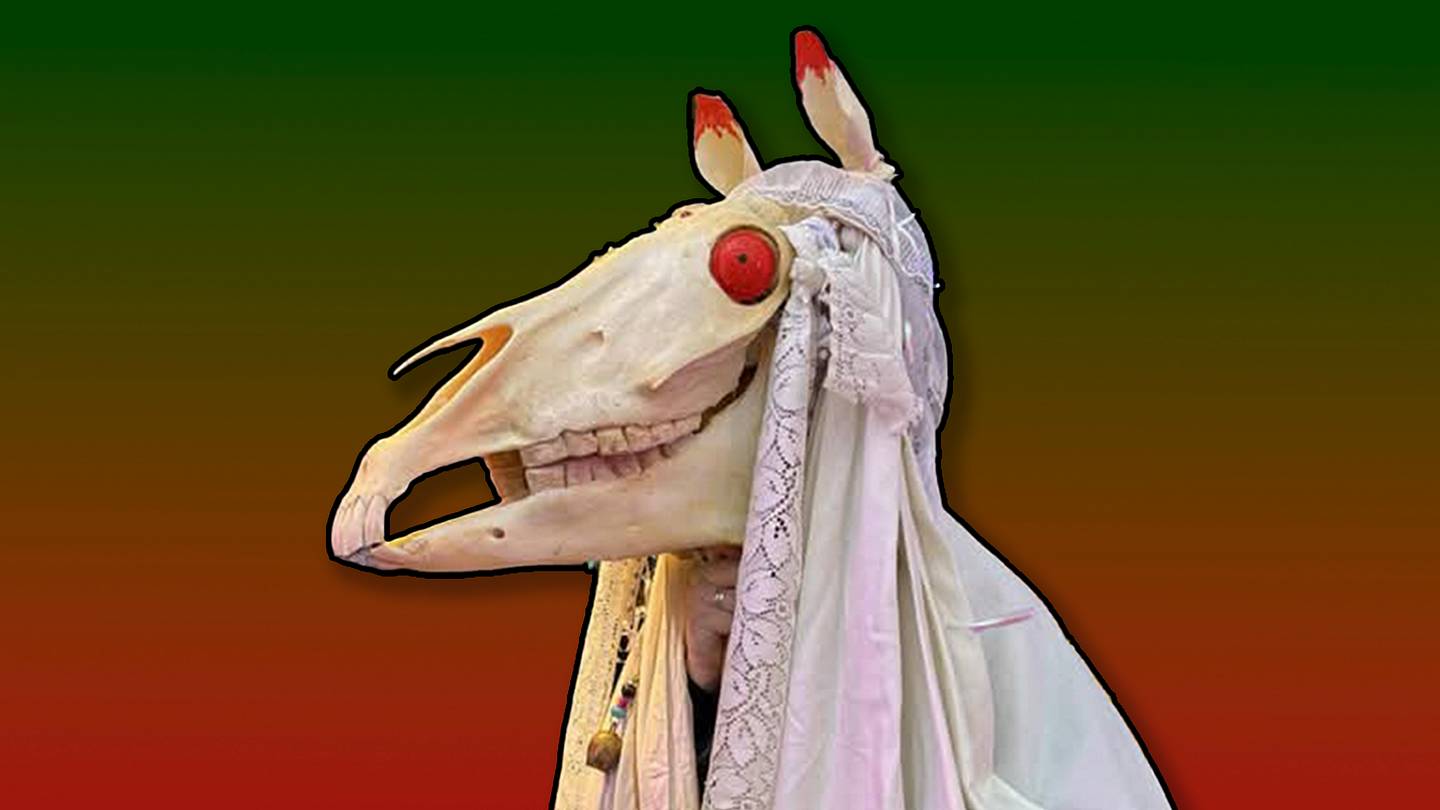
In Wales, one of the strangest and most fascinating midwinter customs is Mari Lwyd. A decorated horse skull, usually mounted on a pole and covered with a white sheet, is carried from house to house by a group of singers. The visitors challenge householders to a playful battle of rhyming verses, asking for entry, food, and drink.
Imagine carolers arriving at your door, except the lead singer is a skeletal horse with ribbons. It is festive, eerie, poetic, and completely unforgettable. The tradition is often linked with wassailing and older winter customs, though its exact origins remain debated.
Mari Lwyd shows how Christmas has always had a theatrical side. Before streaming specials and matching pajamas, communities created their own live entertainment through song, disguise, and friendly competition. The tradition turns the doorway into a stage and the neighborhood into a roaming performance. It is also a reminder that not all holiday visitors come with sleigh bells. Some arrive with a skull and excellent timing.
6. Sweden: The Gävle Goat
In Gävle, Sweden, the Christmas season is marked by the building of a giant straw goat known as the Gävle Goat. The Yule Goat is an old Scandinavian Christmas symbol, often made from straw and tied with red ribbon. Gävle turned that idea into a towering public display beginning in the 1960s.
The unusual twist is that the goat has become famous not only for being built, but for its repeated misfortunes. Over the years, it has often been damaged or burned by vandals, despite security efforts. To be clear, destroying it is not the official tradition. The official tradition is building the goat. The unofficial suspense is whether it survives.
The Gävle Goat has become a global Christmas curiosity because it combines charm, danger, civic pride, and annual cliffhanger energy. It is like a holiday decoration with its own season finale. People follow updates, root for its survival, and treat the goat as both mascot and symbol of festive resilience.
7. Ukraine: Christmas Spiderweb Ornaments
In Ukraine and parts of Eastern European folklore, spiderwebs can be a symbol of Christmas luck. One popular legend tells of a poor family that could not afford decorations for its Christmas tree. During the night, spiders covered the tree with webs, and in the morning light, the webs shone like silver and gold.
Because of this story, some families decorate Christmas trees with spider or web-shaped ornaments. Rather than being spooky, the spider represents blessing, beauty, and unexpected good fortune. It is one of the rare times when finding a spider near the tree is not an emergency meeting topic.
The tradition also gives a deeper meaning to tinsel-like sparkle. The shining web is a reminder that holiday beauty does not always come from expensive decorations. Sometimes the most meaningful symbols come from stories about hope appearing in humble places. That message feels especially powerful in a season often pressured by shopping lists and perfect displays.
8. Italy: La Befana, the Gift-Giving Witch
In Italy, Christmas festivities stretch into Epiphany, celebrated on January 6. On the night before, children await La Befana, a broom-riding old woman who delivers sweets and gifts to well-behaved children and symbolic coal to those who have been naughty.
La Befana is tied to stories of the Magi, or Three Wise Men. In one version, she was invited to join their journey to find the Christ child but was too busy with housework. Later, regretting the missed opportunity, she set out to search for the child herself, leaving gifts for children along the way.
What makes La Befana so beloved is her earthy personality. She is not polished like a department-store Santa. She is practical, old-fashioned, a little messy, and very busy. She sweeps, travels by broom, enters homes through chimneys, and keeps the holiday season alive after December 25. Honestly, she may be the most relatable gift-bringer in Christmas folklore: late, hardworking, and still delivering.
9. Czech Republic: Christmas Carp in the Bathtub
In the Czech Republic, Slovakia, and parts of Central Europe, carp has long been associated with Christmas Eve dinner. Traditionally, families bought live carp before the holiday and kept it in the bathtub for a short time before preparing it for the meal. The practical reason was to help clean the fish’s flavor before cooking.
Fried carp with potato salad remains a classic Christmas Eve dish for many Czech families, though modern habits are changing. Some people now buy prepared fish, choose other seafood, or skip the bathtub stage altogether. Still, the image of a Christmas carp temporarily occupying the family bath remains one of Europe’s most unusual holiday food customs.
This tradition reflects how Christmas menus often grow from local resources. In places where fishponds and freshwater carp were historically important, carp became festive food. It also shows that holiday nostalgia is not always glamorous. Sometimes it has fins, scales, and a strong opinion about your bathroom.
10. Venezuela: Roller Skating to Christmas Celebrations
In Venezuela, especially in Caracas, a tradition known as las patinatas has involved people gathering to roller skate during the Christmas season. The custom became popular in the mid-20th century, especially among children and communities celebrating early morning holiday Masses and neighborhood festivities.
In some accounts, streets were closed to traffic so skaters could move safely. Families and friends joined together outdoors, turning Christmas into a warm-weather community event on wheels. For anyone raised on snow globes, the idea of skating to Christmas celebrations under a tropical sky feels like Santa took a wrong turn and decided to enjoy himself.
Like many traditions, las patinatas has changed over time due to safety and social conditions. But it remains an important memory and cultural symbol for many Venezuelans. It captures the local spirit of Christmas in a climate where sleighs are unnecessary and wheels make much more sense.
11. Mexico: Oaxaca’s Night of the Radishes
Every December 23 in Oaxaca, Mexico, artists and visitors gather for La Noche de Rábanos, or Night of the Radishes. Competitors carve large radishes into detailed scenes, figures, buildings, animals, and holiday displays. The results can be astonishingly creative, especially considering the main material is usually destined for salad.
The event began in the late 19th century and has become one of Oaxaca’s signature Christmas-season celebrations. Radish artists often create nativity scenes, local traditions, market scenes, and imaginative sculptures. Because radishes wilt quickly, the festival is temporary by nature. You admire the art while it lasts, then accept that vegetable fame is brief.
Night of the Radishes is unusual, but it is also deeply connected to Oaxaca’s artistic identity. The city is famous for craft, food, markets, and public celebration. This tradition brings all of that together in one charmingly odd event. It proves that Christmas art does not need marble, gold, or glass. Sometimes it needs a sharp knife, patience, and a very ambitious root vegetable.
What These Christmas Traditions Teach Us
These global Christmas customs may look strange at first, but each one makes sense inside its own cultural story. The Catalan Christmas log turns gift-giving into family comedy. Krampus and the Yule Lads preserve older winter folklore. La Befana extends the holiday into Epiphany. Japan’s KFC feast shows how modern marketing can become genuine tradition when people attach memories to it.
Food appears again and again because holidays are lived through the senses. Czech carp, Japanese chicken, Mexican radish art, and Icelandic treats in children’s shoes all show that Christmas is not only something people believe or decorate. It is something they taste, smell, prepare, and share.
The spookier traditions also reveal something important: winter holidays have never been only sweet. Darkness, mystery, mischief, and moral lessons have long been part of December storytelling. A season filled with lights becomes more meaningful when people remember the darkness those lights are pushing back.
Experience Guide: How to Enjoy Unusual Christmas Traditions Around the World
If you want to experience unusual Christmas traditions around the world, the first rule is simple: arrive curious, not judgmental. A tradition may seem funny or strange from the outside, but for local families it may carry generations of memory. Smile, ask respectful questions, and remember that your own holiday customs may also look odd to someone else. Americans put socks over fireplaces and invite a man to enter through the chimney. We are not in a position to judge the Christmas log.
For travelers, timing matters. Many of these customs happen on specific dates, not throughout the whole holiday season. Krampus events usually cluster around early December. St. Nicholas-related customs happen before Christmas Day. La Befana belongs to Epiphany in January. Oaxaca’s Night of the Radishes is famously held on December 23. If you show up three days late, you may still find great food, but the radishes will not be waiting for your emotional growth.
Markets are often the best places to observe local Christmas culture. In Catalonia, holiday markets may sell smiling Tió de Nadal logs and small folk figures. In Sweden, straw Yule Goat ornaments appear in shops and homes. In Italy, Epiphany markets often feature stockings, sweets, and images of La Befana. Markets let you see how traditions move from folklore into everyday life through objects people buy, gift, and display.
Food experiences are another friendly doorway into culture. Trying a Japanese Christmas cake, tasting Czech-style fried carp, or exploring Oaxacan holiday foods around festival time can tell you more than a museum label. Food makes tradition practical. Someone has to cook it, serve it, argue about the best version, and insist that their grandmother did it correctly.
Photography is tempting, especially at visually dramatic events like Mari Lwyd, Krampus parades, or Night of the Radishes. But always watch how locals behave. Some events are public performances; others may include religious elements or community rituals. Ask before photographing people closely, especially children or costumed performers preparing for an event. Good travel manners are the universal holiday tradition everyone appreciates.
If you are not traveling, you can still explore these customs at home. Add a spider ornament to your tree as a symbol of luck. Read about the Yule Lads with kids and let each child invent a harmless “Yule Lad” personality. Try an international Christmas dinner night, with one dish inspired by another country. Watch documentaries or cultural videos about Christmas markets and winter festivals. The goal is not to copy sacred or local customs carelessly, but to learn from them and widen your sense of what celebration can look like.
The most rewarding experience is noticing the shared human pattern underneath the weirdness. Whether people are carving radishes, feeding a log, skating through city streets, or waiting for a kindly witch, they are doing what people have always done in winter: gathering together, making meaning, entertaining children, honoring ancestors, sharing food, and laughing at the cold, dark world outside.
Conclusion
The world’s unusual Christmas traditions prove that the holiday is far bigger than one image of snow, stockings, and a red-suited Santa. Christmas can arrive with fried chicken, straw goats, spiderweb ornaments, poetic horse skulls, roller skates, mischievous trolls, or a witch who keeps better delivery hours than most shipping companies.
What makes these customs beautiful is not just that they are strange. It is that they are meaningful. They help families teach children, remember the past, celebrate local identity, and turn the darkest time of year into something bright. Some traditions are ancient. Some are surprisingly modern. Some are solemn, some are silly, and some involve vegetables performing above their pay grade.
So the next time Christmas starts to feel predictable, remember the wider world. Somewhere, a child is checking a shoe for candy from a Yule Lad. Somewhere else, a family is ordering holiday chicken weeks in advance. In Wales, a horse skull may be preparing a rhyme. In Oaxaca, a radish is about to become art. The season is full of wonderand sometimes, the wonder has horns, wheels, or a blanket-covered log.













