Depression and anxiety have an annoying talent for turning ordinary moments into emotional obstacle courses. A harmless text can become a courtroom drama, getting out of bed can feel like an Olympic event, and “just relax” may sound about as useful as “simply become a dolphin.” These 17 cute and honest comics transform those invisible struggles into warm, funny, recognizable sceneswithout pretending that recovery is quick, tidy, or powered by inspirational mugs.
Why Relatable Mental Health Comics Matter
Depression and anxiety are not niche experiences. Recent CDC data indicate that about one in five U.S. adults has been told by a health professional that they had a depressive disorder, and a similar share has received an anxiety-disorder diagnosis. These conditions can affect concentration, sleep, energy, relationships, work, school, and the ability to complete basic daily tasks.
That is why a small comic can land with surprising force. It takes a private thought“Why is answering one email so hard?”and makes it visible. The joke does not erase the difficulty. It simply adds a tiny window to a room that may have felt sealed shut.
The original collection was created by cartoonist Chris Naish, who described living with depression and anxiety and gradually rebuilding his life through therapy, art, and exercise. His comics were designed to share what helped him while encouraging people facing similar struggles.
Understanding the Feelings Behind the Comics
Depression is more than a rough afternoon or a playlist containing three sad songs. It may involve persistent low mood, loss of interest, fatigue, hopelessness, sleep or appetite changes, difficulty concentrating, withdrawal, and reduced ability to function. Anxiety disorders can involve intense worry, fear, panic, avoidance, physical tension, and distress that interferes with ordinary life. Symptoms vary, and not everyone experiences them in the same way.
These comics work because they do not present mental health as one dramatic thunderstorm. Often it is more like unpredictable indoor weather: fog in the kitchen, lightning during a phone call, and suspicious drizzle exactly when someone says, “You seem fine to me.”
17 Cute and Honest Comics About Depression and Anxiety
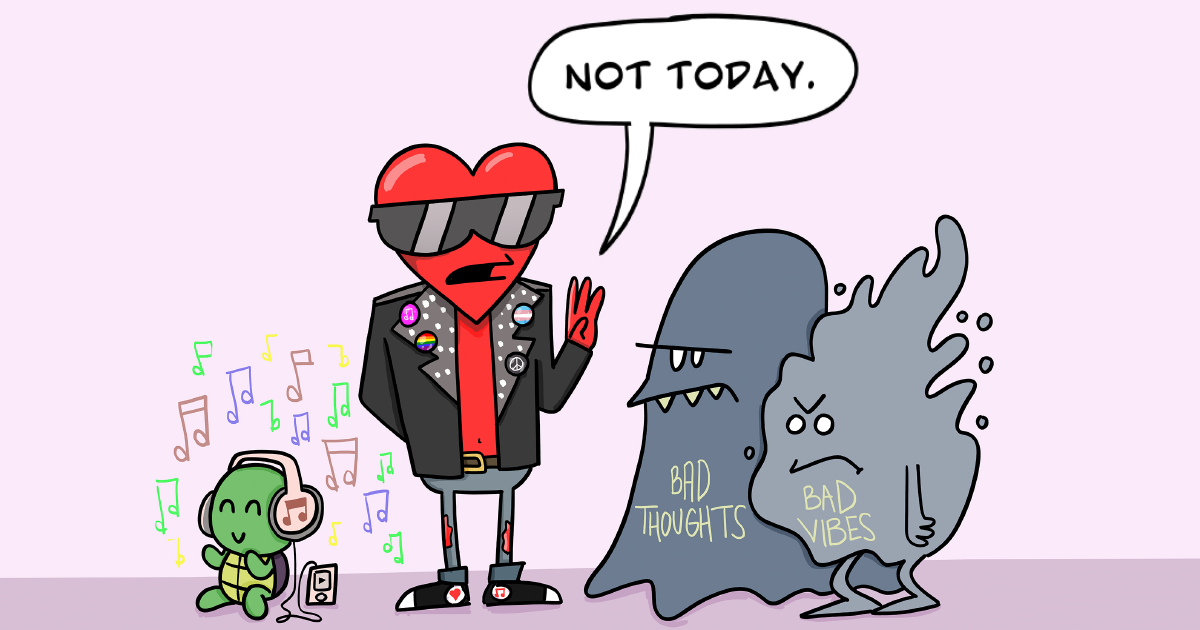
1. The Power of Music
Music can become an emotional handrail when thoughts feel slippery. A familiar song may create structure, offer comfort, or help someone feel an emotion that has been stuck behind a locked door. It is not a magical cure, but sometimes three minutes of melody can make the next three minutes more manageable.
2. Social Anxiety Life Hack
Social anxiety can turn a casual gathering into a high-budget disaster movie produced entirely by the brain. People may rehearse greetings, analyze facial expressions, and replay conversations long after everyone else has forgotten them. The comic’s humor lies in recognizing those improvised survival tacticssome practical, some ridiculous, all deeply understandable.
3. The Right Motivation
When depression drains energy, motivational speeches may bounce off like peas fired at a castle. The “right” motivation is often personal and modest: feeding a pet, buying groceries, seeing a friend, or earning a small reward. Progress does not always arrive wearing running shoes. Sometimes it arrives because a dog needs a walk.
4. How I Got My Life Back
Recovery is rarely one heroic decision followed by triumphant background music. It is usually a collection of ordinary actions repeated over time: attending therapy, taking prescribed treatment, moving the body, resting, making art, asking for help, and trying again after setbacks. The phrase “got my life back” may describe reconstruction rather than a return to an old version of oneself.
5. Call for Back Up!
Anxiety often insists that asking for help is burdensome, embarrassing, or proof of failure. In reality, support can be practical and specific: “Can you sit with me while I make this call?” or “Could you check in tonight?” A backup person does not have to solve everything. Their job may simply be to help the moment feel less lonely.
6. Little by Little
This may be the unofficial motto of mental health recovery. Showering, replying to one message, opening the curtains, or eating something with actual nutritional value can count as progress. Small steps are easy to dismiss because they do not look cinematic. Fortunately, brains are not movie critics, and steady repetition still matters.
7. Little Pizza
Comfort sometimes arrives in a small, warm, cheese-covered form. Food cannot treat depression or anxiety by itself, but simple pleasures can interrupt an exhausting day. The important distinction is kindness rather than punishment: enjoying a favorite meal without turning it into another reason for guilt, self-criticism, or a full congressional investigation.
8. Be Your Own Back Up!
External support matters, but so does building an internal voice that is less cruel. Self-compassion means responding to distress with the patience one might offer a friend. It does not mean pretending everything is wonderful. It means saying, “This is hard, and I still deserve care,” instead of appointing the inner critic as permanent manager.
9. We’ve All Been There
Relatability can reduce shame. A comic about overthinking, avoidance, or emotional exhaustion tells readers that their strange private habits may not be strange or private after all. Shared recognition does not minimize anyone’s pain. It creates the comforting realization that the human brain has been running similar unnecessary emergency drills in many households.
10. It’s Up and Down
Improvement is not a straight staircase. A person can have a good week, struggle the next day, and still be moving forward overall. This is one of the hardest truths to accept because setbacks can feel like proof that nothing worked. In reality, fluctuating symptoms are common, and a difficult day does not cancel earlier progress.
11. Sometimes, Nothing Works
There are days when breathing exercises annoy you, music sounds like noise, the walk feels impossible, and the motivational quote deserves to be placed gently in a drawer. Honest mental health comics make room for these days. Coping tools are tools, not moral tests, and failing to feel better immediately is not a character flaw.
12. Who’s Thinking What
Anxiety is a talented but unreliable mind reader. It may confidently announce that another person is bored, offended, disappointed, or secretly composing a negative review. The truth is usually less dramatic: other people are often thinking about their own errands, insecurities, lunch plans, and whether they left the stove on.
13. It’s Not So Easy to Hide
Many people become skilled at masking distress with jokes, productivity, politeness, or a carefully deployed “I’m just tired.” Yet symptoms may leak through as withdrawal, irritability, canceled plans, missed deadlines, or a sudden loss of interest. Noticing these changes with compassion is more helpful than demanding a perfect explanation.
14. Meditating’s Not Easy!
Meditation is frequently advertised as though the mind will become a silent mountain lake after fourteen seconds. Real practice may involve remembering an awkward conversation from 2009, planning dinner, judging yourself for thinking, and then noticing that judgment. Mindfulness is not having zero thoughts; it is repeatedly returning attention without staging a wrestling match.
15. How Do People See Me?
Depression and anxiety can distort self-perception. A person may assume they look weak, awkward, lazy, or difficult while others see someone thoughtful, funny, resilient, or simply having a hard time. The comic theme exposes the gap between internal criticism and external realitya gap wide enough to fit several unhelpful assumptions and one nervous raccoon.
16. Find a Way to Be There for Each Other
Support does not require perfect words. It may look like sending a meme, sharing a quiet meal, offering a ride, or asking a direct question and listening to the answer. Open conversations and lived-experience stories can reduce stigma and help people feel less isolated, while peer support can complementbut not replaceprofessional care.
17. Even Relaxing Has Its Challenges
“Relaxing” can become another task to perform correctly. Someone with anxiety may schedule rest, monitor whether it is working, and then panic because they are not relaxing efficiently enough. Genuine rest may be messy: rewatching a familiar show, sitting outside, doodling, taking a nap, or doing absolutely nothing without filing a productivity report.
What These Comics Get Right About Recovery
The strongest message is not that one playlist, pizza, pet, joke, walk, or meditation session will fix everything. It is that people often build a flexible collection of supports. One day music helps; another day it is a friend, therapy appointment, medication, creative project, exercise, or extra sleep. Mental health care is individual, and finding useful practices can take trial and error.
Professional treatment also matters. Psychotherapy and medication are established treatment options for depression and anxiety, and some people benefit from a combination. Creative work, exercise, mindfulness, routines, and supportive relationships may be valuable additions, but they should not be framed as substitutes for needed clinical care.
Art can play a meaningful role because it gives shape to experiences that are difficult to explain. The American Art Therapy Association describes art therapy as a mental health profession combining active art-making, psychological theory, and a therapeutic relationship. A personal comic is not automatically art therapy, but creative expression can still help people communicate, reflect, and feel less alone.
Experiences Many Readers May Recognize
One of the most recognizable experiences is the morning negotiation. The alarm rings, and the brain immediately opens a committee meeting about whether standing up is truly necessary. Depression may make the body feel heavy before the day has even started. Anxiety joins the meeting with a slideshow titled “Everything That Could Go Wrong Before Lunch.” The person has not left the bed, yet somehow they are already exhausted from an imaginary future.
Then there is the message problem. A friend sends, “Hey, how are you?” It is kind, simple, and only four words. The anxious brain treats it like a legal document requiring twelve drafts, emotional risk assessment, and approval from senior management. The depressed brain says replying is too much effort. Hours pass. Shame arrives. Now the message feels harder because it is “late,” even though the friend may simply be busy watching a cooking video.
Social plans create another familiar loop. At first, the invitation sounds lovely. Later, anticipation becomes tension: What will I wear? What if I go quiet? What if everyone notices I am uncomfortable? Canceling brings immediate relief, followed by loneliness and guilt. This does not mean the person dislikes friends. Avoidance can be an attempt to escape distress, even when it also blocks the connection they genuinely want.
Productivity can become equally complicated. On a difficult day, completing one task may require enormous effort, but the result looks ordinary to everyone else. Nobody throws confetti because you washed three dishes or scheduled an appointment. Still, those actions may represent persistence under a weight other people cannot see. Relatable depression comics honor this invisible labor by treating tiny victories as real victories, not consolation prizes.
Many people also recognize the strange collision between humor and pain. They may make jokes about overthinking, emotional shutdown, or hiding under a blanket like a worried burrito. Humor does not prove the struggle is minor. Sometimes it is a way to create distance from overwhelming feelings, communicate without giving a speech, or invite another person to say, “Yes, me too.” The laugh and the ache can exist in the same panel.
Recovery experiences are often quieter than expected. A person notices they answered a call without rehearsing. They enjoyed a song again. They took a walk because they wanted to, not because a wellness article scolded them. They had a hard afternoon but did not assume it would last forever. These moments may look small from outside, yet they can signal an expanding life.
There may also be relapses, medication adjustments, frustrating appointments, financial barriers, or stretches when progress is difficult to detect. Honest comics make room for this unevenness. They do not demand a cheerful ending in every strip. Instead, they offer companionship: a reminder that struggling is not failing, support is not weakness, and a bad chapter is not automatically the final page.
Conclusion: A Small Comic Can Say “You’re Not Alone”
The appeal of these 17 cute and honest comics is their balance. They are playful without mocking mental illness, hopeful without becoming sugary, and practical without pretending that coping is easy. Their most useful message is not “cheer up.” It is “this experience is real, other people recognize it, and help is allowed.”
Relatable mental health comics cannot diagnose a condition or replace treatment. What they can do is start a conversation, soften shame, and give readers language for experiences that once felt impossible to describe. Sometimes that is the first tiny step. Little by little, tiny steps can become a path.