
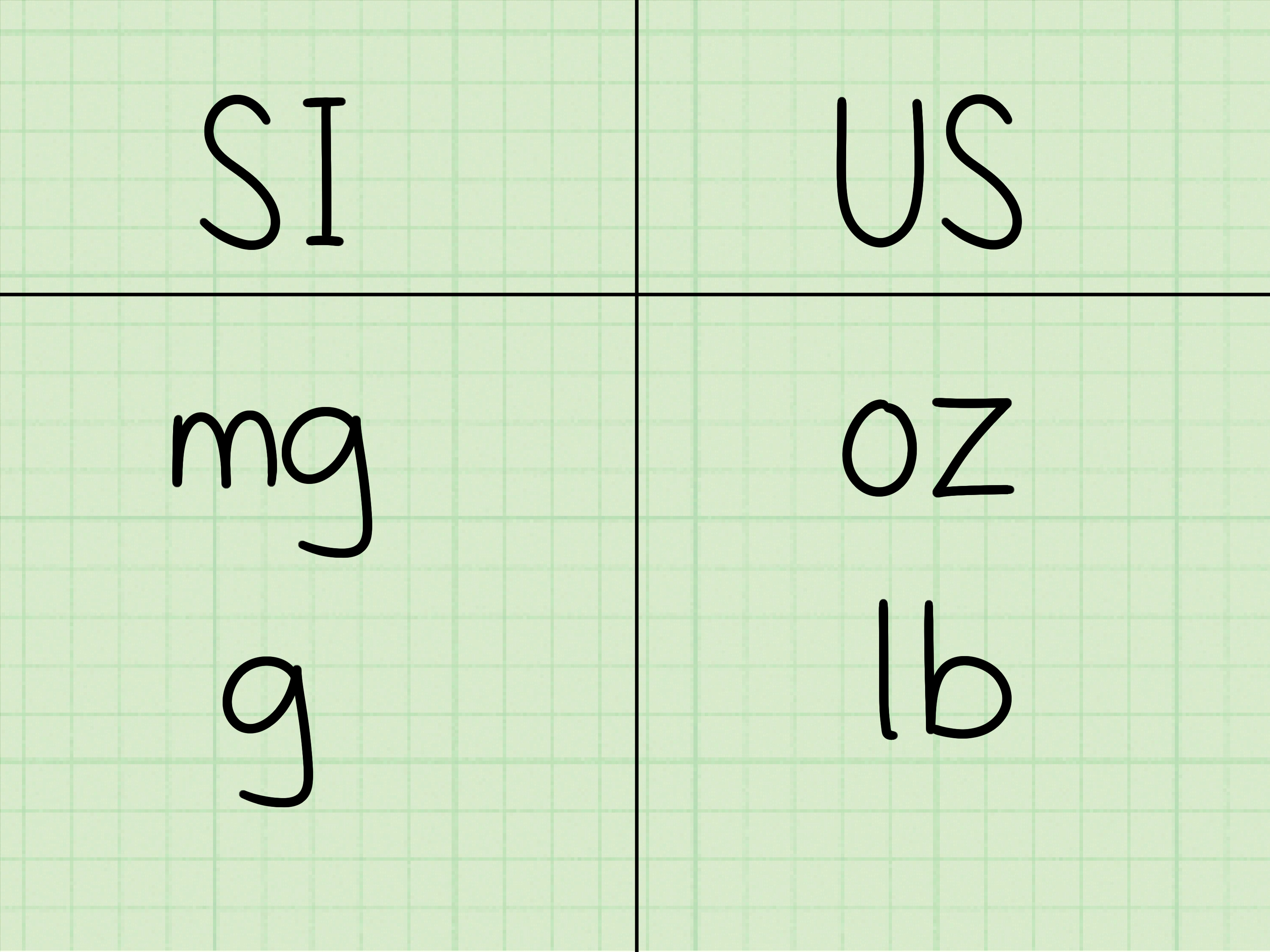
Converting grams to milligrams sounds like the kind of math problem that waits until you are relaxed, then jumps out from behind a cereal box, a supplement label, or a chemistry worksheet. The good news is that this conversion is one of the friendliest in the metric system. No mysterious fractions, no dramatic long division, no calculator sweating in the corner. To convert grams to milligrams, you simply remember one key fact: 1 gram equals 1,000 milligrams.
That tiny sentence does most of the heavy lifting. Whether you are measuring flour for a recipe, checking a science lab result, comparing nutrition labels, helping a student with homework, or trying to understand why a “small” amount of something is written as a surprisingly large number, the gram-to-milligram conversion follows the same logic every time.
This guide explains 3 ways to convert grams to milligrams: multiplying by 1,000, moving the decimal point, and using a conversion table or calculator. We will also walk through examples, common mistakes, real-life uses, and practical experience-based tips so the next time you see “g” and “mg,” you can handle them with confidence instead of staring at them like they just insulted your calculator.
Understanding Grams and Milligrams
Before jumping into the conversion methods, it helps to understand what grams and milligrams actually measure. Both are metric units of mass. In everyday American English, people often say “weight,” especially in cooking, groceries, fitness, and health contexts. Technically, mass and weight are not identical in physics, but for regular daily use on Earth, the distinction usually does not cause trouble. Your kitchen scale is not judging you.
What Is a Gram?
A gram, abbreviated as g, is a common metric unit used to measure relatively small amounts of mass. Food labels, recipes, jewelry, school science activities, and laboratory measurements often use grams. For example, a packet of sugar may weigh a few grams, a serving of protein powder may be measured in grams, and a small kitchen ingredient might be listed as 5 g or 10 g.
Grams are useful because they are small enough for everyday precision but not so tiny that numbers become awkward. Saying “250 grams of flour” is much easier than saying “250,000 milligrams of flour,” unless you enjoy making recipes sound like engineering documents.
What Is a Milligram?
A milligram, abbreviated as mg, is one-thousandth of a gram. The prefix “milli-” means one-thousandth. That means milligrams are used for very small quantities. You will often see milligrams on medicine labels, supplement bottles, nutrition facts panels, chemistry instructions, and scientific measurements.
For example, a vitamin label might list 500 mg of calcium, a nutrition label might show 140 mg of sodium, and a chemistry problem might ask you to convert 0.25 g into mg. Milligrams help make small measurements easier to read without using lots of zeros after a decimal point.
The Basic Formula: Grams to Milligrams
The formula is simple:
milligrams = grams × 1,000
Because 1 gram equals 1,000 milligrams, you multiply the number of grams by 1,000 to get milligrams.
Examples:
- 1 g = 1,000 mg
- 2 g = 2,000 mg
- 5 g = 5,000 mg
- 0.5 g = 500 mg
- 0.025 g = 25 mg
That is the entire secret. The rest of this article is about making that secret easier to remember, apply, and double-check.
Way 1: Convert Grams to Milligrams by Multiplying by 1,000
The most direct way to convert grams to milligrams is to multiply the gram value by 1,000. This method is best when you want a clear mathematical formula, especially for schoolwork, lab reports, recipes, spreadsheets, or any situation where you need to show your work.
Step-by-Step Method
- Write down the value in grams.
- Multiply that number by 1,000.
- Label the answer in milligrams.
For example, convert 7 grams to milligrams:
7 × 1,000 = 7,000
So, 7 g = 7,000 mg.
Example: Convert 3.4 Grams to Milligrams
Start with the formula:
milligrams = grams × 1,000
Now plug in 3.4:
3.4 × 1,000 = 3,400
So, 3.4 g = 3,400 mg.
Example: Convert 0.075 Grams to Milligrams
This is where milligrams are especially useful. A number like 0.075 g may look small and slightly suspicious, like it is hiding something. Multiplication clears things up:
0.075 × 1,000 = 75
So, 0.075 g = 75 mg.
Why This Method Works
The metric system is based on powers of ten. That means many conversions happen by multiplying or dividing by 10, 100, 1,000, and so on. Since a milligram is one-thousandth of a gram, there are 1,000 milligrams in one gram. Multiplying by 1,000 changes the unit from a larger unit to a smaller unit.
A helpful way to think about it: when you move from grams to milligrams, you are breaking each gram into 1,000 smaller pieces. So the number gets larger, even though the actual amount stays the same. One dollar can be written as 100 cents; the value did not magically become richer, but the unit got smaller. Grams and milligrams work in a similar way.
Way 2: Convert Grams to Milligrams by Moving the Decimal Point
The second way to convert grams to milligrams is to move the decimal point three places to the right. This is just a faster version of multiplying by 1,000. It is great for mental math and quick conversions when you do not want to grab a calculator.
The Decimal Rule
To convert grams to milligrams:
Move the decimal point 3 places to the right.
Why three places? Because 1,000 has three zeros. Multiplying by 1,000 shifts the decimal point three positions to the right.
Example: Convert 2.6 Grams to Milligrams
Start with 2.6 g. You can write it as 2.600 g to make the movement clearer.
Move the decimal three places to the right:
2.600 → 2600
So, 2.6 g = 2,600 mg.
Example: Convert 0.48 Grams to Milligrams
Write 0.48 as 0.480. Now move the decimal point three places to the right:
0.480 → 480
So, 0.48 g = 480 mg.
Example: Convert 0.006 Grams to Milligrams
This one looks tiny, but the same rule applies:
0.006 → 6
So, 0.006 g = 6 mg.
This is a beautiful little metric-system moment. The decimal point moves, the unit changes, and nobody needs to wrestle with fractions under fluorescent lights.
When the Decimal Method Is Most Useful
The decimal method is useful when you are comfortable with place value. Students often like it because it is fast. Cooks like it when adapting measurements. Science learners like it because it shows how metric units relate to each other. Anyone who works with nutrition facts can use it to compare labels that mix grams and milligrams.
However, be careful. Moving the decimal in the wrong direction is the most common mistake. If you are converting from grams to milligrams, the number should become bigger because milligrams are smaller units. If your answer becomes smaller, pause. Your decimal point may have gone on vacation in the wrong direction.
Way 3: Use a Conversion Table, Chart, or Calculator
The third way to convert grams to milligrams is to use a conversion table, chart, spreadsheet formula, or online calculator. This method is especially helpful when you need many conversions at once or want to avoid errors with decimals.
Simple Grams to Milligrams Conversion Table
| Grams (g) | Milligrams (mg) |
|---|---|
| 0.001 g | 1 mg |
| 0.01 g | 10 mg |
| 0.05 g | 50 mg |
| 0.1 g | 100 mg |
| 0.25 g | 250 mg |
| 0.5 g | 500 mg |
| 1 g | 1,000 mg |
| 2 g | 2,000 mg |
| 5 g | 5,000 mg |
| 10 g | 10,000 mg |
A table is useful because it gives you quick reference points. Once you know that 0.5 g equals 500 mg and 1 g equals 1,000 mg, many conversions become easier to estimate.
Using a Calculator
A calculator is helpful when the gram value has several decimal places. For example, converting 0.387 g to milligrams is not difficult, but it is easy to misread under pressure.
0.387 × 1,000 = 387
So, 0.387 g = 387 mg.
For a single conversion, mental math may be enough. For a long list of values, a calculator can keep your brain from turning into mashed potatoes.
Using a Spreadsheet Formula
If you are working in a spreadsheet, place the gram value in one cell and multiply it by 1,000 in another. For example, if cell A2 contains the value in grams, use:
=A2*1000
This is useful for lab data, inventory lists, food formulation, nutrition tracking, product labels, or classroom worksheets. It also reduces repeated typing errors, which is excellent news for anyone who has ever typed one too many zeros and accidentally turned a snack into a science experiment.
Common Grams to Milligrams Examples
Let us practice with a few common examples. The more examples you see, the more natural the conversion becomes.
Convert 1.2 Grams to Milligrams
1.2 × 1,000 = 1,200
1.2 g = 1,200 mg
Convert 0.3 Grams to Milligrams
0.3 × 1,000 = 300
0.3 g = 300 mg
Convert 12 Grams to Milligrams
12 × 1,000 = 12,000
12 g = 12,000 mg
Convert 0.0025 Grams to Milligrams
0.0025 × 1,000 = 2.5
0.0025 g = 2.5 mg
Why Converting Grams to Milligrams Matters
At first glance, converting grams to milligrams may seem like a tiny math skill. But tiny math skills often run the world quietly, like stagehands in a theater production. You may not notice them until something goes wrong.
In Cooking and Baking
Most home recipes use grams for ingredients such as flour, sugar, butter, and spices. However, some specialty ingredients, additives, or nutritional components may appear in milligrams. Understanding the conversion helps when comparing ingredient labels, adjusting recipe formulas, or scaling small quantities.
For example, if a recipe discussion mentions 0.5 g of an ingredient, that is the same as 500 mg. This may matter for concentrated flavorings, stabilizers, yeast nutrients, or other ingredients used in very small amounts.
In Nutrition Labels
Nutrition facts panels often mix grams and milligrams. Macronutrients such as carbohydrates, protein, fat, fiber, and sugar are usually listed in grams. Minerals and sodium are commonly listed in milligrams. If you are comparing values, it helps to understand the scale.
For example, 1 g of sodium would be 1,000 mg of sodium. That is why a label showing hundreds of milligrams may represent less than a gram, even though the number looks large.
In Science Classes
Metric conversions are a core part of science education because chemistry, biology, physics, and environmental science all rely on measurement. Students often convert grams to milligrams when solving lab problems, balancing data, measuring samples, or reporting experimental results.
The gram-to-milligram conversion is also a stepping stone to other metric conversions, such as kilograms to grams, milligrams to micrograms, liters to milliliters, and meters to millimeters.
In Health and Medicine
Milligrams are widely used on medication and supplement labels. Because dosage and safety can be serious matters, it is important to read labels carefully and follow guidance from qualified healthcare professionals. This article explains unit conversion only; it should not be used to decide medication doses.
That said, understanding that 1 g equals 1,000 mg can help you read labels more confidently. For instance, a supplement labeled 0.5 g contains 500 mg. A medicine labeled 250 mg contains 0.25 g. The conversion is simple, but the context can be important.
Common Mistakes to Avoid
Even simple conversions can go sideways. Here are the mistakes that most often cause confusion.
Mistake 1: Dividing Instead of Multiplying
To convert grams to milligrams, multiply by 1,000. Do not divide. Dividing by 1,000 converts milligrams to grams, which is the opposite direction.
Wrong: 4 g ÷ 1,000 = 0.004 mg
Correct: 4 g × 1,000 = 4,000 mg
Mistake 2: Moving the Decimal Left
When converting from grams to milligrams, move the decimal three places to the right. Moving it left makes the number smaller, which is what happens when converting from milligrams to grams.
Mistake 3: Forgetting the Unit Label
Always label your answer. A number without a unit is like a suitcase without a handle: technically present, but not very useful. Write “mg” after your converted value so the meaning is clear.
Mistake 4: Mixing Up mg and mcg
Milligrams and micrograms are not the same. A milligram is one-thousandth of a gram, while a microgram is one-millionth of a gram. In other words, 1 mg equals 1,000 micrograms. This matters a lot in health, science, and supplement contexts.
Quick Memory Tricks
Here are a few easy ways to remember the conversion:
- “Milli” means thousandth. So 1 milligram is 1/1,000 of a gram.
- Smaller unit, bigger number. Milligrams are smaller than grams, so the number gets bigger when converting grams to milligrams.
- Three zeros, three decimal places. Multiply by 1,000 or move the decimal three places right.
- 1 g = 1,000 mg. Memorize this one line and you can build every answer from it.
Practice Problems
Try these conversions before checking the answers:
- Convert 6 g to mg.
- Convert 0.9 g to mg.
- Convert 2.75 g to mg.
- Convert 0.004 g to mg.
- Convert 15.5 g to mg.
Answers
- 6 g = 6,000 mg
- 0.9 g = 900 mg
- 2.75 g = 2,750 mg
- 0.004 g = 4 mg
- 15.5 g = 15,500 mg
Experiences Related to Converting Grams to Milligrams
One of the most practical things about learning how to convert grams to milligrams is that the skill shows up in ordinary life more often than people expect. It may begin as a school assignment, but it quickly becomes useful in kitchens, grocery aisles, workout routines, science labs, and even conversations about nutrition. The first time many people notice the importance of this conversion is while reading a label. A food package might list fat or sugar in grams, then sodium in milligrams. At first, 500 mg can look larger than 1 g because 500 is a bigger number than 1. But once you understand the units, the picture changes: 500 mg is only 0.5 g. The unit tells the real story.
In cooking, gram-to-milligram conversion becomes especially useful with tiny amounts. Most home cooks are comfortable measuring 100 g of flour or 20 g of butter. But small quantities can feel trickier. Imagine working with a concentrated ingredient where the recipe calls for 0.2 g. On a scale that displays milligrams, that amount appears as 200 mg. Suddenly, the measurement is easier to read. The math helps translate between the recipe’s language and the tool’s language. That is the kind of conversion that saves time, reduces mistakes, and keeps your cookies from tasting like a chemistry department had a bake sale.
Students also benefit from this conversion because it builds confidence with the metric system. A common classroom experience is seeing a value like 0.036 g and feeling unsure where to start. Once the rule becomes familiar, the student can move the decimal three places to the right and get 36 mg. That small success matters. Metric conversions become less intimidating when learners see that they are not random tricks. They follow a pattern based on powers of ten. After grams to milligrams makes sense, other conversions begin to click too.
In fitness and nutrition tracking, this conversion can help people compare supplements, minerals, and food labels more accurately. Protein is usually listed in grams, while minerals such as sodium, calcium, iron, or potassium may be listed in milligrams. Understanding the relationship helps prevent overreaction to large-looking numbers. It also helps readers ask better questions. For example, 1,000 mg equals 1 g, so a label with 250 mg is one-quarter of a gram. That perspective can make nutrition information easier to understand.
Another real-world experience involves spreadsheets and repeated calculations. Anyone who has had to convert a list of ingredient weights or lab samples knows that doing each one by hand can become boring quickly. A simple spreadsheet formula can turn grams into milligrams across dozens or hundreds of rows. This is not glamorous, but it is wonderfully practical. There is a special kind of joy in typing one formula and watching a whole column behave itself.
The biggest lesson from everyday experience is this: conversions are not just math exercises. They are communication tools. Grams and milligrams describe the same amount in different levels of detail. Grams are convenient for larger small quantities; milligrams are better for very tiny amounts. Once you know how to move between them, labels become clearer, assignments become easier, and measurements feel less mysterious. The conversion itself is simple, but the confidence it gives is surprisingly useful.
Conclusion
Converting grams to milligrams is one of the easiest metric conversions once you know the rule: 1 gram equals 1,000 milligrams. You can multiply grams by 1,000, move the decimal point three places to the right, or use a table, calculator, or spreadsheet formula. All three methods lead to the same result.
The most important thing to remember is that milligrams are smaller than grams, so the number gets larger when you convert from grams to milligrams. Whether you are solving homework problems, reading nutrition labels, handling recipe measurements, or reviewing science data, this conversion gives you a fast and reliable way to understand small amounts.
Note: This article is based on established metric system principles and standard SI unit relationships used in education, science, nutrition, and measurement references.













