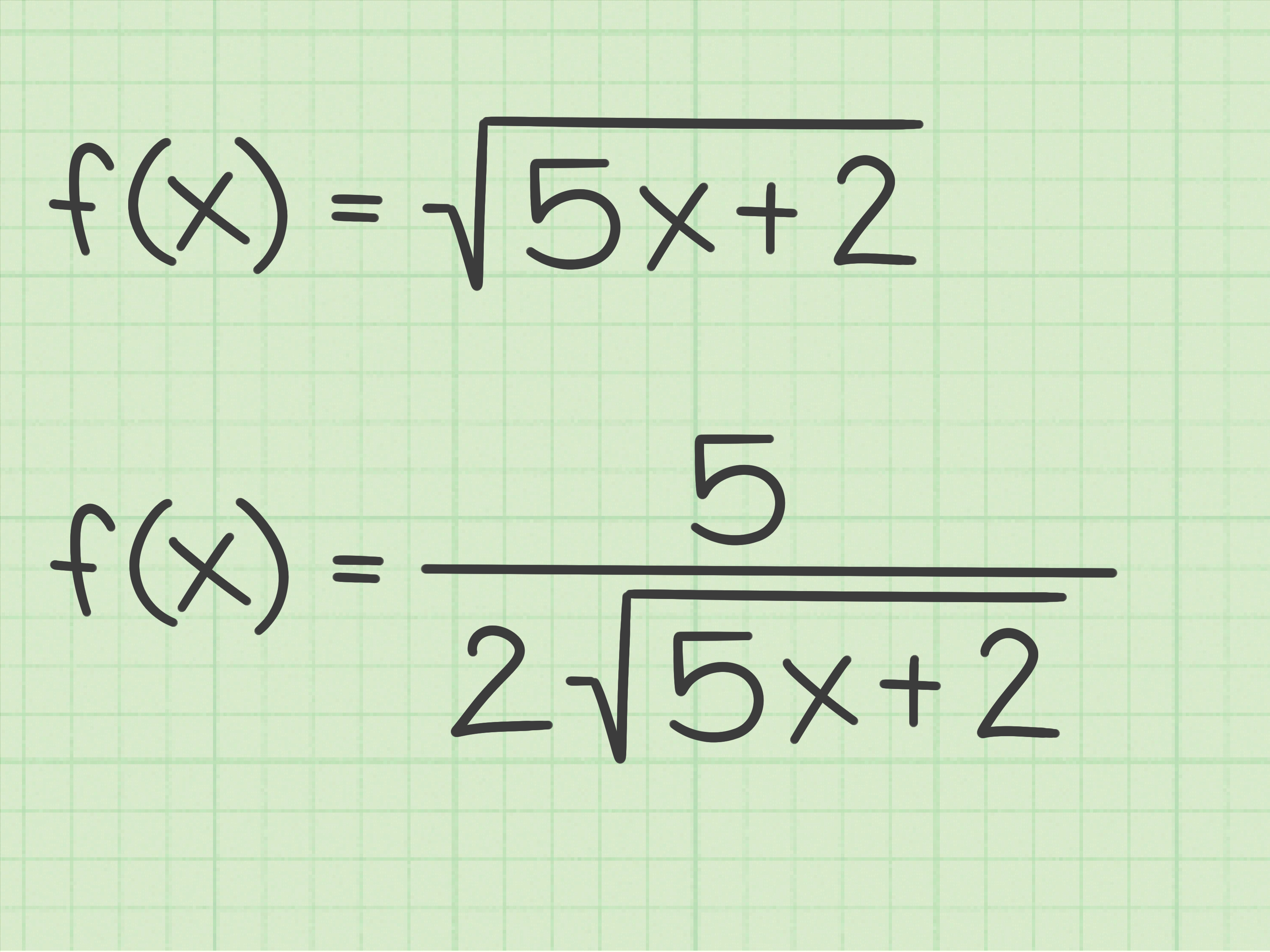
Note: This article synthesizes standard calculus principles taught in reputable American math resources, including open educational materials from Khan Academy, OpenStax, LibreTexts, university calculus notes, and widely used calculus textbook explanations.
Differentiating the square root of x sounds like the kind of thing a math textbook whispers dramatically before dropping a 900-page appendix on your desk. Thankfully, it is much friendlier than it looks. The derivative of √x is one of those little calculus results that shows up everywhere: tangent lines, optimization problems, physics formulas, related rates, and those “quick warm-up” quiz questions that somehow determine your emotional weather for the day.
The goal is simple: find the derivative of the square root function. In calculus notation, we want:
d/dx(√x)
The final answer is:
d/dx(√x) = 1 / (2√x), for x > 0.
That “for x > 0” part matters. The function √x is defined for real numbers x ≥ 0, but its ordinary derivative is not defined at x = 0 because the tangent becomes vertical. In other words, calculus walks up to zero, sees an infinite slope situation, and politely backs away.
In this guide, we will cover 3 ways to differentiate the square root of x: using the power rule, using the limit definition of the derivative, and using implicit differentiation. Each method gives the same result, but each teaches a different skill. Think of them as three routes to the same coffee shop: one is fast, one is scenic, and one makes you feel weirdly powerful.
Why the Derivative of Square Root of X Matters
The square root function is not just a classroom decoration. It appears in geometry, distance formulas, velocity problems, engineering models, statistics, finance, and computer graphics. Anytime a quantity depends on another quantity through a square root, its rate of change often involves the derivative of √x.
The derivative tells us how quickly a function changes. For f(x) = √x, the graph rises quickly near zero and then gradually flattens out. That behavior makes sense when you look at the derivative:
f'(x) = 1 / (2√x)
When x is small and positive, the denominator is small, so the derivative is large. When x becomes bigger, the denominator grows, so the derivative gets smaller. Translation: the square root function starts out sprinting, then settles into a calm mathematical stroll.
Way 1: Differentiate Square Root of X Using the Power Rule
The fastest and most common way to differentiate the square root of x is to rewrite the radical as a fractional exponent. This is the method most calculus teachers hope you learn early because it saves time, ink, and several dramatic sighs.
Step 1: Rewrite the square root as an exponent
The square root of x can be written as:
√x = x1/2
So instead of differentiating:
f(x) = √x
we differentiate:
f(x) = x1/2
Step 2: Apply the power rule
The power rule says:
d/dx(xn) = n xn – 1
Here, n = 1/2. So:
d/dx(x1/2) = (1/2)x1/2 – 1
Subtract the exponents:
1/2 – 1 = -1/2
So the derivative becomes:
f'(x) = (1/2)x-1/2
Step 3: Rewrite the answer in radical form
A negative exponent means the expression belongs in the denominator:
x-1/2 = 1 / x1/2
And since x1/2 = √x, we get:
f'(x) = 1 / (2√x)
Example: Find the derivative of 7√x
Let:
f(x) = 7√x
Rewrite:
f(x) = 7x1/2
Differentiate:
f'(x) = 7(1/2)x-1/2
Simplify:
f'(x) = 7 / (2√x)
This method is efficient because it turns square roots into powers, and powers are exactly what the power rule loves to eat for breakfast.
Way 2: Differentiate Square Root of X Using the Limit Definition
The power rule is fast, but the limit definition shows why the answer is true. This is the “show your work” method. It is less like using a calculator and more like opening the hood of a car to see why it actually moves.
The derivative definition is:
f'(x) = limh→0 [f(x + h) – f(x)] / h
For f(x) = √x, substitute the function:
f'(x) = limh→0 [√(x + h) – √x] / h
At first glance, this expression looks stuck. If we directly plug in h = 0, we get:
[√x – √x] / 0 = 0 / 0
That is an indeterminate form, which is math’s way of saying, “Nice try, but do more work.”
Use the conjugate to simplify
To handle the square roots, multiply the numerator and denominator by the conjugate:
√(x + h) + √x
So:
f'(x) = limh→0 {[√(x + h) – √x] / h} × { [√(x + h) + √x] / [√(x + h) + √x] }
The numerator becomes a difference of squares:
(√(x + h))2 – (√x)2 = (x + h) – x = h
Now the expression is:
f'(x) = limh→0 h / {h[√(x + h) + √x]}
Cancel the h:
f'(x) = limh→0 1 / [√(x + h) + √x]
Now plug in h = 0:
f'(x) = 1 / [√x + √x]
Simplify:
f'(x) = 1 / (2√x)
Why this method is useful
The limit definition method is excellent for understanding the structure of derivatives. It shows that the derivative is not magic. It comes from slope, limits, and algebra. The conjugate step is the hero of the story because it removes the radical difference that caused the original 0/0 problem.
Use this method when you need to prove the derivative from first principles, prepare for a calculus exam, or impress someone who thinks radicals are just tiny roof decorations for numbers.
Way 3: Differentiate Square Root of X Using Implicit Differentiation
The third way is clever, elegant, and surprisingly short. Instead of dealing with the square root directly, we introduce a new variable.
Let:
y = √x
Now square both sides:
y2 = x
This removes the radical. Already, the room feels calmer.
Differentiate both sides
Differentiate both sides with respect to x:
d/dx(y2) = d/dx(x)
Because y is a function of x, we use the chain rule on y2:
2y(dy/dx) = 1
Now solve for dy/dx:
dy/dx = 1 / (2y)
But remember, y = √x. Substitute it back:
dy/dx = 1 / (2√x)
So once again:
d/dx(√x) = 1 / (2√x)
Why implicit differentiation works well
Implicit differentiation is especially helpful when a function is easier to describe through an equation than by explicitly solving for y. In this case, y = √x becomes y2 = x, which is much easier to differentiate.
This method also prepares you for more advanced problems, such as differentiating circles, ellipses, inverse functions, and equations where y and x are tangled together like headphones in a backpack.
Comparing the 3 Methods
All three methods lead to the same derivative:
d/dx(√x) = 1 / (2√x)
But each method has a different purpose.
Power Rule: Best for speed
The power rule method is the quickest. Rewrite √x as x1/2, apply the power rule, and simplify. This is the method you will use most often in homework, exams, and real applications.
Limit Definition: Best for proof
The limit definition shows exactly where the derivative comes from. It is longer, but it builds understanding. If you are studying first principles or preparing for a conceptual calculus question, this method is worth knowing.
Implicit Differentiation: Best for flexibility
Implicit differentiation gives a neat shortcut by turning the square root equation into a power equation. It is also a great bridge to more advanced calculus topics.
Common Mistakes When Differentiating Square Root of X
Mistake 1: Forgetting to rewrite the square root correctly
The square root of x is:
√x = x1/2
It is not x2, not 1/x, and definitely not “that little checkmark thing.” If the exponent is wrong, the derivative will be wrong.
Mistake 2: Dropping the 1/2
When applying the power rule:
d/dx(x1/2) = (1/2)x-1/2
The coefficient 1/2 is essential. Leaving it out changes the answer from calculus to wishful thinking.
Mistake 3: Ignoring the domain
The derivative formula 1 / (2√x) works for x > 0. At x = 0, the denominator becomes zero, and the ordinary derivative is not defined. For negative real values of x, √x is not a real-valued function.
Mistake 4: Confusing derivative and antiderivative
The derivative of √x is:
1 / (2√x)
The antiderivative of √x is:
(2/3)x3/2 + C
They are related, but they are not the same. One finds rate of change; the other reverses differentiation. Mixing them up is like using a toaster to make soup: bold, but not ideal.
Practice Problems
Problem 1: Differentiate 5√x
Rewrite:
5√x = 5x1/2
Apply the power rule:
f'(x) = 5(1/2)x-1/2
Simplify:
f'(x) = 5 / (2√x)
Problem 2: Differentiate √x + x2
Differentiate each term:
d/dx(√x) = 1 / (2√x)
d/dx(x2) = 2x
So:
f'(x) = 1 / (2√x) + 2x
Problem 3: Differentiate √(3x)
This is a chain rule problem. Rewrite:
f(x) = (3x)1/2
Differentiate:
f'(x) = (1/2)(3x)-1/2 × 3
Simplify:
f'(x) = 3 / [2√(3x)]
This example shows why learning the derivative of √x is only the beginning. Once the expression inside the square root becomes more complicated, the chain rule joins the party.
Real-World Meaning of the Derivative
The derivative 1 / (2√x) tells us the slope of the square root curve at any positive value of x. For example, at x = 4:
f'(4) = 1 / (2√4) = 1 / 4
So the slope of the tangent line to y = √x at x = 4 is 1/4.
At x = 100:
f'(100) = 1 / (2√100) = 1 / 20
The slope is smaller, which confirms that the graph is flattening as x increases.
This pattern appears in many applied contexts. If a model grows like a square root, it grows rapidly at first but slows down over time. That is why square root functions often appear in models involving diminishing returns, diffusion, distance, scaling, and certain physical relationships.
Experience Notes: Learning, Teaching, and Actually Remembering This Derivative
Many students first meet the derivative of √x during the early “rules of differentiation” chapter, usually right after the power rule has entered the room wearing sunglasses. At first, it feels almost too easy: rewrite √x as x1/2, move the exponent down, subtract one, and boom. The derivative appears. But the trick is not just memorizing the answer. The real progress happens when you understand why all three methods agree.
One useful learning experience is to graph y = √x and then estimate slopes at different points. Near x = 1, the curve is still fairly steep. At x = 9, it is calmer. At x = 100, it looks almost lazy. Then compare those visual slopes with the derivative formula 1 / (2√x). The formula suddenly stops being a random symbol sandwich and starts describing what your eyes already see.
Another helpful experience is practicing the same derivative using all three methods in one sitting. Start with the power rule because it is quick. Then prove the result with the limit definition, even if the conjugate step makes you briefly question your life choices. Finally, use implicit differentiation by setting y = √x. When the same answer appears three times, the concept becomes much harder to forget.
Students often struggle most with negative exponents. The expression (1/2)x-1/2 is correct, but it may not look as friendly as 1 / (2√x). A good habit is to pause and translate each piece: the 1/2 stays as a coefficient, the negative exponent moves the power to the denominator, and x1/2 becomes √x. This little translation routine prevents many common mistakes.
Teaching this topic also reveals something important: students remember ideas better when they connect algebra to meaning. Saying “the derivative is 1 / (2√x)” is accurate, but saying “the square root curve rises quickly at first and then flattens because its derivative gets smaller as x grows” gives the formula a personality. And yes, formulas can have personalities. Some are dramatic. This one is surprisingly chill.
If you are studying for a test, do not only memorize the final answer. Practice recognizing square roots inside larger expressions, such as √(x2 + 1) or 4√(5x – 3). These require the chain rule, and they are where the basic derivative becomes genuinely useful. Once you can handle those, differentiating √x feels less like a problem and more like a reliable tool in your calculus toolbox.
Conclusion
There are three strong ways to differentiate the square root of x. The power rule is the fastest: rewrite √x as x1/2 and differentiate. The limit definition proves the result from first principles by using the conjugate. The implicit differentiation method turns y = √x into y2 = x and solves neatly for dy/dx.
No matter which path you take, the answer is the same:
d/dx(√x) = 1 / (2√x), for x > 0
Once you understand this derivative, you are better prepared for chain rule problems, tangent line questions, applied rate-of-change models, and more advanced calculus topics. Not bad for one little radical sign with a dramatic hat.