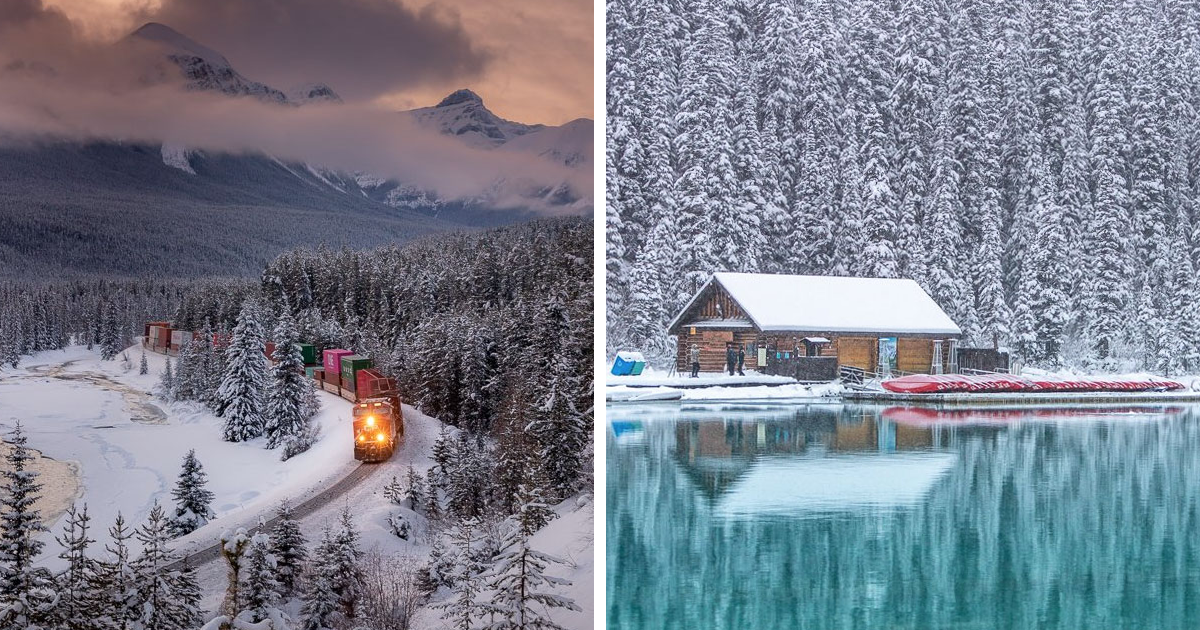
Winter has a funny way of making the world look like it hit the mute button. The roads soften, the trees put on powdered wigs, lakes turn into mirrors, and mountains stand around looking dramatic without having to try very hard. In the hands of Stanley Aryanto, that quiet season becomes more than a pretty postcard. It becomes a visual pause button.
The collection known as “30 Photographs Of Serene And Calming Winter Landscapes Captured By Stanley Aryanto” celebrates the kind of winter photography that lowers your shoulders before you even realize they were tense. These images are not loud. They do not scream for attention with neon colors or visual chaos. Instead, they whisper: snow-covered peaks, frozen textures, lonely trees, soft light, misty valleys, and landscapes so peaceful they make your inbox feel personally offensive.
Who Is Stanley Aryanto?
Stanley Aryanto is an award-winning travel and adventure photographer, educator, explorer, and founder of The Wicked Hunt. Born in Indonesia and raised in Australia, he built a life around the search for rare light, wild places, and the kind of natural moments that most people miss because they are asleep, indoors, or arguing with a phone charger.
Before fully committing to photography, Aryanto worked in engineering. That background matters because his images often show both technical precision and emotional patience. He is not simply pointing a camera at a snowy mountain and hoping winter does the heavy lifting. His work reflects planning, endurance, timing, and a willingness to stand in very cold places while most sensible humans are wrapped in blankets negotiating with the thermostat.
Over the years, Aryanto has traveled widely, photographed dramatic natural environments, earned international recognition, and mentored photographers who want to improve not only their craft but also their creative purpose. His public photography identity blends adventure, education, storytelling, and a deep respect for landscapes that reward patience.
Why These Winter Landscapes Feel So Serene
Winter landscape photography has a unique emotional language. Summer says, “Come outside, there is barbecue.” Autumn says, “Look at my colors, I bought the deluxe package.” Winter says, “Be still.” Aryanto’s winter photographs lean into that stillness beautifully.
Snow naturally simplifies a scene. It covers visual clutter, softens harsh ground, and creates clean negative space. A mountain forest that might feel busy in July can become almost meditative in January. Branches turn into delicate lines. Lakes become sheets of muted reflection. Fog and snowfall reduce contrast, making the world feel slower and more dreamlike.
That simplicity is one reason serene winter landscapes work so well online. They offer instant visual relief. In a feed full of hot takes, blinking ads, and someone’s aggressively documented brunch, a calm snowy photograph feels like a deep breath.
The Power of Minimalism
Many of Aryanto’s winter scenes use minimalism as a strength. A single tree surrounded by snow can become more powerful than a busy panorama. A curved ridge line can guide the eye more effectively than a crowded foreground. A pale sky can become part of the story rather than empty space.
Minimalism in winter photography does not mean “nothing is happening.” It means the image has been reduced to the essential: light, shape, texture, atmosphere, and mood. The viewer is invited to slow down and actually look.
Soft Light, Big Emotion
Winter light has a special character. The sun sits lower in the sky, shadows stretch longer, and snow reflects brightness into places that would otherwise feel dark. In the best winter landscape photography, light does not merely illuminate the subject; it becomes part of the subject.
Aryanto’s strongest winter images often feel calm because the light is controlled rather than chaotic. Soft sunrise tones, blue-hour quiet, or diffused cloudy skies can create a peaceful mood that feels almost cinematic. The result is not just a photograph of winter, but a photograph of winter’s personality.
What Makes These 30 Photographs Stand Out?
The collection stands out because it treats winter as an emotional experience, not just a weather condition. Anyone can photograph snow. The real challenge is photographing silence, scale, cold, mystery, and wonder without making the image feel empty. Aryanto’s work succeeds because it gives viewers both beauty and breathing room.
1. Mountain Landscapes That Feel Alive
Mountains are already dramatic by nature. Add snow, low clouds, and clean winter light, and suddenly they look like they are auditioning for a fantasy film. Aryanto uses mountain settings not only for grandeur but also for contrast. Jagged peaks rise against soft snowfields. Dark rock cuts through white slopes. Tiny trees or distant ridgelines show just how massive the environment really is.
2. Snow As Texture, Not Just Decoration
In weaker winter photos, snow is just “white stuff on things.” In stronger winter photos, snow becomes texture. It clings to branches, smooths over rocks, forms patterns in wind, and transforms ordinary objects into sculptural shapes. Aryanto’s images often use snow as a visual language: soft where the scene needs calm, sharp where the scene needs detail, and luminous where the light catches it just right.
3. Solitude Without Loneliness
There is a fine line between peaceful solitude and “someone please send a rescue helicopter.” Aryanto’s winter scenes tend to fall on the peaceful side. They may show remote places, but they do not feel hopeless. Instead, they suggest escape, reflection, and the kind of quiet that busy people secretly crave.
4. A Strong Sense of Scale
Good landscape photography often needs scale. Without it, a huge mountain can look like a decorative cake topping. Aryanto uses natural markers such as trees, ridges, lake edges, and distant forms to help viewers feel the size of the scene. The result is a humble kind of awe: you are reminded that nature is enormous, and your unread messages are probably not as important as they claim to be.
The Calming Psychology Of Winter Landscape Photography
Nature imagery can be deeply restorative. Many people experience calm when viewing natural scenes because the eye can move through them without being overloaded. Winter landscapes are especially effective because they often contain fewer colors, fewer distractions, and a slower visual rhythm.
A snowy forest, frozen lake, or quiet mountain valley gives the mind a place to rest. The repeating patterns of trees, the smoothness of snow, and the gentle gradients of winter skies can create a sense of order. That visual order feels comforting in a world that often behaves like it was assembled by a committee of caffeinated raccoons.
Aryanto’s photographs work because they combine wildness with calm. They show nature as powerful, but not threatening. They show cold, but not cruelty. They remind viewers that peace is not always warm, colorful, or tropical. Sometimes peace is blue, white, silent, and wearing snow boots.
How Stanley Aryanto Uses Composition To Create Calm
Composition is the skeleton of a great landscape photograph. Without it, even the most beautiful location can look like a random vacation snapshot titled “Pretty, I Think?” Aryanto’s winter images often feel polished because they guide the viewer’s eye with intention.
Leading Lines
Snowy paths, frozen rivers, ridgelines, shadows, and tree rows can all act as leading lines. They pull the viewer deeper into the frame. In winter photography, these lines are often cleaner because snow reduces clutter. The eye knows where to go, and the mind relaxes.
Negative Space
Negative space is the quiet area around the subject. In winter landscapes, that space might be a blank snowfield, a pale sky, or a frozen lake. Aryanto’s use of space helps create serenity. Instead of packing every corner with detail, the image allows room for silence.
Contrast And Balance
Winter photography depends heavily on tonal contrast. Snow can be bright, rocks can be dark, trees can sit somewhere in between, and skies can shift from silver to deep blue. Aryanto balances these tones so the image feels dramatic but not noisy. That balance is a big reason the photographs feel calming rather than cold and harsh.
Lessons Photographers Can Learn From This Collection
Whether you shoot with a professional camera or a phone that still has cookie crumbs in the charging port, Aryanto’s winter landscapes offer practical lessons.
Plan For Light, Not Just Location
A famous viewpoint does not guarantee a great photo. Light decides whether a scene becomes unforgettable or merely “nice.” Winter light changes quickly, especially around sunrise and sunset. Photographers who want serene images should plan around the mood of the light, not just the name of the destination.
Protect Yourself And Your Gear
Winter photography is beautiful, but it is not gentle. Cold weather drains batteries faster, snow can damage equipment, and icy paths have a habit of turning confident photographers into unwilling figure skaters. Extra batteries, waterproof protection, layered clothing, gloves, traction, and a realistic safety plan are not boring details. They are the difference between “I got the shot” and “I became a cautionary tale.”
Expose Snow Carefully
Snow can confuse a camera meter. Because the scene is so bright, cameras may underexpose it and turn clean snow into sad gray oatmeal. Many winter photographers use exposure compensation or manual settings to keep snow bright while preserving highlight detail. The goal is not to make everything blindingly white; the goal is to make the snow feel natural, luminous, and textured.
Embrace Quiet Colors
Not every photo needs a volcanic sunset. Winter often looks best in restrained palettes: white, blue, gray, soft gold, muted green, and deep shadow. Aryanto’s calming style shows how powerful quiet colors can be. They create mood without begging for applause.
Why Winter Landscapes Are So Popular With Online Audiences
Winter landscape photography performs well because it satisfies several emotional needs at once. It offers beauty, escape, nostalgia, and calm. For people living in warm climates, it can feel magical. For people living in snowy places, it can make winter look romantic again, at least until they remember the driveway still needs shoveling.
These images also work beautifully for interior inspiration, desktop wallpapers, meditation content, travel dreaming, and photography education. A serene winter landscape can fit into many digital contexts because it does not demand too much from the viewer. It offers a mood.
That is one reason Aryanto’s collection resonates. The photos are visually impressive, but they are also emotionally accessible. You do not need to know camera settings or mountain geography to feel their impact. You only need to recognize the rare pleasure of silence.
The Art Of Making Cold Places Feel Warm
One of the most interesting things about Aryanto’s winter work is that the images often feel emotionally warm even when the environment is physically freezing. That warmth comes from wonder. It comes from careful framing, patient observation, and the sense that the photographer is not trying to conquer the landscape but listen to it.
Great winter photography does not simply say, “Look how cold this is.” It says, “Look what the cold reveals.” Snow reveals shapes. Ice reveals patterns. Fog reveals distance. Bare trees reveal structure. Mountain light reveals depth. Winter strips the landscape down to its bones, and Aryanto knows how to make those bones beautiful.
Experience Notes: What Serene Winter Landscapes Teach Us
Spending time with winter landscape photography can change the way we see the season. Many people think of winter as an inconvenience: delayed flights, heavy coats, early darkness, dry skin, and the annual mystery of where the other glove went. But when seen through a thoughtful lens, winter becomes less of a problem and more of a teacher.
The first lesson is patience. Winter does not perform on command. A snowy mountain may hide behind clouds for hours. A lake reflection may disappear when wind arrives. A soft sunrise may last only minutes. Photographers like Stanley Aryanto understand that the image is often earned before the shutter clicks. It is earned through waiting, walking, returning, studying weather, and accepting that nature has no customer service department.
The second lesson is simplicity. Winter removes excess. It covers roads, roofs, rocks, and fields with one unifying surface. That simplicity can feel refreshing because daily life is rarely simple. We move through tabs, apps, deadlines, errands, notifications, and tiny decisions that nibble away at attention. A calm winter photograph gives the brain fewer things to chase. It says, “Here is a mountain. Here is snow. Here is light. That is enough.”
The third lesson is humility. In a winter landscape, human presence feels small. A lone figure, cabin, tree, or track in the snow can show how vast the natural world is. That scale is comforting in a surprising way. It reminds us that our problems exist, but they are not the whole universe. The mountain has been standing there for a very long time, and it is not particularly impressed by our calendar alerts.
The fourth lesson is resilience. Snow-covered trees bend under weight. Ice forms, melts, cracks, and forms again. Animals adapt. Light returns after long nights. Winter looks still, but it is full of quiet survival. Aryanto’s photographs capture that hidden energy. They are calm, yes, but not empty. Beneath the silence, the landscape is working.
The final lesson is attention. A serene winter scene rewards careful looking. At first glance, you may see only white snow and dark trees. Look longer and the details appear: wind-shaped patterns, blue shadows, glowing edges, distant peaks, thin mist, soft gradients in the sky. The longer you look, the more the image gives back. That is the heart of calming photography. It does not overwhelm you instantly; it invites you to stay.
For viewers, these 30 winter photographs can become more than visual decoration. They can act as small windows into stillness. For photographers, they are reminders that powerful images do not always come from louder colors, bigger gear, or more dramatic editing. Sometimes the strongest photograph is the one that knows when to be quiet.
Conclusion
“30 Photographs Of Serene And Calming Winter Landscapes Captured By Stanley Aryanto” is a celebration of winter at its most peaceful and poetic. Through snow, ice, mountains, trees, and soft atmospheric light, Aryanto shows that winter is not merely a season to endure. It is a visual world full of calm, structure, mystery, and emotional depth.
His photographs remind us why landscape photography still matters in a fast, distracted digital age. A great landscape image does not just show a place. It changes the pace of the viewer. It creates a moment of stillness. It lets us step out of noise and into snow, even if only for a few seconds.
And honestly, in a world where everything seems to want our attention at full volume, a quiet winter mountain may be exactly the kind of therapy we did not know we needed.