
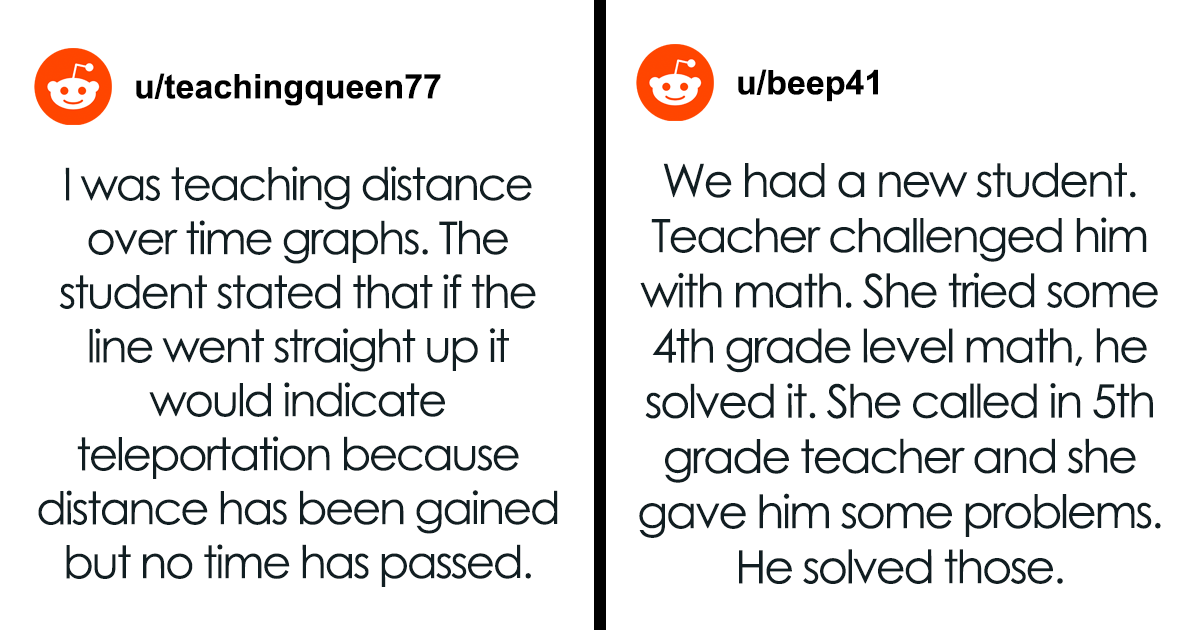
Every teacher has a story about a student who made the classroom go quiet for a secondnot because they were causing trouble, but because they had just said something so sharp, strange, funny, or deeply insightful that the adults in the room needed a moment to reboot.
Gifted students do not always arrive wearing tiny lab coats or quoting Shakespeare over breakfast cereal. Sometimes they are the kid who refuses to show their math work because, inconveniently, their brain skipped the part where the rest of us walk. Sometimes they are the quiet student in the back who writes one sentence that makes the English teacher stare at the wall like they just received a prophecy. Sometimes they are bored, messy, impatient, emotionally intense, hilarious, or wildly obsessed with one subjectvolcanoes, ancient Egypt, train schedules, black holes, mushrooms, or the legal structure of medieval guilds. You know, normal Tuesday stuff.
Giftedness is not simply “good grades.” Experts describe gifted learners as students who show unusually high potential or performance in one or more areas and who often need different educational experiences to keep growing. That can mean acceleration, enrichment, mentorship, creative freedom, emotional support, or simply an adult who notices that “finishes early” is not the same as “is being challenged.”
Below are 30 memorable, realistic momentsdrawn from common patterns teachers, tutors, parents, librarians, coaches, and other adults recognizewhen someone realized the student in front of them was not merely bright, but operating on a different channel entirely.
What “Extremely Gifted” Can Look Like In Real Life
The tricky thing about gifted students is that they do not all look alike. Some are polished high achievers. Others are daydreamers who forget their backpack but can explain gravitational time dilation. Some are socially smooth leaders. Others are asynchronous, meaning their intellectual development may be far ahead of their emotional development. A child may debate ethics like a college senior, then melt down because the cafeteria ran out of preferred applesauce. Brains are magnificent. Brains are also weird.
Teachers often recognize giftedness when a student makes unusual connections, learns with very few repetitions, asks questions that go far beyond the lesson, or solves problems in a way nobody taught them. Just as important, giftedness can be missed when a student is multilingual, twice-exceptional, under-resourced, shy, bored, perfectionistic, or not interested in performing “smart” on command.
30 Moments Adults Realized A Student Was Extremely Gifted
1. The Kindergartner Who Corrected The Calendar
A kindergarten teacher was reviewing months of the year when one child quietly pointed out that the classroom calendar would drift if people ignored leap years. The teacher thought he had memorized a fun fact. Then he explained why February needed an extra day “because the planet is not polite enough to orbit in whole numbers.” That was the moment.
2. The Third Grader Who Solved The Puzzle Backward
During a logic activity, most students tried possible answers one by one. One student began with the impossible answers, eliminated them in groups, and reached the solution in less than a minute. When asked how she knew, she said, “I didn’t know. I just knew where it couldn’t be.” That is not guessing. That is strategy wearing sneakers.
3. The Student Who Asked About The Author’s Motive
In a reading lesson, a student ignored the obvious question“What happened?”and asked why the author chose to hide the character’s fear until the last paragraph. The teacher realized the student was not just reading the story. He was reading the machinery behind the story.
4. The Child Who Built A Better Science Fair Question
Most students asked, “Which plant grows faster?” One student asked, “How would different light wavelengths affect plant growth if water and soil stayed constant?” Then she wanted to discuss control groups. At age nine. The science teacher’s coffee suddenly felt unnecessary.
5. The Quiet Student With The Devastating Essay
A high school English teacher received a paper from a quiet student who rarely spoke in class. The essay compared grief in two novels, but the real surprise was the structure: each paragraph mirrored the emotional pattern it described. The teacher wrote, “Come see me,” then underlined it twice.
6. The Math Student Who Refused The Formula
When introduced to a standard formula, one student asked, “But what if we derive it instead?” The teacher expected a stumble. Instead, the student built the idea from simpler principles and found the formula on his own. He had not rejected instruction. He wanted to see the engine.
7. The Librarian’s Dinosaur Expert
A librarian recommended a children’s book about dinosaurs. The child politely said the illustrations were outdated because the posture and feathering were wrong. Then he explained the difference between older depictions and newer paleontological thinking. The librarian upgraded him to the adult nonfiction shelfwith supervision and a smile.
8. The Student Who Translated More Than Words
A multilingual student helped a classmate understand an assignment, but she did not translate word for word. She explained the concept in two languages, adjusted the metaphor, and checked whether the classmate understood the reasoning. The teacher saw advanced language ability, empathy, and intellectual flexibility all at once.
9. The Kid Who Saw The Pattern In The Mistake
After a class quiz, one student told the teacher, “The wrong answers are all wrong in the same way.” He had noticed that several classmates made errors because of a hidden misconception in the lesson. That is a gift teachers treasure: a student who can diagnose the learning, not just ace it.
10. The Five-Year-Old Philosopher
During story time, a child asked whether a character was “bad” or just “making the only choice the story gave him.” The adult paused. The children paused. Somewhere, a philosophy department felt a disturbance in the force.
11. The Student Who Invented A New Rule For The Game
In a classroom math game, one student proposed a new rule that made the game harder but fairer. It required players to plan two moves ahead and prevented a dominant strategy from winning every time. The teacher realized the child was not just playing the game. She was redesigning the system.
12. The Music Student Who Heard The Pattern Once
A music teacher played a short melody and asked students to repeat it. One student played it back, added harmony, and then asked if the second phrase was supposed to “answer” the first. The teacher had planned a beginner exercise. The student had entered a composition workshop.
13. The Student Who Asked For The Original Source
During a history lesson, a student asked, “Do we have a primary source for that, or is that from someone interpreting it later?” The teacher nearly hugged the document camera. A gifted learner often wants evidence, not just conclusions.
14. The Child Who Understood The Joke Too Well
A teacher made a mild pun. One student laughed, then made a better pun, then explained why the teacher’s version depended on sound while his depended on double meaning. The class laughed. The teacher accepted defeat with dignity.
15. The Science Student Who Loved The Exception
When learning a simple rule, a student immediately asked when the rule breaks. Some learners are comforted by rules; others are magnetized by exceptions. Gifted students often live at the edge of the map, waving from the “but what about…” section.
16. The Artist Who Could Explain The Emotion Of Color
An art teacher asked students to use warm and cool colors. One student explained that she used a warm color in a lonely scene because “warmth can make loneliness worse when nobody shares it.” That sentence did not just show artistic talent. It showed emotional depth.
17. The Student Who Finished EarlyAnd Then Went Deeper
Many students finish early. This one finished early and wrote three alternative endings, each based on a different theme. The teacher realized extra worksheets would be educational cardboard. This student needed complexity, choice, and room to stretch.
18. The Chess Player Who Explained The Opponent
A coach watched a young player win quickly, then asked how he chose his moves. The student did not start with pieces. He described the opponent’s habits, risk tolerance, and likely emotional reaction after losing a bishop. Strategy plus psychology? Checkmate, indeed.
19. The Student Who Asked The Question Nobody Else Saw
During a lesson on ecosystems, a student asked what would happen if the model included human economic incentives. That question moved the discussion from food chains to policy, ethics, and unintended consequences. The teacher’s lesson plan waved goodbye from the dock.
20. The Kid Who Could Not Memorize But Could Understand
One student struggled with rote memorization yet could explain complex concepts beautifully once they made sense. This is an important reminder: gifted students are not always tidy academic machines. Some need meaning before memory. Some are twice-exceptional and require both challenge and support.
21. The Student Who Spotted Bias In The Chart
In a statistics activity, one student asked who collected the data and who was missing from the sample. That was the moment the teacher realized the student had moved beyond numbers into interpretation, fairness, and methodology.
22. The Young Writer Who Understood Silence
A student wrote a dialogue scene where the most important line was not spoken. When the teacher praised the dialogue, the student said, “The silence is the dialogue.” Somewhere, every writing teacher in America nodded dramatically.
23. The Student Who Needed One Example
Most of the class needed several practice problems. One student needed one example, then began applying the concept to unfamiliar situations. Rapid learning with minimal repetition is one of the classic signs that a learner may need a faster pace or deeper work.
24. The Future Engineer With The Broken Pencil Sharpener
A classroom pencil sharpener jammed. While everyone complained, one student asked permission to inspect it, identified the mechanical issue, and suggested a fix using a paper clip and patience. The teacher declined the paper clip surgery but made a mental note.
25. The Student Who Debated The Rubric
A student challenged a grading rubric not because he wanted more points, but because he believed it rewarded surface features over original thinking. He was polite, specific, and correct enough to be annoying. The teacher revised the rubric the next semester.
26. The Child Who Made Adults More Precise
Some gifted students become tiny auditors of vague language. When an adult said “always,” the student asked, “Always, or usually?” It can be exhausting. It can also sharpen everyone’s thinking. Precision is a love language for certain brains.
27. The Student Who Learned Through Obsession
One student’s passion for astronomy seemed excessive until a teacher noticed it connected to math, mythology, physics, drawing, and writing. Gifted learners often dive deeply into a topic and build an entire intellectual city down there. Adults should bring oxygen, not judgment.
28. The Student Who Saw Both Sides Too Clearly
In a debate, a student argued one side beautifully, then asked to switch and argued the opposite side even better. This was not indecision. It was flexible reasoningthe ability to hold multiple perspectives without dropping them like hot potatoes.
29. The Student Who Was Bored, Not Lazy
A student kept doodling during class and rarely completed routine work. A teacher finally asked him to design a more difficult version of the assignment. He produced a thoughtful, original project that connected the topic to robotics. The problem was not lack of ability. The problem was lack of challenge.
30. The Moment A Teacher Said, “I Need To Stop Underestimating You”
Perhaps the most powerful moment is not dramatic. It is the adult pause: the second a teacher realizes a student has been quietly waiting for the class to catch up, hiding their ability, or translating their thoughts into smaller words. That moment matters because recognition can change a student’s path.
Why Gifted Students Are Sometimes Missed
Gifted students are not always the ones with perfect grades, perfect handwriting, and perfect behavior. In fact, some of them are allergic to repetition, suspicious of busy work, and deeply unimpressed by assignments that ask them to color the title page. A student may appear distracted because the lesson is too slow. Another may underperform because perfectionism makes starting feel dangerous. Another may be gifted and have ADHD, dyslexia, autism, anxiety, or another learning difference that masks their strengths.
Students from underrepresented groups may also be overlooked when schools rely too narrowly on test scores, teacher nominations, or traditional ideas of what “gifted” looks like. Multilingual learners, students from low-income communities, culturally diverse students, and twice-exceptional students may show advanced potential in ways that do not fit a neat checklist. A student who negotiates between languages, solves real-world problems at home, or shows unusual leadership outside school may be demonstrating giftedness even if their worksheet does not sparkle.
How Adults Can Respond When They Notice Giftedness
The first step is simple: do not reduce the child to a label. “Gifted” should open doors, not build a glass display case. Extremely gifted students still need instruction, encouragement, boundaries, friendships, humor, and permission to be beginners. They also need adults who understand that more work is not the same as better work.
Useful support may include compacting material the student already understands, offering advanced reading, creating open-ended projects, encouraging mentorships, allowing subject acceleration, or connecting the student with intellectual peers. Just as important, adults can help gifted learners develop resilience, collaboration skills, study habits, and emotional regulation. A student who can understand quantum physics may still need help emailing a teacher, organizing a backpack, or surviving group projects without writing a constitution.
500 More Words: Real-Life Experiences Around Recognizing Gifted Students
One of the most common experiences teachers describe is the slow realization. Not every gifted student announces themselves with a dramatic speech about black holes. Sometimes the signs arrive in small, almost missable moments. A student asks a question that seems slightly too advanced. Then they make a connection across subjects. Then they finish a task early but do not look proudonly restless. Then, weeks later, the teacher discovers the student has been reading college-level material at home, building elaborate fictional maps, teaching themselves coding, composing music, or quietly correcting the textbook in the margins.
Another familiar experience is the “boredom misunderstanding.” Adults may see a student refusing work and assume defiance. Sometimes that is true; children are still children, and even tiny geniuses can be tiny goblins before lunch. But sometimes refusal is a signal. A gifted student may resist work that feels pointless, repetitive, or disconnected from real thinking. The solution is not to excuse every behavior. The solution is to ask better questions: Does the student already know this? Can they show mastery another way? Would depth, complexity, or choice change their engagement?
Parents often describe the experience differently. At home, giftedness may look like intensity. The child asks enormous questions at bedtime, when adults have foolishly hoped to become horizontal. “What happens after the universe ends?” is not a relaxing 8:45 p.m. topic, but there you are, Googling cosmology in pajamas. Gifted children may feel things strongly, notice injustice quickly, and become overwhelmed when their understanding outpaces their coping skills. They may need emotional support as much as academic challenge.
Tutors and coaches often notice giftedness through transfer. A student learns one skill and immediately applies it somewhere new. A math idea becomes a music pattern. A chess strategy becomes a way to understand social conflict. A writing technique becomes a tool for analyzing a movie. That ability to transfer knowledge is one reason gifted learners can surprise adults: they are not simply storing facts; they are building bridges.
There is also the experience of realizing that gifted students need peers. Many extremely gifted students spend years translating themselves for others. They simplify jokes, hide interests, or pretend not to know answers because standing out can feel lonely. When they finally meet intellectual peers, their shoulders drop. They do not have to shrink. They can be challenged, corrected, amused, and understood. That social relief can be as important as any advanced curriculum.
The best stories about gifted students are not really about being impressed by talent. They are about responsibility. When an adult recognizes unusual ability, the next question is not, “How do we make this child perform?” It is, “How do we help this child grow wisely, kindly, bravely, and fully?” Giftedness is potential, not a finished product. The moment of recognition is only the beginning.
Conclusion
The moment an adult realizes a student is extremely gifted can be funny, humbling, inspiring, and occasionally hazardous to the adult ego. A child may reveal it through a question, a joke, a drawing, a proof, a melody, a debate, or a refusal to accept sloppy thinking. But recognition should lead to support. Gifted students need challenge without pressure, freedom without neglect, and adults who understand that advanced ability does not erase childhood.
In the end, the most important thing a teacher, parent, coach, or mentor can say may not be “You are brilliant.” It may be: “I see how your mind works. Let’s help it grow.” That sentence can change everything.











