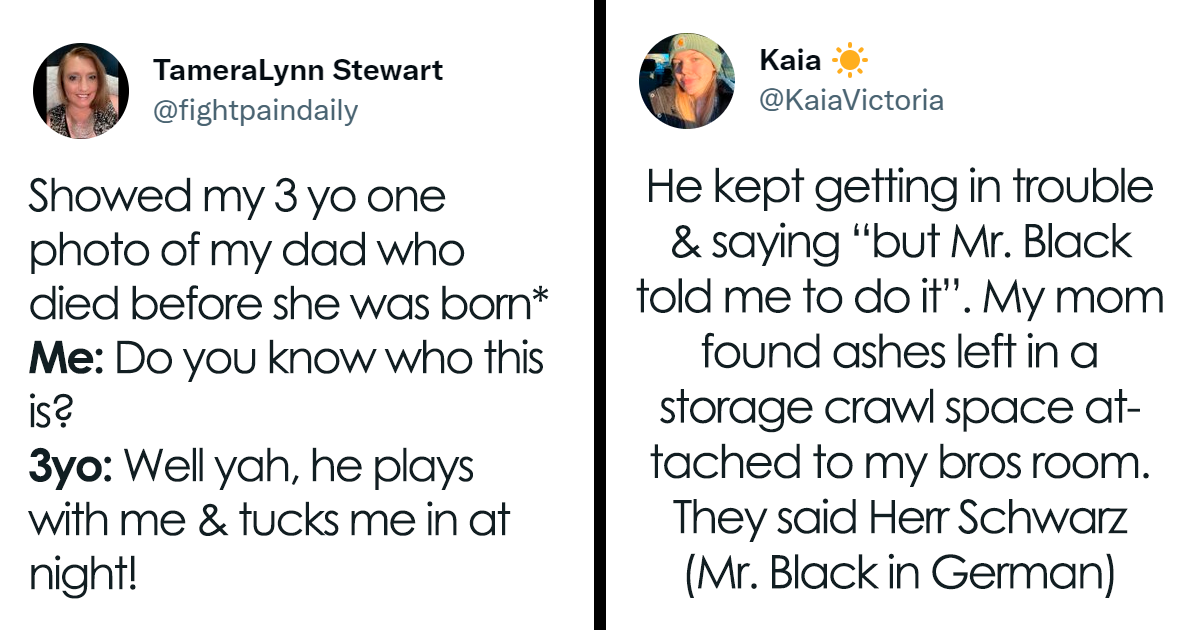
Note: The examples below are original, rewritten scenarios inspired by common parenting themes, child-development research, and widely shared caregiver experiences. They are not copied from any single source, and they are presented with a light, human tone for entertainment and insight.
Children are adorable. They smell like shampoo, ask for snacks every twelve minutes, and can turn a cardboard box into a spaceship, a castle, or a legally questionable restaurant. But every now and then, a kid will look up from a bowl of cereal and say something so unsettling that the adults in the room suddenly remember every horror movie they were too confident to watch alone.
The strange thing about creepy things kids say is how casually they deliver them. No dramatic music. No lightning. Just a four-year-old in dinosaur pajamas whispering, “The lady in the corner says you forgot her name.” Wonderful. Great. Fantastic. Nobody sleep tonight.
Of course, most eerie kid comments have perfectly normal explanations. Young children live in a world where imagination, dreams, overheard phrases, emotional intuition, and magical thinking all blend together. They may not fully understand death, time, privacy, or why “I used to be an old man” makes Grandma drop her mug. Kids are not trying to be creepy. They are often processing fears, making stories, repeating fragments, or experimenting with language. Still, the results can be deliciously spooky.
Why Kids Say Creepy Things So Calmly
Before we tiptoe into the list, it helps to understand the tiny narrator behind the chills. Preschool and early elementary-age children often use pretend play to make sense of the world. Imaginary friends are common, nightmares can feel extremely real, and children may describe emotions or memories in dramatic, symbolic ways. A child who says “the wall is watching me” might mean a shadow looks like a face. A child who says “I was here before” may be playing with identity, memory, or a half-heard family story.
That does not make the moment less creepy. It simply means the explanation is usually more developmental than demonic. Usually. We are leaving a very small door open for dramatic effect.
30 Times Kids Nonchalantly Said Incredibly Creepy Things
-
1. “The man in my room doesn’t like when you close the door.”
A parent thinks bedtime is finally under control. Then their child calmly points to an empty corner and explains that “the man” prefers the door open. Most likely? Shadows, imagination, and bedtime anxiety. Emotionally? Immediate goosebumps.
-
2. “I had a different mommy before, but she was sad all the time.”
Children sometimes play with ideas of “before” and “after” in ways adults find startling. A comment like this may come from pretend play, a movie, or a dream. Still, hearing it over pancakes would make anyone butter their toast in silence.
-
3. “Don’t worry. I won’t let the ceiling people take you.”
Nothing adds flavor to family night like a child inventing an entire upstairs civilization. The “ceiling people” may be creaking pipes, neighbors, or nighttime imagination. Either way, suddenly every noise above you has a backstory.
-
4. “Your real face comes out when you sleep.”
This is probably a kid noticing that adults look different while sleeping. Droopy mouth, weird breathing, one eye slightly openhuman sleep is not glamorous. But the wording? Absolutely villainous.
-
5. “The baby keeps crying in the closet.”
Parents know houses make sounds: vents, plumbing, neighbors, old wood. Kids give those sounds characters. Unfortunately, “crying baby in the closet” is not the kind of character anyone requested.
-
6. “When I was big, I died in water.”
Past-life-style comments are among the most shared creepy kid stories. Developmentally, children may combine dreams, stories, and imagination into personal-sounding narratives. Adults, however, hear this and instantly cancel the beach trip.
-
7. “There are too many eyes in the dark.”
This could be as simple as stuffed animals, shadows, reflective stickers, or a child’s fear of the dark. But as a sentence, it belongs on the cover of a gothic novel.
-
8. “I like your new hair. The woman behind you doesn’t.”
Compliment, insult, and ghost report in one neat package. Kids often comment on imaginary characters with total confidence because pretend play feels vivid. Adults simply nod and avoid mirrors for the rest of the evening.
-
9. “The old me had a knife, but I don’t anymore.”
Children repeat language from cartoons, overheard conversations, video games, or older siblings. The phrase may mean nothing dangerous. Still, it is not the sentence you want to hear from the back seat during a peaceful drive.
-
10. “I know where you hide when you are scared.”
Kids are astonishing observers. They notice patterns adults think are invisible: where you stand when nervous, how you talk on the phone, which drawer has the emergency chocolate. Creepy? Yes. Accurate? Also yes.
-
11. “The mirror girl only moves when you leave.”
Mirrors are already doing too much. Add a child’s imagination, dim bathroom lighting, and one unsettling sentence, and suddenly brushing your teeth becomes a survival exercise.
-
12. “I heard Grandma singing last night.”
If Grandma lives across town, this becomes eerie. If Grandma has passed away, the room temperature drops by twelve emotional degrees. Children may associate songs with loved ones and dreams, but the timing can feel supernatural.
-
13. “My shadow is mad because I stepped on it.”
This one is strangely poetic. Kids often personalize objects and natural phenomena. A shadow becomes a companion, a blanket becomes brave, and a broken crayon becomes “injured.” Cute in daylight. Creepy at midnight.
-
14. “The house remembers when we weren’t here.”
Children hear adults talk about old houses, previous owners, and family history. Then they compress all of that into one tiny haunted-property sentence. Congratulations: your child just wrote an award-winning opening line.
-
15. “Someone was breathing with me.”
This may describe a stuffy nose, sleep sounds, a pet, or a parent checking on them. But if a child says it while staring calmly at a dark hallway, every adult becomes a professional hallway inspector.
-
16. “I don’t talk to the boy under the bed anymore.”
The phrase “anymore” is doing heavy lifting here. Monsters under the bed are common childhood fears, but when a kid gives one a social history, parents start vacuuming with spiritual urgency.
-
17. “You looked prettier when you were younger. I saw it.”
This could come from old photos. It could also come from the kind of confidence only a five-year-old can have while destroying an adult’s self-esteem and sense of reality in one sentence.
-
18. “The dog barks at the invisible man.”
Pets already stare into corners like they pay rent to ghosts. When a child joins the investigation, the family living room becomes a paranormal conference room.
-
19. “I picked this family because you looked lonely.”
Sweet? Yes. Deeply unsettling? Also yes. Children often say emotionally intuitive things that feel too wise for their age. Sometimes the creepiness comes from tenderness wearing tiny socks.
-
20. “The basement has a bad mouth.”
Maybe the furnace groans. Maybe the stairs creak. Maybe the child is describing a vent. Or maybe the basement has been judged, sentenced, and officially avoided.
-
21. “When the lights blink, they are talking.”
Flickering bulbs are usually electrical issues, not coded messages. But kids love patterns, and they often give meaning to random events. Adults love calling electricians immediately.
-
22. “I saw you crying when you thought nobody did.”
This one is creepy because it is painfully human. Children are more emotionally observant than adults sometimes realize. They may not understand the whole situation, but they notice tone, posture, and sadness.
-
23. “The dolls whisper when I turn them around.”
Dolls have been carrying the horror genre for decades, and children know exactly how to keep the brand alive. This may simply be pretend play, but nobody is leaving that doll facing the bed tonight.
-
24. “I had a dream where you forgot me, so I followed you forever.”
Children’s dreams often center on separation, being lost, or losing caregivers. This sentence sounds like a ghost story, but underneath it may be a child’s fear of abandonment wrapped in dream logic.
-
25. “That picture is wrong. He doesn’t smile like that now.”
Old family photos can spark questions about death, aging, and memory. Kids may speak about people in pictures as if they are still changing. Adults may respond by placing the photo face down until morning.
-
26. “I saw my name written in the rain.”
This might be a window streak, condensation, or a child’s pattern-seeking brain. Humans are wired to find shapes and meaning. Children simply announce those meanings with maximum theatrical impact.
-
27. “The quiet is getting closer.”
Honestly, this is too good. A child might be describing the feeling of a house settling at night, the pause before sleep, or anxiety. But as a line of dialogue, it deserves its own movie trailer.
-
28. “I miss the people who lived in my head yesterday.”
Kids can grieve the end of a dream, a game, or an imaginary world. Adults hear “people who lived in my head” and immediately start Googling whether night-lights come in industrial strength.
-
29. “Don’t sit there. That’s where she sits.”
Every family has a chair. Every child has an imagination. Combine the two and suddenly Aunt Linda is standing in the kitchen whispering, “Which she?”
-
30. “I’m not afraid of monsters. They’re afraid of me.”
This one is both creepy and inspiring. Maybe the child is building courage. Maybe they have excellent self-esteem. Either way, the monsters have been notified, and bedtime negotiations have changed forever.
What These Creepy Kid Comments Usually Mean
The most important thing to remember is that creepy things kids say are usually not warnings from beyond the veil. They are often snapshots of development. Children are learning language, emotion, cause and effect, memory, and social rules at the same time. That is a lot of software updates for one tiny brain wearing mismatched socks.
1. Imagination Feels Real to Young Kids
When children invent characters, they may speak about them with complete seriousness. An imaginary friend can have opinions, rules, a favorite seat, and apparently a grudge against closed doors. This does not mean a child cannot distinguish fantasy from reality at all. It often means they are enjoying the power of pretend play.
2. Dreams Can Spill Into Daylight
Nightmares and vivid dreams are common in childhood. A child may wake with images that still feel present: a crying baby, a shadow, a lost parent, or a strange room. When they describe these fragments later, adults may hear a ghost story. The child may simply be narrating sleep leftovers.
3. Kids Repeat What They Do Not Fully Understand
Children absorb phrases from television, YouTube, siblings, classrooms, grocery-store lines, and adult conversations that were absolutely not as private as adults hoped. A kid who says something alarming may be repeating a dramatic phrase without grasping its meaning.
4. Magical Thinking Makes Connections Everywhere
Young children often connect events in unusual ways. If they think about rain and then it rains, the thought may feel powerful. If they say they miss someone and then see a flickering light, the light may become a message. Adults call it coincidence. Children call it Tuesday.
5. Some Comments Are Emotional Truths in Spooky Costumes
A statement like “the quiet is getting closer” may not be supernatural; it may be anxiety. “The house remembers” may be a child trying to understand moving, loss, or family change. The creepiness often comes from the fact that children speak in images before they speak in explanations.
How Parents Can Respond Without Making It Weirder
When a child says something creepy, the first adult instinct may be to freeze, laugh nervously, or ask, “Who told you that?” in a voice that is trying very hard not to become a scream. A calmer approach works better.
Start by asking simple, open questions: “What do you mean?” “Did you see that in a dream?” “Is it scary or pretend?” This helps you understand whether the child is playing, worried, repeating something, or genuinely distressed.
Avoid shaming the child or making a huge dramatic reaction. If adults act terrified, children may learn that their thought is dangerous or that they can summon chaos with one sentence during dinner. Instead, validate the feeling without confirming the fear. Try: “That sounds like a scary picture in your mind. You are safe here.”
If the comment connects to bedtime, check for common triggers: scary media, overtiredness, stress, changes in routine, or a room full of shadow-making objects. A night-light, predictable bedtime routine, comfort item, or daytime conversation can help. If a child repeatedly seems terrified, talks about self-harm, describes disturbing content they may have seen, or has sleep problems that affect daily life, it is wise to consult a pediatrician or child mental health professional.
Why Adults Love Stories About Creepy Things Kids Say
Part of the appeal is the contrast. Children are supposed to be innocent, sticky, and obsessed with snacks shaped like animals. When they suddenly say something that sounds like a message from a haunted attic, it breaks the script. The result is funny, chilling, and strangely memorable.
These stories also remind adults that children experience the world intensely. They notice tiny details. They hear things we miss. They turn ordinary objects into characters. They speak before filtering themselves. In a way, the “creepy kid quote” is just childhood honesty walking through a fog machine.
Extra Experiences: Living With Tiny Masters of Accidental Horror
Anyone who has spent enough time around children knows the experience: you are doing something ordinary, like folding laundry, when a child drops a sentence that makes the air feel refrigerated. The funniest part is that kids never understand the effect. They do not lean into the drama. They do not pause for suspense. They simply return to eating crackers as if they did not just suggest your hallway has a memory.
One common experience is the bedtime confession. The lights are low, the stuffed animals are lined up like a tiny jury, and the child suddenly says, “I don’t want the whispering to start again.” Your brain immediately becomes a detective agency. Was it the air conditioner? A sibling? A dream? A neighbor’s television? Meanwhile, the child is already asking for water.
Another familiar situation happens in the car. Kids stare out windows for long stretches, half-dreaming, half-processing the world. Then, from the back seat, comes a sentence like, “That road is where the sad people walk at night.” Adults may laugh, but they also check the rearview mirror twice. Children are excellent at turning landscapes into stories. A foggy road, an empty field, or a broken streetlight can become an entire mythology before the next traffic signal.
Family photos are another danger zone. Children often treat pictures as living records rather than frozen moments. They may ask why a deceased relative looks “stuck,” whether a baby version of themselves is “still in there,” or why a younger parent “went away.” These questions can sound eerie, but they are often sincere attempts to understand time. Adults know a photograph is an image. Children may see it as a doorway to a version of someone they cannot quite reach.
Then there are imaginary friends. Many are charming. Some are apparently named things like Mr. Bone, Blue Lady, or The Other Daniel. Parents may try to be supportive while quietly hoping the imaginary friend has normal hobbies. When a child says, “He doesn’t like you standing there,” it can be helpful to remember that imaginary play gives kids control. They create rules, roles, and relationships. Unfortunately, sometimes those rules make the kitchen feel like a haunted courtroom.
The best way to survive these moments is with calm curiosity and a sense of humor. Ask what they mean. Offer comfort if they seem scared. Write down the funniest lines for later, because one day the child will be a teenager who denies everything. Most creepy kid comments fade into family legend: the time your toddler introduced the “corner grandma,” the week your preschooler refused to sit beside “invisible Jack,” or the night your child announced that the moon was “following us because it knows.”
In the end, creepy things kids say are part of the strange magic of childhood. They reveal a mind still building walls between dream and fact, fear and fun, memory and imagination. Adults may hear horror. Kids are often just telling us how wild, symbolic, and emotionally bright their inner world really is. Still, maybe keep the hallway light on. For research.
Conclusion
The reason stories about creepy things kids say never get old is simple: they sit at the perfect intersection of funny, spooky, and deeply human. A child’s imagination can turn a coat rack into a visitor, a dream into a memory, and a creaky house into a character with opinions. Most of the time, there is nothing to fear. These eerie comments usually come from normal development, vivid dreams, pretend play, overheard language, or a child’s attempt to explain emotions they cannot yet name.
Still, the next time a child calmly announces that “the mirror girl is awake,” you are allowed to feel a shiver. You are also allowed to ask gentle questions, offer reassurance, and then quietly move the mirror to another room. Parenting is about balance.