
Every garage has one: the old cordless drill that still has plenty of fight in the motor, a comfortable grip worn smooth by years of use, and a battery pack that gave up sometime around the same era as flip phones. The charger still blinks. The trigger still clicks. The drill itself looks ready to work. But without a battery, it becomes a very confident paperweight.
That is exactly why the idea behind a 3D printed battery pack is so satisfying. Instead of throwing away a functional tool because the original battery is discontinued, a maker can design a new battery housing, reuse compatible contacts and latches, choose appropriate rechargeable cells, and put the drill back into service. It is practical repair culture with a little sci-fi seasoning: measure, model, print, assemble, test, and grin when the chuck spins again.
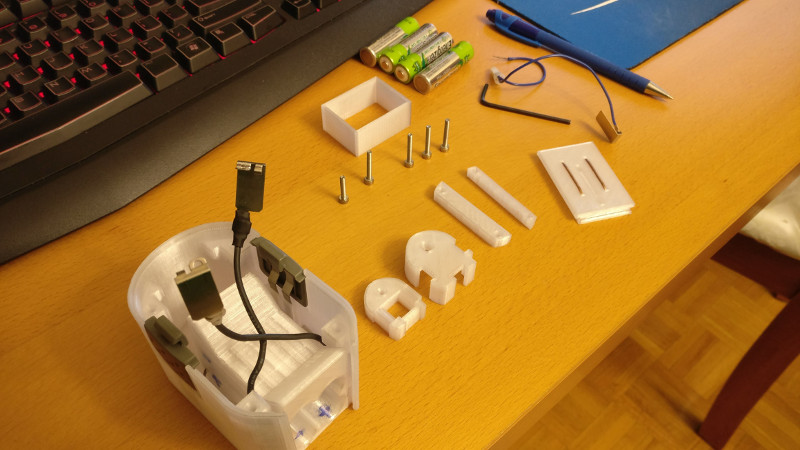
The project that inspired this topic involved an older 7.2V cordless drill originally powered by nickel-cadmium cells. The drill was still useful for light repairs and craft work, but replacement packs had become difficult to find. Rather than toss it, the maker designed a custom 3D printed battery pack from scratch, printed the housing in PETG, reused parts from the original pack, and powered the tool with common rechargeable AA NiMH batteries. In other words, the drill got a second life without demanding a second mortgage.
Why Old Cordless Drills Die Before They Are Actually Dead
Cordless tools usually do not fail all at once. The motor, gearbox, chuck, trigger, and body may keep working for decades if the tool was not abused. The weak link is often the battery pack. Older drills commonly used NiCd batteries, which were rugged but had drawbacks: limited energy density, self-discharge, aging cells, and the famous “memory effect” that made many weekend warriors treat charging like a mysterious moon ritual.
When the battery chemistry ages or the manufacturer changes platforms, the tool can be stranded. Proprietary battery shapes make the problem worse. A perfectly good drill may need an oddly shaped pack that no store carries anymore. Buying a used battery online can be a gamble because old stock may already be weak. Buying a new drill feels wasteful when the old one only needs power. This is where 3D printing becomes more than a hobby; it becomes a tiny rebellion against planned obsolescence.
What Makes a 3D Printed Battery Pack So Clever?
A drill battery pack is not just a plastic box with metal bits inside. It must fit the handle securely, align electrical contacts, withstand vibration, release safely, and survive being tossed onto a workbench by a person who swears they “placed it gently.” The clever part of a 3D printed replacement is that it can mimic the geometry of the original pack while adapting the inside for available cells.
In the original project, the maker measured the old pack with calipers, used reference photos, and modeled the replacement in Fusion 360. That matters because fit is everything. If the stalk slides into the drill at the wrong angle, the contacts may not touch. If the latch spacing is off, the pack may wobble or fall out. If the walls are too thin, the case can crack. This is functional 3D printing, not a decorative dragon that guards your desk and judges your cable management.
Why PETG Is a Smart Material Choice
PETG is often favored for functional prints because it offers a strong balance of durability, flexibility, impact resistance, and chemical resistance. PLA is easy to print but can be brittle and softens more easily in hot environments. ABS is tough but can warp and smell like the inside of a plastic volcano during printing. PETG sits in the practical middle: strong enough for many tool parts, printable on common machines, and forgiving enough for iterative design.
For a battery pack housing, those traits matter. A drill pack has to absorb small knocks, hold screws or inserts, keep parts aligned, and avoid cracking around latch points. The best design also considers print orientation. Layer lines are weaker in certain directions, so the part should be printed so mechanical stress does not simply peel the layers apart like string cheese.
NiCd, NiMH, and Lithium-Ion: Choosing the Right Battery Chemistry
The original drill pack used six NiCd cells in series, producing the voltage the tool expected. The replacement pack used AA NiMH cells, partly because they were common, rechargeable, and already available. That decision made sense for light drilling and screwdriving, especially when the goal was experimentation and repair rather than turning an old drill into a deck-building monster.
NiMH cells can be a practical substitute in some older low-power tools, but they are not magic. They must be charged correctly, and they may not deliver the same current as high-drain tool cells. Lithium-ion cells, including 18650 cells, offer higher energy density and strong current capability when chosen properly, but they introduce more serious safety requirements. A lithium-ion pack needs correct cell matching, proper protection electronics, safe charging, and careful construction. A mistake with lithium cells is not a “whoopsie”; it can become smoke, fire, or a very exciting afternoon with the wrong kind of sirens.
The BMS Question
A lithium-ion battery management system, or BMS, monitors and protects cells from overcharging, over-discharging, short circuits, and imbalance. For DIY battery packs, especially packs made from 18650 cells, a suitable BMS is not optional decoration. It is part of the safety system. The pack also needs conductors sized for the expected current, insulation where metal could touch metal, and a charger designed for the chemistry and cell count.
Many battery rebuilders also prefer spot welding nickel strips instead of soldering directly to cells. Direct soldering can overheat cells, damage seals, and create unreliable joints in a tool that vibrates. The less glamorous truth is that good battery work is mostly about avoiding shortcuts. The drill may be old, but the fire risk is very modern.
How the Original Drill Pack Handled Speed Control
One fascinating detail from the old drill design is that the original battery pack provided two voltage taps. In simple terms, the drill could connect to fewer cells for low speed or all cells for high speed. That was a rough but functional form of speed control. The replacement pack simplified the design and only supported the maximum speed setting because the maker did not need two speeds for light household work.
This is a good example of repair trade-offs. A replacement does not always need to reproduce every feature if the user understands the compromise. For craft work, pilot holes, light screwdriving, and quick fixes, one speed may be enough. For delicate materials, precise control, or long sessions, preserving speed control could matter. A more advanced version might use pulse-width modulation, but that adds electronics and complexity.
Design Lessons From a Printed Drill Battery Pack
1. Start With the Mechanical Fit
Before thinking about cells, voltage, or runtime, the pack must physically fit. The model should capture the battery stalk, contact area, latch positions, release buttons, and overall body shape. A few short test prints are smarter than one full-size print followed by an emotional support snack.
2. Reuse Original Contacts When Possible
Electrical contacts are often shaped specifically for the tool. Reusing contacts, springs, or latch parts from the original pack can save time and improve reliability. Salvaged components also help the replacement behave more like the original battery from the drill’s point of view.
3. Match the Pack to the Job
A light-duty 7.2V drill does not need the same battery strategy as a modern brushless hammer drill. If the tool is used for craft work, assembling furniture, or drilling small holes, a modest pack may be enough. If the tool will be asked to drive lag bolts all afternoon, the battery, conductors, and housing must be designed for far higher current and heat.
4. Make the Design Serviceable
A repairable battery pack should not be permanently sealed like a submarine hatch. Screws, removable lids, modular internal holders, and accessible contacts make future maintenance easier. The whole point is to keep the tool alive, not create a new mystery object that only one person on Earth can open.
Safety Comes Before the Satisfying Trigger Pull
Battery projects deserve respect. Used lithium-ion batteries should not be thrown into household trash or regular recycling bins. Terminals should be taped, and batteries should go to proper recycling or hazardous waste collection points. Damaged, swollen, leaking, hot, or suspicious batteries should be treated as dangerous. A battery that looks like a tiny pillow is not being cute; it is asking to be retired immediately.
Charging is another major safety point. Use a charger designed for the chemistry and cell count. Do not charge unknown DIY packs unattended, near flammable materials, or with improvised chargers. If the pack uses NiMH cells, use an appropriate NiMH charger. If it uses lithium-ion cells, use a lithium-ion charging system with the right voltage limits and protection. “It fits the plug” is not electrical engineering. It is how bad stories begin.
Why Repairing Old Tools Matters
Repairing an old drill is not only about saving money. It reduces waste, teaches useful skills, and reminds us that many products fail because one replaceable part becomes unavailable. A 3D printed battery pack can extend the life of a tool that already exists, which is usually more sustainable than buying a new one for occasional jobs.
There is also emotional value. Tools carry history. Maybe the drill helped build shelves in a first apartment, fix a fence, assemble a crib, or survive a heroic encounter with flat-pack furniture. Bringing it back to life feels better than clicking “add to cart” for yet another plastic-and-metal newcomer. The old drill may not have Bluetooth, an app, or a dramatic product launch video, but it can still make holes. That is literally its job.
When a DIY Battery Pack Makes Senseand When It Does Not
A 3D printed replacement battery pack makes sense when the tool is low-risk, the user understands basic electrical safety, the pack voltage is modest, and the workload is light. It is especially reasonable when the project uses readily available rechargeable cells and does not push them beyond their rated limits.
It may not make sense for high-current tools, professional jobsite use, unknown lithium cells, damaged tools, or packs that require complex protection systems beyond the builder’s skill level. In those cases, buying a certified replacement battery, using a commercial adapter, or replacing the tool may be safer. Repair culture is wonderful, but it should not require keeping a fire extinguisher as a co-author.
Practical Example: A Light-Duty Revival Plan
Imagine an old 7.2V drill that still runs when connected briefly to a safe bench power supply. The original pack is dead, but the case and contacts are intact. A sensible project path would start with documenting the original pack, measuring the sliding interface, and modeling a printed shell. The builder could print a small contact test piece first, check fit, revise the model, and only then print the full housing.
For power, the builder might choose high-quality rechargeable NiMH cells if the tool’s current demand is modest. The pack would need secure cell retention, solid wiring, strain relief, insulation, and correct polarity. Before real use, the drill should be tested lightly: no load, short bursts, then small screws or softwood drilling. If the cells heat up quickly, voltage sags badly, or the pack smells odd, the project needs revision. Tools should spin, not simmer.
SEO Takeaway: Why This Topic Resonates
The phrase 3D printed battery pack keeps old drill spinning works because it combines three powerful ideas: useful 3D printing, battery repair, and saving old tools. Readers searching for this topic are likely makers, DIY repair fans, tool owners, and people who hate throwing away something that is “almost fine.” The topic also naturally includes related search terms such as cordless drill battery replacement, DIY battery pack, NiCd battery replacement, NiMH rechargeable batteries, PETG 3D print, and power tool repair.
More importantly, it tells a story. A dead battery is frustrating. A printed solution is clever. A working drill is the reward. That arc is simple, satisfying, and extremely shareable. It is the workshop version of a comeback movie, except the hero has a chuck key and some suspiciously organized drawers.
Hands-On Experience: What This Kind of Fix Teaches You
Working on a 3D printed battery pack for an old drill is one of those projects that looks simple from across the room and becomes educational the moment you pick up the calipers. The first lesson is that manufactured parts are full of tiny decisions. A battery pack may look like a chunky rectangle, but it has draft angles, ribs, latch pockets, spring clearances, contact slots, screw bosses, and just enough weird geometry to make you mutter at your CAD software like it owes you money.
The measuring stage is humbling. A ruler gets you close, but a digital caliper gets you honest. You measure the original battery stalk, print a test piece, slide it into the drill, and discover that “close enough” is not close enough when electrical contacts are involved. Then you adjust by half a millimeter, print again, and suddenly the pack clicks in with that beautiful little mechanical snap. That sound is better than applause.
The second lesson is that 3D printing rewards patience. The first full print may reveal that a wall is too thin, a support scar blocks a latch, or the lid needs a little more clearance. None of that means failure. It means the printer is doing what small home manufacturing does best: letting you revise cheaply. Instead of waiting for a factory, you make another version before lunch. If the print fails halfway through, you learn a bonus lesson about bed adhesion and humility.
The electrical side teaches a different kind of respect. Even a small battery pack can deliver enough current to heat wires, damage contacts, or surprise careless fingers. Good builders slow down here. They check polarity twice, insulate connections, avoid loose metal parts, and test in short bursts. The goal is not to create the world’s most powerful drill. The goal is to make a safe, useful pack that lets a familiar tool handle light jobs again.
There is also a practical joy in using common cells. Swapping in standard rechargeable batteries can make the tool easier to maintain than it was when new. Instead of hunting for an extinct proprietary pack, you open a lid, replace cells, charge them properly, and keep going. That does not make the drill modern, but it makes it useful. And usefulness is the whole point.
The best moment comes when the drill spins under its own printed pack for the first time. It may not sound like much to anyone else, but to the person who measured, modeled, printed, sanded, wired, and tested it, that little whir is a victory speech. It says the tool was not junk. It says repair still works. It says a desktop 3D printer can turn frustration into function. And yes, it also says you now have no excuse not to fix that loose cabinet hinge.
Conclusion
A 3D printed battery pack can keep an old drill spinning by solving the problem that kills many cordless tools: unavailable or worn-out proprietary batteries. The best projects combine careful measurement, smart material choice, safe battery selection, and realistic expectations. PETG makes sense for durable housings, NiMH cells can suit light-duty older tools, and lithium-ion upgrades require extra protection and caution. Done well, this kind of repair saves money, reduces waste, and turns a forgotten tool into a working one again.
The bigger lesson is simple: before tossing a tool, ask what actually failed. If the motor is good and the only villain is an obsolete battery pack, 3D printing may offer a second chance. Your old drill may never become a jobsite superstar, but it can still hang shelves, tighten brackets, drill pilot holes, and enjoy a retirement full of small victories.
Note: This article is based on real maker-project practices and reputable battery-safety, recycling, and 3D-printing guidance. Battery work can be hazardous; always follow manufacturer instructions, use the correct charger, recycle old cells properly, and avoid DIY lithium-ion packs unless you understand the safety requirements.












