Mercury, Venus, Earth, Mars, Jupiter, Saturn, Uranus, Neptune. That is the official order of the eight planets from closest to farthest from the Sun. Reading the list is easy. Recalling it during a science test, family trivia night, or sudden conversation with a space-obsessed eight-year-old can be a little more challenging.
Fortunately, remembering the order of the planets does not require an astronaut’s training schedule. You simply need to turn an abstract list into something your brain enjoys handling: a funny sentence, a visual pattern, a physical journey, or a short retrieval game.
This guide explains four practical ways to memorize the planets in order, why each method works, and how to choose the best technique for children, teenagers, and adults. By the end, the solar system should feel less like eight unrelated names and more like a well-organized cosmic neighborhood.
What Is the Correct Order of the Planets?
Before learning any memory trick, make sure you are memorizing the current scientific list. Starting at the Sun and traveling outward, the planets are:
- Mercury
- Venus
- Earth
- Mars
- Jupiter
- Saturn
- Uranus
- Neptune
NASA and the Jet Propulsion Laboratory identify these as the solar system’s eight planets. Mercury is nearest to the Sun, Earth occupies the third position, Jupiter is fifth, and Neptune is the most distant planet. Our solar system also contains dwarf planets, moons, asteroids, comets, and other smaller bodies.
What Happened to Pluto?
Many adults learned a nine-planet list that ended with Pluto. In 2006, however, the International Astronomical Union adopted a formal definition of a planet. Pluto met some of the requirements but had not cleared its orbital neighborhood of other objects, so it was classified as a dwarf planet.
Pluto did not explode, disappear, or receive a one-way ticket out of the solar system. It is still orbiting the Sun beyond Neptune. It simply belongs to a different scientific category. NASA currently lists five officially recognized dwarf planets: Ceres, Pluto, Haumea, Makemake, and Eris.
Why Is the Planetary Order Difficult to Remember?
The planet names are familiar, but familiarity is not the same as ordered recall. You may recognize Saturn instantly because of its rings yet still forget whether it comes before or after Jupiter. You may know that Mars is near Earth but hesitate over the sequence of Mercury and Venus.
The middle of a list is often harder to recall than its beginning or end. Mercury gets a helpful starting position, while Neptune stands proudly at the finish line. The planets caught in the middle must compete for attention like passengers trying to board the same interplanetary bus.
Memory improves when information has meaningful connections. Mnemonics link unfamiliar material with familiar words, while chunking divides a long sequence into smaller units. Visual imagery, spatial associations, and retrieval practice provide additional routes for recalling the same information.
Way 1: Use a Planet Mnemonic Sentence
A mnemonic sentence uses the first letter of each planet as the first letter of a word. The planetary initials are:
M – V – E – M – J – S – U – N
One of the best-known modern examples is:
My Very Educated Mother Just Served Us Nachos.
The words correspond to the planets:
- My = Mercury
- Very = Venus
- Educated = Earth
- Mother = Mars
- Just = Jupiter
- Served = Saturn
- Us = Uranus
- Nachos = Neptune
Create a Mnemonic You Will Actually Remember
A standard sentence works, but a personalized one can be even more memorable. The more vivid, surprising, or ridiculous the image, the more mental hooks it creates.
Try one of these alternatives:
- Many Very Excited Monkeys Jumped Straight Up North.
- My Velvet Elephant Makes Jelly Sandwiches Under Nightlights.
- Messy Vampires Eat Muffins Just South of Utah Nightly.
- Magical Visitors Explore Mars, Jupiter, Saturn, Uranus, and Neptune.
The final example includes actual planet names and works more like a bridge between a sentence and direct recall. Whichever version you choose, say it aloud several times and then translate each word back into its matching planet.
Avoid the Initials-Only Trap
A mnemonic is a stepping-stone, not the final destination. Someone who remembers “My Very Educated Mother Just Served Us Nachos” but cannot convert “Served” into Saturn has memorized a snack order, not the solar system.
Practice in both directions:
- Say the mnemonic.
- Convert each word into a planet.
- Cover the mnemonic and name all eight planets.
- Start with Neptune and recite the list backward.
Backward recall is especially useful because it proves that you understand the sequence rather than merely repeating a rehearsed sound pattern.
Way 2: Divide the Planets Into Meaningful Groups
Instead of treating the planets as eight separate items, divide them into two groups of four:
- Inner planets: Mercury, Venus, Earth, Mars
- Outer planets: Jupiter, Saturn, Uranus, Neptune
The inner planets are the four rocky or terrestrial planets. Jupiter and Saturn are gas giants, while Uranus and Neptune are commonly described as ice giants. This structure gives the list meaning, making it easier to remember than an unorganized string of names. NASA educational resources likewise distinguish the rocky inner planets from the much larger outer planets.
Use the Asteroid Belt as a Mental Divider
Picture the main asteroid belt as a cosmic fence between Mars and Jupiter. On the Sun-facing side are four smaller rocky worlds:
Mercury – Venus – Earth – Mars
Beyond the fence are four giant planets:
Jupiter – Saturn – Uranus – Neptune
This gives you a simple “four plus four” structure. If you remember that Mars is the last inner planet and Jupiter is the first outer planet, you also secure the transition point that often causes mistakes.
Attach One Distinctive Feature to Each Planet
Build a quick visual identity for each world:
- Mercury: a small, cratered world racing close to the Sun
- Venus: a bright planet wrapped in thick clouds
- Earth: blue oceans and living ecosystems
- Mars: rusty-red terrain
- Jupiter: enormous size and the Great Red Spot
- Saturn: a spectacular ring system
- Uranus: a pale blue-green planet rotating on its side
- Neptune: a deep-blue, distant world with powerful winds
Now imagine moving from one picture to the next. Memory tends to hold meaningful images more securely than plain vocabulary, especially when each image is distinctive.
Way 3: Build a Visual or Physical Solar-System Journey
Some learners remember locations more easily than sentences. For them, the order of the planets can become a journey through a familiar room, hallway, yard, or route to school.
This approach resembles the method of loci, sometimes called a memory palace. The technique associates each item with a familiar location and then retrieves the items by mentally moving through those locations. Research and educational materials describe spatial association and vivid imagery as useful mnemonic tools.
Create a Planet Walk Through Your Home
Choose eight fixed locations in a logical order. For example:
- Front door: Mercury
- Shoe rack: Venus
- Sofa: Earth
- Coffee table: Mars
- Television: Jupiter
- Kitchen counter: Saturn
- Refrigerator: Uranus
- Back door: Neptune
Then make the images exaggerated. Imagine Mercury melting the front-door handle. Venus fills the shoe rack with glowing yellow clouds. Earth spins on the sofa and drops oceans onto the cushions. Mars covers the coffee table with red dust. Jupiter becomes so large that it blocks the television. Saturn wraps its rings around the kitchen counter. Uranus tips the refrigerator sideways. Neptune turns the back door into a deep-blue wall of wind.
The images are absurd, but absurdity is useful here. Nobody remembers the perfectly ordinary Tuesday when the refrigerator stood upright. A sideways refrigerator representing Uranus is harder to ignore.
Make a Hands-On Planet Line
For a classroom or family activity, place eight cards, balls, or labeled objects in a line. Begin with a lamp or yellow circle representing the Sun. Students then arrange the planets outward from it.
Do not worry about producing a perfectly scaled solar system during the first memory exercise. Planet sizes and orbital distances differ enormously, and truly accurate models require much more space than most living rooms are prepared to surrender. Start with the correct order, then explore scale as a separate lesson.
Way 4: Practice Active Recall With Games and Mini-Quizzes
Reading the list repeatedly can create a feeling of familiarity, but familiarity may disappear when the list is hidden. Active recall is different: you deliberately retrieve the answer without looking.
Retrieval practice has been widely studied as an effective strategy for strengthening long-term retention. Low-stakes quizzes, flashcards, brain dumps, spaced reviews, and teaching the material to someone else can make recall more reliable than passive rereading alone.
Try the 30-Second Planet Challenge
- Study the planet order for 30 seconds.
- Hide the list.
- Write all eight planets from the Sun outward.
- Check your answer immediately.
- Correct any mistakes and try again later.
Immediate feedback matters because it prevents an incorrect sequence from becoming comfortable. If you repeatedly write Saturn before Jupiter, your brain may eventually decide that the error deserves permanent office space.
Use Missing-Planet Questions
Test individual relationships instead of always reciting the complete list:
- Which planet comes after Venus?
- Which planet is immediately before Jupiter?
- What are the two planets between Earth and Jupiter?
- Which planet comes after Saturn?
- What is the seventh planet from the Sun?
- Which four planets are beyond the asteroid belt?
These questions strengthen your understanding of positions and neighbors. They also prepare you for tests that ask more than “List the planets in order.”
Space Out Your Reviews
Review the sequence shortly after learning it, again later that day, the next day, and several days afterward. Each successful retrieval makes the list easier to access in the future.
A simple schedule might look like this:
- Review 1: Ten minutes after learning
- Review 2: Before bedtime
- Review 3: The following day
- Review 4: Three days later
- Review 5: One week later
Each review can take less than a minute. The goal is not to stare at the list for an hour. The goal is to make your brain retrieve it just as it begins to become less accessible.
Which Planet Memory Method Is Best?
The best method is the one that helps you reproduce the correct order without assistance. Different learners may prefer different combinations:
- Verbal learners: Use a funny mnemonic sentence.
- Visual learners: Draw the planets and attach a feature to each one.
- Spatial learners: Build a memory palace or planet walk.
- Hands-on learners: Arrange labeled cards or objects.
- Competitive learners: Use timed quizzes and planet-order games.
You do not have to choose only one. A strong routine might combine all four methods: say a mnemonic, visualize the two planetary groups, walk through a familiar route, and finish with a blank-page quiz.
Common Mistakes When Memorizing the Planets
Adding Pluto to an Eight-Planet Question
Pluto remains an important member of the solar system, but it is classified as a dwarf planet. Include it when discussing dwarf planets or the historical nine-planet model, not when a question asks for the eight planets.
Confusing Jupiter and Saturn
Remember that Jupiter is the largest planet and comes first. Saturn follows it with the famous rings. Picture a giant named Jupiter opening a door for ring-wearing Saturn.
Switching Uranus and Neptune
Use the final mnemonic words “Us Nachos” or remember that Uranus is seventh and Neptune is eighth. Neptune is the last planet, standing at the outer edge of the official planetary lineup.
Reciting Without Understanding
Knowing the chant is helpful, but connect it with the Sun, inner planets, asteroid belt, and outer planets. Understanding the structure gives you several ways to reconstruct the answer if the mnemonic briefly escapes.
A Practical Learning Experience: From Mixed-Up Planets to Confident Recall
Consider a typical composite learning experience based on the way students and families often practice this topic. A learner begins by confidently naming Earth, Mars, Jupiter, and Saturn. Mercury and Venus are floating somewhere near the beginning, while Uranus and Neptune have apparently wandered into deep space without leaving forwarding addresses.
The first attempt is simple: read the eight planets three times. It feels successful because every name looks familiar. Then the list is covered. The learner writes Mercury, Venus, Earth, Mars, Saturn, Jupiter, Neptune, Uranus. All eight names are present, but two pairs have switched places. Recognition has not yet become ordered recall.
Next comes the mnemonic: “My Very Educated Mother Just Served Us Nachos.” After saying it aloud several times, the learner maps each word to a planet. The beginning becomes easy, but “Just Served” still needs attention. A quick mental image solves the problem: giant Jupiter is served first because he is enormous and extremely hungry; ringed Saturn receives the next plate.
The learner then draws a horizontal line with the Sun on the left. Four small circles represent Mercury, Venus, Earth, and Mars. A dotted asteroid belt creates a visible break. Four larger circles represent Jupiter, Saturn, Uranus, and Neptune. This drawing turns an eight-item list into two groups of four. The transition from Mars to Jupiter suddenly makes sense.
For the spatial method, eight household locations become planets. Mercury is placed at the bedroom door, Venus on a chair, Earth on the desk, and Mars beside a red backpack. Jupiter takes over the bookcase, Saturn wraps imaginary rings around a lamp, Uranus tips a laundry basket sideways, and Neptune splashes blue water across the bathroom door. Walking the route once or twice creates a second path to the same answer.
The final step is a mini-quiz. The learner writes the planets forward, then backward. A parent, teacher, or friend asks, “Which planet comes before Saturn?” and “What is the seventh planet?” The questions initially feel harder than reciting the complete list, but that effort is productive. Each correct retrieval strengthens the sequence.
The next day, the learner tries again without reviewing first. The planets appear in the correct order. A week later, there is another quick test. One moment of hesitation occurs after Mars, but the two-group picture brings Jupiter immediately to mind.
This experience illustrates an important point: memorization is rarely one magical moment. It is usually a short process of encoding, organizing, retrieving, correcting, and retrieving again. The mnemonic provides the verbal skeleton. The drawing supplies structure. The memory journey creates vivid associations. The quizzes make the knowledge accessible without prompts.
It also shows why mistakes are useful. Switching Jupiter and Saturn during the first attempt identifies exactly where more attention is needed. A wrong answer followed by immediate correction is not a failed learning experience; it is a map showing where the road needs repair.
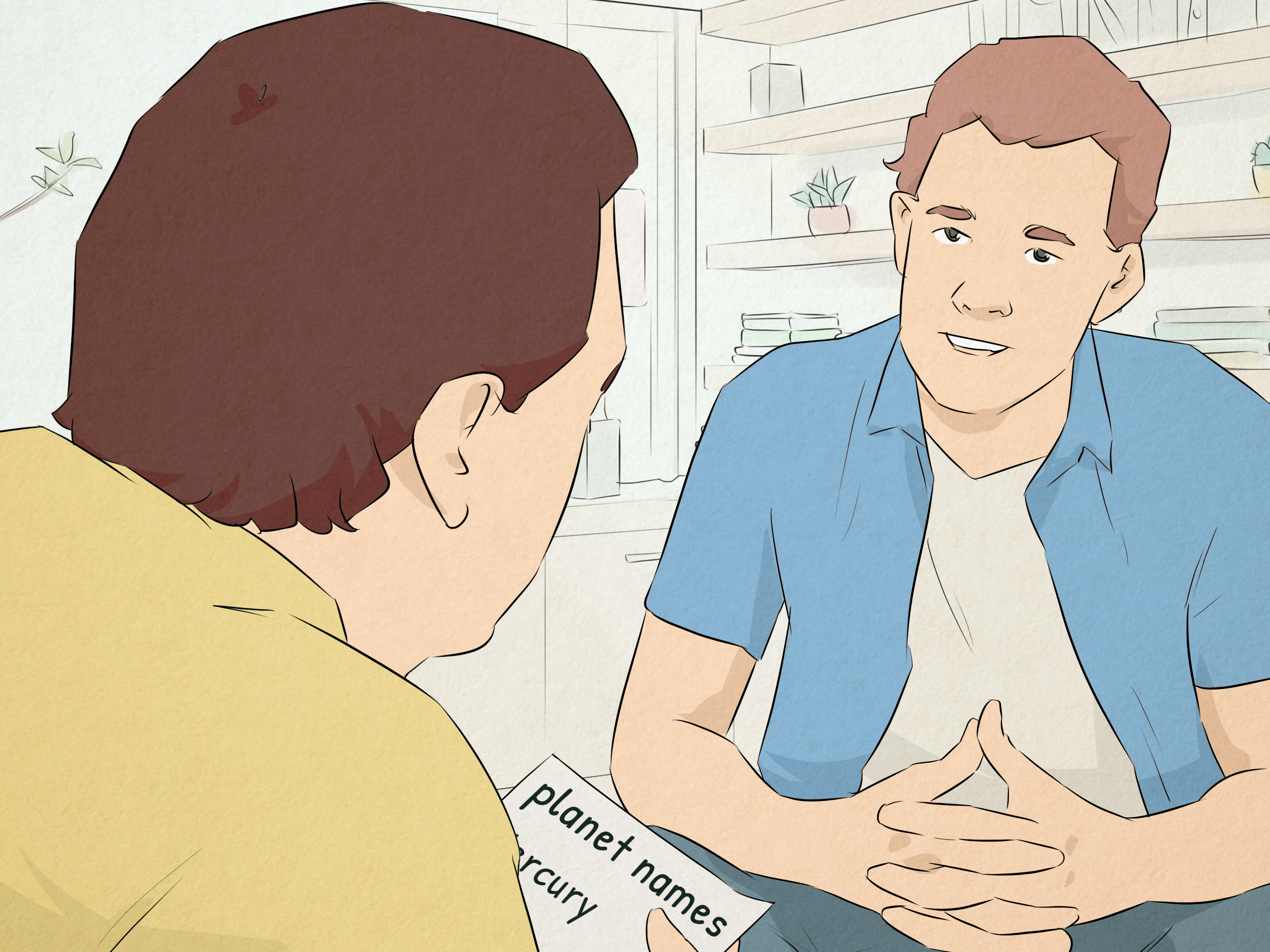
Children can turn the process into a game by racing against a timer or arranging planet cards. Adults can practice during a coffee break. Teachers can ask students to invent their own mnemonic sentences, compare the funniest examples, and then test whether those sentences actually produce the correct planetary order. The entire activity can be completed in a few minutes, yet it creates knowledge that may remain available for years.
Conclusion
The correct order of the planets from the Sun is Mercury, Venus, Earth, Mars, Jupiter, Saturn, Uranus, and Neptune. To remember that sequence, transform it instead of merely rereading it.
Create a memorable sentence from the initials M-V-E-M-J-S-U-N. Divide the planets into four rocky inner worlds and four giant outer worlds. Place them along a visual or physical route. Finally, test yourself through active recall and spaced reviews.
Once these four methods work together, the planetary order stops feeling like an arbitrary list. It becomes a funny sentence, a structured map, a vivid journey, and a fact you can retrieve whenever someone asks. Pluto may not be on the main eight-planet roster anymore, but it can still watch proudly from the dwarf-planet section while you recite the solar system like a professional space tour guide.
Research synthesized from authoritative educational material published by NASA Science, NASA Space Place, NASA Jet Propulsion Laboratory, the Smithsonian Institution, Scholastic, the American Psychological Association, Harvard University, Cornell University, Washington University in St. Louis, the University of Michigan, and peer-reviewed research available through the National Institutes of Health.