
Movie fans love a good plot hole. Give audiences one unexplained computer virus, one mysteriously absent villain, or one casually mentioned sea monster, and the internet will investigate it with the enthusiasm of detectives who have unlimited coffee and no bedtime.
However, some famous movie flaws were not mistakes in the original screenplay. They were wounds created in the editing room. The filmmakers shot an explanation, watched the running time climb, and removed the scene while apparently forgetting that another part of the movie still depended on it.
Deleted scenes can reveal missing character motivations, restore continuity, and answer questions that have bothered viewers for decades. They do not always improve the overall filmpacing mattersbut they often prove that the writers had considered the problem before fans began pointing at it with digital pitchforks.
The following seven examples include genuine continuity errors, missing explanations, and confusing character decisions that became much clearer after deleted footage was released or restored in an extended edition.
Why Deleted Scenes Create Accidental Movie Flaws
A finished movie is rarely the complete story that was filmed. Editors remove scenes to shorten the runtime, accelerate the pace, improve test-screening reactions, or keep the audience focused on the central conflict. A perfectly useful explanation may disappear simply because it arrives during a slow section.
The trouble begins when the editor removes the setup but leaves the payoff. A character refers to an adventure the audience never saw. Someone displays knowledge that was only established in deleted footage. A major villain vanishes between sequels as if he quietly accepted a position in another franchise.
These omissions are not always traditional plot holes. Some are better described as continuity gaps or missing narrative bridges. Nevertheless, they create the same viewer response: “Wait, when did that happen?”
1. The Goonies Mentioned an Octopus That Was Never in the Movie
The apparent flaw
Near the end of The Goonies, reporters surround the children and ask them to describe their underground adventure. Data excitedly mentions an encounter with an octopus.
There is only one small problem: no octopus appears anywhere in the theatrical version.
Viewers had watched the Goonies escape criminals, survive elaborate traps, slide through tunnels, and discover a pirate ship. An octopus attack would have been difficult to overlook. Yet Data describes it as if everyone had just seen the same movie he did.
How the deleted scene explains it
An octopus sequence was filmed for the underwater portion of the adventure. In the removed scene, the creature attacks the children before Data uses one of his gadgets to help defeat it. The sequence was reportedly difficult to film, and the artificial octopus was not especially convincing.
The filmmakers wisely removed the awkward effects sequence but left Data’s line in the finale. As a result, the dialogue sounds like a continuity error rather than a reference to deleted footage.
This famous Goonies movie flaw is therefore not evidence that Data invented a sea-monster encounter for attention. Although, considering his personality, that explanation would also be believable.
2. Independence Day Explained How a Laptop Could Hack Alien Technology
The apparent flaw
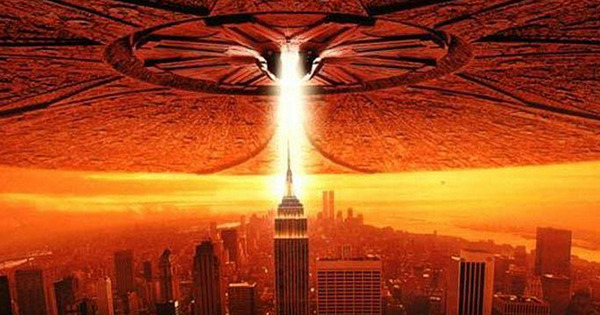
The climax of Independence Day requires satellite technician David Levinson to upload a computer virus into an alien mothership. The program disables the defensive shields protecting the invaders’ ships, allowing Earth’s remaining pilots to attack.
It is an enormously entertaining plan. It is also the science-fiction equivalent of connecting a 1990s office printer to a civilization capable of interstellar travel and hoping the correct driver installs automatically.
How could David understand the alien operating system? Why would his human software be compatible with extraterrestrial hardware? Why did the invaders have devastating energy weapons but apparently no cybersecurity department?
How the deleted scene explains it
Deleted material shows David examining the recovered alien spacecraft stored at Area 51. By studying its communication system and comparing it with the signal he decoded earlier, he realizes that the alien network may be vulnerable to a deliberately introduced program.
The scene establishes that his virus is not a miraculous idea invented seconds before the final mission. He has access to an alien craft, understands the communication frequency, and has enough information to design a targeted attack.
Co-writer and producer Dean Devlin also explained that the alien system used recognizable binary principles. Area 51 researchers had spent decades studying the captured technology, providing an interface between human equipment and the alien ship.
The explanation still requires blockbuster-sized generosity from the audience, but it turns the plan from pure technological sorcery into fictional reverse engineering. That is a significant improvementand excellent news for the heroic laptop.
3. Star Trek Revealed What Nero Did for 25 Years
The apparent flaw
In the 2009 Star Trek film, Nero and the mining ship Narada travel through a temporal disturbance and arrive in 2233. Nero attacks the USS Kelvin, altering history and creating the alternate timeline followed by the movie.
Ambassador Spock does not emerge from the disturbance until approximately 25 years later. Nero wants revenge against him, so the Romulan captain waits for his arrival.
In the theatrical cut, that quarter-century gap is barely addressed. Nero possesses a gigantic vessel equipped with advanced technology, yet he seems to spend 25 years parked somewhere off-screen, angrily checking the space calendar.
How the deleted scenes explain it
A longer sequence reveals that Klingon forces intercepted the damaged Narada after the attack on the Kelvin. Nero and his crew were captured and imprisoned on the Klingon penal colony Rura Penthe.
Years later, the Romulans escaped, recovered their vessel, and resumed their plan to confront Spock. The additional material explains both Nero’s long disappearance and later reports that a large Klingon force had been destroyed.
Removing the sequence accelerated the film’s opening and preserved some mystery around Nero. Unfortunately, it also made him appear remarkably inactive for a revenge-obsessed villain. The deleted footage supplies the missing history: he was not patiently meditating for two and a half decades; he was imprisoned.
4. The Lord of the Rings: The Return of the King Revealed Saruman’s Fate
The apparent flaw
Saruman is a central villain in the first two installments of Peter Jackson’s Lord of the Rings trilogy. He imprisons Gandalf, builds an army, devastates the surrounding lands, and launches the assault on Helm’s Deep.
Then, in the theatrical version of The Return of the King, he effectively disappears.
The heroes visit the flooded remains of Isengard, where Gandalf explains that Saruman no longer possesses meaningful power. The former White Wizard is apparently still trapped inside Orthanc, but audiences never see him, hear his response, or learn his ultimate fate.
For such a major antagonist, this is an oddly quiet exit. Saruman goes from commanding thousands of soldiers to becoming Middle-earth’s least successful apartment tenant.
How the extended scene explains it
The extended edition restores a confrontation outside Orthanc. Gandalf offers Saruman an opportunity to provide information about Sauron, but the defeated wizard remains proud and defiant.
Gandalf breaks Saruman’s staff, symbolically stripping him of authority. Gríma Wormtongue, pushed beyond his limit by Saruman’s cruelty, stabs his master. Saruman falls from the tower and dies, while Gríma is immediately killed by an arrow from Legolas.
The sequence also connects naturally with the discovery of the palantír, which becomes important when Pippin later looks into it.
Peter Jackson removed the material because he felt it concluded a conflict belonging to the previous movie and slowed the beginning of the final chapter. That editorial reasoning is understandable, but the theatrical trilogy leaves one of its most prominent villains without an on-screen ending.
5. Return of the Jedi Explained Why Obi-Wan Hid the Truth
The apparent flaw
Obi-Wan Kenobi tells Luke Skywalker that Darth Vader betrayed and murdered Luke’s father. In The Empire Strikes Back, Vader reveals that he is Luke’s father, forcing Obi-Wan to defend his earlier story as true “from a certain point of view.”
The explanation is elegant, but it does not completely answer the practical question. Why did Obi-Wan withhold information that Luke clearly needed before confronting one of the most dangerous beings in the galaxy?
Obi-Wan knew Anakin Skywalker’s history better than almost anyone. He also knew Luke might eventually encounter Vader. Remaining silent makes the Jedi Master look manipulative, careless, or both.
How the deleted dialogue explains it
An extended version of Yoda’s death scene in Return of the Jedi included a revealing line. Yoda tells Luke that Obi-Wan would have disclosed the truth long ago if Yoda had allowed him to do so.
That brief statement shifts much of the responsibility. Obi-Wan did not independently decide to maintain the deception forever. He was following Yoda’s instruction, presumably because the older Jedi believed Luke was emotionally unprepared to learn that his father had become a Sith Lord.
The line does not make the decision ethically perfect. The Jedi still sent a poorly informed young man toward a family confrontation involving laser swords. It does, however, clarify the chain of command and explain why Obi-Wan continued concealing the truth.
Without the deleted dialogue, audiences may conclude that Obi-Wan created the plan. With it, the deception becomes a broader Jedi strategyand one more example of Yoda making a complicated situation sound deceptively simple.
6. Back to the Future Part II Showed What Happened to Old Biff
The apparent flaw
In Back to the Future Part II, elderly Biff Tannen steals the DeLorean, travels from 2015 to 1955, and gives his younger self a sports almanac containing decades of winning results.
After returning the time machine to 2015, Old Biff stumbles out of the vehicle in obvious pain. He breaks his cane, collapses nearby, and then disappears from the story. Marty and Doc retrieve the DeLorean without realizing what Biff has done.
The strange physical reaction looks important, but the theatrical version never explains it. Was Biff injured while driving? Did time travel make him sick? Had he finally developed an allergy to manure?
How the deleted scene explains it
The completed sequence continued after Biff collapsed. His body began fading before he vanished from existence, much like Marty’s near-erasure in the first film.
Biff’s interference had created a new history in which his future self apparently died before 2015. As the altered timeline caught up with him, the elderly version of Biff could no longer exist.
Filmmakers Robert Zemeckis and Bob Gale explained that the scene confused preview audiences. Viewers had not yet seen the alternate 1985, so they lacked enough information to understand why Biff was disappearing. The moment was removed, but the setuphis pain and collapseremained.
The deleted footage answers one mystery while raising another: why did the timeline wait until Biff conveniently returned the DeLorean before erasing him? The most practical explanation is that even the space-time continuum understood that the movie needed its car back.
7. Aliens Explained Ripley’s Immediate Bond With Newt
The apparent flaw
The theatrical version of Aliens establishes that Ellen Ripley spent 57 years in hypersleep after escaping the destruction of the Nostromo. She wakes in a future where her old life has disappeared, but the movie moves quickly toward the investigation of the colony on LV-426.
Once Ripley meets Newt, the colony’s only known survivor, she becomes fiercely protective of the child. Their relationship is emotionally effective, yet the theatrical cut does not fully explain why Ripley forms such a powerful maternal attachment so quickly.
It can be understood through their shared trauma, but a deleted scene provides a far more personal reason.
How the deleted scene explains it
In the restored special-edition sequence, Ripley asks Carter Burke about her daughter, Amanda. Burke reveals that Amanda survived into old age but died two years before Ripley was rescued.
Ripley sees an image of her elderly daughter and remembers promising that she would return before Amanda’s 11th birthday. For Ripley, only a short period has passed since making that promise. For Amanda, an entire lifetime came and went.
The scene transforms Ripley’s relationship with Newt. She is not merely helping a frightened child; she is responding to the unbearable loss of the daughter she never had the opportunity to raise. Saving Newt becomes both an immediate moral duty and a second chance to protect someone who needs her.
Director James Cameron removed the scene partly for pacing, but later restored it in the special edition. Its absence does not break the plot, yet it removes a vital emotional bridge. With the scene included, Ripley’s choices feel deeper, sadder, and more inevitable.
The Experience of Rewatching Movies With Their Deleted Scenes
Discovering a deleted explanation can completely change the experience of rewatching a familiar movie. A moment that once appeared careless may suddenly reveal evidence of a much more detailed screenplay. The “mistake” did not necessarily begin with the writer; it may have appeared when a two-and-a-half-hour assembly was trimmed into a commercially manageable release.
The first rewatch after seeing the deleted footage is often the most interesting. Data’s octopus comment in The Goonies stops sounding like random nonsense. Nero’s unexplained 25-year delay in Star Trek becomes a prison sentence rather than an extended vacation. Old Biff’s pain becomes the beginning of his erasure instead of a mysterious senior-citizen emergency.
At the same time, deleted scenes demonstrate why logical completeness is not the only goal of film editing. The Saruman sequence gives The Return of the King a satisfying conclusion for a major villain, but it also delays the movie’s movement toward Sauron and the larger war. The longer version of Aliens strengthens Ripley’s emotional history, while other restored scenes reveal events at the colony before the Marines arrive, reducing some of the uncertainty that made the theatrical cut tense.
This creates a fascinating trade-off between explanation and momentum. Audiences frequently say they want every question answered, but a movie that explains everything can begin to feel like a meeting that should have been an email. Filmmakers must decide whether a piece of information is essential, merely helpful, or interesting enough to become a Blu-ray bonus feature.
Extended editions also affect different types of viewers in different ways. A casual viewer may prefer the faster theatrical cut because the central story remains clear. A dedicated fan may gladly accept another 30 minutes if those minutes contain world-building, character development, or the on-screen death of an extremely tall wizard.
Physical media played an especially important role in preserving these alternate experiences. DVDs and Blu-rays turned deleted scenes into miniature film-history archives. Director commentaries explained why footage was removed, while special editions allowed audiences to compare competing versions of the same story. Streaming services sometimes include extras, but availability can be inconsistent, making well-produced disc releases valuable to collectors and researchers.
These discoveries also encourage viewers to distinguish among different kinds of movie flaws. A genuine plot hole violates the story’s established logic. A continuity error places an object in the wrong position or refers to something that is no longer present. A missing motivation makes a character’s actions feel abrupt. An unresolved subplot simply leaves a narrative thread hanging.
Deleted scenes can repair the last three categories more easily than the first. Restoring the octopus sequence resolves a continuity problem. Showing Nero’s imprisonment fills a timeline gap. Revealing Ripley’s daughter strengthens her motivation. None of these additions must rewrite the fundamental rules of the story.
The best viewing experience may therefore involve treating theatrical and extended editions as different interpretations rather than assuming one is automatically superior. The theatrical version shows what the filmmakers believed worked best for a general audience at the time of release. The longer version reveals more of the story’s original architecture.
Most importantly, deleted footage reminds us that movies are constructed objects. Every clean transition may conceal an abandoned subplot, every unexplained reaction may have once followed a longer conversation, and every mysterious octopus may be waiting patiently in the bonus-features menu.
Conclusion
Famous movie flaws are not always the result of lazy writing. Sometimes the explanation existed, the actors performed it, and the cameras recorded itonly for the scene to be removed in the pursuit of better pacing.
The deleted footage from The Goonies, Independence Day, Star Trek, The Return of the King, Return of the Jedi, Back to the Future Part II, and Aliens demonstrates how a small edit can create decades of confusion. Some restored scenes solve continuity errors. Others deepen character motivations or close abandoned storylines.
Editors must protect the rhythm of a film, even when doing so sacrifices useful information. Fortunately, special editions and archival releases allow viewers to recover those missing pieces. The next time a movie appears to contain an obvious flaw, the answer may not require an elaborate fan theory. It may simply be sitting on the cutting-room floor.
Note: This article uses “movie flaw” broadly to include continuity errors, unresolved storylines, missing motivations, and narrative gaps caused or intensified by the removal of filmed material.













