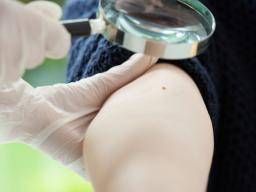
Could counting the moles on one arm reveal something important about your skin cancer risk? It sounds like the setup for a suspiciously low-budget medical quiz, but the idea comes from genuine research. Scientists have found that the number of moles on the right arm may help estimate a person’s total-body mole count, an established marker associated with melanoma risk.
That does not mean 11 moles equal melanoma, nor does it mean a nearly spotless arm earns you a lifetime exemption from sunscreen. Your right arm is not a crystal ball. It may, however, offer doctors a quick and practical clue about who could benefit from a more thorough skin assessment.
What Did the Right-Arm Mole Study Actually Find?
The headline-making research examined whether counting moles on a smaller, easily accessible area could provide a useful estimate of the number across the entire body. Researchers analyzed data from 3,694 female twins in the United Kingdom and compared mole counts across 17 anatomical areas. For the study, a mole, medically called a melanocytic nevus, was defined as a lesion measuring at least 2 millimeters.
The arms and legs showed the strongest relationships with total-body mole count, but the arms were more convenient to examine. The researchers then tested the method in another group of 415 healthy men and women, where the arm continued to perform well as a marker of overall mole burden.
The Number That Grabbed Everyone’s Attention
Women with more than 11 moles on the right arm were approximately nine times more likely to have more than 100 moles across their bodies than women with fewer than 11 on that arm. More than eight moles on the upper right arm, above the elbow, was also strongly associated with having more than 100 total-body moles.
The study did not show that 11 right-arm moles directly cause melanoma or that everyone crossing that threshold will develop cancer. It showed that the arm count can act as a shortcut for identifying people who may have a high total mole count.
Why the Right Arm?
There is no known sinister force hiding specifically in the right elbow. Both arms correlated with whole-body mole counts. The researchers emphasized the right arm because it provided a standardized measurement site and performed particularly well in their statistical analysis.
In clinical practice, an arm is also easier to inspect than someone’s entire body. A primary care professional can count visible moles in a few moments and decide whether a complete skin examination or dermatology referral may be appropriate.
Why Does Having Many Moles Matter?
Most common moles are harmless collections of pigment-producing cells called melanocytes. They often appear during childhood and young adulthood and may stay unchanged for decades. A mole is not a tiny melanoma waiting impatiently for its villain era.
However, people with many moles, several large moles, or atypical moles have a higher statistical risk of developing melanoma. Total mole count is therefore useful as one component of a broader risk assessment that also considers ultraviolet exposure, skin characteristics, medical history, and family history.
Mole Count Is a Risk Marker, Not a Diagnosis
A high mole count does not reveal whether any particular mole is cancerous. Likewise, a person with very few moles can still develop melanoma. The number helps place someone into a possible risk category; it cannot replace a dermatologist’s examination, dermoscopy, or biopsy.
Many common moles never change into cancer. A suspicious melanoma may also appear as an entirely new spot rather than developing from a mole that has been present for years. That is why counting is only one part of sensible skin awareness.
How to Count Moles on Your Right Arm
A casual arm count can be a useful starting point, but do not treat it like a home laboratory test. Freckles, sun spots, skin tags, and other benign growths can resemble moles, especially to an untrained eye.
A Simple Counting Method
- Stand in bright, even lighting and expose the entire right arm from shoulder to wrist.
- Use a mirror or ask someone you trust to help inspect the back of the upper arm.
- Count distinct brown, tan, black, pink, or skin-colored spots that appear to be moles.
- Record the total and note any spots that look different from the rest.
- Take clear, dated photographs so that future changes are easier to recognize.
The original research counted nevi measuring 2 millimeters or more. At home, accurately distinguishing a tiny mole from a freckle can be difficult. The purpose is not to achieve courtroom-level numerical precision. It is to notice whether you appear to have a substantial number of moles and whether any deserve professional attention.
Do Not Stop at the Arm
Melanoma can develop anywhere, including areas that receive little sunlight. A complete skin self-exam should include the scalp, ears, neck, back, buttocks, legs, feet, spaces between the toes, palms, soles, and skin around the nails. A hand mirror can help with difficult areas, although it may also introduce you to parts of your back you have apparently been ignoring for years.
The American Academy of Dermatology encourages regular skin self-examinations and offers body mole maps for recording spots and changes over time.
ABCDE: Warning Signs That Matter More Than the Total
A mole count may help estimate general risk, but the appearance and behavior of an individual lesion may require more immediate attention. Dermatologists commonly recommend the ABCDE rule:
- A Asymmetry: One half does not resemble the other half.
- B Border: The edges are irregular, blurred, scalloped, or poorly defined.
- C Color: The spot contains several colors or develops uneven pigmentation.
- D Diameter: The lesion is larger than approximately 6 millimeters, although melanomas can be smaller.
- E Evolving: The spot changes in size, shape, color, texture, elevation, or symptoms.
Evolution is particularly important. A mole that has looked the same for 20 years is generally less concerning than one that has recently started growing, bleeding, itching, crusting, or changing color. Any new, changing, or unusual lesion deserves attention, even when it does not check every ABCDE box.
Watch for the “Ugly Duckling”
Most of a person’s ordinary moles tend to resemble one another. A lesion that is noticeably darker, lighter, larger, smaller, or structurally different may be an “ugly duckling.” Unlike the fairy-tale bird, this one should not be left alone until the final chapter.
The ugly-duckling method can be especially useful for people with numerous moles because it focuses attention on the outlier rather than asking them to analyze every dot as though preparing a forensic report.
Who Has a Higher Risk of Melanoma?
No single factor determines who will develop melanoma. Risk generally reflects a combination of inherited traits, environmental exposure, age, immune function, and personal history.
Factors associated with increased melanoma risk include:
- A high number of common moles
- Atypical or dysplastic nevi
- A personal history of melanoma or another skin cancer
- A parent, sibling, or child with melanoma
- Repeated sunburns, particularly blistering burns earlier in life
- Indoor tanning or substantial ultraviolet exposure
- Fair skin, light eyes, red or blond hair, or skin that burns easily
- A weakened immune system
- Certain inherited genetic conditions
- Older age, although melanoma can affect younger adults
People of every skin tone can develop melanoma. In darker skin, suspicious lesions may be overlooked or appear in areas such as the palms, soles, and beneath fingernails or toenails. No one should assume that natural pigmentation provides complete protection.
What Should You Do If You Count More Than 11 Moles?
First, do not panic. Crossing the study’s threshold does not mean you have melanoma, and it does not mean you are destined to develop it. It suggests that you may have a larger total-body mole count, which is one reason to discuss personalized skin monitoring with a health professional.
A clinician may recommend a full-body examination, especially when a high mole count appears alongside atypical lesions, significant sun damage, previous skin cancer, or a strong family history. A dermatologist can examine lesions using a dermatoscope and determine whether any should be photographed, monitored, or biopsied.
When to Make an Appointment Promptly
Arrange an evaluation when you notice a spot that:
- Is new and continues to grow
- Looks markedly different from your other moles
- Changes in shape, border, or color
- Bleeds without a clear injury
- Repeatedly crusts and fails to heal
- Becomes persistently itchy, painful, or tender
- Forms a dark streak beneath a nail
A biopsy is the definitive method used to determine whether a suspicious lesion is melanoma. Smartphone applications and internet photographs may improve awareness, but they should not be trusted to rule out cancer.
A Note About Routine Screening
The U.S. Preventive Services Task Force has concluded that evidence is insufficient to recommend for or against routine clinician screening of every asymptomatic adolescent and adult. That statement applies to broad population screening; it does not apply in the same way to someone with symptoms, a suspicious lesion, previous skin cancer, a strong family history, or another high-risk condition. Clinicians are advised to use individual judgment.
How to Lower Your Skin Cancer Risk
You cannot change your inherited mole pattern, natural skin tone, or family history. You can reduce unnecessary ultraviolet exposure, which is the major environmental risk factor for skin cancer.
- Seek shade when ultraviolet radiation is strongest.
- Wear long sleeves, pants, UV-blocking sunglasses, and a wide-brimmed hat.
- Apply broad-spectrum, water-resistant sunscreen with SPF 30 or higher to exposed skin.
- Reapply sunscreen approximately every two hours and after swimming, sweating, or toweling off.
- Avoid tanning beds, sunlamps, and deliberate tanning.
- Do not rely on cloudy weather as sun protection.
- Protect children from sunburn and teach sun-safe habits early.
Sunscreen is valuable, but it works best as part of a larger strategy rather than as permission to bake outdoors indefinitely. Clothing, shade, timing, and sensible sunscreen use make a stronger team.
Limitations of the Right-Arm Mole Rule
The original study involved a large group, but its primary population consisted of female twins in the United Kingdom. Although the findings were replicated in a smaller group containing men and women, the threshold should not automatically be treated as equally precise for every age, ancestry, skin tone, or geographic population.
The result also depends on correct mole identification. Sun spots and freckles can be mistaken for moles, while pale, pink, or skin-colored moles may be missed. Mole numbers can vary with age and genetics, and a total count does not capture other important features such as atypical appearance or family history.
More recent research continues to support counting moles on the arm as a feasible approximation of total-body nevus count, but researchers also note the need for standardized counting methods.
Experience-Based Scenarios: What This Can Look Like in Real Life
The following are composite educational scenarios based on common experiences. They are not descriptions of specific patients and should not be interpreted as diagnoses.
The Casual Count That Becomes a Useful Conversation
Imagine someone reading about the right-arm rule while wearing a short-sleeved shirt. Curiosity wins, and the counting begins. Three moles near the wrist, several around the forearm, and another cluster above the elbow bring the total to 14. The first reaction may be alarm: “Well, that escalated quickly.”
A better response is to treat the count as information rather than a verdict. The person schedules a routine dermatology visit, where the clinician confirms that most of the spots are ordinary moles. One darker lesion is photographed because it looks slightly different, but it has no immediately alarming features. The appointment produces a baseline record, practical advice, and far less anxiety than a week of zooming into blurry phone photographs.
The Person With Only a Few Moles
Now consider someone who counts four moles and feels instantly reassured. Months later, a new pink bump appears on the shoulder and slowly changes. Because the arm count was low, the person is tempted to ignore it.
This experience illustrates the rule’s most important limitation: low mole numbers do not provide immunity. Melanoma does not always look like a dark, dramatic mole, and some forms can be pink, red, pale, or nearly colorless. A new or changing lesion still warrants evaluation regardless of the number on the opposite arm.
The Family Photo Strategy
For people with many moles, memory is often the weak link. After staring at 40 similar brown spots, even a sharp observer may struggle to remember which one was slightly larger six months ago. A practical approach is to take well-lit photographs at regular intervals, using the same room, distance, and angle.
A partner or family member can help photograph the back, scalp, and backs of the legs. The process may feel awkward at first, particularly when someone is standing in the bathroom holding a ruler beside a shoulder blade. Yet consistent images can make genuine change easier to detect and reduce unnecessary worry over spots that remain stable.
The Outdoor Worker Who Changes Routine
Another common experience involves a person who spends years working outside and considers sunburn an unavoidable job requirement. After discovering numerous arm moles, the person begins wearing lightweight long sleeves, keeping sunscreen near work equipment, and using a wide-brimmed hat instead of the baseball cap that protected approximately 14 percent of the head.
The mole count itself does not erase previous UV exposure, but it can become a prompt for better habits. Prevention is not an all-or-nothing project. Starting sun protection today still reduces future exposure, even when yesterday involved poor decisions and suspiciously little shade.
The Most Useful Lesson
Across these scenarios, the right-arm count works best as a doorway to awareness. It may encourage someone to notice a high mole burden, learn the ABCDE signs, document the skin, improve sun protection, or arrange an appropriate examination.
Its value disappears when it is treated as a home diagnosis. The healthiest interpretation is neither panic nor dismissal: count, observe, protect, and seek qualified advice when something looks new, changing, or unusual.
Conclusion
Counting the moles on the right arm offers a surprisingly practical way to estimate total-body mole burden. Research suggests that more than 11 right-arm moles can be associated with a much greater likelihood of having over 100 moles in total, an established melanoma risk marker.
The number is not a cancer test. It cannot determine whether a mole is malignant, and it should never outweigh visible warning signs such as asymmetry, changing color, irregular borders, bleeding, or continued growth. Use the count as a reason to understand your skin, not as a reason to diagnose yourself.
Regular observation, professional evaluation of suspicious lesions, and consistent UV protection remain far more valuable than obsessing over a single numerical cutoff. Your arm may offer a clue, but the complete picture includes your entire skin, medical history, family history, and lifetime sun exposure.