Imagine you’re walking down a perfectly normal street, minding your own business, when a wall suddenly starts roasting modern life.
Not with a long essay. Not with a TED Talk. With a single image so sharp it feels like it should come with a safety warning label.
That’s the vibe of the French street artist known as Dranoften dubbed “the French Banksy” for his dark humor,
social commentary, and talent for turning everyday hypocrisy into visual punchlines.
Dran’s work doesn’t whisper. It side-eyes. It points. It makes you laugh firstthen makes you feel slightly guilty for laughing.
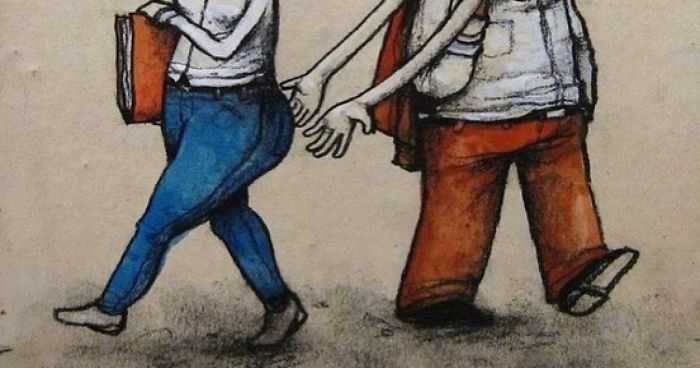
His illustrations and street pieces often feature childlike characters (frequently armed with crayons, chalk, or mischievous creativity),
which is ironic in the best way: innocence used as a magnifying glass for grown-up messes.
Who (Exactly) Is “The French Banksy”?
The nickname gets tossed around, but in pop-culture street art circles, “French Banksy” commonly points to Dran:
a satirical French street artist associated with sharp, sometimes uncomfortable commentary about consumerism, censorship, and power.
Like Banksy, he uses humor as camouflageuntil you realize the joke is about us.
One reason the comparison sticks: both artists use accessible visuals and punchy symbolism to talk about serious issues without sounding like a lecture.
Another reason: the work lives in public space, where it’s impossible to “opt out.” You don’t need a ticket. You just need eyeballs.
Why These Illustrations Feel “Controversial” (Even When They’re True)
“Controversial” doesn’t always mean “offensive.” In street art, it often means:
this image just said the quiet part out loud.
Dran-style satire tends to poke at topics we’re trained to avoid at dinnermoney, politics, advertising, surveillance, hypocrisy,
and the weird fact that our phones know more about us than our closest friends.
The controversy comes from the collision of three things:
(1) public space, (2) public nerves, and (3) private guilt.
When art calls out the system on a wall, the system can’t just scroll past it (even if it tries).
How to Read Satirical Street Illustrations Without Missing the Point
- Start with the obvious: What’s happening in the scene?
- Spot the twist: What’s “off” or exaggerated?
- Ask the annoying question: Who benefits from this situation staying the same?
- Check your first reaction: If you laughed, what did you laugh atand why?
Now, let’s get to the main event: 49 controversial illustration ideas inspired by the themes and visual logic
that made the “French Banksy” nickname feel inevitable.
49 Controversial Illustrations That Will Make You Think
Note: This is a curated set of thought-provoking illustration concepts in the spirit of Dran’s satireshort “visual scripts” that reflect
recurring themes commonly associated with his work (consumerism, creativity, authority, modern anxiety, etc.).
Read them like a gallery wall: quick glance, then lingering discomfort.
1–7: Consumerism & Advertising (a love story no one asked for)
- The Shopping Cart Baby Stroller A parent pushes a cart like a stroller, soothing a baby with brand logos instead of lullabies.
- Sale Signs as Oxygen Masks People in a “crisis” put on discount tags like survival gear, panicking when the promo ends.
- The Receipt That Never Ends A cashier hands over a receipt that unrolls down the street like a parade float of regret.
- Influencers Feeding on Likes A character eats “likes” off a plate, still hungry, still smiling, still posting.
- Luxury Handcuffs Handcuffs made of designer bracelets: shiny, expensive, and weirdly comfortable.
- Billboard Sunlight A city blocks the sun with ads, then sells “sunlight” back in tiny bottles at a premium.
- Happiness: Limited Edition A product box labeled “JOY” with a countdown timer and a strict return policy.
8–14: Social Media & Attention (the currency that never sleeps)
- The Mirror With Notifications A mirror doesn’t show your face; it shows your follower count and “engagement rate.”
- Thumbs-Up Pacifier A baby won’t stop crying until someone taps “like.” It works. Everyone pretends that’s normal.
- Algorithm Puppet Strings People dance with invisible strings labeled “recommended for you.”
- Cancel Culture Eraser A giant eraser scrubs people out of group photosleaving perfect, empty backgrounds.
- Oversharing Confessional Booth A booth that says “Tell All,” but the priest is a corporate data broker.
- Privacy as a Vintage Trend A boutique sells “privacy” like retro denim: expensive, rare, and mostly performative.
- The Endless Scroll Staircase People climb a staircase made of posts, never reaching the top, too tired to stop.
15–21: Power, Politics & Authority (the suit-and-tie magic trick)
- The Gavel That’s a Remote Control A judge changes channels labeled “public opinion,” “fear,” and “silence.”
- Press Conference Ventriloquism A spokesperson talks while a hidden hand inside the podium moves their jaw.
- Democracy as a Suggestion Box Citizens submit votes; the box empties into a shredder labeled “feedback.”
- Police Tape as Decoration Crime scene tape is used like party streamers at a “grand opening” for inequality.
- National Flags as Blindfolds People proudly wear flags over their eyes, insisting they’ve never seen clearer.
- The Law as a Ladder A ladder labeled “justice” is pulled up the moment someone starts climbing.
- Charity as a Photo Op A politician feeds someone for the camerathen takes the food back when the flash ends.
22–28: Art, Creativity & Censorship (the war on imagination)
- Crayons in a TSA Tray A child’s crayons are confiscated as “dangerous materials,” while billboards pass freely.
- The Museum Gift Shop Exit A gallery forces visitors to leave through a shop that sells “rebellion” in tote-bag form.
- Paint Over the Question Mark A wall has a giant question mark; a worker carefully paints it into a period.
- Art School Assembly Line Students enter with weird ideas and exit with identical portfolios and identical anxiety.
- The Creativity Leash A character walks their “imagination” like a dogshort leash, strict route, no sniffing allowed.
- Permission Slip Street Art A mural is beautiful, but it has a stamped permit bigger than the artwork itself.
- Freedom of Expression: Out of Stock A storefront sign says “Sold Out,” while the backroom is stacked with silence.
29–35: Surveillance & Control (smile, you’re being… optimized)
- Security Cameras as Birds Cameras perch like pigeons, watching everyone, pooping suspicion everywhere.
- Facial Recognition Makeup Kit People apply makeup to look like someone else, but the software still “knows.”
- The Smart City Cage A city is “smart,” but the gates lock automatically when you ask too many questions.
- Terms & Conditions Tattoo A character’s skin is covered in tiny legal text. They agreed. They didn’t read.
- Data Harvest Scarecrow A scarecrow in a field labeled “users,” collecting more than just clicks.
- Consent Button Whack-a-Mole Popups appear endlessly; your “choice” is how fast you give up.
- GPS as a Collar People wear collars that beep when they wander toward independent thought.
36–42: Environment & “Progress” (the future tastes like plastic)
- Nature as Wallpaper A family sits in a room where the forest is a mural… because the real forest is gone.
- Recycling as a Magic Trick A magician shows you “recycling,” then reveals it was landfill the whole time.
- Oceans in a Snow Globe A child shakes a globe; instead of snow, microplastics fall beautifully.
- Electric Cars, Coal Shadows A clean car casts a shadow shaped like an old smokestack.
- Greenwashing Paint Roller A corporation paints “eco” over a factorybright green letters, same gray smoke.
- The Tree as a Subscription “Plant a tree” costs monthly, and the tree disappears if your card declines.
- Climate Anxiety Weather App The forecast says “doom,” but the ad below says “BUY MORE.”
43–49: Work, Inequality & Modern Life (please enjoy your burnout)
- The Promotion Treadmill A worker runs toward a “promotion” sign that stays the same distance away.
- Minimum Wage Balancing Act Someone tightropes over bills, holding a paycheck that’s clearly a joke.
- Luxury Penthouse, Basement Reality A building’s top is gold; the bottom is crackedbut both share the same address.
- Productivity as a Whip A manager cracks a whip labeled “KPIs,” and the spreadsheet applauds.
- Healthcare as a Maze A person tries to reach “help,” but the maze signs say “prior authorization” and “out of network.”
- The Debt Balloon A balloon labeled “student loans” floats above a person’s head, pulling them off the ground.
- Work-Life Balance Seesaw One side says “work,” the other says “life,” and a giant corporation sits on one end.
Why These Images Stick in Your Brain (Even If You Wish They Didn’t)
Satirical street illustrations work because they compress complicated systems into a single, readable moment.
That’s also why they make people mad: you can’t “well actually” a picture fast enough to outrun your own recognition.
And because this kind of art lives in public, it naturally raises questions about who controls public spaceand what counts as “art” versus “vandalism.”
Banksy’s long-running ability to spark debates about value, ownership, and the art market has been widely coveredeverything from
public “residencies” to infamous stunts that turned auctions into performance. Dran’s world is less headline-driven,
but the mechanism is similar: use humor as a Trojan horse, then let the meaning walk itself into the room.
What to Do If an Illustration Hits a Nerve
- Don’t rush to defend yourself. If it stung, there’s probably a reason.
- Translate it into a question. “What system is this pointing at?” is more useful than “Do I agree?”
- Notice who feels targeted. Satire often punches upunless the viewer insists on standing under the punch.
- Let it be complicated. The best street satire doesn’t give you a neat moral; it gives you a messy mirror.
Conclusion
“49 controversial illustrations” isn’t just a listit’s a reminder that a single image can still interrupt the noise.
Dran’s brand of dark, funny, sometimes unsettling satire keeps proving a simple point:
if you can’t talk about power, money, and hypocrisy in public… then public walls will do it for you.
Extra: of Real-World Experiences (Because Street Satire Isn’t Just Theory)
If you’ve never experienced satirical street art in real life, it’s hard to explain how quickly it rewires your mood.
Online, you’re in control: you click, you scroll, you curate. On the street, the street curates you. One minute you’re thinking about coffee,
the next minute you’re staring at an image that makes you laugh and cringe at the same timelike your conscience just learned stand-up comedy.
A common “first experience” is the double-take. You walk past something that looks playfulmaybe a childlike character with a crayon,
maybe a cartoonish sceneand you keep walking because your brain files it under “cute.” Then the meaning catches up three steps later.
You turn around. Now you’re reading it like a headline, except it’s smarter than most headlines and doesn’t ask for your email address.
People often stand there longer than they intended, not because the image is complex, but because it’s too clear.
Another experience is the accidental conversation with strangers. Satirical street art does this magical thing where it makes people talk to each other
without the awkward “so… weather, huh?” opener. Someone will mutter, “That’s brutal,” and you’ll nod like you’ve known them for years.
You’ll see a couple disagree right there on the sidewalkone person calling it “truth,” the other calling it “too much.”
And that’s kind of the point: the wall becomes a public comment section, but with fewer bots and more eye contact.
There’s also the “museum effect,” where people treat a random corner like a gallery. Phones come out. People frame the shot.
Someone angles their camera so the illustration “talks” to a billboard behind it. And suddenly you realize satire isn’t just critiqueit’s a tool for seeing.
It teaches you to notice what you normally ignore: the sales language, the surveillance hardware, the way public space is designed to sell at you,
not speak with you. Even if you never think about street art again, you’ll probably notice the ads more, and trust them less.
Finally, there’s the weirdly personal experience of recognition. Not “I’ve seen this image before,” but “I’ve lived this idea before.”
A drawing about work-life balance can hit harder on a Monday morning. A joke about consumerism lands differently when you’re carrying shopping bags.
And that’s why these illustrations linger: they don’t just criticize “society.” They catch you mid-routine and ask, politely and mercilessly,
whether the routine is serving youor using you.
One last thought: If an image makes you uncomfortable, congratulations. Your brain is still working. Keep it that way.