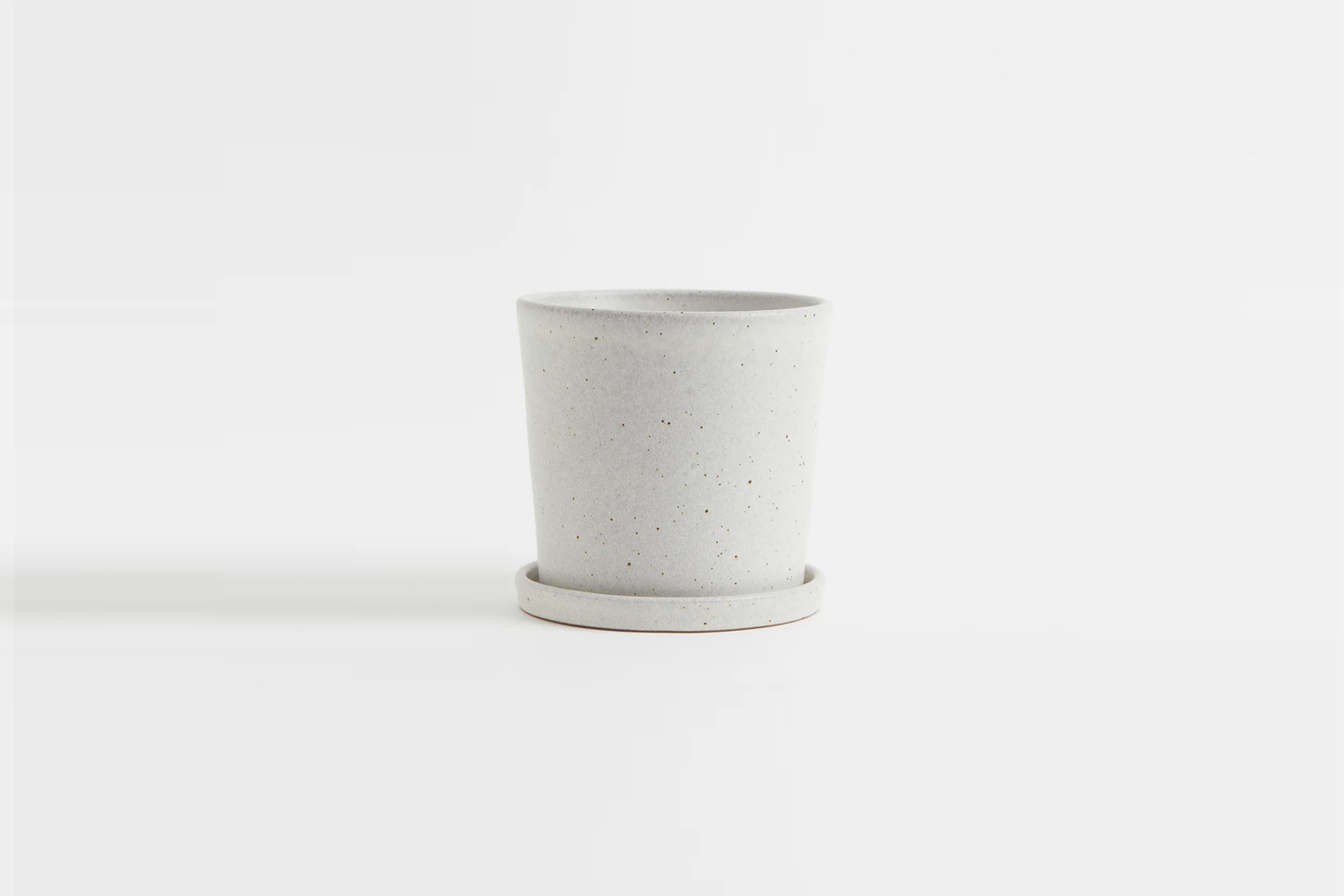
A white speckled plant pot and saucer is one of those small home accessories that quietly makes everything around it look more intentional. Add a trailing pothos, a compact snake plant, or a cheerful herb, and an ordinary shelf suddenly resembles a carefully styled corner from an interior-design magazine. The plant gets all the applause, of course, while the pot performs the less glamorous work of holding soil, managing drainage, and protecting the furniture from an unexpected indoor flood.
The appeal comes from balance. The white background feels clean and versatile, while the scattered speckles prevent the planter from looking sterile. Depending on the clay, glaze, and firing process, those flecks may appear gray, tan, brown, or black. The result can fit modern, farmhouse, Scandinavian, coastal, rustic, or minimalist décor without looking as though it wandered in from a completely different house.
However, buying a planter should involve more than deciding whether it looks adorable beside a stack of books. Drainage, saucer depth, pot size, weight, glaze, and plant compatibility all affect whether the combination becomes a thriving display or a stylish little root-rot factory.
Why White Speckled Planters Are So Versatile
Solid white pots are crisp and bright, but they can sometimes look overly polished. Speckling introduces texture and visual movement without adding a strong competing color. It creates the handmade appearance associated with studio pottery, even when the planter is commercially produced.
This neutral finish also lets foliage take center stage. Dark leaves appear richer against a pale container, variegated plants look more defined, and flowering plants gain a simple backdrop that does not argue with their blooms. A white speckled ceramic planter can therefore move from room to room as decorating styles change. It may hold rosemary in the kitchen today, a peperomia in the office next month, and several emergency pens after the plant enthusiast temporarily loses confidence.
A Useful Middle Ground Between Plain and Patterned
Highly patterned pots can be beautiful, but they are harder to coordinate with rugs, artwork, countertops, and other containers. A speckled finish provides enough personality to look interesting while remaining quiet enough to join an existing collection. It works particularly well when several planters have different shapes but share a similar neutral palette.
What to Check Before Buying a Plant Pot and Saucer
1. Confirm That the Pot Has a Drainage Hole
For most houseplants, a drainage hole is not an optional luxury. It allows excess water to leave the root zone so air can return to the potting mix. Iowa State University Extension advises that containers need drainage holes and notes that adding gravel to the bottom does not compensate for a sealed pot.
If the white speckled pot has no hole, it is best used as a decorative cachepot. Keep the plant in a slightly smaller nursery container with drainage, place that container inside the decorative pot, and remove it when watering. Better Homes & Gardens and Mississippi State University Extension both describe this nested-pot method as a practical way to combine decorative containers with safer drainage.
2. Examine the Saucer
A matching saucer catches runoff and helps protect shelves, windowsills, desks, and wood furniture. It should be slightly wider than the base of the pot and deep enough to hold modest drainage without overflowing immediately.
A saucer is a catch tray, not a miniature swimming pool. Iowa State University Extension recommends removing excess water from a saucer or outer pot after approximately 30 to 45 minutes because roots left standing in water may rot.
For delicate furniture, consider placing a cork pad, waterproof mat, or discreet plant coaster beneath the ceramic saucer. Condensation, tiny glaze imperfections, and unnoticed spills can sometimes mark vulnerable surfaces even when the saucer appears dry.
3. Choose the Right Size
A large pot may seem generous, but houseplants do not always appreciate being upgraded from a studio apartment to an empty mansion. Too much unused potting mix can remain wet long after the roots have absorbed what they need.
Illinois Extension recommends moving a houseplant up by one pot size, generally choosing a container about one to two inches larger in diameter. Oversized containers can hold excess moisture and increase the risk of poor growth or root problems.
For example, a plant currently growing comfortably in a 4-inch nursery pot will usually transition more safely into a pot around 5 or 6 inches wide than into a dramatic 10-inch bowl. The larger planter may look impressive on day one, but the roots could spend the next several weeks surrounded by soggy soil and regrettable decisions.
4. Understand the Material and Glaze
Many white speckled pots are ceramic or stoneware. Some are fully glazed, while others have an unglazed interior or base. Glazed ceramic generally loses moisture more slowly than porous, unglazed clay. Penn State Extension explains that unglazed clay is porous, while glazed and less porous materials retain moisture differently.
That distinction matters when selecting a plant. A moisture-loving fern may appreciate a pot that dries gradually, while a succulent may be safer in a porous container or a particularly fast-draining mix. The Spruce likewise notes that unglazed containers dry more rapidly than glazed ceramic and other nonporous options.
5. Check Stability and Weight
Ceramic planters are heavier than thin plastic nursery pots, which can be helpful for tall or top-heavy plants. A wide-based white speckled pot can stabilize a snake plant, young rubber plant, or compact dracaena that might otherwise lean whenever someone walks past it enthusiastically.
Weight becomes less convenient when the planter must be moved for every watering. Before buying a large ceramic pot, imagine it filled with damp soil rather than sitting empty on a store shelf. That charming 12-inch planter may eventually require both hands, careful posture, and a brief negotiation with your lower back.
Best Plants for a White Speckled Pot
Succulents and Small Cacti
A compact white speckled planter is an attractive match for echeveria, haworthia, jade, or other succulents. Their sculptural shapes stand out against the soft neutral finish. Use a drainage hole and a gritty potting mix, then allow the soil to dry appropriately for the species.
Succulents should not be planted directly in a sealed decorative pot. Mississippi State University Extension emphasizes drainage holes and well-draining mixes for snake plants and similar drought-tolerant houseplants.
Pothos and Philodendrons
Trailing foliage softens the sturdy appearance of ceramic. A pothos or heartleaf philodendron can spill over the rim, making the speckled surface part of a larger vertical display. Place the pot on a shelf, cabinet, or plant stand where the vines have room to hang without tangling around charging cables, picture frames, and innocent household objects.
Peperomia and Pilea
Compact plants with rounded or textured leaves are excellent for small and medium planters. Their moderate size makes them suitable for desktops, nightstands, and narrow windowsills. The neutral pot highlights leaf patterns without making a small space feel visually crowded.
Kitchen Herbs
Basil, thyme, parsley, mint, and chives can look fresh and inviting in white speckled pots. Use separate containers for herbs with significantly different moisture preferences, and place them where they receive suitable light. University of New Hampshire Extension recommends well-draining, soilless mixes for container-grown plants rather than dense garden topsoil.
How to Pot a Plant Correctly
- Inspect the drainage hole. Remove any plug, sticker, or packaging material blocking it.
- Cover an unusually large hole. A piece of plastic mesh, a coffee filter, or a small section of paper towel can reduce soil loss while allowing water to pass. Illinois Extension lists a coffee filter or paper towel as a simple option.
- Add fresh potting mix. Select a mix appropriate for the plant instead of using compact garden soil.
- Remove the plant gently. Support the root ball and loosen tightly circling roots without tearing the entire root system apart.
- Maintain the original planting depth. Illinois Extension recommends repotting at the same depth at which the plant was previously growing.
- Fill around the roots. Lightly firm the mix, leaving space near the rim so watering does not send soil surfing across the table.
- Water thoroughly. Add water until a small amount drains into the saucer, then discard the runoff after the pot has finished draining.
Bottom watering is another option for pots with drainage holes. The plant can be placed in a basin of water so moisture moves upward through the potting mix. After soaking, it should be allowed to drain before being returned to its saucer.
Styling Ideas for a White Speckled Ceramic Planter
Create a Neutral Plant Grouping
Arrange the speckled pot with two or three planters in cream, charcoal, sand, or terracotta. Vary the heights and shapes rather than buying identical containers. A low bowl, a cylindrical pot, and a taller tapered planter can look coordinated without appearing like a showroom display that nobody is allowed to touch.
Use Contrast
Place the planter against dark wood, black shelving, or a deep green wall to emphasize its pale finish. On a white countertop, introduce contrast with a wooden tray, woven mat, brass plant stand, or darker neighboring pot.
Repeat the Speckled Texture
Subtle repetition makes a room feel connected. Pair the planter with speckled mugs, stoneware bowls, terrazzo accessories, or natural linen. Avoid repeating the pattern on every object unless the goal is to make the room look as though it has been gently seasoned with pepper.
Let the Saucer Remain Visible
A matching saucer is part of the design, not something that must be hidden. Center the pot carefully and keep the tray clean. The small shadow line between the planter and saucer gives the set a finished, architectural appearance.
Cleaning and Maintaining the Pot and Saucer
Wipe glazed surfaces with a soft damp cloth. For routine cleaning, mild dish soap and warm water are usually sufficient. Avoid abrasive pads that could dull the finish or create scratches where dirt becomes more noticeable.
Mineral deposits may eventually appear around the rim, drainage hole, or saucer. These chalky marks are often caused by dissolved minerals or fertilizer salts left behind as water evaporates. Gardening Know How recommends diluted white vinegar and warm water for stubborn mineral buildup on flowerpots, especially porous clay.
Test any cleaning solution on an inconspicuous area first. Decorative speckles are normally part of the glaze or clay body, but some inexpensive finishes may be painted onto the surface. Aggressive scrubbing could turn an intentionally speckled pot into an unintentionally patchy one.
When reusing the planter for a different plant, remove old soil and wash the container thoroughly. Iowa State University Extension recommends brushing away soil, washing containers with soapy water, and disinfecting previously used pots when disease prevention is necessary.
Outdoor use requires additional caution. Ceramic and terracotta containers can crack when absorbed water freezes and expands. Move vulnerable pots indoors or empty and shelter them before sustained freezing weather.
Common Mistakes to Avoid
- Leaving runoff in the saucer: Empty standing water instead of allowing the roots to remain submerged.
- Using a dramatically oversized pot: Extra soil stays wet longer and may create an unhealthy root environment.
- Blocking the drainage hole: Check that roots, compacted mix, stickers, and decorative plugs are not preventing water flow.
- Assuming gravel fixes poor drainage: A stone layer does not replace an actual drainage outlet.
- Planting in dense outdoor soil: Use a clean container mix designed to maintain both moisture and air space.
- Ignoring the saucer’s underside: Moisture trapped beneath it may affect wood, paint, or porous stone surfaces.
- Buying for appearance alone: A beautiful pot that is too narrow, unstable, or impossible to drain will become annoying surprisingly quickly.
University of Georgia Extension specifically warns against allowing containers with drainage holes to remain in water-filled saucers.
Conclusion: The Experience of Living With a White Speckled Plant Pot and Saucer
The following is a composite, experience-based account reflecting common situations encountered by indoor gardeners rather than a review of one specific manufacturer’s product.
The first noticeable advantage of a white speckled plant pot is how easily it settles into a room. There is no lengthy decorating debate and no need to rearrange every object nearby. On a wooden desk, the pale ceramic brightens the surface. On a white shelf, the speckles provide just enough definition to keep the pot from disappearing. Even before a plant is added, the container looks finished rather than purely functional.
After potting a small pothos, the practical details become more important. A real drainage hole immediately proves its value. Water moves through the potting mix, excess moisture collects in the saucer, and the plant can be watered thoroughly without carrying it to the sink every time. The matching saucer also looks far better than an improvised plastic lid, although the plastic lid deserves respect for its years of emergency service.
The main habit to develop is checking the saucer after watering. It is easy to admire the plant, wipe one leaf, and walk away while an inch of runoff remains beneath the pot. Returning 20 or 30 minutes later to empty the tray keeps the setup cleaner and prevents the bottom of the root ball from remaining waterlogged. University of Minnesota Extension similarly advises emptying plant saucers so roots are not left sitting in water.
Over several weeks, the speckled finish tends to hide tiny marks better than perfectly smooth white ceramic. A few drops of dried water blend into the pattern rather than announcing themselves from across the room. Dust still collects around the lower edge and inside the saucer, but a damp cloth usually restores the clean appearance quickly.
The planter also changes how the plant itself is perceived. Green foliage looks brighter, damaged leaves become more noticeable, and new growth is easier to appreciate against the neutral container. That visual contrast can encourage better care because yellowing leaves, leaning stems, and dry soil are less likely to go unnoticed. The pot does not magically improve horticultural ability, but it may make neglect slightly more difficult to disguise.
There are small inconveniences. Ceramic is heavier than plastic, especially after watering. Moving the pot requires more care, and placing it directly on delicate furniture can feel risky. A cork mat beneath the saucer solves much of that concern. Mineral marks may also develop near the drainage opening, particularly where hard water is common, so occasional cleaning becomes part of ownership.
The most satisfying aspect is long-term versatility. When the pothos eventually outgrows the container, the same pot can hold a peperomia, small fern, herb, or succulent suited to its size and moisture behavior. Because the white speckled design is not tied to a strong trend or season, it remains useful even when furniture, wall colors, and plant collections change.
Ultimately, a good white speckled plant pot and saucer succeeds because it combines decoration with everyday function. The finish is interesting without being loud, the saucer protects the surrounding surface, and the right drainage setup supports healthier roots. It is a modest purchase, but one that can make a plant display look calmer, cleaner, and more deliberate. That is an impressive amount of work for an object whose daily schedule mostly involves sitting still.
Note: Dimensions, glaze coverage, drainage-hole placement, water resistance, and frost tolerance vary by manufacturer. Confirm the individual product specifications before purchasing or planting directly in the container.