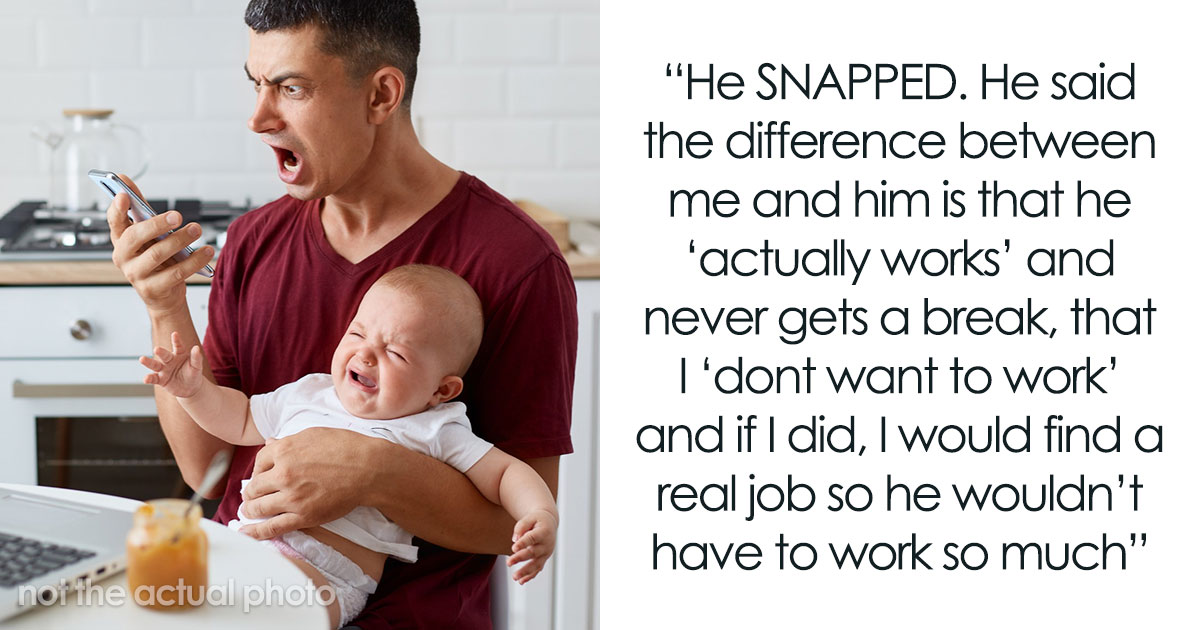
Love usually does not vanish in one dramatic movie-scene moment. It rarely packs a suitcase, slams the door, and leaves behind a perfectly timed thunderstorm. More often, love quietly leaks out through a thousand small cracks: dirty dishes left “for later,” laundry that magically becomes one person’s job, a crying baby handed back like a malfunctioning appliance, and the final insultbeing called “lazy” by the very person creating most of the mess.
The story of a woman falling out of love with her husband after he barely helps at home but still calls her “lazy” hits a nerve because it is not just about chores. It is about respect, partnership, emotional safety, and the painful realization that a spouse may enjoy the benefits of a home without sharing the work required to keep it running. The issue is not whether the trash was taken out on Tuesday. The issue is whether one partner feels seen or used.
Across many American households, domestic labor remains one of the most emotionally loaded topics in marriage. Research on time use, mental load, and relationship satisfaction continues to show that housework is not “small stuff” when it becomes unequal, invisible, and unappreciated. A sink full of dishes can become a scoreboard. A pile of laundry can become a thesis statement. And the word “lazy” can become the exact moment a wife stops wondering how to fix the marriage and starts wondering why she is still in it.
Why Being Called “Lazy” Hurts More Than the Mess Itself
When a husband does not help much at home, the wife may feel tired, irritated, or disappointed. But when he calls her “lazy,” the conflict changes shape. It is no longer a disagreement about chores. It becomes a character attack.
Calling someone lazy ignores what they actually do. It erases the grocery lists, appointments, meal planning, cleaning, emotional support, child care, pet care, birthday reminders, school forms, and the daily mental gymnastics required to keep a household from turning into a live-action laundry avalanche. It says, “I do not see your labor, and I do not respect your exhaustion.” That lands hard.
In relationship psychology, criticism and contempt are considered especially damaging because they attack a partner’s identity rather than addressing a specific behavior. Saying, “I feel overwhelmed and need help with dinner cleanup” opens a door. Saying, “You are lazy” lights the door on fire and then complains about the smoke.
For many wives, the pain is not simply that their husbands do less. It is that their husbands do less and still feel entitled to judge. That combination can kill affection faster than a wet towel on the bed. A spouse can forgive forgetfulness. It is much harder to stay emotionally close to someone who benefits from your effort while insulting your effort.
The Invisible Work Behind a “Clean Enough” Home
One reason household conflict becomes so explosive is that much of domestic labor is invisible. The clean bathroom is visible. The fact that someone noticed the toothpaste was low, added it to the shopping list, bought it, put it away, and replaced it before anyone had to brush their teeth with vibes and hope? Invisible.
This invisible work is often called the mental load. It includes remembering, planning, anticipating, organizing, and following up. It is not just doing the task; it is being the household’s unpaid project manager. In many homes, one partner is not merely washing the dishes. She is tracking which dishes exist, whether the dishwasher detergent is almost gone, whether the toddler’s favorite cup is clean, whether guests are coming Saturday, and whether someone should probably wipe that mysterious sticky spot before it develops citizenship.
When a husband says he “helps,” it may sound supportive, but it can also reveal the problem. Helping implies that the home is primarily the wife’s responsibility and he is generously assisting. A healthier partnership uses ownership, not charity. The goal is not for one adult to “help” another adult with a shared life. The goal is for both adults to own the shared life together.
Why Women Fall Out of Love Slowly
A woman may not fall out of love because of one argument. She may fall out of love because the argument confirms what she has felt for years: she is alone inside the marriage.
At first, she may explain. Then she may ask. Then she may remind. Then she may create chore charts, send texts, make lists, soften her tone, try humor, try tears, try silence, try “Can you please just notice what needs to be done?” At some point, she realizes she is not asking for help anymore. She is auditioning for basic consideration.
That is where emotional withdrawal begins. She stops telling him what bothered her because she has learned the conversation will become exhausting. She stops expecting him to notice. She stops imagining a future where he suddenly becomes an equal partner. She may still cook, clean, smile at family gatherings, and answer “fine” when people ask how things are. But inside, the relationship has changed.
This is why the phrase “I love him, but I am not in love with him anymore” often appears after years of imbalance. Love needs admiration. It needs trust. It needs the feeling that your partner has your back. When a wife feels like her husband is another dependent rather than a teammate, romance starts looking for the emergency exit.
The “Lazy” Label Often Backfires
Calling a spouse lazy may feel like a quick way to express frustration, but it usually creates the opposite of motivation. Nobody hears “You are lazy” and thinks, “Wonderful feedback, beloved. I shall now blossom into my most energetic self.” More often, the insult produces shame, anger, resentment, or emotional shutdown.
In the situation described by the title, the husband barely helps at home yet calls his wife lazy. That contradiction is exactly why so many people react strongly to stories like this. The label sounds unfair because it comes from someone who is not carrying the same load. It is like a passenger complaining that the driver is bad at steering while he is eating chips in the back seat and refusing to read the map.
If a wife is managing most domestic responsibilities, being called lazy can feel absurd. It may also become clarifying. Sometimes the insult does not create the breakup; it reveals it. It makes the wife see the relationship without the filter of hope. She may suddenly understand that the problem is not poor communication, a busy season, or one bad day. The problem is a pattern of disrespect.
Household Labor Is Emotional Labor, Too
Chores are not emotionally neutral when they are unfairly divided. A dish is not just a dish when it represents being ignored. A sock on the floor is not just a sock when it represents the assumption that someone else will pick it up. The grocery list is not just a list when one partner is responsible for feeding everyone and the other partner appears at dinner like a restaurant critic.
Unequal domestic labor can create emotional loneliness. The overloaded partner may feel like the family’s engine: always running, rarely noticed, and expected to keep going until smoke comes out. When she asks for support and receives defensiveness or insults, loneliness deepens into resentment.
Resentment is not simply anger. It is anger with a memory. It keeps receipts. It remembers the time she was sick and still had to handle dinner. It remembers the baby crying while he gamed, scrolled, or relaxed. It remembers asking for help and being told she was nagging. Eventually, resentment becomes a wall. Once that wall is built, flowers from the gas station may not be structurally sufficient.
Why “Just Ask Me” Is Not a Solution
Many husbands respond to household conflict with, “Just tell me what to do.” On the surface, that sounds reasonable. Underneath, it often keeps the wife in charge of management. She still has to notice the task, assign the task, explain the task, remind him about the task, and sometimes praise him for completing the task. Congratulations, the chore got done, but she remains the CEO of Everything No One Wants To Do.
A true partner does not wait to be managed. He learns the rhythm of the home. He knows when trash day is. He understands that children require snacks with the urgency of tiny raccoons. He notices when the floor needs vacuuming, when the laundry basket is full, when dinner will not cook itself, and when his wife is running on fumes.
The shift from “Tell me what to do” to “I see what needs doing” is enormous. It changes the relationship from parent-child energy to adult-adult partnership. Attraction tends to grow in relationships where both people feel competent, considerate, and mutually invested. It tends to wither when one partner feels like the other’s supervisor.
What This Situation Says About Respect
A husband who rarely helps but calls his wife lazy may not realize how much damage he is doing. He may think he is making a complaint. She may hear a verdict. He may think she is overreacting. She may be reacting to years of being unseen.
Respect in marriage is not only about avoiding affairs, paying bills, or saying “I love you.” Respect also lives in ordinary moments. It is picking up after yourself. It is taking care of your child without acting like you deserve a parade. It is not mocking your spouse’s exhaustion. It is saying, “I noticed you have been carrying too much. I am going to take over dinner and bedtime tonight,” and then actually doing it without needing a commemorative plaque.
When respect disappears, affection often follows. Many women do not stop loving their husbands because the house is messy. They stop loving them because the mess reveals an attitude: “My comfort matters more than your well-being.” That message is hard to unhear.
Can a Marriage Recover From This?
Yes, but only if the husband understands that the issue is bigger than chores. A half-hearted promise to “help more” may not be enough. The repair has to include accountability, changed behavior, and a serious commitment to rebuilding trust.
1. Stop the insults immediately
Words like “lazy,” “nagging,” “dramatic,” or “crazy” poison the conversation. A spouse who wants repair must stop attacking character and start naming specific needs. “I am overwhelmed by the house” is workable. “You are lazy” is a relationship grenade.
2. Divide ownership, not tasks
Instead of assigning random chores, couples can divide entire areas of responsibility. One person owns laundry from hamper to drawer. The other owns meals from planning to cleanup. One owns school communication. The other owns bills, appointments, or weekend cleaning. Ownership reduces the mental load because it removes the need for constant reminders.
3. Make rest equal
A fair home is not one where both partners do identical tasks every day. It is one where both partners have real rest. If one person relaxes every evening while the other cleans until bedtime, the relationship is not balanced. Free time should not be a luxury item reserved for the person who ignores mess best.
4. Appreciate what is already being done
Gratitude does not replace fairness, but it helps repair emotional damage. Saying “Thank you for keeping this family running” can matter deeply, especially when followed by real action. Appreciation without change is just decorative wallpaper over a cracked wall.
5. Consider counseling before contempt takes over
Couples therapy can help when both partners are willing to be honest. A trained therapist can identify destructive patterns, improve communication, and help partners negotiate a more equal home life. Therapy is not magic, but it can be a flashlight in a basement full of emotional clutter.
When Leaving Becomes a Reasonable Thought
Not every relationship can be repaired. If one partner refuses accountability, mocks the other’s pain, or repeatedly makes promises without changing, the exhausted spouse may begin to consider separation. That does not make her cruel. It may mean she has finally recognized that she cannot carry a marriage by herself.
There is a particular heartbreak in realizing that you have begged for the minimum. Many women do not want grand gestures. They want a partner who notices the overflowing trash. They want someone who can run a load of laundry without acting like he has solved world peace. They want kindness. They want respect. They want to stop being called lazy by someone who has mistaken her labor for the natural background music of his life.
If a woman falls out of love in this situation, it is not because she is cold. It may be because her warmth was used as fuel until nothing was left. Love can survive many things, but it struggles to survive contempt, entitlement, and chronic imbalance.
What Husbands Should Learn From This
The lesson is simple, but not always easy: do not wait until your wife emotionally leaves before you become useful. Do not treat her exhaustion as a personality flaw. Do not assume that because she keeps doing everything, she is fine. People can function and still be falling apart. People can love you and still be quietly preparing to stop.
If you live in the home, you are responsible for the home. If you helped create children, you are responsible for parenting them. If you enjoy clean towels, food in the fridge, remembered birthdays, paid bills, and a functioning household, then you are enjoying someone’s labor. The loving thing is to share it.
Being a good husband is not about occasionally “babysitting” your own child or doing one chore with the energy of a visiting celebrity. It is about partnership as a daily practice. It is about seeing domestic work as real work. It is about understanding that romance is not separate from responsibility. Sometimes the sexiest sentence in a marriage is, “I already handled it.”
What Wives Should Remember
A wife in this situation may wonder whether she is asking for too much. She is not. Wanting respect is not high maintenance. Wanting shared responsibility is not selfish. Wanting rest does not make her lazy. It makes her human.
Still, clarity matters. If the marriage is not abusive but deeply unequal, a direct conversation may be necessary. Not another tired hint. Not a sarcastic comment while folding towels like a furious origami artist. A clear statement: “I am overwhelmed, I feel disrespected, and I need this household to become a shared responsibility. If nothing changes, my feelings about this marriage will continue to change.”
That kind of honesty can be scary, but it also removes confusion. A husband who wants the marriage will listen and act. A husband who only wants the benefits of marriage may deflect, blame, or temporarily improve before returning to old habits. Either response gives information.
Experiences Related to This Topic: When the Last Straw Is Not Really the Last Straw
Many women describe the moment they fell out of love as if it happened suddenly, but when they look back, the “sudden” moment had a very long preface. It might have been the night she had a fever and still had to cook dinner because everyone else waited for her to decide what food should exist. It might have been the morning she packed lunches, dressed the kids, fed the dog, answered work emails, and then heard her husband say he was “too tired” to take out the trash. It might have been the day he called her lazy while stepping over a basket of laundry he had contributed to with Olympic consistency.
One common experience is the feeling of becoming invisible in plain sight. A wife may be physically present all day, doing task after task, yet her husband only notices what remains undone. He does not see the counters she wiped, only the toys on the floor. He does not see the meals she planned, only the one night she ordered pizza. He does not see the baby she soothed, the appointments she scheduled, or the emotional regulation she performed so the household could stay peaceful. Then he calls her lazy, and the word lands like proof that he has not been paying attention at all.
Another experience is the slow death of attraction. This part is rarely discussed honestly because it sounds harsh, but it is real. When a wife has to remind her husband to do basic adult tasks, she may begin to feel less like his partner and more like his manager. Desire often struggles in a parent-child dynamic. It is difficult to feel romantic toward someone who creates extra work, dismisses your stress, and waits to be praised for doing the bare minimum. The issue is not that she wants a perfect husband. She wants an adult teammate.
Some women also describe a strange calm after years of frustration. At first, they cry. Then they argue. Then they explain. Eventually, they stop. That silence may look like peace, but it can actually mean emotional resignation. She no longer asks because she no longer believes the answer will matter. She no longer fights because she has already started detaching. To the husband, this may seem like things are improving. To her, it may mean the marriage has entered its final quiet season.
There are also couples who turn the situation around. The difference is usually not one dramatic apology. It is consistent behavior over time. The husband stops debating whether the workload is unfair and starts learning what the workload actually is. He takes ownership. He notices. He follows through. He apologizes without adding a courtroom defense. He understands that repairing trust means doing the work even when nobody is clapping.
For couples facing this issue, the lesson is practical and emotional: chores are never just chores when they represent respect. A marriage can survive messy rooms, imperfect dinners, and busy seasons. It has a much harder time surviving contempt disguised as criticism, laziness accusations aimed at an exhausted partner, and a home where one person gets rest because the other person never does.
Conclusion
A woman falling out of love with her husband after he barely helps at home but calls her “lazy” is not a petty domestic drama. It is a story about emotional erosion. It shows how unequal household labor, invisible mental load, and disrespectful language can turn affection into resentment.
The solution is not complicated in theory: share the work, notice the invisible labor, stop insulting your spouse, and act like the home belongs to both of you. In practice, it requires humility. It requires changing habits. It requires understanding that love is not maintained by wedding photos, anniversary posts, or saying “I love you” while someone else cleans the kitchen alone.
Marriage is built in ordinary moments. It is built when someone wipes the counter without being asked, folds the laundry because clean clothes benefit everyone, takes the baby so the other parent can breathe, and says, “I see how much you do.” If a husband wants love to stay alive, he should start there. The dishwasher is not romantic, but neither is divorce paperwork.
Note: This article synthesizes real-world relationship psychology, U.S. household labor data, mental load research, and common marriage experiences to provide general educational commentary. It is not a substitute for professional counseling, legal advice, or individualized mental health support.