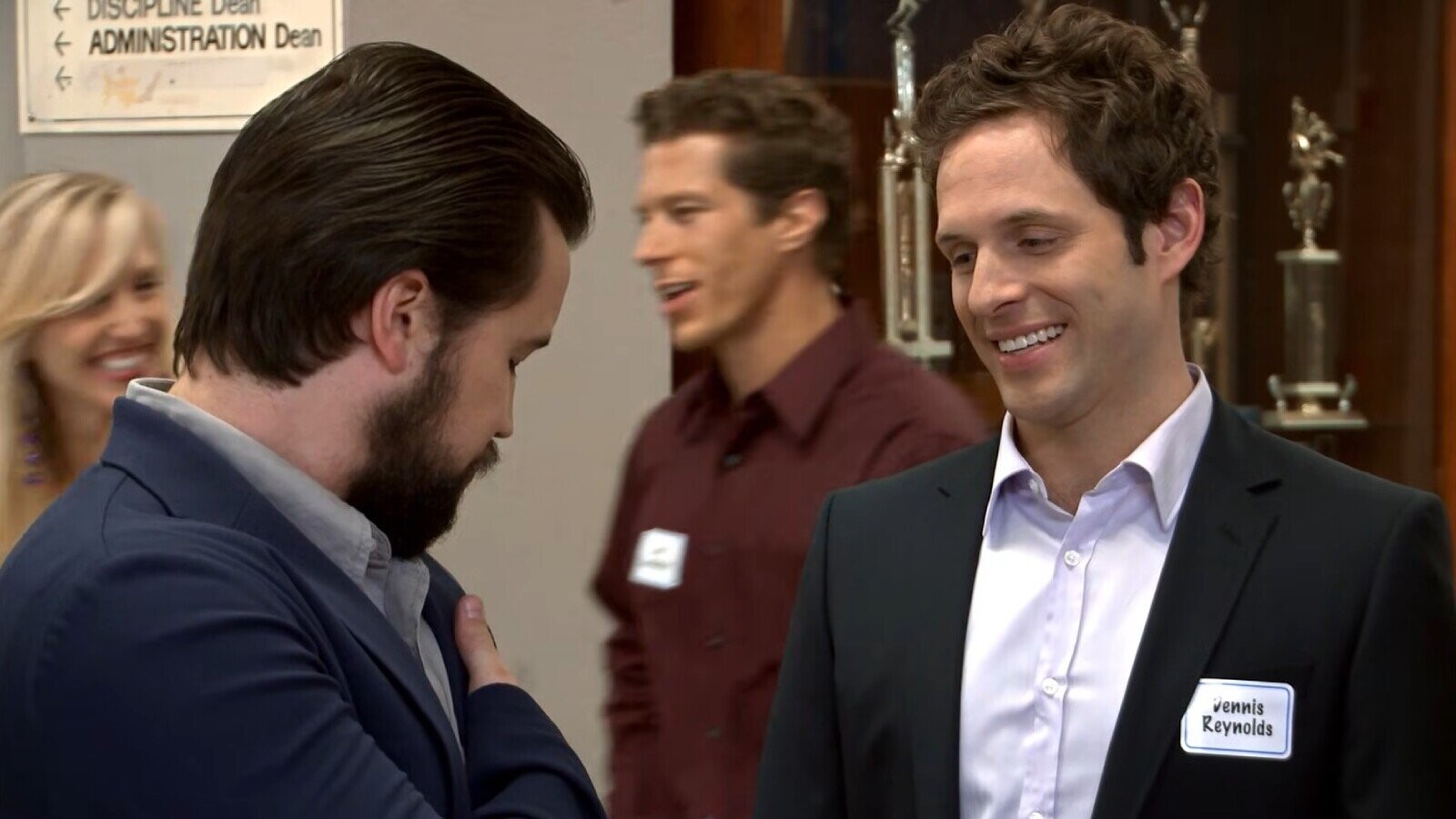
Rob McElhenney, the creator and star of It’s Always Sunny in Philadelphia and co-owner of Wrexham AFC, appears to be leaning all the way into a shorter, easier, very Mac-forward identity: Rob Mac. And yes, this seems to be more than a celebrity whim cooked up between protein shakes, soccer chants, and a suspiciously profitable whiskey meeting.
The Name Change That Made the Internet Blink Twice
Celebrity name changes are nothing new. Hollywood has always been full of strategic reinventions, from actors simplifying hard-to-spell surnames to musicians creating stage names that sound like they were engineered in a neon-lit branding laboratory. But when Rob McElhenney moved toward becoming “Rob Mac,” the reaction was different. It was funny, oddly practical, and extremely on-brand.
For nearly two decades, McElhenney has been known to millions of viewers as Mac, the spectacularly overconfident, under-self-aware, karate-loving bar owner from It’s Always Sunny in Philadelphia. The character name already lives in pop culture. So when the actor, writer, producer, entrepreneur, and football club co-owner began using “Rob Mac” professionally, fans had a collective reaction somewhere between “Wait, really?” and “Honestly, that tracks.”
The move became serious when reports confirmed that he had filed legal paperwork in Los Angeles to change his name. This was not just a new Instagram handle, a podcast bit, or a promotional gag that would evaporate by lunch. It was paperwork. The least glamorous and therefore most convincing sign that someone means business.
Why “Rob Mac” Actually Makes Sense
At first glance, changing Rob McElhenney to Rob Mac can feel like taking a finely crafted Irish surname and putting it through a Hollywood espresso machine. But the reasoning is surprisingly practical. McElhenney has joked and explained that people have struggled for years to pronounce and spell his surname. For fans, reporters, business partners, and international audiences, “McElhenney” often becomes a small obstacle course with vowels.
“Rob Mac,” by contrast, is short, memorable, easy to pronounce, and already connected to his most famous character. It works on a call sheet. It works in credits. It works on a soccer scarf. It works in a boardroom where nobody wants to start a meeting by apologizing to a surname.
A stage name, a business move, and a joke all walk into Paddy’s Pub
The brilliance of “Rob Mac” is that it sits at the intersection of comedy, personal branding, and convenience. It feels like a punchline, but it also functions like a clean brand asset. That is a very modern celebrity move. Today, actors are rarely just actors. They are producers, founders, investors, sports executives, podcasters, brand partners, and professional deliverers of carefully casual social media posts.
McElhenney has expanded far beyond one sitcom. He is tied to Welcome to Wrexham, More Better Industries, Four Walls Whiskey, and a growing sports-and-entertainment ecosystem. In that context, a shorter name is not just cosmetic. It is friction reduction. In business, friction is the little pebble in the shoe. Remove it, and suddenly the walk looks smoother.
From Rob McElhenney to Rob Mac: The Branding Angle
Names matter because they shape memory. A great public name is easy to say, easy to search, easy to repeat, and easy to attach to a story. “Rob McElhenney” carries history, family identity, and authenticity. “Rob Mac” carries speed, clarity, and pop-culture recognition.
That does not mean the original name disappears from his story. In fact, the emotional layer of the change is that McElhenney has discussed the varied spelling history of his family name. Like many surnames passed through immigration records, clerks, accents, and generations, the spelling was not always fixed in stone. The “Rob Mac” decision can be read less as rejecting family history and more as adapting it for a global, media-saturated life.
Short names win in the attention economy
In the age of search engines, streaming platforms, international press tours, and TikTok captions, shorter names have obvious advantages. They fit better in headlines. They are easier to hashtag. They are less likely to be misspelled by someone posting in a hurry after watching three episodes and eating cereal at midnight.
For SEO, “Rob Mac” is a fascinating case. “Rob McElhenney name change” will likely remain a high-interest search term, but over time, “Rob Mac” may become the dominant professional keyword. Entertainment sites, streaming platforms, cast listings, and official show pages using the new credit will gradually train audiences and search engines to accept the updated identity.
FX Already Helped Normalize “Rob Mac”
One reason this name change feels serious is that official entertainment materials have already used “Rob Mac.” FX’s current pages for It’s Always Sunny in Philadelphia and Welcome to Wrexham refer to him as Rob Mac in cast and show descriptions. That matters because official credits are where a celebrity name becomes more than a preference. It becomes the searchable, archivable, professional record.
In It’s Always Sunny in Philadelphia, Rob Mac is credited as Mac, creator, writer, executive producer, and star. In Welcome to Wrexham, the official framing also uses Rob Mac alongside Ryan Reynolds. That is a major clue that the entertainment infrastructure around him has already adjusted.
Fans may still say McElhenney. Longtime viewers may continue to use the old name out of habit. But once networks, databases, press releases, and streaming pages begin adopting a new credit, the cultural shift starts to happen automatically. The internet has many flaws, but it is excellent at repeating whatever appears in official metadata.
The “Always Sunny” Connection: Mac Was Always Waiting
The funniest part of the name change is that “Mac” has been hiding in plain sight since 2005. It’s Always Sunny in Philadelphia introduced viewers to Ronald “Mac” McDonald, one of television’s most gloriously delusional characters. Mac has reinvented himself constantly: bouncer, bodyguard, martial artist, religious warrior, fitness enthusiast, ocular patdown specialist, and occasional denim philosopher.
Because the character became so central to McElhenney’s public image, “Rob Mac” feels less like a random rebrand and more like a nickname finally getting promoted to management. The audience already had the shorthand. The paperwork simply caught up.
A sitcom legacy with unusual staying power
It’s Always Sunny in Philadelphia is one of American television’s most durable comedy institutions. Its longevity is not built on polished likability. It is built on chaos, satire, terrible decisions, and characters who learn absolutely nothing with heroic consistency. McElhenney helped create that world, and Mac remains one of its most recognizable pieces.
That makes the name “Rob Mac” valuable in a way few stage names are. It carries an existing emotional shortcut. Fans hear it and immediately think of the show, the character, and the long-running creative identity behind both.
Wrexham Made the Name Bigger Than Television
If McElhenney had only been known for It’s Always Sunny, “Rob Mac” would still make sense. But Wrexham made the question larger. When he and Ryan Reynolds bought Wrexham AFC, the story seemed almost too strange to be real: two Hollywood actors taking over a historic Welsh football club and turning the journey into a documentary series.
Then something surprising happened. The project worked. Wrexham’s rise became one of the most compelling sports-entertainment stories of the decade. The club gained international attention, the city became a tourism magnet, and Welcome to Wrexham turned local football drama into global streaming comfort food.
As Wrexham’s profile grew, McElhenney’s name had to travel farther. It moved through British sports coverage, American entertainment media, international business reporting, football podcasts, sponsorship decks, club communications, and fan discussions. A name that was already tricky for some American hosts became even more exposed to global pronunciation roulette.
In that environment, “Rob Mac” is not just easier. It is portable. It crosses borders better. It works whether someone is watching FXX in Los Angeles, Hulu in Ohio, or Wrexham highlights from a pub where the chant-to-pint ratio is dangerously high.
Is This a Rebrand or a Personal Decision?
The answer is probably both. Public figures often live where personal identity and professional strategy overlap. A name is private, but a famous name is also public infrastructure. It appears in contracts, credits, databases, trademarks, interviews, search results, and the mental filing cabinets of millions of fans.
For Rob Mac, the decision appears to combine convenience, humor, family context, and professional clarity. It is not hard to imagine the cumulative fatigue of correcting a surname for decades. Most people get tired after spelling their email address twice to a dentist. Now imagine doing that across Hollywood, sports ownership, international media, and legal documents while also maintaining a sitcom empire.
The internet reaction was predictable
Of course, fans had opinions. The internet reacts to celebrity name changes the way raccoons react to an open trash can: loudly, immediately, and with questionable priorities. Some people thought the move was funny. Some thought it was unnecessary. Some defended it. Some treated it like the collapse of civilization, which is impressive for two syllables.
But that reaction also proves the point. People noticed. The phrase “Rob Mac name change” became searchable, clickable, and discussable. Whether critics loved it or rolled their eyes, the new name entered the culture quickly.
How “Rob Mac” Fits the Modern Celebrity Playbook
Modern fame rewards consistency. The most successful celebrity brands are simple enough to travel across industries. Ryan Reynolds is not just an actor; he is a marketing voice. Dwayne Johnson became The Rock, then turned that identity into a global business machine. Lady Gaga, Awkwafina, Bruno Mars, Jamie Foxx, and many others prove that a public name can become a powerful creative vehicle.
Rob Mac fits that playbook, but with a twist. He is not inventing something from scratch. He is formalizing something the audience already knew. That gives the change a built-in familiarity. It is not “please meet my new mysterious persona.” It is more like “please use the name you have already been yelling at your television for years.”
That subtle difference matters. A forced rebrand can feel artificial. “Rob Mac” feels almost inevitable. It has been rehearsing in public since the first seasons of Always Sunny.
SEO Analysis: Why the Name Change Will Keep Getting Traffic
From a search perspective, this story has all the ingredients of an evergreen entertainment article. It includes a famous actor, a beloved sitcom, a legal filing, a surprising name change, a spouse and family angle, a major sports ownership storyline, and the eternal internet hobby of debating whether celebrities are being normal.
Primary search phrases include “Rob McElhenney name change,” “Rob Mac,” “Rob McElhenney Rob Mac,” “why did Rob McElhenney change his name,” and “Rob Mac Wrexham.” Related terms include It’s Always Sunny in Philadelphia, Welcome to Wrexham, Ryan Reynolds, Kaitlin Olson, FX, FXX, Hulu, and Wrexham AFC.
The old name will still matter
For SEO, the transition period is important. Readers will continue searching the original name for years, especially because it is tied to older credits, interviews, and fan memory. A smart article should use both names naturally. Overusing “Rob Mac” without context may confuse readers. Overusing “Rob McElhenney” may miss the new professional direction. The best approach is balanced: explain the change early, then use both names where helpful.
This is also why the headline works. “Rob McElhenney Seems Serious About This ‘Rob Mac’ Name-Change” captures the curiosity of longtime fans while introducing the new keyword. It sounds conversational, a little amused, and specific enough to match search intent.
Specific Examples That Show He Means It
Several details make the “Rob Mac” change feel more permanent than a casual nickname. First, the legal filing suggests formal intent. Second, official FX pages already identify him as Rob Mac in relation to major projects. Third, entertainment coverage has begun reporting that he will be credited that way going forward. Fourth, the name aligns with the character that made him globally recognizable.
There is also the business context. More Better Industries reflects McElhenney’s growing ambitions outside acting. The company connects entertainment, marketing, production, and brand development. In that world, a clean, simple name can function like a logo. You may love the poetry of a complex surname, but a pitch deck loves two syllables and no pronunciation footnotes.
Finally, the Wrexham era has made his public identity more international. A global sports audience does not always share the same familiarity with American sitcom history, but “Rob Mac” travels easily. That is useful when your life includes television sets, football stands, investor meetings, and the occasional Ryan Reynolds prank.
What Fans Can Learn From the Rob Mac Name Change
Beyond celebrity gossip, the story offers a useful lesson about identity and adaptability. Most people are not changing their names while running a football club and producing TV shows, unless your book club has become unusually intense. But many people do face a version of the same issue: how do you present yourself clearly without losing who you are?
A professional name, nickname, or public-facing identity can be practical. Writers use pen names. Musicians use stage names. Entrepreneurs simplify company names. Immigrants and descendants of immigrants sometimes live with names that were reshaped by records, languages, or bureaucracy. The tension between heritage and usability is real.
Rob Mac’s move is funny because of the sitcom connection, but it is also understandable. Names are supposed to help people recognize us. If a name becomes a constant speed bump in a global career, changing how it appears professionally can be a reasonable choice.
Experience-Based Reflections: Why This Name-Change Story Feels So Relatable
There is something oddly human about watching a famous person wrestle with a name problem. On the surface, Rob Mac’s situation belongs to the celebrity universe: red carpets, network credits, football ownership, and interviews where everyone looks suspiciously well-lit. But underneath, the issue is familiar. Many people have experienced the tiny social awkwardness of hearing their name mispronounced, misspelled, shortened without permission, or turned into a joke by someone who thinks they are being charming but is actually auditioning for the role of “person you avoid at parties.”
Names carry memory. They connect people to family, place, language, culture, and personal history. That is why changing a name can feel bigger than changing a shirt. It can invite questions from relatives, friends, fans, coworkers, and strangers who suddenly become amateur identity philosophers. “But why would you change it?” “Will your kids change theirs?” “Does this mean you hate the old name?” “Is this for branding?” Sometimes the answer is simple: life is easier this way. Sometimes convenience is not shallow; it is self-preservation with better paperwork.
In everyday professional life, people make similar adjustments all the time. Someone named Elizabeth becomes Liz at work because email threads move faster. Someone with a difficult-to-pronounce surname adds a pronunciation guide to LinkedIn. Someone uses initials because their full name does not fit on conference badges. Someone keeps their legal name but uses a simplified version for clients. These choices are not always dramatic reinventions. They are small negotiations between identity and environment.
That is what makes the Rob Mac story more interesting than a simple entertainment headline. He is not abandoning the public history that made him famous. He is acknowledging the name people already use and turning it into the official version. It is like finally changing your contact name in someone’s phone from “Robert Work Maybe” to the thing everyone actually calls you.
There is also a branding lesson here for creators, founders, and public professionals. Clarity matters. If people cannot remember your name, spell your business, search your work, or pronounce you confidently in conversation, you may be losing tiny opportunities before they even arrive. That does not mean everyone should flatten their identity for convenience. It means the best public names reduce confusion without erasing personality. “Rob Mac” works because it is short, funny, familiar, and connected to a real body of work.
The risk, of course, is that a name change can look calculated. The internet is suspicious of anything that smells like branding. But that suspicion fades when the new name feels natural. Rob Mac has the advantage of decades of audience training. Fans have been hearing “Mac” for so long that the new credit does not feel like a costume. It feels like the nickname finally got health insurance.
For anyone thinking about a public name, pen name, creator handle, or professional identity, the lesson is not “copy Rob Mac.” The lesson is to choose something durable. A good public name should be easy to say, easy to remember, and honest enough that you do not cringe when introducing yourself. It should work in a headline, an email signature, a podcast intro, and a room full of people who have never met you before.
Rob Mac’s name change may continue to be a punchline, because comedy fans are legally required to turn everything into a bit. But it also reflects a smart understanding of how fame, business, and communication work now. The shorter name removes a common obstacle, strengthens an existing association, and gives his expanding career a cleaner front door. Not bad for two syllables and a mountain of internet discourse.
Conclusion: Rob Mac Is Probably Here to Stay
Rob McElhenney’s shift to “Rob Mac” may have started as the kind of story that makes fans squint at their phones, but the details suggest it is a serious professional change. Legal paperwork, official credits, network usage, entertainment reporting, and business logic all point in the same direction.
The name works because it is simple, recognizable, and deeply connected to the character that helped define his career. It also fits his current life as a television creator, entrepreneur, football club owner, and global entertainment figure. In other words, “Rob Mac” is not just shorter. It is strategically useful.
Will some longtime fans keep saying McElhenney? Absolutely. Habits are stubborn. Ask anyone who still calls a renamed stadium by its old name. But in the official world of credits, media coverage, and search results, Rob Mac is already becoming the name to know. And somewhere, Mac the character is probably nodding proudly, doing an ocular patdown, and claiming he invented personal branding.