A toilet brush is rarely invited into conversations about interior design. It does not appear on mood boards holding a tiny latte, and nobody proudly announces, “Come see the glamorous object beside my toilet.” Yet every functional bathroom needs one, and a beech wood toilet brush stand proves that even the humblest cleaning tool can look intentional rather than vaguely apologetic.
With its pale color, fine grain, and warm natural character, beech wood fits comfortably into Scandinavian, minimalist, farmhouse, Japanese-inspired, and contemporary bathrooms. However, attractive wood alone does not make a good toilet brush holder. The best design must also control drips, allow drying, remain stable, resist bathroom moisture, and come apart without requiring the investigative skills of a plumbing detective.
This guide explains what makes a beech wood toilet brush stand practical, how to choose one, how to care for it, and what daily ownership is actually like after the novelty of buying an unusually handsome bathroom brush has worn off.
What Is a Beech Wood Toilet Brush Stand?
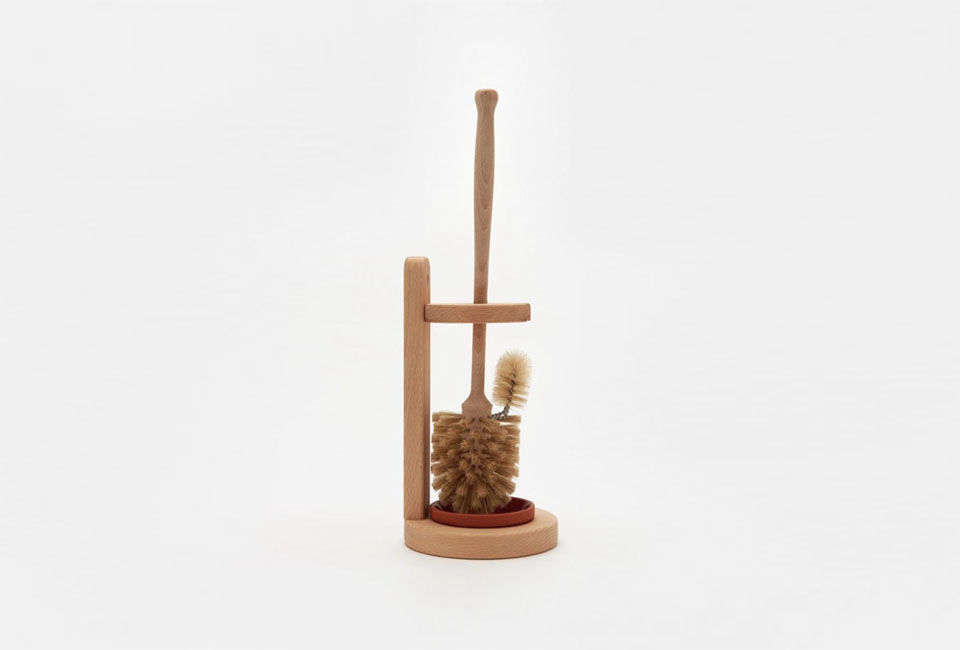
A beech wood toilet brush stand is a freestanding holder designed to store a toilet-cleaning brush between uses. Depending on the model, beech may be used for the exterior container, the handle, the lid, the base, or decorative accents surrounding an internal liner.
Most well-designed stands combine wood with another material. A removable plastic, stainless steel, ceramic, or coated-metal cup may sit inside the wooden shell to collect moisture. This hybrid construction is usually more practical than placing a damp brush directly into unfinished wood. It preserves the natural appearance while giving dirty water a washable place to go.
The product may be sold under several names, including:
- Beech wood toilet brush holder
- Wooden toilet brush and stand
- Natural wood toilet brush set
- Scandinavian toilet brush holder
- Bathroom cleaning brush with wooden caddy
Despite the slightly different labels, the basic mission is identical: hide an unattractive cleaning head, keep it upright, reduce drips on the floor, and avoid becoming a mysterious swamp beside the toilet.
Why Beech Wood Works So Well
A Smooth, Understated Appearance
Beech normally has a light cream or pale tan color with a relatively even grain. That visual simplicity allows it to blend with white porcelain, gray tile, matte black fixtures, terrazzo, concrete, or warm neutral walls. It provides contrast without shouting for attention.
Interior designers frequently use natural materials such as wood to soften bathrooms dominated by hard surfaces. Tile, glass, stone, metal, and porcelain are durable, but an entire room made from them can feel slightly clinical. A small wooden accessory introduces warmth and texture without requiring a full renovation or a contractor who mysteriously stops answering messages.
Strength for Everyday Handling
Beech is a hardwood commonly used for furniture, chairs, handles, brushes, and other products that need a smooth surface and reasonable strength. U.S. Forest Service references describe commercial beech as strong, shock-resistant, and suitable for bending and furniture applications. Those characteristics help explain why the material is frequently chosen for tool handles and household accessories.
A toilet brush stand does not face the structural demands of a dining chair, of course. Unless your bathroom routine is dramatically more exciting than average, the holder is not supporting anyone. Still, dense, smoothly finished wood feels substantial in the hand and tends to look more refined than thin molded plastic.
A Natural Match for Minimalist Bathrooms
Beech is especially effective in spaces inspired by Scandinavian and Japanese design. Both approaches typically favor clean lines, restrained decoration, useful objects, and natural materials. A cylindrical or gently tapered beech wood stand can look calm and deliberate beside a wall-mounted toilet or floating vanity.
It also works in less minimalist rooms. Pair it with woven baskets for a relaxed coastal bathroom, brass hardware for a warmer transitional space, or matte black fixtures for sharper contrast. Beech is visually flexiblethe bathroom equivalent of a plain white shirt that somehow gets invited everywhere.
Wood and Bathroom Moisture: The Important Catch
Beech may be durable, but it is still wood. Repeated exposure to standing water can discolor the surface, raise the grain, weaken glued joints, damage the finish, or cause expansion and shrinkage. USDA wood references note that beech can shrink substantially as its moisture content changes, making proper drying and protection important.
For that reason, the best wooden toilet brush holders do not depend on bare beech to contain dirty water. Look for a sealed exterior and a removable waterproof liner. The liner handles the damp brush; the wood handles the looking-good portion of the assignment.
A clear protective coating can reduce moisture penetration and everyday staining. Wood-finishing manufacturers recommend durable topcoats for items exposed to humidity or occasional water, while emphasizing complete drying and adequate curing between coats. A damaged finish should be cleaned, dried, lightly prepared, and recoated with a compatible product rather than ignored until the wood develops the personality of an old dock.
Features That Matter More Than the Product Photo
1. A Removable Inner Cup
This is one of the most useful features. A washable insert catches residual water and cleaner while protecting the wooden shell. It should lift out easily without tools, hidden screws, or a ceremonial chant.
Plastic inserts are lightweight and inexpensive. Stainless steel inserts can feel more premium but may show water spots. Ceramic cups look attractive and clean easily, although they add weight and can crack if dropped. Any of these can work as long as the liner is smooth, nonporous, and accessible.
2. Ventilation Around the Brush
A completely sealed container may hide the brush, but it can also trap moisture and odor. Open backs, air slots, a loose-fitting lid, or a suspended brush design improve airflow. Product testing and cleaning guidance consistently emphasize that a toilet brush should dry before enclosed storage and that the holder itself requires regular cleaning.
A suspended design is especially useful because the bristles do not sit in pooled liquid. Some modern holders automatically open when the brush is lifted, while others use a collar or lid attached to the handle. The mechanism matters less than the result: the head should remain protected without marinating in yesterday’s cleaning water.
3. A Stable, Non-Slip Base
A tall, narrow holder can tip when the brush is removed at an angle. Choose a model with enough weight at the bottom, a broad footprint, or a rubberized pad. The base should remain steady on tile, vinyl, stone, or sealed concrete.
Stability becomes even more important in a small bathroom where the holder may be nudged by a vacuum, mop, pet, child, or sleepy adult navigating at 2 a.m. Consumer product evaluations commonly prioritize a holder that stays upright and is easy to clean.
4. An Effective Brush Head
The stand may be the attractive part, but the brush still has to scrub. A rounded or tapered head offers broad contact with the bowl, while an angled extension can reach beneath the rim. Stiff nylon bristles generally provide stronger scrubbing than very soft silicone fins, although silicone may rinse more easily and retain less visible debris.
Independent household testing has found that head shape, stiffness, maneuverability, and the ability to reach under the rim influence cleaning performance. Longer handles can also reduce bending and keep hands farther from the bowl.
5. Replaceable Parts
A replaceable brush head is preferable to discarding the entire stand. This is particularly valuable when the wooden holder is still in excellent condition but the bristles have become bent, discolored, or sparse enough to resemble a toothbrush discovered behind a radiator.
Before purchasing, check whether replacement heads are available and whether they use a standard threaded connection. Proprietary heads may look elegant, but they can turn a small maintenance purchase into an online scavenger hunt.
How to Match the Stand to Your Bathroom
For a White or Neutral Bathroom
Natural beech adds warmth without disrupting a clean color scheme. Pair it with white ceramic accessories, oatmeal towels, and a simple woven bath mat. The combination feels relaxed rather than sterile.
For Matte Black Fixtures
Choose a model with a black liner, handle shaft, or brush head. The dark detail connects the stand to faucets, shower frames, and cabinet pulls, while the light wood prevents the room from becoming visually heavy.
For Small Bathrooms
Look for a slim cylindrical stand with a footprint of roughly five inches or less. Light-colored wood can feel less bulky than a solid black container, and design guidance for narrow bathrooms often recommends pale natural materials to add warmth without visually crowding the room.
For Rustic or Farmhouse Spaces
A slightly warmer oil finish can coordinate with wood shelving, framed mirrors, baskets, or vintage-style hardware. Avoid excessively distressed surfaces, however. Deep grooves may collect dust and are less convenient to wipe clean.
For a Coordinated Accessory Set
Some manufacturers offer matching beech soap dishes, trays, wastebaskets, dispensers, and toothbrush holders. A few repeated wood accents create cohesion. Covering every available surface in matching beech, meanwhile, risks making the bathroom resemble a small Scandinavian lumber showroom.
How to Clean a Beech Wood Toilet Brush Stand
After Each Use
- Apply toilet bowl cleaner according to its label.
- Scrub the bowl, including the area beneath the rim.
- Rinse the brush in clean flushing water when appropriate.
- Allow excess water to drain into the bowl.
- Let the brush air-dry before placing it fully inside the holder.
One practical drying method is to secure the handle temporarily between the toilet seat and the rim, leaving the head suspended over the bowl. Cleaning experts repeatedly warn against returning a soaking-wet brush directly to an enclosed holder because lingering moisture encourages odor, residue buildup, and microbial growth.
During Weekly Bathroom Cleaning
- Remove the inner cup.
- Wash it with an appropriate household detergent.
- Disinfect it when needed, following the product label and required contact time.
- Rinse if the label instructs you to do so.
- Dry the insert completely before reassembly.
- Wipe the wooden exterior with a barely damp cloth.
- Dry the wood immediately with a clean towel.
Cleaning and disinfecting are not identical. Cleaning physically removes dirt and many germs using soap or detergent; disinfecting uses a registered chemical product to kill specified organisms when used correctly. Public-health guidance recommends cleaning visible soil first because dirt can interfere with disinfectant performance. In most routine household situations, ordinary cleaning is often sufficient unless someone is sick or contamination presents a specific concern.
Protecting the Beech Exterior
Do not soak the wooden portion, place it in a dishwasher, or leave it sitting in a puddle. Use a mild, nonabrasive cleaner only when necessary. Harsh toilet bowl chemicals are designed for porcelain, not for casually redecorating your wood finish with cloudy stains.
Inspect the holder occasionally for dull patches, cracks, swelling, peeling coating, dark moisture marks, or loose joints. Small finish problems are easier to repair before water reaches the underlying wood. Retail bathroom-care guidance similarly recommends gentle cleaning, protection from standing water, and periodic checks for leaks or moisture.
Cleaning Products and Safety
Choose products that are suitable for the surface being cleaned and follow label directions for dilution, ventilation, protective gloves, contact time, rinsing, and storage. The EPA’s Safer Choice program identifies household products whose ingredients have been evaluated against health and environmental criteria, including options in toilet bowl and bathroom-cleaner categories.
Never mix bleach with ammonia, vinegar, acidic toilet cleaner, or other cleaning products. Chemical combinations can release dangerous fumes. Use one product at a time, ventilate the room, and wash your hands after handling cleaning equipment.
When Should the Brush Be Replaced?
There is no universal expiration date printed by the bathroom police, but condition matters. Replace the brush when the head becomes loose, bristles remain flattened, fibers begin shedding, stains cannot be removed, odors persist after cleaning, or the tool no longer reaches surfaces effectively.
Several home-care sources recommend evaluating frequently used nylon toilet brushes around every six to eight months, with longer possible service for durable silicone heads. Replacement may be needed sooner after household illness, heavy use, or visible damage. The holder can remain in service much longer when it is washable, dry, structurally sound, and fitted with replaceable heads.
Common Problems and Practical Fixes
The Holder Develops an Odor
Remove and clean the liner, disinfect it as directed, and let every component dry separately. Confirm that the brush is not being stored wet. If the wooden shell itself smells musty, inspect the finish for cracks or absorbed moisture.
The Base Leaves a Ring on the Floor
Dry both the floor and holder after mopping. Add a washable silicone pad if the original base lacks protection. Do not place an unsealed wooden base directly beside a shower where it receives daily splashes.
The Finish Turns Rough
Raised grain usually indicates that moisture has reached the wood. Stop soaking the surface. Once completely dry, a lightly damaged area may be smoothed and refinished with a compatible coating, following the finish manufacturer’s instructions.
The Stand Tips Over
Move it onto a flatter section of flooring, add a non-slip pad, or replace it with a wider and heavier model. A beautiful toilet brush holder lying horizontally in a puddle has temporarily failed both of its listed duties.
The Brush Is Difficult to Remove
Check whether the lid or collar catches on the container. Mineral residue or dried cleaner may also make moving parts sticky. Wash the removable components, but avoid forcing swollen wooden pieces.
Is a Beech Wood Stand an Eco-Friendly Choice?
Wood is renewable, but the word “wooden” does not automatically guarantee responsible forestry or low environmental impact. Look for credible sourcing information, durable construction, replaceable brush heads, minimal mixed-material packaging, and parts that can be separated at the end of the product’s life.
The Forest Stewardship Council states that its label identifies wood and paper products from independently verified responsible sources. An FSC mark is therefore more meaningful than vague phrases such as “forest friendly,” which may sound pleasant while communicating approximately nothing.
Longevity also matters. A sturdy stand that accepts several replacement heads may generate less waste than repeatedly replacing an entire low-cost plastic set. However, natural-fiber brushes are not automatically better performers. Consider cleaning effectiveness, drying, replacement availability, packaging, and durability together rather than choosing based on one appealing material claim.
Buying Checklist
Before ordering a beech wood toilet brush stand, check the following:
- Wood protection: Is the beech sealed, oiled, or coated?
- Inner liner: Can the moisture-catching cup be removed and washed?
- Ventilation: Can the brush dry, or is it locked inside an airtight tube?
- Base stability: Is the footprint wide or weighted enough to resist tipping?
- Brush shape: Can it reach under the toilet rim?
- Handle length: Is it long enough for comfortable use?
- Replacement heads: Are compatible heads readily available?
- Dimensions: Will it fit between the toilet and wall?
- Cleaning access: Can every area that contacts moisture be reached?
- Material sourcing: Does the company provide credible certification or origin details?
A product photograph can show color and shape, but it rarely reveals whether the liner is removable or whether the stand wobbles. Read dimensions, material descriptions, care instructions, and owner feedback before buying. The cheapest option is not inexpensive if it needs replacing after three months of damp confusion.
Who Will Appreciate This Bathroom Accessory?
A beech wood toilet brush holder is a good choice for homeowners and renters who want cleaning tools to coordinate with the rest of the room. It suits people who enjoy natural materials, neutral colors, Scandinavian styling, and accessories that can remain visible without looking industrial.
It may be less suitable for a heavily used commercial restroom, a frequently flooded wet room, or a household that prefers placing every removable object in the dishwasher. In those settings, a fully stainless steel or molded plastic holder may tolerate aggressive cleaning more easily.
Conclusion
A beech wood toilet brush stand succeeds when it balances appearance with sanitation. The wood should be smoothly finished and protected from standing water. The interior should contain a removable, nonporous liner. The brush should reach beneath the rim, drain properly, and dry before enclosed storage. The base should remain upright even when someone grabs the handle with the enthusiasm of a competitive curler.
Choose a design that can be dismantled, cleaned, dried, and maintained without difficulty. Then treat the wooden exterior as a bathroom accessory rather than as a bucket. With sensible care, beech can add warmth to an otherwise hard-surfaced room while discreetly housing the tool responsible for its least glamorous task.
Living With a Beech Wood Toilet Brush Stand: Real-World Experience
The first noticeable difference after replacing a standard plastic holder with a beech wood model is visual. A plastic caddy often looks like cleaning equipment that has escaped from a supply closet. The beech stand looks more like part of the bathroom. It does not become the room’s centerpiecenor should any toilet brush aspire to such political powerbut it stops attracting attention for the wrong reasons.
In a small bathroom with white tile, pale oak cabinetry, and black hardware, the light wood acts as a useful bridge between the warm cabinet and the colder porcelain. The effect is subtle. Guests are unlikely to compliment the toilet brush, which is probably a sign that the design is doing its job perfectly.
The most important ownership lesson is that the liner matters more than expected. A model with a removable cup is dramatically easier to maintain. After cleaning the toilet, the brush can be rinsed, drained, and left to dry over the bowl. Later, the liner can be lifted out, washed, dried, and returned to the wooden shell. Nothing needs to be poured from a tall decorative container while hoping the contents travel toward the sink rather than onto a bath mat.
The drying step initially feels inconvenient. It adds a pause between scrubbing and putting everything away. After a few uses, however, it becomes automatic: clean, rinse, suspend, continue with the rest of the bathroom, and store the brush when finished. Because the brush is no longer returned dripping wet, the liner develops less residue and the area smells fresher.
Another real-world issue is placement. Positioning the stand directly beside the shower may look balanced in photographs, but daily splashes are not friendly to wood. Moving it several inches away from the wet zone reduces spotting and prevents water from collecting beneath the base. A thin non-slip pad also helps on smooth porcelain tile.
The wooden exterior requires less work than expected. A quick pass with a slightly damp microfiber cloth removes dust and small splashes. Drying it immediately keeps the surface even. Aggressive bathroom spray is unnecessary and can be risky for the finish. The internal cup receives the serious cleaning; the exterior receives polite housekeeping.
One drawback appears when the included brush head is too soft. A beautiful holder cannot compensate for bristles that politely wave at mineral stains instead of scrubbing them. Before buying, it is worth checking both the shape and stiffness of the head. A replaceable threaded brush solves this problem because the stand can remain while the working component is upgraded.
Long-term satisfaction depends on small design choices: a stable base, enough airflow, a handle that does not rattle against the lid, and a liner that can be removed without touching the brush head. When those details are right, the product feels pleasantly uneventful. It sits quietly, cleans effectively, and asks for only occasional maintenance.
That is ultimately the best experience a toilet brush stand can offer. It does not revolutionize bathroom cleaning, compose inspirational music, or make anyone excited about scrubbing porcelain. It simply turns an awkward necessity into a cleaner, warmer, and better-organized objectand sometimes that modest improvement is exactly what a bathroom needs.
Note: Always follow the instructions supplied with the brush, wood finish, toilet, and cleaning product. Never mix bleach with ammonia, vinegar, acidic toilet cleaner, or any other household cleaner.