SaaStr looks like a media brand, sounds like a software company, behaves like a conference organizer, and invests like a venture capital firm. That combination can make its business model seem more mysterious than the final episode of a prestige drama. The simple answer is that SaaStr builds a focused audience of B2B software founders, executives, investors, and vendors, then monetizes the relationships and commercial opportunities created around that audience.
The engine begins with free, practical content. Articles, podcasts, videos, newsletters, workshops, and community programs attract people trying to build or scale software companies. SaaStr then converts part of that attention into event ticket sales, sponsorship packages, media partnerships, premium learning products, and long-term investment opportunities through the separately operated SaaStr Fund.
Despite having “SaaS” in its name, SaaStr is not mainly a subscription software business. It is better understood as a niche B2B media-and-events platform with a venture capital arm. The clever part is not one revenue stream; it is the flywheel connecting all of them.
The Short Explanation of SaaStr’s Business Model
SaaStr creates value by helping B2B founders and executives learn faster, meet useful people, and avoid expensive scaling mistakes. It captures value by charging companies and attendees for premium access to that community.
The Flywheel Works Like This
- Publish useful SaaS and B2B growth content for free.
- Build trust, search visibility, email subscribers, and repeat engagement.
- Bring the audience together at large events and smaller programs.
- Sell tickets, sponsorships, booths, media packages, and promotional opportunities.
- Use the community to strengthen reputation and founder access for SaaStr Fund.
- Turn event sessions and interviews into more content, restarting the cycle.
This audience is unusually valuable. SaaStr attracts founders buying software, executives controlling budgets, investors seeking deals, and vendors selling high-value B2B products. That concentration creates strong commercial potential even when most editorial content remains free.
How SaaStr Built Its Audience First
SaaStr began in 2012 with Jason Lemkin sharing lessons from building and selling EchoSign, later Adobe Sign. Early growth came through blog posts and answers to founder questions. The content addressed practical problems such as hiring sales leaders, growing annual recurring revenue, reducing churn, raising capital, and surviving startup life without turning every board meeting into group therapy.
The sequence mattered. SaaStr built credibility before expanding into meetups, SaaStr Annual, podcasts, regional events, education initiatives, a coworking experiment, and a fund. By the time it sold tickets and sponsorships, it already had distribution. Readers knew the brand, speakers wanted access to the audience, and vendors understood who would be in the room.
SaaStr’s Main Revenue Streams
1. Event Tickets
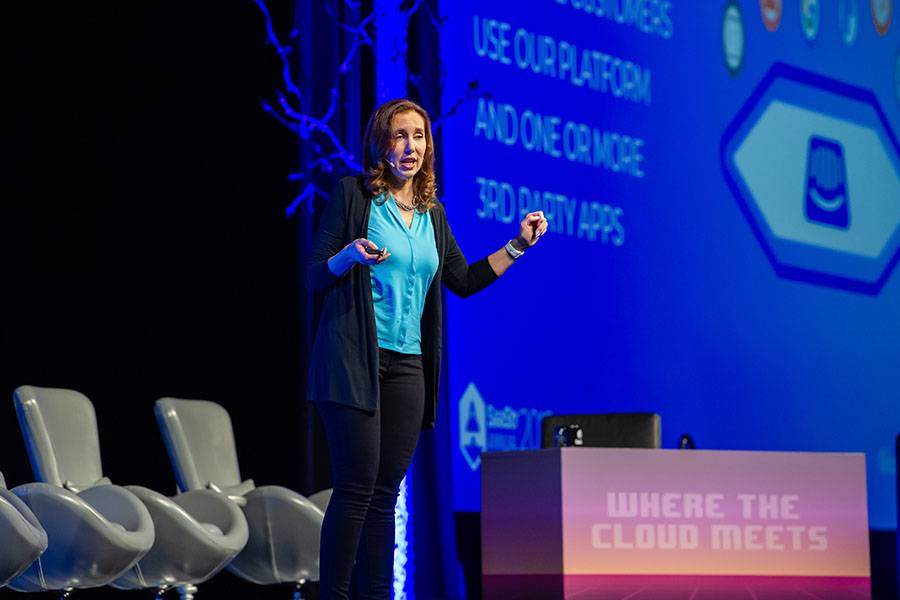
SaaStr Annual and related events sell admission to founders, executives, investors, and other members of the B2B ecosystem. Buyers pay for more than presentations. The product includes workshops, peer access, executive gatherings, matchmaking, and the chance to meet a future customer, employee, partner, or investor while searching for coffee.
Marketing for the May 2026 SaaStr AI Annual cited more than 10,000 attendees, 200 speakers, 100 workshops, and thousands of scheduled one-on-one meetings. Those features show that the event functions as a relationship marketplace, not merely a lecture series.
Ticket revenue may not cover the full cost of a premium conference. In a historical explanation, Lemkin said SaaStr spent heavily per attendee and made up part of the event economics through sponsorships. That statement is old, not a current financial disclosure, but it reveals the strategy: tickets bring the right people together, while sponsors monetize access to them.
2. Event Sponsorships and Exhibitor Packages
B2B software companies and service providers pay for booths, branding, hosted experiences, meetings, and exposure to decision-makers. A sponsor is not simply buying a logo on a wall. It is buying targeted distribution.
A vendor selling a $50,000 or $200,000 annual contract can justify a substantial sponsorship if the event produces a few qualified opportunities. SaaStr also offers tiered packages and integrated programs that can extend before and after the conference. This helps transform a three-day event into a longer demand-generation campaign.
3. Media Sponsorships
SaaStr operates a media network spanning its website, newsletter, podcast, video channels, social accounts, and digital programming. Sponsors can reach the same audience throughout the year rather than waiting for one annual event.
This creates recurring inventory. Newsletters publish regularly, podcast episodes keep arriving, and video clips can attract viewers long after a keynote ends. Media campaigns also feed the event business: a reader may become a subscriber, then a podcast listener, and eventually a ticket buyer. A digital sponsor may later purchase an event package.
4. Education and Premium Access
SaaStr has offered paid education and membership products, including SaaStr Pro, which bundled structured lessons, private content, team training, exclusive sessions, job promotion, and event benefits. The prominence of individual products changes over time, so premium education is best viewed as an extension of the core model rather than its only engine.
The logic is straightforward: free content solves common problems, while paid products organize knowledge for teams that want a curriculum, accountability, or special access.
5. Venture Capital Returns Through SaaStr Fund
SaaStr Fund invests in B2B and AI startups and currently advertises checks of roughly $750,000 to $5 million. The fund benefits from SaaStr’s reputation because founders often know the brand through its content and events.
However, the fund should not be blended casually with SaaStr’s operating business. Venture funds typically earn management fees and a share of investment profits, and meaningful returns may take years. Lemkin has described the fund as separate from the events-and-media operation.
The strategic connection remains powerful. Content creates trust, events create access, and the community surfaces founders. Portfolio companies can later contribute knowledge and credibility to the ecosystem. Venture capital still offers no guarantees, even when the conference tote bag is excellent.
Who Are SaaStr’s Customers?
- Founders and executives receive education, networking, recruiting opportunities, benchmarks, and investor access.
- Investors receive founder access, market intelligence, and ecosystem visibility.
- Vendors and service providers receive sponsorship inventory, meetings, brand exposure, and potential leads.
- Speakers receive distribution, reputation benefits, and access to peers.
- Portfolio founders may receive capital, advice, introductions, and community credibility.
This makes SaaStr a multi-sided platform. The event becomes more useful when respected operators speak, more attractive when strong founders attend, and more valuable to sponsors when buyers are present. Each group helps attract the others.
What Makes the Model Defensible?
A Narrow, Commercially Valuable Audience
SaaStr’s focus on B2B software gives the brand editorial clarity and commercial precision. Sponsors know whom they are paying to reach, and attendees know the programming should relate to scaling recurring-revenue companies.
Founder-Led Trust
Lemkin’s direct, experience-based voice helped establish the brand. Readers get a consistent point of view rather than anonymous corporate content, including opinions they may disagree with before forwarding them to the entire leadership team.
A Content-to-Event Recycling Loop
Events create interviews, transcripts, clips, case studies, and questions. Those assets become search-friendly media that attracts future attendees and sponsors. The event is therefore both a product and a content-production system.
First-Party Relationships
Newsletter subscriptions, registrations, workshops, sponsor inquiries, and meeting requests reveal what the community cares about. Used responsibly, those signals help SaaStr shape programming and improve commercial relevance. This is more valuable than generic traffic because it reflects professional intent.
Costs and Risks in SaaStr’s Model
Large conferences carry substantial costs: venues, food, audiovisual production, security, staffing, travel, insurance, event software, and speaker support. Media requires editors, producers, sales systems, and continuous publishing. In short, the glamorous stage sits on top of a spreadsheet with very little sense of humor.
Major risks include dependence on sponsor budgets, vulnerability to travel or event disruptions, competition from other communities and conferences, and the danger that excessive promotion could weaken audience trust. Founder-led visibility is a major asset but also creates concentration risk. Venture returns are uncertain and illiquid.
SaaStr has responded by expanding into AI-focused programming, digital workshops, matchmaking, and AI tools. Reporting in 2026 also described the company using AI agents in parts of its sales operation. Automation may improve efficiency, but community quality, editorial judgment, and partner relationships still require careful human management.
Is SaaStr a Media Company, Events Company, or VC Firm?
It is all three, but the cleanest description is an audience-and-community business. Media is the acquisition engine. Events and sponsorships are the main monetization mechanisms. Education adds another product layer. Venture investing is a separate, long-duration opportunity strengthened by the network.
The model resembles a wheel rather than a ladder. A podcast attracts an attendee; the attendee meets a sponsor; the sponsor helps fund the next event; the event produces new content; and a founder encountered through the ecosystem may later become an investment.
Practical Experiences and Lessons From SaaStr’s Business Model
Experience 1: Build the Audience Before the Expensive Product
The most useful lesson is not flashy: earn attention before spending heavily on a conference, membership, or marketplace. Many teams reverse the order. They rent the venue, design the premium package, and then discover that “distribution strategy” is not a magical phrase that fills 2,000 chairs.
Free content can test which problems matter. Newsletter growth shows repeat interest. Podcast guests reveal which names attract attention. Small meetups validate whether an online audience wants to gather in person. A larger event can then launch with evidence rather than excellent vibes alone.
Experience 2: The Payer and User May Be Different
Attendees consume the event, but sponsors may supply a large share of its economics. The organizer must therefore create genuine value for attendees while producing measurable opportunities for sponsors.
Lean too far toward sponsors and the event becomes a sales pitch with snacks. Lean too far toward attendees without sustainable revenue and it becomes a generous hobby with alarming invoices. The practical balance is strong editorial standards plus useful, clearly labeled commercial experiences.
Experience 3: Price the Ecosystem, Not One Product
A ticket can have modest margins yet remain strategically valuable because it brings a desirable participant into the marketplace. That participant may improve networking, attract sponsors, produce content, or return in a senior role later.
The reverse is also true. A cheap ticket that brings the wrong audience can weaken sponsor results and lower renewal rates. Operators should measure the value of each participant across tickets, meetings, content, referrals, and partnerships rather than judging admission revenue alone.
Experience 4: Capture Content Systematically
One strong interview can become a podcast, long video, short clips, article, newsletter excerpts, and future programming. Teams that fail to record, transcribe, edit, tag, and redistribute their best material leave value on the stage floor.
SaaStr demonstrates the advantage of creating content where the community already gathers. This reduces the need to invent every topic from scratch and gives the brand access to real operator stories rather than generic advice assembled in a conference room.
Experience 5: Separate Operating Revenue From Investment Returns
Media income, sponsorship revenue, and venture returns move on different clocks. Event money may arrive before a conference, campaigns may run quarterly, and a startup investment may take seven to ten years to produce a resultor produce none.
A community does not automatically become a successful fund. The businesses can reinforce one another, but each needs its own financial model, performance metrics, risk controls, and patience level.
Experience 6: A Trusted Niche Can Outperform a Huge Generic Audience
For B2B monetization, 10,000 relevant decision-makers may be worth more than millions of casual visitors. A concentrated audience supports better sponsor economics, stronger referrals, clearer content, and more productive networking.
SaaStr’s growing emphasis on AI shows how a niche brand can evolve with its customers. It is expanding from traditional SaaS scaling into AI-native B2B operations without abandoning the founders and executives at its core. The lesson is to follow changing customer problems, not every trend wearing a shiny hat.
Conclusion
SaaStr’s business model is a community flywheel. Free content attracts a valuable B2B audience; events turn that audience into a live marketplace; tickets and sponsorships monetize participation; media partnerships create year-round revenue opportunities; premium education adds another layer; and SaaStr Fund extends selected relationships into long-term ownership.
The parts reinforce one another. Content fills events, events create content, sponsors fund access to decision-makers, and the community improves the value of every channel. That combinationnot a single productis the real answer to how SaaStr makes money.
Note: SaaStr is privately held and does not publish complete current financial statements. Historical revenue comments, former product pricing, and past event economics should be treated as context rather than a precise statement of its finances today.