Europe has a habit of making ordinary life look suspiciously cinematic. A weathered doorway becomes a lesson in color. A tiny apartment turns into a master class in spatial planning. A grocery run involves linen bags, refillable jars, and bread that seems to have a better social life than most people.
Our current obsession with Europa is not about copying a single decorating style or turning the living room into a theme park of striped cushions and miniature Eiffel Towers. It is about studying the ideas behind some of Europe’s most memorable spaces: respect for history, honest materials, intelligent reuse, regional craftsmanship, and the refreshing belief that a home should become more interesting as it ages.
From Puglia’s whitewashed villas to Barcelona’s restless architecture, Parisian restoration projects, package-free markets, indigo textiles, and brilliantly organized micro-apartments, these are the European design ideas currently taking up permanent residence in our minds.
Why European Design Still Captures Our Attention
“European design” is an enormous umbrella. A Swedish cabin, a Paris apartment, a Portuguese farmhouse, and a Barcelona townhouse do not look identicaland thank goodness, because one universal beige room is already more than civilization needs.
What many admired European interiors share is an ability to balance old and new. Historic walls may sit beside contemporary lighting. Antique tables are paired with modern chairs. Hand-painted ceramics appear in kitchens with streamlined appliances. Instead of erasing the past, designers frequently allow different eras to have a polite conversation.
This approach feels especially relevant today. Fast-changing trends can make a recently decorated room appear outdated before the paint has fully dried. European-inspired interiors offer a slower alternative based on architecture, local materials, craftsmanship, adaptability, and objects that gain character through use.
Obsession One: Puglia’s Sun-Bleached Simplicity
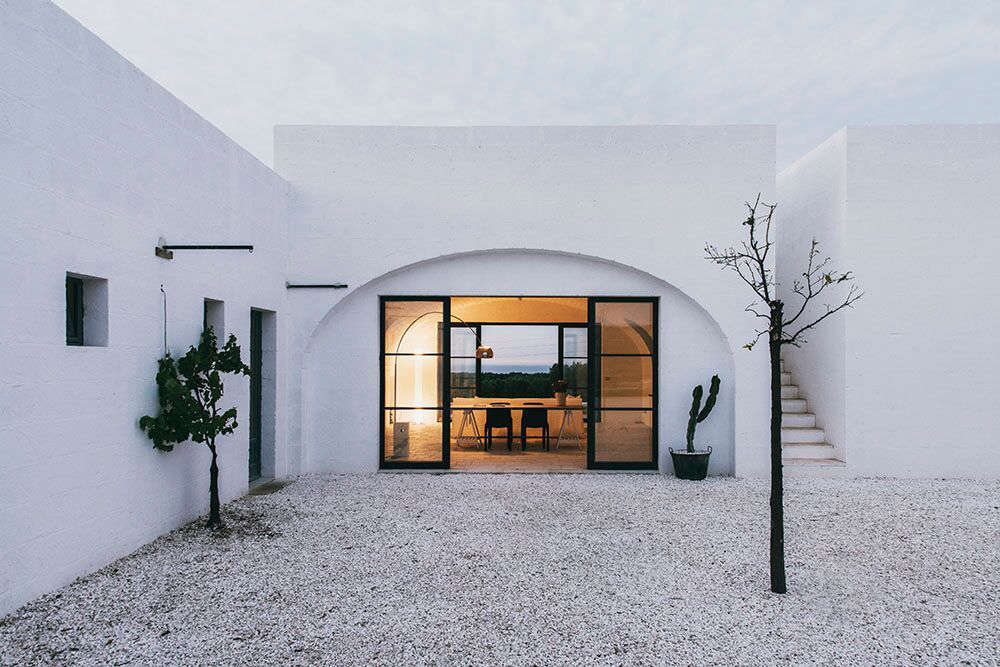
Southern Italy provides one of the clearest examples of atmosphere created through restraint. In the Puglian countryside, traditional masserie and villas often rely on thick masonry walls, pale plaster, stone floors, arched openings, shaded courtyards, and a limited palette inspired by limestone, olive trees, dry grasses, and the Mediterranean sky.
Contemporary renovations in the region frequently preserve these vernacular qualities while adding discreet modern conveniences. Villa Castelluccio, for example, was renovated with local materials, traditional construction methods, whitewashed walls, stone flooring, concrete surfaces, linen upholstery, aged wood, and brass fixtures designed to develop patina. The result feels relaxed rather than stageda house that understands it is surrounded by olive trees and has no desire to compete with them.
What Makes the Look Work?
The appeal is not simply “paint everything white.” The magic comes from texture. Rough plaster catches sunlight differently throughout the day. Natural linen wrinkles without filing an apology. Stone remains cool underfoot. Old wood adds warmth, while dark metal or aged brass provides definition.
It is also a lesson in editing. A Puglian room may contain fewer objects, but those objects have weight: a hand-thrown jug, a long farmhouse table, a woven basket, or a sculptural lamp. The room is quiet without feeling empty.
How to Borrow the Idea
Start with warm off-white rather than icy white. Introduce limestone, terracotta, unfinished oak, woven fibers, and washed linen. Leave a little breathing room around furniture. Most importantly, resist the urge to purchase twelve “rustic Italian” accessories before lunch. One authentic, useful object will do more than a cartful of decorative garlic braids.
Obsession Two: Barcelona as a Living Design Laboratory
Barcelona refuses to choose between historical ornament and radical experimentation. Gothic streets, Catalan Modernisme, rationalist housing, industrial conversions, and contemporary interventions coexist within the same urban fabric.
Antoni Gaudí remains the city’s most recognizable architectural figure, but his work is more than colorful mosaics and photogenic curves. His buildings explored structure, ventilation, daylight, craft, geometry, and forms inspired by nature. UNESCO recognizes seven Gaudí properties in and near Barcelona for their exceptional contribution to architecture and building technology. The city was also selected as the UNESCO-UIA World Capital of Architecture for 2026, reinforcing its status as a place where design is treated as public culture rather than expensive wallpaper for private life.
Barcelona’s architectural identity also includes the fluid stone façade and inventive courtyards of Casa Milà, the tree-like columns of the Sagrada Família, and the glass, steel, marble, travertine, and onyx composition of Mies van der Rohe’s reconstructed Barcelona Pavilion. These buildings differ dramatically, yet each treats materials and movement as essential parts of the experience.
The Barcelona Lesson: Give a Room a Point of View
Many forgettable interiors are not ugly; they are simply afraid to say anything. Barcelona offers the opposite lesson. A room can feature an expressive curve, a surprising tile pattern, a dramatic pendant, or a piece of furniture with enough personality to introduce itself.
This does not require covering every surface with mosaic. Choose one assertive gesture and let quieter elements support it. A patterned floor can coexist with plain walls. A sculptural chair can sit beside an ordinary wooden table. Good design needs contrast, not constant shouting.
Obsession Three: Notre-Dame and the Meaning of Restoration
When fire devastated Notre-Dame Cathedral in Paris in April 2019, the event prompted immediate questions about preservation. Should the damaged roof and spire be reconstructed as they appeared before the fire? Should contemporary architects introduce a visible new chapter? What does authenticity mean when a landmark has already evolved through centuries of construction and restoration?
The cathedral ultimately reopened in December 2024 after an immense five-year effort. Craftspeople, architects, engineers, conservators, and researchers rebuilt the roof and spire, cleaned stonework, restored artworks, and revived the great organ while working within modern safety requirements and a commitment to historical accuracy.
Notre-Dame is an extraordinary monument, but its restoration carries an everyday message: repair can be more meaningful than replacement. A scratched table, worn floor, damaged chair, or aging building is not automatically finished. Sometimes the most sustainable and emotionally satisfying choice is to understand what already exists and give it another life.
Restoration Is Not the Same as Freezing Time
A successful restoration does not always make an object look brand-new. It can stabilize, clean, adapt, and preserve evidence of age. That principle works beautifully in residential design. Original trim can be repaired instead of stripped out. Old cabinets can receive new hardware. Vintage furniture can be reupholstered. A historical floor can remain imperfect and still be glorious.
The American Institute of Architects identifies building reuse and adaptive reuse as important climate strategies because they extend the life of existing structures and conserve resources already invested in them. In other words, the greenest charming old building may be the one that avoids being introduced to a wrecking ball.
Obsession Four: Package-Free Shopping and Low-Waste Rituals
European-style market culture is often romanticized, but it contains a practical idea worth preserving: buy what you need, carry it in something reusable, and allow food to look like food rather than a science experiment wrapped in three layers of plastic.
Package-free and refill-focused stores have carried that idea into contemporary urban life. Brooklyn’s Precycle, for example, was developed around selling groceries without disposable packaging, encouraging shoppers to bring reusable containers and purchase appropriate quantities. The model turns waste reduction into a routine rather than an annual burst of environmental guilt around Earth Day.
The environmental logic is straightforward. The U.S. Environmental Protection Agency describes source reduction as preventing waste before it is created, including selecting products with less packaging and longer useful lives. Recycling remains valuable, but not producing unnecessary material in the first place is even better.
Bring the Market Mindset Home
A low-waste kitchen does not require matching glass jars labeled in calligraphy by a professional sign painter. Begin with reusable shopping bags, washable produce sacks, a few containers for frequently purchased dry goods, cloth napkins, and a visible place for leftovers.
Buy smaller quantities when possible. Store food where it can be seen. Learn three reliable meals for ingredients nearing the end of their glamorous youth. Soup, frittata, and fried rice have rescued more vegetables than motivational speeches ever will.
Obsession Five: Materials That Improve With Age
One reason European interiors photograph so well is that many contain materials with visual depth. Limewashed walls, handmade tile, unlacquered brass, solid wood, linen, wool, leather, stone, and natural dyes change gradually instead of remaining unnaturally perfect.
Indigo is a particularly compelling example. Used across cultures as both a pigment and textile dye, it has traveled through long histories of agriculture, craft, trade, technological innovation, and everyday clothing. Its color can vary with the fiber, dye bath, technique, and number of immersions, giving handmade textiles an individuality that mass production struggles to imitate.
Handmade tile offers a similar appeal. Slight variations in tone, edge, and surface allow light to move across a wall or floor. In wet or heavily used spaces, beauty must also cooperate with performance, which is why slip resistance, appropriate installation, and suitability for the location matter as much as color.
Patina Is Not a Maintenance Emergency
Patina records use. Brass darkens where it is not touched and brightens where hands meet it. Leather softens. Linen becomes more relaxed. Wood gathers small marks. These changes can make a home feel inhabited rather than delivered yesterday by a very efficient warehouse.
Of course, “natural aging” is not permission to ignore mold, structural damage, or the mysterious puddle beneath the refrigerator. The goal is to distinguish graceful wear from actual failurea useful skill in both decorating and adulthood.
Obsession Six: The Intelligence of Micro-Apartments
Europe’s dense historical cities have produced generations of creative small-space solutions. Compact apartments make every square foot audition for multiple roles. A bench becomes storage. A wall becomes a desk. A stair conceals drawers. A curtain creates a bedroom without requiring a permanent partition and a minor construction treaty.
Well-designed micro-apartments use built-in cabinetry, vertical storage, folding furniture, sliding doors, raised platforms, and clearly defined activity zones. The objective is not to cram miniature versions of large-house furniture into a small room. It is to decide what the space genuinely needs and design around real behavior.
Small-Space Design Starts With Elimination
Before buying organizers, reduce the number of things demanding organization. Then prioritize full-height storage, furniture with concealed capacity, wall-mounted lighting, and pieces that serve more than one purpose.
Visual continuity also helps. Repeating a limited palette and using consistent materials can make a compact interior feel calmer. That does not mean every object must be beige. It means the room should not resemble six unrelated furniture stores trapped in an elevator.
How to Create a Europa-Inspired Home Without Making It Themed
The most effective way to borrow from European design is to adopt principles rather than props. Begin with the building or room you already have. Identify its best natural feature: sunlight, ceiling height, an old floor, a useful alcove, a garden view, or even one unusually handsome radiator.
Preserve what deserves preservation. Repair before replacing. Choose fewer materials, but make them tactile. Mix eras gradually instead of purchasing a coordinated “European collection.” Include handmade or locally produced pieces where the budget allows, and let useful objects remain visible when they are beautiful enough to earn the privilege.
Most importantly, design for daily rituals. Create a comfortable place for morning coffee, a welcoming table for dinner, a proper landing area near the door, and storage where it is actually needed. The European rooms we admire rarely succeed because of decoration alone. They succeed because architecture, furniture, light, and routine support one another.
Experience Report: A Seven-Day Europa Experiment
To understand why these ideas are so appealing, imagine spending one week applying the Europa mindset without renovating, booking a flight, or pretending the neighborhood supermarket is a Provençal market.
Day One: Remove Before Adding
The experiment begins by clearing one room of objects that serve no practical or emotional purpose. The immediate surprise is that the room does not feel empty. It feels visible. A wooden chair that previously disappeared beneath bags suddenly looks intentional. Afternoon light reaches the floor. The home has not gained anything, yet it seems more generous.
Day Two: Shop With Containers
A few reusable bags and containers come along for the grocery run. Not every product can be purchased without packaging, but the process changes attention. Quantities become more deliberate. Loose produce replaces a few prepacked items. Back home, ingredients are transferred into clear containers, making it painfully obvious that three separate bags of lentils were already in residence.
Day Three: Repair Something Small
A loose chair joint, chipped drawer pull, or wobbly lamp receives attention. The repair may take twenty minutes or an hour, depending on how quickly the correct screwdriver emerges from hiding. Once fixed, the object feels more valuablenot because its market price changed, but because care has been invested in it.
Day Four: Introduce Texture
Instead of buying a major piece of furniture, one synthetic throw is replaced with washed linen or wool. A woven basket gathers newspapers. A ceramic bowl holds fruit. These minor changes make the room feel warmer because texture invites touch. The home becomes less like an image and more like a place where humans are expected to live.
Day Five: Improve One Ritual
The morning coffee routine receives a designated tray, cup, spoon, and comfortable seat near a window. Nothing is luxurious in the traditional sense, yet the ritual becomes noticeably better. This is perhaps the most important European-inspired lesson: quality of life is often created through repeated small experiences rather than dramatic purchases.
Day Six: Make the Table Matter
Dinner is served at the table instead of beside a laptop. Cloth napkins appear. A branch or a few garden clippings stand in a jar. The plates do not match perfectly, which somehow improves the scene. Conversation lasts longer because nobody is balancing a bowl over a keyboard while answering a message titled “Gentle Reminder.”
Day Seven: Let the Home Be Imperfect
The final day involves doing almost nothing. The linen remains wrinkled. A repaired chair shows its age. The brass is not polished. Books sit in a slightly uneven stack. The room feels calm because it is no longer attempting to pass an inspection conducted by the internet.
After seven days, the Europa experiment reveals that the most attractive ideas are not primarily visual. They are behavioral. Buy less, choose carefully, maintain what you own, honor useful rituals, and allow materials to age. The style emerges naturally from those decisions. Conveniently, this approach also requires fewer emergency throw pillows.
Conclusion: Europa Is a Mindset, Not a Shopping List
Our current obsession with Europa is ultimately an obsession with continuity. Barcelona shows how architectural experimentation can become part of a city’s identity. Puglia demonstrates the emotional power of local materials and restraint. Notre-Dame illustrates the meaning of repair, while low-waste markets and compact apartments prove that thoughtful limitations can inspire better systems.
You do not need a stone villa, a Gothic ceiling, or a balcony overlooking a picturesque square to apply these lessons. Work with what already exists. Choose materials that feel good and last. Make small spaces work harder. Preserve useful history, support craftsmanship, and create daily rituals worth repeating.
A well-designed home should not merely look impressive on the day it is completed. It should become richer, easier, and more personal over time. That may be the most enduring European obsession of all.