Ask almost anyone to describe 2020 and you will usually get the same facial expression: a long stare, a tired laugh, and the kind of sigh normally reserved for assembling furniture with one missing screw. Yes, COVID dominated the headlines, but even if you mentally set the virus aside for a second, 2020 still felt like a masterclass in chaos. It was the year when bad news stopped arriving in waves and started showing up like an all-you-can-eat buffet nobody ordered.
So why did 2020 feel like the worst year beyond corona itself? Because it was not just one crisis. It was a pileup of economic panic, political hostility, school disruption, climate disasters, social unrest, grief, isolation, and relentless uncertainty. People were not simply dealing with one giant problem. They were juggling five flaming bowling pins while someone yelled, “Have you checked the news?”
This article breaks down the biggest reasons 2020 hit so hard, why it felt uniquely exhausting, and why so many people still talk about it like it was less a year and more a survival-level group project.
2020 Was Not One Disaster. It Was a Stack of Disasters.
The biggest reason 2020 felt terrible is simple: it refused to stay in one lane. Normally, a rough year has a theme. Maybe it is a recession year. Maybe it is a disaster year. Maybe it is a politically tense year. 2020 said, “Why choose?” and proceeded to become all of them at once.
There was economic freefall, enormous job loss, racial justice protests, bitter political conflict, school closures, childcare breakdowns, wildfires, hurricanes, food insecurity, mental health struggles, and a nonstop stream of public grief. Each new event made the previous one feel unfinished rather than over. Instead of closure, people got layers.
That matters psychologically. Human beings can handle hard things better when they can name the problem, create a plan, and imagine an endpoint. In 2020, the endpoint kept moving. Every time people thought they understood the crisis, a new headline kicked down the door.
The Economy Fell Through the Floor
Jobs disappeared fast, and security disappeared with them
One of the clearest reasons 2020 felt awful was money stress. Even for people who kept their jobs, the economy suddenly looked shaky enough to make everyone clutch their wallet like it might run away. Layoffs hit fast. Businesses shut down. Entire industries, especially hospitality, travel, entertainment, food service, and retail, got slammed.
But this was not just about numbers on a chart. It was about rent, groceries, insurance, and that deeply unpleasant realization that modern adulthood is often held together with direct deposit and blind optimism. Millions of households had to rethink spending overnight. Weddings were canceled. Moves were delayed. Retirement plans got side-eyed. The phrase “financial uncertainty” stopped sounding like economist wallpaper and started sounding like Tuesday.
Even people who were technically employed often felt insecure. Hours were cut. Childcare was unpredictable. Side gigs vanished. New graduates entered one of the strangest job markets in modern memory. If your plan for 2020 involved “launching your career,” the year’s response was basically, “That is adorable.”
Daily Life Lost Its Structure
One underrated reason 2020 felt brutal is that it wrecked routine. People tend to underestimate how much mental stability comes from ordinary structure: commuting, chatting with coworkers, grabbing coffee, taking kids to school, going to the gym, seeing friends on weekends, and having separate places for work, rest, and social life.
Then 2020 flattened all of it. Home became office, classroom, gym, break room, daycare, and stress cave. Days blended together. Mondays felt like Thursdays, Thursdays felt like November, and nobody knew whether to get dressed properly or just upgrade from pajama pants to “video call acceptable” sweatpants.
Routine is not glamorous, but it is one of the quiet engines of emotional health. Once it disappeared, a lot of people found themselves tired in a strangely deep way. Not dramatic tired. Weirdly shapeless tired. The kind where you cannot tell whether you need sleep, sunlight, a raise, or a completely different decade.
School Closures Turned Families Into Emergency Systems
Parents, students, and teachers were all asked to do impossible math
For families, 2020 was especially punishing because schools did not just close. They took a major piece of daily life, social support, supervision, meals, routine, and child development with them. Suddenly, parents were expected to work and supervise learning at the same time. Teachers had to reinvent classroom instruction through screens. Students lost milestones, sports, clubs, friendships, and in many cases motivation.
Remote learning was not merely inconvenient. It exposed inequality in a very loud way. Some children had quiet rooms, reliable internet, available adults, and extra devices. Others had shared spaces, unstable connections, working parents, caregiving duties, or none of the above. The gap between “school from home” and “actual learning conditions” was often enormous.
And the burden did not land evenly. Mothers, in particular, absorbed a massive share of the childcare and schooling shock. Many families were doing elaborate daily logistics just to keep the household moving. It was less “work-life balance” and more “who is crying right now, and do they need a charger or a snack?”
Mental Health Took a Serious Hit
Even if you ignore the virus itself, 2020 was emotionally exhausting because it turned stress into the default background setting. The year produced a weird cocktail of loneliness, fear, anger, uncertainty, and overstimulation. People were isolated but never mentally offline. They were physically home but emotionally on call.
That is part of what made 2020 feel so different from an ordinary bad year. Usually, hard times still include relief valves: parties, movies, routines, vacations, normal social contact, maybe a weekend where your brain is not doing a full emergency broadcast. In 2020, many of those release valves disappeared.
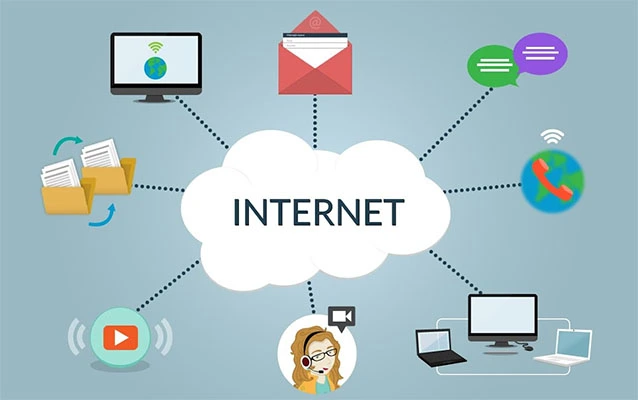
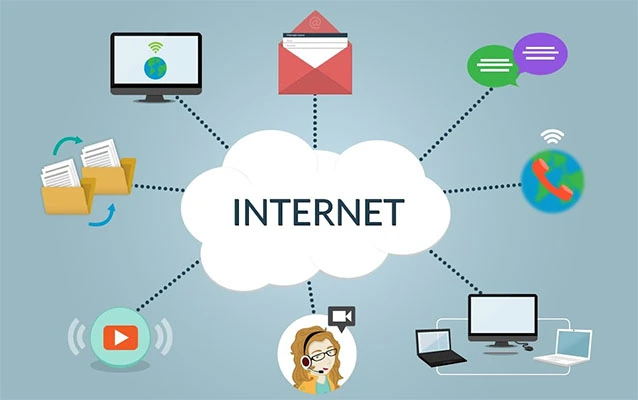
At the same time, the internet became both lifeline and stress machine. Social media connected people to friends, news, organizing, humor, and comfort. It also delivered doomscrolling, conspiracy theories, arguments, panic, and the deeply cursed experience of seeing a homemade focaccia photo directly between wildfire smoke images and election rage. Nobody’s nervous system was built for that feed.
People were not only dealing with big events. They were also absorbing ambient dread. That is often what made the year feel so personal. You could be safe at home and still feel wrecked. You could be employed and still feel unstable. You could have food in the fridge and still feel like the entire cultural floor was wobbling.
Political Conflict Became a Daily Stress Test
Another reason 2020 felt miserable was political tension. Polarization was not new, but in 2020 it became harder to avoid, harder to laugh off, and harder to separate from daily life. The election season felt endless. Every conversation seemed one accidental comment away from becoming a courtroom drama with snacks.
Politics also stopped feeling abstract. It was tied to work, schools, health, policing, protests, voting, speech, and public trust. People were not just disagreeing over policy. They were disagreeing over reality, risk, fairness, and what kind of country they believed they were living in. That kind of divide is exhausting because it turns even ordinary interactions into emotional negotiations.
Many Americans described feeling angry, fearful, or dissatisfied with the direction of the country. And that mood seeped into everything. Group chats got weird. Family holidays became negotiation zones. Even people who normally tuned out politics found themselves pulled in because the stakes felt immediate, personal, and impossible to ignore.
Social Unrest Forced the Country to Look at Deep Wounds
2020 also felt terrible because it was a year of public reckoning. The killing of George Floyd sparked nationwide protests and pushed conversations about race, policing, inequality, and justice to the center of public life. For many people, this was necessary, overdue, and morally urgent. It was also emotionally intense.
National reckoning is not neat. It brings grief, anger, confrontation, disagreement, learning, backlash, and reflection all at once. Some people found clarity and purpose. Others felt overwhelmed, defensive, confused, or heartbroken. Many felt all of that in rotation.
This matters when asking why 2020 felt like the worst year. It was not simply “bad vibes.” It was a period when the country’s deepest fractures became impossible to ignore. That kind of exposure can be valuable, but it is rarely comfortable. Growth is often romanticized as some inspiring montage. In real life, it can look more like collective emotional whiplash.
Nature Also Chose Violence
Wildfires, hurricanes, and smoke made the year feel apocalyptic
As if the economy and politics were not enough, 2020 also delivered a parade of climate and weather disasters that made the country feel like it was living inside a disaster movie written by someone with no editor. Wildfires scorched huge areas of the West. Smoke turned skies orange. Hurricane season became one of those stories where the adjective “record-breaking” stops sounding impressive and starts sounding threatening.
These events mattered not only because of property damage and displacement, but because they reinforced a grim feeling: nowhere felt stable. If you were not worried about work, you were worried about smoke. If you were not worried about smoke, you were watching storm tracks. Even people far from disaster zones were absorbing the imagery and emotional residue of another national emergency stacked onto an already overloaded year.
That visual landscape became part of 2020’s identity. Empty streets. Masked faces. Zoom squares. Orange skies. Protest crowds. Election maps. It was a year made of unforgettable images, and unfortunately many of them looked like warnings from the future.
Grief Was Everywhere, Not Just in Obvious Places
One more reason 2020 hit so hard: people were grieving more than deaths. They were grieving plans, routines, milestones, identities, and assumptions. Graduations were canceled. Weddings were postponed. Birthdays became drive-bys. Career starts got delayed. College did not look like college. Sports did not look like sports. Friendship became something you scheduled and buffered.
Even the cultural losses felt heavier than usual. The death of public figures such as Kobe Bryant landed in an already emotionally raw environment. In a normal year, sad news hurts. In 2020, it often felt like one more brick on an overloaded shelf.
That is why so many people struggle to explain 2020 without sounding dramatic. It was not only tragic. It was relentless. The year did not give people enough time to metabolize anything before the next event arrived. Emotionally, that creates a sense of permanent incompletion.
Why 2020 Felt Worse Than Other Bad Years
Plenty of years in history have been objectively deadlier, bloodier, or more catastrophic. But 2020 felt uniquely bad to many modern Americans because it combined scale, intimacy, and repetition. The crises were national, but they also invaded kitchens, laptops, calendars, paychecks, and family relationships. The bad news was historic, but it was also personal.
It was not just that 2020 was hard. It was that it was hard in a way people could not easily compartmentalize. Work stress bled into family stress. National stress bled into mental health. Weather stress bled into financial stress. News stress bled into sleep. The boundaries failed.
In that sense, 2020 felt like the worst year because it was totalizing. It did not politely ruin one category of life. It wandered through all of them like it owned the place.
Extended Reflection: What Living Through 2020 Actually Felt Like
To really understand why 2020 felt so awful besides corona, you have to remember the texture of it. Not just the headlines, but the mood. It felt like waking up already behind. It felt like checking your phone with the same emotional energy people reserve for exam results or messages from the bank. Every day seemed to begin with the possibility that something else had gone wrong overnight.
There was a strange sameness to daily life, but the sameness was never peaceful. Days blurred together, yet the emotional temperature kept changing. One moment you were baking banana bread or pretending a video call counted as social interaction. The next moment you were reading about layoffs, protests, fires, storms, or another shattered public norm. It was like living inside a loop where boredom and alarm somehow coexisted.
Many people also experienced a kind of low-grade identity confusion. If your job changed, your school changed, your relationships changed, your routines changed, and your plans vanished, then who exactly were you in that moment? The ambitious person with a five-year plan? The student building a future? The parent holding everything together? In 2020, lots of people felt reduced to basic functions: get through today, answer emails, keep the house from collapsing, try not to panic before lunch.
Even leisure felt weird. Watching TV was not always relaxing because real life already felt absurd. Scrolling online was rarely restful because humor existed right next to disaster. You could laugh at a meme, read a terrifying headline, watch a recipe video, and then see someone arguing with a cousin about democracy all within three minutes. That was not entertainment. That was emotional cross-training.
And then there was the uncertainty. Not cinematic uncertainty where a hero gives a speech and everyone unites. Just ordinary, draining uncertainty. Could you make plans? Maybe. Should you buy tickets? Probably not. Would school reopen? Unknown. Would your office reopen? Unclear. Would your mental health improve if you stopped reading the news? Possibly, but then what if the news got worse and you missed it? 2020 was full of no-win mental math like that.
People also felt guilty in new ways. Guilty for complaining when others had it worse. Guilty for being tired while working from home. Guilty for not being productive enough. Guilty for missing people. Guilty for wanting normal life back. Guilty for adapting too well. Guilt became one of the year’s stealthiest side effects.
What made 2020 especially memorable is that nearly everyone has some version of this story. Different details, same exhausted soundtrack. Maybe one person remembers school closures. Another remembers losing a job. Another remembers smoke outside the window, constant sirens, or the tension of election week. But the emotional core is recognizable: life felt unstable, the future felt foggy, and the usual ways people regulate stress stopped working well.
That is why the phrase “2020 was the worst” still lands. People are not just referring to a date range. They are referring to an atmosphere. A year when normal life broke formation, public stress became private stress, and even small joys had to fight for oxygen. It was not awful because one thing went wrong. It was awful because everything felt fragile at once.
Conclusion
If you ask why 2020 was the worst year besides corona, the answer is that the year attacked stability from every angle. The economy buckled, routines vanished, schools closed, politics intensified, social trust eroded, disasters piled up, and mental health took repeated hits. It was not one punch. It was a whole combo.
That is also why 2020 remains such a strong cultural reference point. It became shorthand for overload. For uncertainty. For trying to function in a world that felt glitchy in every direction. If the year taught anything, it is that people do not break only from tragedy. They break from sustained instability, unfinished grief, and the exhaustion of never fully exhaling.
And that, more than any meme or catchphrase, is why 2020 still lives rent-free in collective memory. Not because it was dramatic. Because it was relentlessly, creatively, professionally inconvenient on a historical level.