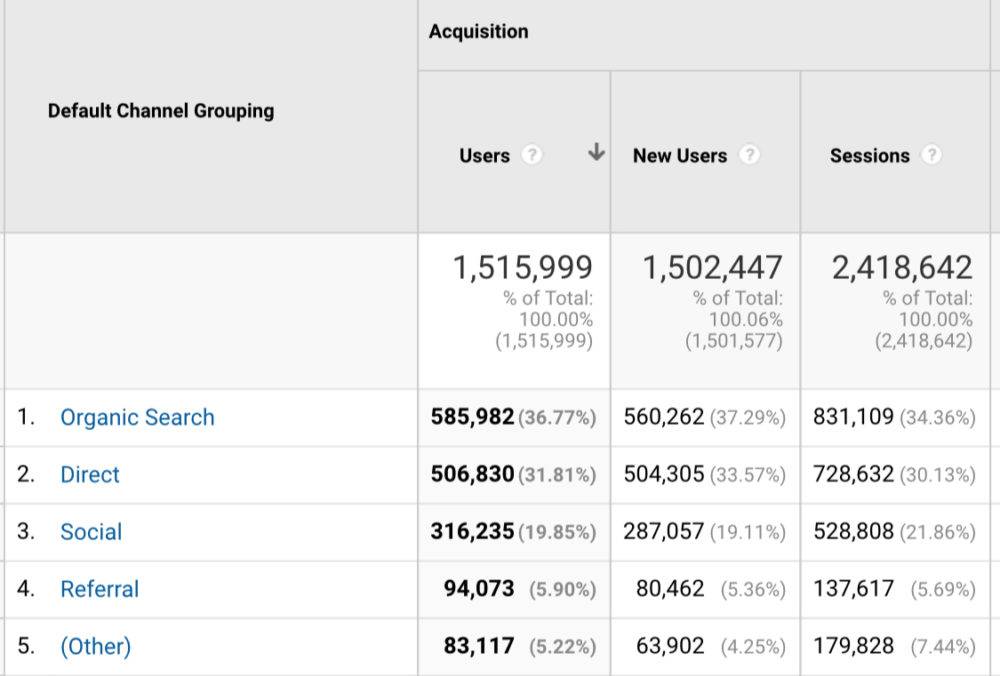
Search engine optimization has always had a slightly theatrical personality. You publish an article, adjust a few headings, improve the internal links, and then stare at Google Search Console like a farmer waiting for rain. Nothing happens on Monday. Nothing happens on Tuesday. Three months later, an old post unexpectedly begins attracting qualified visitors from sixteen different search queries you never deliberately targeted.
That is the enduring paradox of SEO. Its mechanics are increasingly well documented, yet its exact outcomes remain stubbornly difficult to predict. After ten years of publishing, optimizing, measuring, refreshing, and occasionally blaming an innocent algorithm update, a company may still be unable to explain precisely why one article became a traffic machine while another disappeared into the digital basement.
Nevertheless, the broader pattern is clear: useful content, technical accessibility, topical authority, search intent, and consistent maintenance can produce substantial long-term visibility. SEO may remain mysterious at the page level, but at the portfolio level, it still works its magic. SaaStr’s original reflection on a decade of content marketing captured this contradiction well: even after years of publishing, the exact mechanics remained difficult to explain, while the accumulated organic results were impossible to ignore.
Why SEO Still Feels Like a Mystery
Search engines do not publish a complete recipe
Google explains that its automated ranking systems evaluate many factors and signals across an enormous index. It also publishes extensive guidance covering crawling, indexing, helpful content, page experience, spam, structured data, and technical requirements. What it does not publish is a neat spreadsheet saying, “Add three internal links, remove one adjective, and receive position four by Thursday.”
That secrecy is understandable. A completely transparent ranking formula would be manipulated before lunch. Search engines must reveal enough to help legitimate publishers while concealing enough to discourage industrial-scale trickery. The result is a profession built partly on documentation, partly on testing, and partly on experienced people saying, “Well, this usually works.”
Bing follows a similar philosophy. Its webmaster guidance emphasizes technical quality, clarity, accessibility, relevance, and sustainable visibility across traditional search and AI-powered experiences. It explains what healthy optimization looks like without promising that any individual change will produce a specific ranking.
SEO has delayed and noisy feedback
Paid advertising offers relatively immediate feedback. Spend money, receive impressions, measure clicks, and decide whether the campaign is brilliant or merely setting cash on fire with excellent targeting.
SEO behaves differently. A new page must be discovered, crawled, indexed, evaluated, compared with competing documents, tested against different searches, and reconsidered as the surrounding web changes. During that process, competitors publish new material, links appear or disappear, search behavior shifts, and the search results page itself may acquire videos, shopping results, AI summaries, maps, or discussion forums.
This makes clean attribution difficult. A ranking improvement might follow a content update, stronger internal linking, new backlinks, improved site performance, growing brand authority, or a broader algorithmic reassessment. Frequently, several of those things occur at once. SEO is less like flipping a switch and more like improving the soil, watering the garden, and discovering six months later that the tomatoes have formed a small government.
Every query is its own competitive market
A website does not simply “rank well on Google.” It competes separately across thousands of searches, each with its own intent, freshness requirements, content format, commercial value, and competitive landscape.
Someone searching “what is customer retention” probably wants an explanation. Someone searching “best customer retention software” is comparing products. Someone searching “CustomerSuccessPro pricing” may be preparing to buy. Treating these three searches as interchangeable because they contain similar words is a reliable way to produce a beautifully optimized page that nobody wanted.
Modern keyword research therefore extends beyond search volume. It examines the reason behind a query and the type of result search engines consistently reward. Ahrefs, Backlinko, Semrush, and Yoast all frame search intent as a central part of deciding what content to create and how to structure it.
Why SEO Still Works Its Magic in Year 10
A content library becomes a compounding asset
The greatest advantage of a mature SEO program is not one blockbuster article. It is the accumulated library.
Imagine a SaaS company publishing three genuinely useful articles each week. After ten years, it could have more than 1,500 opportunities to appear in search results. Some pages will fail. Some will become outdated. Some will attract only a handful of monthly visitors. Others may rank for hundreds of closely related long-tail searches and quietly generate demos, newsletter subscriptions, backlinks, and branded searches year after year.
This is where SEO begins to resemble magic. A small editorial decision made six years ago can introduce a potential customer to the company today. The employee who wrote the original article may have changed jobs twice, moved across the country, and developed strong opinions about espresso machines, yet the page is still working.
HubSpot describes SEO as a long-term channel in which content and authority signals can build momentum. Its historical optimization guidance also emphasizes the value of revisiting an established archive rather than treating publishing as a one-way conveyor belt.
Topical authority grows through connected coverage
A decade of focused publishing creates something more valuable than a pile of URLs. It creates a map of expertise.
Suppose a company sells project management software. One general article about project management is unlikely to establish much authority. A connected collection covering project planning, workload management, resource allocation, project templates, stakeholder communication, risk tracking, sprint reviews, and implementation mistakes gives both readers and search engines a much clearer understanding of the site’s specialty.
Internal links reinforce those relationships. They help visitors move from broad educational content to specific solutions while helping crawlers discover pages and understand hierarchy. Search Engine Land’s framework groups successful SEO around content, architecture, code, credibility, links, users, and performance rather than a single magical ranking factor.
Old content can become more valuable than new content
Many companies celebrate publishing and neglect maintenance. The team rings a tiny metaphorical bell when a post goes live, shares it on LinkedIn, and then abandons it like patio furniture in November.
However, content naturally decays. Competitors publish better explanations. Product screenshots become obsolete. Statistics age. Search intent changes. Links break. An article that once ranked near the top may gradually drift downward without triggering an obvious alarm.
Ahrefs describes content decay as a gradual decline in organic rankings and traffic that often unfolds over months or years. Mature SEO teams monitor this decline and decide whether to update, consolidate, redirect, reposition, or retire affected pages.
A refresh can be more productive than another new article. Replacing stale examples, improving the introduction, answering newly relevant questions, adding firsthand evidence, fixing broken links, and aligning the page with current intent can revive an existing asset. In year 10, the archive is not a museum. It is inventory.
Technical SEO lets good content participate
Excellent writing cannot perform if search engines cannot reliably access or interpret it. Technical SEO provides the infrastructure that allows content to enter the competition.
The essentials are not glamorous: sensible site architecture, crawlable links, useful status codes, accurate canonical tags, XML sitemaps, mobile usability, secure delivery, restrained JavaScript, duplicate-content control, and pages that load without rearranging themselves like furniture during an earthquake.
Google’s guidance continues to emphasize crawlability, index eligibility, clear technical structure, and a good experience across devices. Semrush likewise defines technical SEO around helping search engines find, understand, and index a site.
Core Web Vitals measure real-world loading performance, interactivity, and visual stability. Google advises publishers to consider page experience broadly rather than obsessing over a single score, while web.dev provides recommended thresholds for the three current metrics: Largest Contentful Paint, Interaction to Next Paint, and Cumulative Layout Shift.
Performance is not a substitute for relevance. A lightning-fast article that answers the wrong question is simply an efficient disappointment. Still, when several pages are similarly useful, a cleaner and more comfortable experience can make a meaningful difference.
Authority still matters, but shortcuts age badly
Backlinks, brand mentions, expert contributions, original research, and a credible reputation help search systems assess whether a source deserves attention. The difficult part is that real authority must usually be earned through work that is valuable outside SEO.
A useful industry study may attract references because the data helps people. A detailed calculator may earn links because it solves a problem. A strong opinion from an experienced founder may spread because it adds something new to the conversation. These assets succeed because they deserve distribution, not because someone purchased 4,000 links from websites with names such as GlobalBusinessArticleDirectory247.
Google’s people-first content guidance explicitly prioritizes information created to benefit users rather than manipulate rankings. Its newer AI-search guidance similarly recommends unique, non-commodity material grounded in expertise or firsthand experience.
SEO in the Age of AI Overviews and Answer Engines
The arrival of generative search has produced another round of predictions that SEO is dead. SEO has now died more times than a low-budget horror villain, yet it keeps returning with a new reporting dashboard.
The environment has unquestionably changed. Searchers can receive answers without clicking a traditional result. AI systems may synthesize information from multiple sources. Brands must think about citations, mentions, entity clarity, reviews, video, community discussions, and consistency across the wider web.
However, Google’s current guidance states that its generative search features remain rooted in core search ranking and quality systems. Crawlable pages, sound technical foundations, useful original information, strong page experience, and clear business details continue to matter. Google also cautions publishers against chasing unsupported tactics such as rewriting every page for machines, producing countless query variations, or assuming that a special file will unlock AI visibility.
Semrush now describes SEO as visibility across both search engines and AI systems, while Search Engine Land has expanded its definition to include traditional rankings, AI search, traffic, and brand authority. The channel is broadening, not evaporating.
The practical lesson is refreshingly unexciting: create information worth retrieving. Make your company understandable. Publish facts that can be verified. Add genuine experience. Maintain accurate product and business details. Build a reputation in the places where your audience already spends time. The future of search may be powered by sophisticated models, but those models still need something trustworthy to retrieve.
A Practical Year-10 SEO Playbook
1. Audit the archive before expanding it
Identify pages that generate traffic, conversions, backlinks, branded discovery, or AI citations. Separate them from outdated, duplicated, irrelevant, or cannibalizing content. Protect winners, refresh declining assets, combine overlapping posts, and remove pages that no longer serve a purpose.
2. Organize content around customer problems
Build topic clusters around actual buying journeys rather than random high-volume keywords. Cover early questions, comparison-stage concerns, implementation challenges, objections, alternatives, use cases, and post-purchase education.
3. Create material competitors cannot cheaply imitate
Publish proprietary data, experiments, templates, calculators, original visuals, expert interviews, customer lessons, and honest product experience. A generic definition can be rewritten in minutes. A decade of operating insight cannot.
4. Strengthen internal distribution
Every important page should receive relevant internal links from other useful pages. Connect educational articles to product pages without turning every paragraph into a sales ambush. A reader should feel guided, not tackled.
5. Measure business outcomes, not rankings alone
Track qualified organic sessions, assisted conversions, demo requests, sign-ups, pipeline contribution, customer acquisition, branded search growth, backlinks, and visibility in AI-generated answers. A number-one ranking for a query that attracts no suitable customers is mostly a decorative trophy.
6. Maintain a publishing-and-refreshing rhythm
New content captures emerging demand. Updated content protects accumulated value. Mature programs need both. A sensible editorial calendar reserves time for refreshing proven pages instead of rewarding the team only for increasing the URL population.
Experience After Years of Watching SEO Behave Strangely
One of the most important lessons from long-running SEO programs is that the pages expected to win are not always the pages that succeed. Teams often spend weeks polishing a major “ultimate guide,” complete with custom graphics, executive quotes, and enough stakeholder feedback to qualify as municipal planning. The article launches, receives enthusiastic applause in Slack, and generates forty-three visits.
Meanwhile, a practical post written in one afternoonperhaps answering a narrow question raised during a customer callbegins ranking for dozens of long-tail searches. It earns links from industry blogs, appears in sales conversations, and eventually becomes one of the site’s most reliable sources of qualified traffic.
The difference is often usefulness. The smaller article may answer a real question more directly. It may face less competition. It may match the searcher’s intent more precisely. It may also contain a specific example that does not exist anywhere else. Search systems can be complicated, but people are wonderfully predictable when they are frustrated: they appreciate an answer that solves the problem without making them read a corporate autobiography first.
Another recurring experience is the delayed payoff. A page can appear unsuccessful for months before gaining traction. It may need time to be discovered through internal links, earn external references, accumulate engagement, or benefit from the growing authority of the broader site. This delay makes SEO emotionally difficult for organizations accustomed to weekly campaign reports.
The temptation is to abandon the strategy too early. A new content program publishes for three months, sees modest traffic, and concludes that organic search does not work. In reality, the company has planted twelve trees, checked for fruit every morning, and canceled the orchard before summer.
Years of data also reveal how uneven SEO returns can be. A relatively small group of pages commonly generates a large share of organic traffic and conversions. That does not mean the remaining content was pointless. Supporting pages can establish topical depth, attract links, answer niche questions, and lead visitors toward the strongest commercial assets. Still, the imbalance reinforces the need to find winners and improve them aggressively.
Refreshing those winners is frequently the highest-return activity. Updating a headline alone rarely performs miracles, but substantial improvements can. Add a clearer answer near the top. Replace expired statistics. Include product screenshots that match the current interface. Improve examples. Address new objections. Remove paragraphs that exist solely because someone once believed every article needed 2,.
Technical problems also become more visible as a site ages. Redesigns create redirect chains. Product migrations leave orphaned pages. Tag archives multiply. JavaScript frameworks hide content. International versions produce canonical confusion. The tenth year of SEO therefore involves as much maintenance as expansion. A mature website resembles an old house: valuable, full of character, and always one renovation away from discovering an alarming pipe.
Most importantly, long-term SEO experience teaches humility. No tool can guarantee a ranking. No consultant has the complete algorithm. No single update explains every traffic movement. The strongest operators form hypotheses, make controlled improvements, examine multiple data sources, and accept that uncertainty is part of the channel.
That uncertainty does not make SEO ineffective. It makes discipline more important. Over a decade, the organizations that keep answering customer questions, improving technical quality, earning trust, and maintaining their archives tend to build a durable discovery engine. They may never identify the exact teaspoon of magic responsible for each ranking, but they can see the cauldron is producing leads.
Conclusion: The Mystery Is a Feature, Not a Verdict
SEO remains mysterious because search is a dynamic marketplace governed by complex systems, changing competitors, shifting user behavior, and imperfect measurement. Nobody can promise exactly which article will rank, when it will rise, or how long it will remain visible.
Yet ten years of accumulated evidence can still reveal a dependable pattern. Websites that publish genuinely useful information, satisfy search intent, maintain strong technical foundations, earn credible authority, and refresh their best assets create more opportunities to be discovered. The effect compounds across hundreds or thousands of pages.
SEO is not free traffic, a bag of keyword tricks, or a machine that accepts title tags and dispenses customers. It is the long process of becoming the most useful and understandable answer in your market. The individual results may occasionally feel like magic. The underlying work is anything but mysterious.
Note: Organic performance varies by industry, competition, website history, technical condition, content quality, and search demand. SEO decisions should be tested against first-party analytics, Search Console data, Bing Webmaster Tools, conversion results, and customer behavior rather than rankings alone.