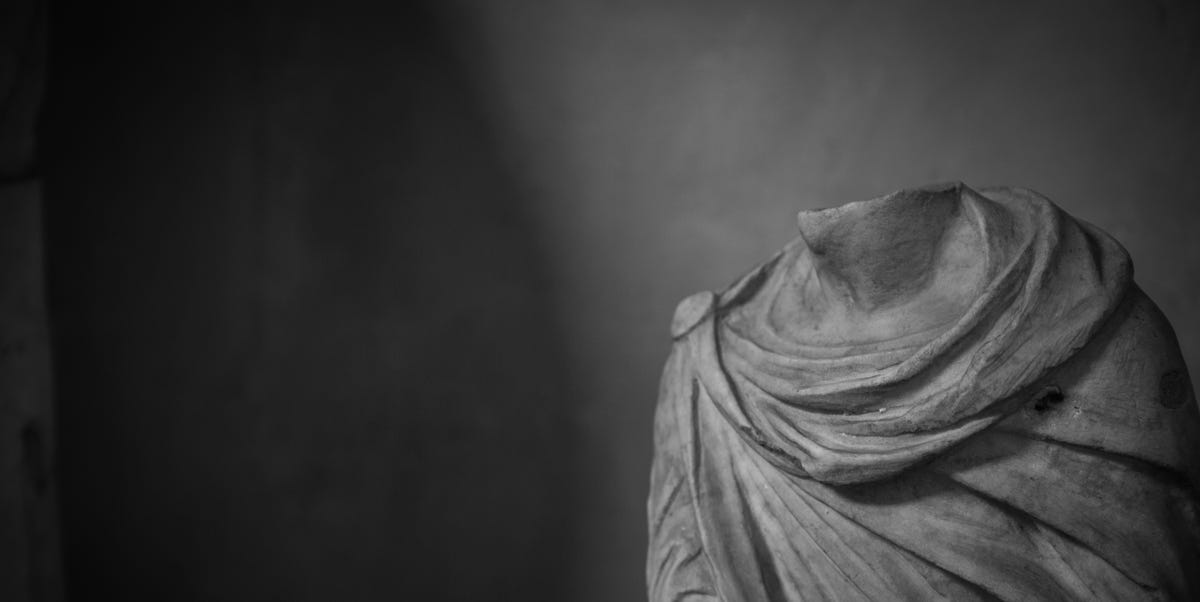
Every so often, the sea gives history a dramatic entrance. Not a polite tap on the shoulder, but a full cinematic reveal: divers below, cranes above, cameras rolling, and a 2,000-year-old headless statue rising from the Mediterranean like it missed its museum appointment by two millennia.
That is exactly the kind of scene that unfolded in Abu Qir Bay near Alexandria, Egypt, where archaeologists and divers recovered a collection of ancient artifacts from the seafloor. Among the discoveries was a headless statue believed to date to the Ptolemaic or Roman era, along with other sculptures, coins, pottery, architectural remains, and pieces of maritime history. The find is more than a fascinating photo opportunity. It opens another window into a submerged world tied to ancient Canopus, a once-important city near Alexandria that slowly disappeared beneath the water due to earthquakes, shifting ground, and rising sea levels.
For readers who love archaeology, ancient Egypt, underwater mysteries, or the idea that the ocean is basically the world’s messiest attic, this discovery is a treasure chest of questions. Who did the statue represent? Why is it headless? What was the city like before the sea moved in? And why are archaeologists choosing to leave many artifacts underwater instead of hauling up everything like an overexcited antique shopper?
The Discovery in Abu Qir Bay
The headless statue was found in Abu Qir Bay, a historically rich stretch of the Mediterranean near Alexandria. This area is famous for underwater archaeological sites connected to the ancient cities of Canopus and Thonis-Heracleion. Both were important centers of religion, trade, and cultural exchange before parts of the coastline sank below the waves.
During the recovery operation, divers identified artifacts on the seabed before selected objects were lifted by crane. The scene was striking: ancient stone figures, weathered by centuries underwater, were carefully raised from the bay while archaeologists and officials watched from shore. The recovered items included a headless statue, a sphinx, a figure thought to represent a priest, Roman coins, pottery, and fragments of buildings that may have once served residential, commercial, or religious purposes.
The headless statue quickly became the star of the story, probably because “2,000-year-old headless statue pulled from the sea” sounds like the opening line of either a museum exhibition or a very classy ghost story. But archaeologically, the statue matters because it is part of a larger landscape. It was not floating around by itself. It belonged to a sunken urban environment, one that preserves evidence of daily life, religious practice, trade, and artistic taste in ancient Egypt under Greek and Roman influence.
Why a Headless Statue Matters
A missing head may look like damage, but to archaeologists, damage can be data. A broken neck, missing limbs, or eroded surface can reveal how an object was made, used, destroyed, moved, or buried. In the case of the Abu Qir Bay statue, the missing head could have resulted from ancient collapse, seismic activity, deliberate breakage, or centuries of impact from sediment and water movement.
Statues in the Ptolemaic and Roman periods often represented rulers, elites, deities, priests, or honored individuals. Without the head, identifying the figure becomes more difficult because facial features, hairstyles, crowns, and inscriptions often provide the biggest clues. Still, the body, posture, clothing, stone type, and carving style can help specialists narrow the date and cultural context.
The statue also reminds us that ancient Egypt during the Ptolemaic and Roman periods was not culturally simple. It was a crossroads. Egyptian, Greek, and Roman traditions blended in art, religion, politics, and everyday life. A statue from this environment may carry Egyptian religious meaning, Greek artistic influence, and Roman-era social identity all at once. In other words, it is not just a stone body without a head. It is a historical puzzle wearing a very old outfit.
The Sunken World of Canopus
Authorities have suggested that the artifacts may come from an area connected to ancient Canopus. Canopus was located near Alexandria and was known in antiquity as a religious and commercial center. It was associated with temples, trade, luxury, and pilgrimage. Ancient visitors came for worship, healing, festivals, and probably a fair amount of socializing. Think of it as part port city, part sacred destination, part Mediterranean resort town with better columns.
Canopus became especially important during the Ptolemaic dynasty, which ruled Egypt from 305 to 30 BCE. This dynasty was founded after the death of Alexander the Great and ended with Cleopatra VII. The Ptolemies were Macedonian Greek rulers who governed Egypt while adopting and adapting Egyptian royal traditions. Their world produced temples, bilingual inscriptions, grand sculpture, and a cultural blend that still fascinates historians.
After Egypt became part of the Roman world, the region remained significant. Roman-era elites, merchants, sailors, priests, and local communities continued to shape the coastal cities around Alexandria. The recovered artifacts from Abu Qir Bay appear to reflect this long, layered history, with objects connected to both Ptolemaic and Roman periods.
How Did an Ancient City End Up Underwater?
Sunken cities sound like fantasy, but the science is very real. Coastal Egypt has long been vulnerable to earthquakes, subsidence, soil liquefaction, and rising sea levels. In simple terms, the ground shifted, weakened, and sank while the sea advanced. Over time, buildings, quays, statues, temples, and harbor structures that once stood on dry land or shallow shoreline ended up beneath the Mediterranean.
Abu Qir Bay is especially important because it preserves pieces of this vanished coastal world. Archaeologists have studied the region for decades, using sonar, magnetic scanning, mapping, diving surveys, and careful excavation. The underwater remains include traces of ancient cities, harbor facilities, shipwrecks, statues, temple elements, and everyday objects.
This is what makes underwater archaeology so exciting. A land site may be disturbed by farming, construction, looting, or weather. A submerged site can also suffer damage, but it may preserve objects in unusual relationships. A statue, an anchor, a wall, and a cluster of pottery may still sit near where people last used or lost them. The seafloor becomes an archive, although one written in sand, salt, and stubborn barnacles.
What Else Was Found Beside the Headless Statue?
The Abu Qir Bay recovery included several notable objects beyond the headless statue. Reports describe a sphinx, a priest-like figure, Roman coins, pottery, stone architectural pieces, and fragments associated with maritime activity. Some finds were linked to limestone buildings that may have functioned as homes, workshops, businesses, or places of worship.
One of the most intriguing objects was a sphinx connected with the name of Ramesses II, one of ancient Egypt’s most famous pharaohs. Even if the statue was reused, moved, or displayed long after Ramesses II’s lifetime, its presence shows how older Egyptian royal imagery continued to matter in later periods. Ancient people were excellent recyclers of symbols. If a great pharaoh’s name still carried prestige centuries later, why not use it?
Other finds, including pottery and coins, may seem less glamorous than statues, but they are often more useful for reconstructing everyday life. Coins help with dating. Pottery reveals trade, storage, cooking habits, and local production. Building remains can show how neighborhoods were organized. Ship fragments, anchors, and harbor structures help scholars understand maritime commerce and transportation.
Why Archaeologists Did Not Recover Everything
One of the most important details about the discovery is what archaeologists chose not to remove. Modern underwater archaeology does not operate on a “grab everything shiny” policy. In fact, preservation in place is often preferred. International heritage standards, including the principles associated with UNESCO’s 2001 Convention on the Protection of the Underwater Cultural Heritage, emphasize careful documentation, conservation, and protection from commercial exploitation.
Removing an artifact from the sea is not the end of the job. It is the beginning of a very expensive, very delicate rescue mission. Objects that have spent centuries underwater can deteriorate quickly when exposed to air. Salt crystals, biological growth, pressure changes, and chemical instability all become problems. A stone statue may look tough, but after 2,000 years underwater, it deserves more spa treatment than a celebrity before an awards show.
That is why archaeologists recover only selected objects when there is a strong scientific, conservation, or exhibition reason. The rest can remain underwater, where they continue to be studied and protected. Leaving artifacts in place also preserves their context. Context is everything in archaeology. A statue by itself is interesting; a statue mapped beside a wall, anchor, coin scatter, and collapsed column becomes evidence of an ancient place.
What the Statue Reveals About Ancient Alexandria’s World
The discovery highlights the extraordinary cultural mix around ancient Alexandria. Founded by Alexander the Great in 332 BCE, Alexandria became one of the great cities of the Mediterranean. It was a center of scholarship, trade, politics, religion, and art. Nearby Canopus and Thonis-Heracleion formed part of the same wider coastal network.
In this region, Egyptian gods were worshipped alongside Greek and later Roman traditions. The god Serapis, for example, reflected a fusion of Egyptian and Greek religious ideas. Temples, festivals, statues, inscriptions, and luxury goods all show how communities interacted across languages and identities. The headless statue, whatever its precise identity, belongs to that complex world.
The find also reminds us that ancient people lived with water as both opportunity and threat. Harbors brought wealth. Ships carried grain, wine, oil, stone, metal, and ideas. Coastal cities grew rich from trade. But the same sea that connected people could also erase their streets. Abu Qir Bay is therefore not just a place of loss. It is a place where ancient globalization, climate vulnerability, engineering, religion, and art meet in one underwater archive.
The Role of Technology in Underwater Archaeology
Recovering a 2,000-year-old statue from the seafloor requires much more than bravery and a good pair of flippers. Underwater archaeologists use specialized tools to locate, document, and interpret submerged sites. Side-scan sonar can help identify shapes on the seafloor. Magnetometers detect buried metal objects. Photogrammetry allows researchers to create detailed 3D models from photographs. Divers record measurements, sediment layers, object positions, and environmental conditions.
Technology helps archaeologists avoid guesswork. Before lifting an artifact, teams need to know where it sits, how fragile it is, what surrounds it, and whether removing it would damage the broader site. A crane may do the heavy lifting, but the real work begins with mapping, planning, and conservation science.
Once an artifact reaches land, conservators take over. They clean, desalinate, stabilize, and study the object. This process can take months or years depending on the material. Stone, bronze, wood, pottery, and organic remains all require different treatments. The goal is not to make the object look brand-new. The goal is to preserve its evidence while preventing further damage.
Why This Discovery Captures the Public Imagination
There is a reason stories like this spread quickly. A headless statue on the seafloor combines mystery, beauty, danger, and time. It gives us an image we can understand instantly: a human-made object, shaped by ancient hands, lying silently under the sea until modern divers bring it back into view.
It also challenges the way we imagine the past. Ancient history is often presented as dry dates and dusty museum labels. But discoveries like this feel alive. They show that history is still moving, still being found, still rising from unexpected places. The past is not finished. Sometimes it is just underwater.
The find also speaks to modern concerns. Alexandria and other coastal heritage sites face pressure from climate change, erosion, urban development, and rising seas. The story of Canopus is not only about an ancient disaster. It is also a warning about what can happen to coastal cities when land and water shift. Archaeology, in this case, becomes both memory and message.
Experiences Inspired by the 2,000-Year-Old Headless Statue
Standing before an ancient artifact in a museum is powerful, but imagining that same artifact on the seafloor adds a completely different feeling. A headless statue recovered from Abu Qir Bay is not just an object to admire; it is an invitation to experience history as something physical, unpredictable, and deeply human. You can almost picture the statue in its original setting: perhaps near a temple, courtyard, harbor, or public building, surrounded by voices speaking Greek, Egyptian, and Latin, with ships arriving from across the Mediterranean.
For travelers, this discovery makes Alexandria feel even richer. A visit to the city is already filled with layers: ancient foundations, Greco-Roman remains, Islamic architecture, modern streets, sea air, and stories of the famous Library and Lighthouse. Knowing that more of the ancient city’s world lies just offshore changes the experience. The coastline becomes more than scenery. It becomes a border between the visible city and the drowned city.
For museum visitors, the experience is equally meaningful. Seeing a recovered statue after conservation is different from seeing a statue that has always been indoors. Marine-worn surfaces, missing parts, and softened details tell their own story. The broken neck is not merely damage; it is evidence of survival. The statue endured collapse, submersion, pressure, saltwater, sediment, and time. Frankly, most of us complain when our phone battery drops below 20 percent, so the statue deserves some respect.
For students and history lovers, the find is a perfect case study in how archaeology works. It shows that discoveries are not isolated “treasures” but pieces of a system. A single statue leads to questions about ancient religion, sculpture, trade, urban planning, geology, sea-level change, conservation, and international heritage law. That is the magic of archaeology: one object can open ten doors.
For anyone interested in the future of cultural heritage, the discovery also offers a practical lesson. Not everything old should be removed, polished, and displayed immediately. Sometimes the best way to protect history is to study it carefully and leave it where it is. Underwater sites are fragile, and responsible archaeology balances public curiosity with long-term preservation. The goal is not to win a race against the sea by grabbing artifacts as quickly as possible. The goal is to understand the past without destroying the evidence that makes understanding possible.
Most of all, the headless statue reminds us that history is never as still as it looks. Cities sink. Seas rise. Statues break. Names are forgotten. Then, one day, a diver’s light catches stone in the blue-green gloom, and an ancient figure begins a second life in the modern world.
Conclusion
The discovery of a 2,000-year-old headless statue on the seafloor near Alexandria is more than an archaeological headline. It is a glimpse into a submerged chapter of Mediterranean history, where Egyptian, Greek, and Roman worlds met along the coast of Abu Qir Bay. The statue, along with sphinxes, coins, pottery, building fragments, and maritime remains, helps researchers better understand the lost urban landscape connected to ancient Canopus.
Its missing head adds mystery, but its true value lies in context. It tells a story of artistic tradition, cultural exchange, natural disaster, and modern preservation. It also reminds us that the sea is not empty space. Beneath its surface are cities, ships, temples, tools, and memories waiting to be studied with patience and care.
As archaeologists continue exploring Abu Qir Bay, more discoveries may surface. Some will be lifted for conservation and display. Others will remain underwater, protected as part of Egypt’s sunken heritage. Either way, this headless statue has already done something remarkable: it has brought an ancient drowned world back into public imagination, one crane lift at a time.
Note: This article was created from a synthesis of current archaeological reporting, public heritage references, and established historical context. Source links are intentionally not embedded in the article body for clean web publication.