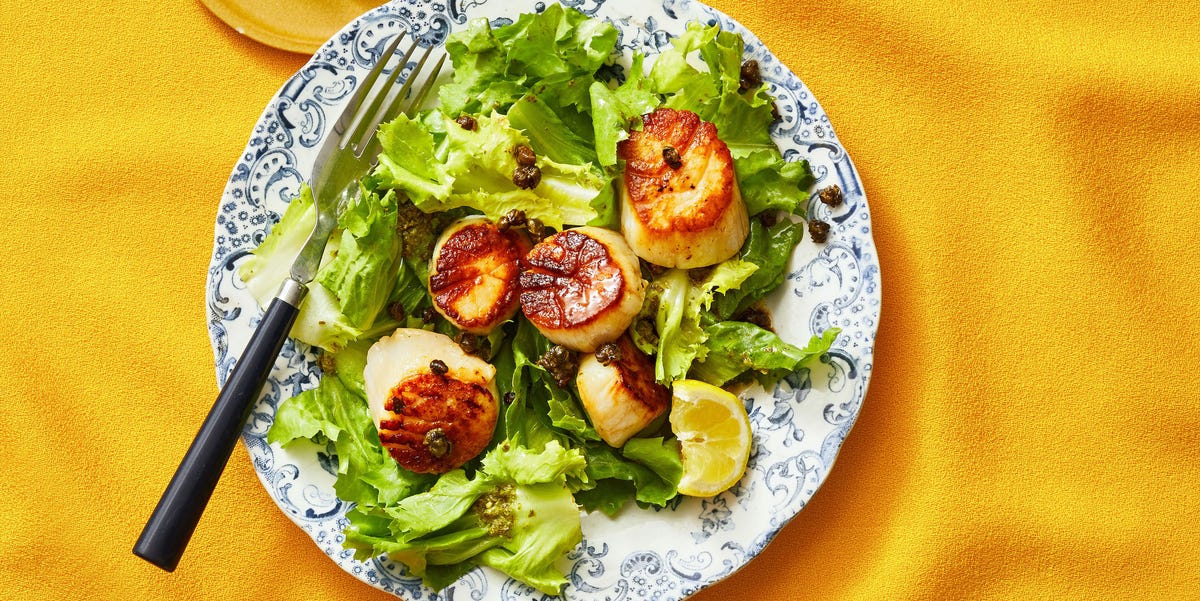
Golden sea scallops, pleasantly bitter escarole, basil-packed vinaigrette, crispy capers, and a glossy lemon-butter sauce come together in one elegant dinner that takes about 25 minutes. It looks like something ordered beneath flattering restaurant lighting, yet the technique is refreshingly manageable at home.
The secret is not a mysterious chef handshake. Start with dry sea scallops, remove as much surface moisture as possible, heat the skillet properly, and resist the urge to poke them every six seconds. Once the scallops develop a caramel-colored crust, the bright salad and tangy pesto vinaigrette keep their natural richness beautifully balanced.
Why This Seared Scallops Recipe Works
Scallops are naturally sweet, mild, and buttery. High-heat searing creates a savory golden crust while preserving their delicate interior. Escarole supplies crisp texture and a mild bitterness that cuts through the seafood’s richness, while lemon, pesto, and capers contribute acidity, herbs, saltiness, and a little Mediterranean swagger.
The recipe also uses the skillet twice. First, it produces beautifully pan-seared scallops. Then the browned bits left behind become the foundation of a quick lemon-butter pan sauce. Those bits, known as fond, are concentrated flavornot kitchen debris having a difficult day.
The Flavor Balance
- Sweet: Large sea scallops have a naturally delicate sweetness.
- Bitter: Escarole adds a clean, pleasantly sharp contrast.
- Acidic: Fresh lemon juice brightens both the salad and pan sauce.
- Herbal: Basil pesto supplies garlic, herbs, cheese, and nutty richness.
- Briny: Capers reinforce the seafood flavor without overpowering it.
- Rich: Cold butter transforms the pan juices into a silky finish.
Recipe at a Glance
- Prep time: 15 minutes
- Cook time: 10 minutes
- Total time: About 25 minutes
- Yield: 4 servings
- Difficulty: Easy to moderate
- Best served: Immediately
Ingredients for Seared Scallops with Escarole Salad
For the Pesto Vinaigrette and Salad
- 1 teaspoon finely grated lemon zest
- 3 tablespoons fresh lemon juice
- 3 tablespoons refrigerated basil pesto
- 1 1/2 tablespoons extra-virgin olive oil
- 1 tablespoon capers, drained and finely chopped
- 1 large bunch escarole, trimmed, thoroughly washed, dried, and torn into bite-size pieces, about 10 cups
For the Scallops and Pan Sauce
- 1 pound large dry-packed sea scallops, preferably 10 to 20 per pound
- 1/2 teaspoon kosher salt, plus more as needed
- 1/2 teaspoon freshly ground black pepper
- 1 tablespoon neutral high-heat oil, such as grapeseed, avocado, or canola oil
- 1 tablespoon capers, drained and patted dry
- 2 tablespoons fresh lemon juice
- 1 tablespoon cold unsalted butter, cut into small pieces
Useful Equipment
- Large stainless-steel or cast-iron skillet
- Paper towels or a clean lint-free kitchen towel
- Salad spinner
- Mixing bowl
- Tongs or a thin fish spatula
- Instant-read thermometer, optional
How to Choose the Best Scallops for Searing
Large sea scallops are the best choice for this recipe because their broad, flat surfaces make excellent contact with the skillet. Smaller bay scallops are sweet and tender, but they cook so quickly that achieving an even crust without overcooking them can become a miniature seafood circus.
Look for Dry-Packed Sea Scallops
Ask the seafood counter specifically for dry-packed scallops. These have not been treated with the moisture-retaining solution commonly used for “wet” scallops. Dry scallops generally look creamy, slightly translucent, and naturally varied in color. Wet scallops may appear uniformly bright white and can release enough liquid to turn your skillet into an unwanted steam room.
Fresh scallops should feel firm and smell clean, sweet, and lightly brinynot aggressively fishy. If buying frozen scallops, choose an intact package without excessive frost or ice crystals. Thaw them overnight in the refrigerator, drain them, and dry them particularly well.
Remove the Side Muscle
Check each scallop for a small, firm flap attached to its side. This is the side muscle. It is safe to eat but noticeably tougher than the scallop itself. Pinch it between your fingers and peel it away before cooking.
How to Make Seared Scallops with Escarole Salad and Pesto Vinaigrette
Step 1: Prepare the Scallops
Place the scallops between layers of paper towels and press gently but thoroughly. Replace damp towels if necessary. The surfaces should feel almost tacky rather than wet. Season both flat sides evenly with kosher salt and black pepper just before cooking.
Surface moisture is the chief enemy of browning. When wet scallops enter a skillet, the pan must evaporate that water before it can create a crust. During that delay, the centers continue cooking, which is how expensive scallops become pale little erasers.
Step 2: Make the Pesto Vinaigrette
In a large bowl, whisk together the lemon zest, 3 tablespoons lemon juice, refrigerated pesto, extra-virgin olive oil, and chopped capers. Taste before adding salt because pesto and capers already bring plenty of seasoning.
Add the escarole and toss until the leaves are lightly coated. Avoid drowning the greens; vinaigrette should make salad glisten, not require a lifeguard. Set the salad aside briefly while cooking the scallops.
Step 3: Heat the Skillet
Place a large, heavy skillet over medium-high heat. Let it preheat for two to three minutes, then add the neutral oil. When the oil shimmers and moves fluidly across the pan, it is ready.
A high-smoke-point oil is preferable for the initial sear. Whole butter and extra-virgin olive oil can scorch under intense heat, so save the flavorful butter for the lower-temperature pan sauce.
Step 4: Sear the First Side
Arrange the scallops in one layer, placing a flat side against the pan. Leave at least half an inch between them. If the skillet is small, cook in two batches rather than overcrowding it.
Sear without moving the scallops for about two to three minutes. When a deep golden crust has formed, they should release fairly easily. If one stubbornly sticks, wait another 15 to 20 seconds. The scallop is not challenging your authority; its crust simply needs more time.
Step 5: Flip and Finish Cooking
Turn each scallop and cook the second side for approximately one to two minutes, depending on thickness. Transfer the scallops to warm plates once the centers are firm and pearly or milky white.
For food safety, the FDA advises cooking scallops until their flesh is firm and opaque; its general seafood guidance uses 145°F as the temperature benchmark. People who are pregnant, older, immunocompromised, or otherwise at increased risk from foodborne illness should be especially careful to cook seafood thoroughly.
Step 6: Crisp the Capers
Reduce the heat to medium. Add the whole, well-dried capers to the skillet and cook for about two minutes, shaking the pan occasionally. They should darken slightly, open in places, and become crisp around the edges.
Step 7: Make the Lemon-Butter Pan Sauce
Remove the skillet from direct heat and carefully add the remaining 2 tablespoons lemon juice. It may sputter. Scrape the bottom with a wooden spoon to release the flavorful browned bits.
Add the cold butter and swirl the skillet until it melts into the lemon juice, producing a glossy, lightly thickened sauce. Taste and adjust the seasoning only if necessary.
Step 8: Plate and Serve
Divide the dressed escarole among four plates. Arrange the seared scallops beside or over the salad, keeping their golden surfaces visible. Spoon the warm lemon-butter sauce and crispy capers over the scallops. Serve immediately while the crust is crisp and the salad remains lively.
Professional Tips for Perfect Pan-Seared Scallops
Dry Everything Thoroughly
Dry the scallops, the escarole, and the whole capers. Moist scallops steam, wet greens dilute vinaigrette, and damp capers spit hot oil with surprising enthusiasm.
Use a Wide, Heavy Pan
Stainless steel and cast iron retain heat well and encourage browning. The skillet must be wide enough to prevent the scallops from touching. Crowding lowers the pan temperature and traps steam.
Cook the Scallops Last
Have the salad dressed, plates ready, and other side dishes finished before the scallops enter the pan. Scallops cook in minutes and are at their best immediately after searing.
Watch the Scallops, Not Just the Clock
Cooking time changes with scallop size, pan material, burner output, and starting temperature. Look for a brown crust, opaque edges, and a firm center. Avoid repeatedly flipping them, which interrupts contact with the hot surface.
Balance the Salt Carefully
Pesto and capers can both be salty. Season the scallops confidently, but taste the vinaigrette and sauce before adding additional salt. Rinsing the capers can soften their salinity if needed.
Common Scallop Mistakes and How to Fix Them
The Scallops Are Pale
They were probably too wet, the skillet was insufficiently heated, or the pan was crowded. Remove excess liquid, reheat the skillet, and work in smaller batches. Do not continue cooking indefinitely while hoping for color; the centers will become rubbery before the moisture disappears.
The Outside Burned Before the Center Cooked
The heat was too high or the scallops were unusually thick. Reduce the burner slightly after the first side browns. You can also finish thick scallops over medium heat for another minute, turning only as necessary.
The Scallops Stuck to the Pan
Either the pan was not hot enough or the crust had not finished forming. Properly seared scallops usually release when ready. Use a thin spatula to lift them without tearing the surface.
The Salad Tastes Too Bitter
Escarole’s bitterness varies. Add another teaspoon of pesto or a small drizzle of honey to round out the vinaigrette. Tender inner leaves are generally milder than the dark outer leaves. Romaine, arugula, or a combination of escarole and butter lettuce can also be used.
The Sauce Looks Greasy
Remove the skillet from the heat before adding cold butter. Swirl continuously so the butter emulsifies with the lemon juice rather than separating. If needed, add a teaspoon of cool water and swirl again.
Variations and Substitutions
- Homemade pesto: Blend basil, toasted pine nuts or walnuts, Parmesan, garlic, olive oil, and lemon juice.
- Nut-free option: Choose a certified nut-free pesto made with seeds or prepare an herb vinaigrette without nuts.
- Dairy-free version: Use dairy-free pesto and replace butter with a spoonful of extra-virgin olive oil.
- Different greens: Substitute arugula, radicchio, frisée, or romaine for some or all of the escarole.
- More texture: Add toasted walnuts, almonds, or homemade breadcrumbs to the salad.
- A touch of sweetness: Include sliced pear, apple, or orange segments to soften the bitter greens.
- Gentle heat: Add red pepper flakes to the vinaigrette or pan sauce.
What to Serve with Seared Scallops
The escarole salad makes this a light main course, but a simple starch turns it into a more substantial dinner. Serve it with crusty bread for collecting the lemon-butter sauce, creamy polenta, risotto, roasted fingerling potatoes, couscous, or lemony orzo.
For wine, consider a crisp Sauvignon Blanc, unoaked Chardonnay, Albariño, or dry sparkling wine. Their acidity complements the lemon and capers while allowing the scallops’ delicate sweetness to remain the star.
Storage and Make-Ahead Guidance
The vinaigrette can be prepared up to two days ahead and refrigerated in a sealed container. Bring it closer to room temperature and whisk before using. Wash and dry the escarole in advance, then refrigerate it separately with a paper towel to absorb excess moisture.
Raw scallops should remain at 40°F or colder and, according to FDA guidance, should generally be used within two days of purchase unless frozen. Thaw frozen scallops in the refrigerator rather than on the counter.
Cooked scallops can be refrigerated in an airtight container, but reheating tends to toughen them. If leftovers happen, warm them very gently over low heat or enjoy them chilled in a salad. Store the dressed escarole separately whenever possible.
My Experience Making This Scallop Dinner at Home
The first lesson this dish taught me was that scallops can sense nervousness. That is not scientifically established, of course, but it certainly feels true when a pricey pound of seafood is waiting beside a smoking skillet. My earliest attempt involved wet scallops, a crowded pan, and constant flipping. Instead of a bronzed crust, I produced a shallow pool of scallop broth. The flavor was acceptable, but the texture suggested a seafood-themed office supply.
The breakthrough came from treating preparation as seriously as cooking. I started buying dry-packed sea scallops and giving them several minutes between clean paper towels. I also stopped seasoning them far in advance. Salt can draw moisture to the surface, so I now season immediately before the scallops meet the pan. That small routine made the crust dramatically more consistent.
Pan size mattered more than expected. In a cramped skillet, even well-dried scallops release enough moisture to cool the cooking surface. Using a wide stainless-steel pan and leaving visible space around every scallop produced stronger sizzling, quicker browning, and a more tender interior. When cooking for a crowd, two batches are faster than one overcrowded batch because the second approach does not require waiting for a small indoor ocean to evaporate.
I also learned that restraint is an actual cooking technique. After placing the scallops in the pan, I leave them alone. The temptation to lift one and check underneath is powerful, particularly when dinner guests are watching. However, the scallops release more cleanly after a crust develops. A gentle nudge with tongs tells me when they are ready: if they resist, I wait a little longer.
Escarole surprised me just as much as the seafood. Raw escarole can taste assertively bitter on its own, but the pesto vinaigrette changes the conversation. Basil, olive oil, lemon, and chopped capers soften the bitterness without erasing it. That edge is important because it prevents the combination of scallops, pesto, and butter from becoming too rich. The salad is not merely decorative greenery occupying valuable plate space; it performs essential flavor-management duties.
Crisping the whole capers became my favorite detail. They turn darker and slightly crunchy, delivering concentrated bursts of salt and acidity. Drying them first is nonnegotiable unless you enjoy stepping backward from your stove while hot oil stages a rebellion. Once the capers are crisp, lemon juice loosens the browned fond and cold butter rounds the sharp liquid into a sauce that tastes far more elaborate than its ingredient list suggests.
For serving, I prefer placing the salad slightly off-center and arranging three or four scallops alongside it. Spooning sauce over the scallops at the final moment preserves their crust. A few drops can reach the escarole, but soaking the entire salad makes it wilt too quickly.
The most satisfying part of this recipe is the timing. Twenty-five minutes after beginning, the table holds a dinner with crisp greens, sweet seafood, citrus, basil, briny capers, and a polished pan sauce. It feels celebratory without requiring hours of preparation. Once the drying and heat-control habits become automatic, seared scallops stop being intimidating and start becoming one of the quickest impressive meals in the home-cooking playbook.
Final Thoughts
The best seared scallops with escarole salad and pesto vinaigrette depend on a few disciplined details: choose dry-packed sea scallops, remove surface moisture, use a properly heated skillet, give each scallop breathing room, and avoid overcooking. The lemony pesto vinaigrette and bitter greens balance the buttery seafood, while crispy capers and a quick pan sauce supply a restaurant-worthy finish.
Master those fundamentals and this elegant-looking meal becomes reliable enough for a weeknight, date night, or dinner party. Just remember to prepare everything else first. Scallops wait for no onenot even the person still searching the drawer for the nice napkins.