Historical framing for Zoroaster is based on scholarly reference material noting that his biography and dating remain disputed.
Tituba’s role in the Salem crisis is supported by Library of Congress and University of Virginia historical records.
John Dee and Edward Kelley’s angelic conversations and partnership are documented by medical-history and museum collections.
Crowley’s public career as an occultist and creator of a new religious system is documented in academic reference material.
Marie Laveau’s association with New Orleans spiritual history and Congo Square is preserved in local historical collections.
History has no shortage of people who stared at the night sky, opened a suspiciously old book, and decided that ordinary life needed more symbols, secret languages, spirits, potions, prophecies, or very dramatic robes. Some were genuine practitioners of occult traditions. Some were philosophers later wrapped in magical legends. Others were accused of witchcraft by frightened societies that desperately needed someone to blame when life got weird.
That distinction matters. This list is not a scoreboard of supernatural powers, and nobody is receiving points for turning lead into gold or allegedly chatting with angels before breakfast. Instead, these historical sorcerers and magical figures reveal how humans have tried to understand fate, disease, power, religion, love, death, and the eternal mystery of why people will pay good money for a promise that their ex will text them back.
Note: The word sorcerer is used here as a historical and cultural label. The article separates documented practices from legends, accusations, and later storytelling.
What Makes Someone a Historical Sorcerer?
In many societies, a sorcerer was not simply someone with a pointy hat and an alarming number of ravens. The label could refer to a healer, astrologer, alchemist, medium, ritual specialist, fortune-teller, religious reformer, or person accused of dealing with unseen forces. In some cases, magic was a respected intellectual pursuit connected to astronomy, medicine, mathematics, and theology. In others, it was a dangerous accusation that could lead to imprisonment, torture, or execution.
The people below lived in very different worlds, from ancient Persia and imperial Rome to Salem, Paris, London, and New Orleans. Their stories are fascinating not because they prove magic worked, but because they show how powerful magical belief could become when mixed with politics, fear, ambition, faith, and human imagination.
1. Zoroaster: The Prophet Later Branded a Master of Magic
Zoroaster, also known as Zarathustra, was the religious reformer associated with the founding of Zoroastrianism, one of the world’s oldest surviving faiths. His actual life is difficult to reconstruct. Scholars debate when he lived, where he was born, and how much of the tradition can be tied directly to the historical person rather than later religious development.
So why does he appear on a list of famous sorcerers? Ancient Greek and Roman writers often linked Zoroaster with the Magi, a priestly group associated in the Western imagination with hidden wisdom, astrology, and magical arts. Over time, “Zoroaster” became almost a brand name for ancient secret knowledge. Medieval and Renaissance occult writers invoked him as an authority on astrology, alchemy, and mystical philosophy, even when the works attributed to him had nothing to do with the historical prophet.
Why He Still Matters
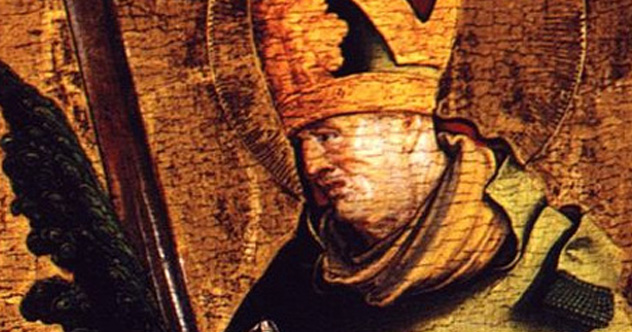
Zoroaster shows how easily a real religious teacher can become a legendary magician in later cultures. His story is less about spellcasting and more about the human habit of turning wisdom into mystery. Give an ancient thinker a few centuries, a foreign language, and a mysterious beard in a painting, and suddenly everyone assumes he owned at least three enchanted mirrors.
2. Simon Magus: The Original Celebrity Magician of Early Christianity
Simon Magus appears in the New Testament’s Book of Acts as a Samaritan figure known for magical practices and public influence. According to the account, he was impressed by the powers displayed by the apostles and attempted to purchase spiritual authority. That moment gave the English language the word simony, meaning the buying or selling of church offices or privileges.
Later Christian writings expanded Simon’s reputation dramatically. He became a rival of the apostle Peter in stories full of miracles, arguments, levitation, and theological trash talk that would make modern reality television producers proud. Some traditions claimed Simon flew through the air. Others claimed Peter’s prayers caused him to fall. Whether these tales preserve history is impossible to prove, but they reveal how early Christian communities used magical imagery to define spiritual authority.
A Man Between History and Legend
Simon Magus is fascinating because he sits in the foggy borderland between a possible historical figure and a character enlarged by religious storytelling. His legend reminds us that accusations of sorcery were often political. Calling someone a magician could mean, “This person has dangerous influence, and we would prefer everyone stop listening to him immediately.”
3. Apollonius of Tyana: Philosopher, Healer, and Miracle Worker
Apollonius of Tyana was a first-century Greek philosopher associated with the Pythagorean tradition. He advocated discipline, vegetarianism, spiritual purity, and philosophical self-control. That sounds fairly calm until later accounts added miracle stories, prophecies, healings, demon encounters, and journeys that made him seem less like a traveling philosopher and more like someone who had accidentally wandered out of a fantasy novel.
The best-known account of his life was written by Philostratus more than a century after Apollonius died. It describes him performing extraordinary acts across the Mediterranean world and beyond. Historians treat many of these stories cautiously, but they are valuable evidence of his growing reputation as a holy man with access to secret wisdom.
Why Apollonius Became a Magical Icon
Apollonius represented the ideal ancient sage: learned, self-controlled, mysterious, and apparently never far from a dramatic prophecy. In later centuries, people compared him with Jesus, magicians, philosophers, and wandering miracle workers. His legend demonstrates how ancient audiences often blurred the lines between philosophy, religion, healing, and magic.
4. John Dee: The Elizabethan Scholar Who Talked to Angels
John Dee was one of the most remarkable intellectuals of sixteenth-century England. He studied mathematics, astronomy, navigation, cartography, alchemy, and astrology. He advised powerful figures in Elizabethan England and built a famous personal library packed with books, manuscripts, maps, and enough mysterious material to make a modern conspiracy podcaster faint with joy.
Dee was not merely a courtly eccentric. He was a serious scholar who believed mathematics could unlock the structure of the universe. Yet his most famous work involved attempts to communicate with angels through ritual sessions. Using crystal scrying and assistants who claimed to see visions, Dee recorded elaborate conversations in what later became known as the Angelical or Enochian language.
Science, Magic, and the Renaissance Mind
John Dee is one of history’s most fascinating sorcerers because he refuses to fit neatly into one category. Calling him only a magician ignores his scholarly achievements. Calling him only a scientist ignores the enormous importance he placed on angels, prophecy, and divine revelation. Dee lived in an age when studying stars, numbers, sacred texts, and spirits could all seem like parts of one giant cosmic puzzle.
5. Edward Kelley: The Scryer With a Talent for Angels and Trouble
Edward Kelley was John Dee’s most famous spiritual assistant. Kelley claimed he could see spirits and angels in reflective surfaces such as crystals or mirrors. Dee believed these visions gave him access to divine knowledge, and together they conducted years of recorded angelic conversations.
Kelley’s reputation was much more flamboyant than Dee’s. He claimed knowledge of alchemy and was eventually connected with the court of Holy Roman Emperor Rudolf II in Prague, a ruler famous for his interest in art, science, astrology, and alchemical experimentation. Kelley rose quickly in status, but his career ended in imprisonment and mystery.
The Renaissance’s Most Dramatic Sidekick
If John Dee was the brilliant professor with a telescope and a library, Edward Kelley was the unpredictable person who arrived carrying a crystal, claimed the angels had an urgent message, and somehow made the evening more complicated. Their partnership produced one of the strangest surviving records of Renaissance occult practice: detailed notes about visions, rituals, language, and divine instructions.
6. La Voisin: Parisian Fortune-Teller at the Center of a Poison Scandal
Catherine Monvoisin, better known as La Voisin, became one of the most notorious magical figures in seventeenth-century France. She worked as a fortune-teller and was linked to a wide network of people seeking potions, love charms, abortions, divination, and, in some allegations, poison.
Her name became central to the Affair of the Poisons, a scandal that shook the court of King Louis XIV. The investigation uncovered rumors of poisonings, secret rituals, and aristocrats seeking supernatural help with romance, inheritance, and revenge. In other words, the wealthy elite of Paris proved that money cannot buy happiness, but it can apparently buy very questionable advice.
A Cautionary Tale About Power and Panic
La Voisin was executed in 1680 after being convicted of witchcraft and poisoning. However, the Affair of the Poisons also illustrates the dangers of sensational investigations. Testimony was shaped by fear, pressure, rumor, and political self-interest. Her story remains compelling because it reveals how occult fears could expose the hidden anxieties of an entire royal court.
7. Tituba: The Enslaved Woman Pulled Into the Salem Witch Trials
Tituba was an enslaved woman in the household of Reverend Samuel Parris in Salem Village, Massachusetts. In 1692, she became one of the first people accused during the Salem witch trials. Her testimony included vivid descriptions of the Devil, spectral creatures, and a supposed network of witches, helping fuel a crisis that eventually led to widespread accusations, imprisonment, and executions.
For generations, popular retellings turned Tituba into a mysterious Caribbean witch or a practitioner of foreign magic. The evidence for those claims is thin. Historians continue to debate her origins, and the surviving records tell us far more about the fears of Puritan society than about Tituba’s actual beliefs or practices.
Not a Villain, but a Victim of a Terrifying System
Tituba belongs on this list not because history proves she was a sorcerer, but because her story shows how the label of witchcraft could trap vulnerable people. As an enslaved woman, she had little power in a community already gripped by fear. Her case is a reminder that magical accusations have often been weapons used against those least able to defend themselves.
8. Marie Laveau: New Orleans’ Legendary Voodoo Queen
Marie Laveau was a free woman of color who became one of the most famous spiritual figures in nineteenth-century New Orleans. She worked as a hairdresser, was known for charitable acts, cared for sick people, and became closely associated with Louisiana Voodoo. Her public image grew so large that it became difficult to separate the historical Marie Laveau from the legend built around her.
Stories described her as a powerful ritual leader, healer, counselor, and creator of protective charms. Her connection with Congo Square, Catholic practices, African diasporic traditions, local herbal knowledge, and New Orleans folklore helped turn her into an enduring symbol of the city.
Legend With a Real Human Core
Marie Laveau’s life is often reduced to spooky tourist stories, but that misses the point. Her influence came partly from spiritual practice and partly from social intelligence. She lived in a world shaped by race, class, religion, slavery, disease, and colonial history. The “Voodoo Queen” label may be dramatic, but it also reflects the authority she held in a society that offered few formal paths to power for women of color.
9. Aleister Crowley: The Man Who Made Occultism a Spectacle
Aleister Crowley was a British occultist, poet, writer, mountaineer, and relentless self-promoter. Born in 1875, he became involved with ceremonial magic and eventually developed a spiritual philosophy called Thelema. He claimed that a supernatural intelligence dictated The Book of the Law to him in Cairo in 1904.
Crowley cultivated scandal with the dedication of a man who understood that controversy was excellent marketing long before social media existed. Newspapers called him “the wickedest man in the world,” a title he did little to discourage. He mixed ritual magic with Eastern religious ideas, sexual symbolism, mysticism, and a strong belief in personal will.
Why Crowley Still Has Influence
Whether people see him as a spiritual innovator, an outrageous provocateur, or a walking warning label, Crowley influenced modern occultism, popular culture, music, art, and alternative religion. He understood that mystery sells, but he also helped shape the vocabulary and practices of twentieth-century ceremonial magic.
10. Gerald Gardner: The Modern Architect of Wicca
Gerald Gardner was an English civil servant, writer, and occult enthusiast who played a major role in bringing modern Wicca into public view during the twentieth century. After Britain repealed its Witchcraft Act in 1951, Gardner openly wrote about what he described as a surviving witchcraft tradition.
His books, including Witchcraft Today, helped establish a modern religious movement centered on ritual, seasonal festivals, nature, magic, and reverence for the divine feminine and masculine. Scholars continue to debate how much of Gardner’s tradition came from older folk practices, ceremonial magic, Freemasonry, and his own creative reconstruction.
The Sorcerer Who Built a Modern Movement
Gardner’s importance is not based on ancient spells hidden in a ruined castle. It comes from his impact on modern religious life. Wicca became one of the most visible forms of contemporary paganism, and Gardner helped transform witchcraft from a feared accusation into an identity embraced by many modern practitioners.
Why Historical Sorcerers Continue to Fascinate Us
The most fascinating sorcerers in history are rarely just “magic people.” They are mirrors of their societies. John Dee reveals the Renaissance struggle to unite science and spirituality. La Voisin shows the danger of scandal and superstition at the highest levels of power. Tituba exposes the cruelty of witch-hunt panic. Marie Laveau demonstrates how spiritual authority could become a form of community influence. Crowley and Gardner show how old ideas can be repackaged for modern audiences.
Magic remains compelling because it promises that the world contains hidden patterns and that human beings might somehow learn to read them. Even in an age of satellites, artificial intelligence, and refrigerators that can send text messages, people still want signs, rituals, meaning, and maybe a little reassurance that the universe has not completely forgotten their birthday.
Experiences Related to History’s Most Fascinating Sorcerers
Exploring the stories of historical sorcerers can feel very different from reading a standard biography of a king, inventor, or military commander. These figures live in the shadows between documented fact and dramatic legend. Their stories invite curiosity, but they also demand patience. The experience is less like opening a neat history textbook and more like walking through an old house where every room contains a locked cabinet labeled, “Probably Not Cursed.”
One of the most memorable parts of studying magical history is discovering how normal many of these people could be. John Dee worried about money, career, reputation, and lost books. Marie Laveau was connected to family, neighborhood life, illness, charity, and work. Gerald Gardner wrote books, built communities, and argued over religious ideas. Even the most mysterious figures still had to eat meals, negotiate relationships, and survive the daily nonsense that has always made human life complicated.
Another powerful experience comes from comparing magical traditions with modern assumptions. Today, many people place science and magic on opposite sides of a very large, very angry fence. In earlier centuries, that boundary was much less clear. Astrology could sit beside astronomy. Alchemy could overlap with chemistry. Religious visions could be discussed alongside mathematics. A person like John Dee did not necessarily see a conflict between studying numbers and seeking messages from angels. He believed both activities were ways of understanding creation.
There is also a more uncomfortable side to this topic. Stories about witches and sorcerers often reveal prejudice, fear, racism, sexism, and political manipulation. Tituba’s story makes that painfully clear. She was not a glamorous occult celebrity. She was an enslaved woman caught in a system designed to control her. Studying her experience changes the mood of the subject immediately. It reminds readers that magical accusations were not always entertaining folklore; they could ruin lives and lead to death.
Visiting places linked to magical history can deepen the experience, even without treating them as supernatural sites. Salem, Massachusetts, offers archives and memorials that encourage visitors to think about the human cost of hysteria. New Orleans provides a richer understanding of Marie Laveau when visitors learn about Congo Square, African diasporic religion, Catholic influence, slavery, and the city’s complicated cultural history. London, Prague, and Renaissance libraries offer their own reminders that occult history is often hidden in manuscripts, court records, and old books rather than in crystal balls.
The best way to approach these stories is with both imagination and skepticism. Enjoy the legends. Appreciate the drama. Let yourself be amazed by strange symbols, angelic languages, alchemical experiments, and ancient prophecies. But keep asking useful questions: Who wrote this story? When was it written? Who benefited from the claim? Was the person a practitioner, a performer, a religious leader, or simply someone accused by others?
That balance is what makes the topic so rewarding. History’s most fascinating sorcerers do not need to prove that magic was real. Their lives already prove something more interesting: people have always searched for hidden meaning in an unpredictable world. Sometimes they found knowledge. Sometimes they found power. Sometimes they found trouble. And, occasionally, they found all three before lunch.