Buying fragrance can feel a little like ordering coffee in a city where every café has invented its own language. You ask for “perfume,” and suddenly you are staring at labels such as parfum, eau de parfum, eau de toilette, cologne, and eau fraîche. They all smell lovely in the store, but one may still be dancing on your sweater at bedtime while another disappears before lunch like a magician who forgot to leave a business card.
The biggest difference between perfume types is usually fragrance concentration: the amount of aromatic oil blended with alcohol, water, or a carrier base. More fragrance oil often means a richer scent and longer wear time, but concentration is not the only thing that matters. Ingredients, skin type, humidity, body heat, application technique, and even how aggressively you hug people can influence how long a fragrance lasts.
This guide breaks down the seven most common perfume types, explains their typical longevity, and helps you choose a fragrance that fits your daily routine instead of forcing you to carry a bottle around like emotional-support luggage.
What Determines How Long Perfume Lasts?
Perfume longevity is not a stopwatch competition. A fragrance may smell strong for two hours, remain noticeable close to the skin for six hours, and cling to fabric until laundry day. Those are three different experiences.
In general, fragrances with more concentrated oils tend to last longer because they evaporate more slowly. However, perfume composition matters just as much. Bright citrus, watery, green, and delicate floral notes often fade faster. Heavier base notes such as vanilla, amber, musk, patchouli, sandalwood, tobacco, leather, resins, and oud usually stick around longer.
Your skin also gets a vote. Dry skin tends to absorb fragrance quickly, while well-moisturized skin often helps scent linger. Hot weather can make perfume project more strongly at first, but heat may also speed up evaporation. Cold weather can make fragrance feel quieter, especially when it is hiding under three layers of sweaters and a scarf that has seen things.
Perfume Concentration and Longevity at a Glance
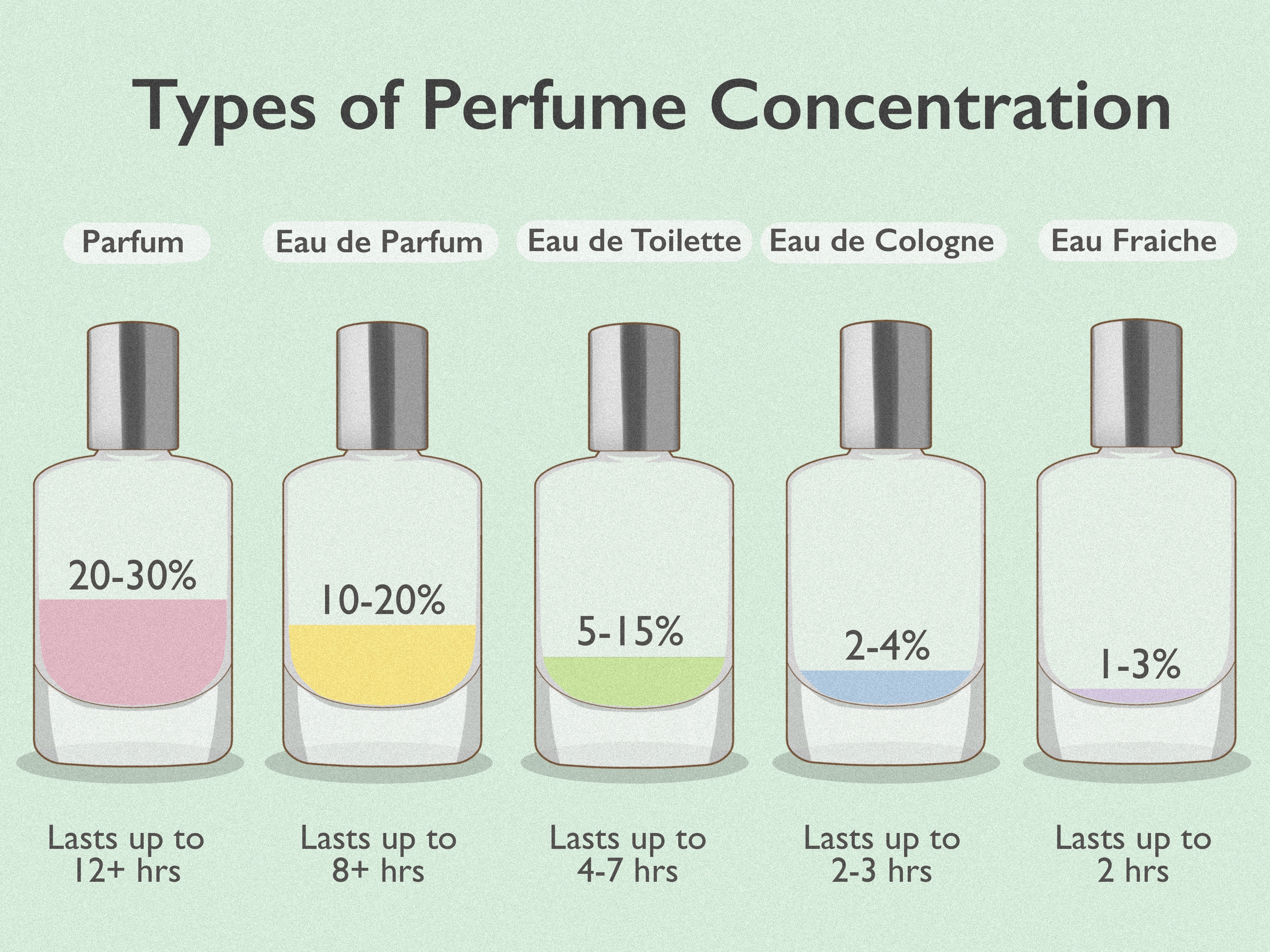
| Perfume Type | Typical Fragrance Concentration | Average Wear Time on Skin | Best For |
|---|---|---|---|
| Parfum or Extrait de Parfum | 20% to 30% or more | 6 to 10+ hours | Special events, evenings, long days |
| Eau de Parfum | 15% to 20% | 4 to 6 hours | Daily wear, office-to-evening use |
| Eau de Toilette | 5% to 15% | 2 to 4 hours | Daytime, warm weather, casual wear |
| Eau de Cologne | 2% to 5% | 1 to 2 hours | Fresh, quick, easy refreshes |
| Eau Fraîche | 1% to 3% | 1 to 2 hours | Very light summer fragrance |
| Perfume Oil | Varies; often highly concentrated | 5 to 8+ hours | Close-to-skin wear and layering |
| Solid Perfume | Varies by formula | 3 to 6 hours | Travel, touch-ups, subtle fragrance |
These ranges are useful guidelines, not legally binding promises from the perfume universe. Two eau de parfums can perform very differently depending on their ingredients, formula, and your skin chemistry.
The 7 Main Types of Perfume
1. Parfum or Extrait de Parfum
Parfum, also called extrait de parfum, is usually the most concentrated fragrance category. It often contains around 20% to 30% fragrance oil, although some luxury extracts may contain even more. Because it has a high concentration of aromatic materials, it can feel deeper, smoother, and more luxurious than lighter fragrance formats.
Most parfums last at least six to eight hours, and some can remain noticeable for ten hours or longer. Rich formulas built around amber, woods, vanilla, resin, musk, spice, or incense may linger on clothing well into the next day.
Parfum is ideal for formal events, date nights, weddings, winter weather, or anyone who wants a fragrance with serious staying power. Start with a small amount. A dab on the wrists or neck is often enough. This is not the time to spray like you are trying to bless an entire conference room.
2. Eau de Parfum
Eau de parfum, commonly shortened to EDP, is one of the most popular fragrance formats. It typically contains about 15% to 20% perfume oil. It offers a sweet spot between noticeable projection and everyday practicality, making it the workhorse of many fragrance collections.
An eau de parfum usually lasts four to six hours on skin, although warmer, woodier, sweeter, or musk-heavy EDPs can last much longer. It is versatile enough for work, dinner, errands, travel, and the kind of social event where you want to smell polished without announcing your arrival from the parking lot.
EDP is a smart choice for people who want one fragrance to handle both daytime and evening. Floral, fruity, woody, gourmand, and fresh scents all exist in eau de parfum form, so this category gives shoppers a lot of room to experiment.
3. Eau de Toilette
Eau de toilette, or EDT, is lighter than eau de parfum and generally contains between 5% and 15% fragrance oil. It is often fresher, brighter, and more casual, which makes it a favorite for daytime wear and warmer climates.
Most eau de toilettes last about two to four hours. Citrus, aquatic, green, tea, and soft floral EDTs may fade faster, while woody or spicy EDTs can hang around longer. The lighter concentration is not a flaw; it is the whole point. An EDT is meant to feel breezy, wearable, and easy to reapply.
Choose eau de toilette when you want a scent that feels clean and relaxed. It is excellent for brunch, the gym bag, summer vacations, casual offices, and any day when a heavy fragrance would feel like showing up to a picnic in a velvet tuxedo.
4. Eau de Cologne
Eau de cologne has nothing to do with whether a fragrance is “for men.” Despite the way modern marketing often uses the word cologne, eau de cologne is actually a traditional fragrance concentration. It usually contains around 2% to 5% aromatic compounds.
Colognes are often built around bright citrus, herbs, neroli, lavender, rosemary, bergamot, or clean aromatic notes. They feel refreshing and energetic, but they do not usually stay around for long. Expect one to two hours of noticeable wear on skin, sometimes a little longer if the formula includes musk or woody ingredients.
Think of eau de cologne as a quick shower in fragrance form. It is great after shaving, after a workout, before a casual lunch, or whenever you want an instant burst of freshness. Reapplication is normal, not a personal failure.
5. Eau Fraîche
Eau fraîche is among the lightest fragrance styles. It often contains only 1% to 3% fragrance oil and may use more water than alcohol compared with traditional sprays. The result is soft, refreshing, and close to the skin.
Because it is so light, eau fraîche generally lasts around one to two hours. It is made for moments when you want a whisper of scent rather than a full fragrance performance. Think hot summer days, post-shower freshness, beach trips, or evenings when you want to smell pleasant without making your pillowcase file a complaint.
Fresh citrus, watery florals, cucumber, herbs, soft fruit, and airy green notes often work beautifully in this category. Eau fraîche is also a good option for people who find stronger perfumes overwhelming.
6. Perfume Oil
Perfume oils use oil instead of a traditional alcohol-heavy spray base. They may be diluted in carrier oils such as jojoba or fractionated coconut oil, or they may contain a highly concentrated fragrance blend. Since oils evaporate slowly, they often last five to eight hours or more.
Perfume oil usually sits closer to the skin than an alcohol-based spray. In fragrance language, that means lower projection but potentially excellent longevity. You may not leave a scent cloud behind you, but someone standing close may notice a warm, personal fragrance that feels almost secret.
Oils are great for layering, travel, intimate settings, dry skin, or anyone who prefers subtle scent. Roll them onto pulse points, including the wrists, neck, and inner elbows. Avoid applying too much near delicate fabrics because oils can leave marks.
7. Solid Perfume
Solid perfume is fragrance blended into a wax, balm, or gel-like base. It usually comes in a compact, tin, stick, or small travel-friendly case. Solid perfume is easy to carry, hard to spill, and much less likely to trigger the “why is there liquid all over my tote bag?” emergency.
Depending on the formula, solid perfume often lasts around three to six hours. It usually has lower projection than a spray because it stays close to the skin. The scent develops slowly and feels soft, which makes it useful for offices, airplanes, restaurants, and any setting where you would rather not become the main character through scent alone.
Apply solid perfume with clean fingertips to pulse points. It also works well for touch-ups throughout the day, especially if you enjoy changing your scent mood without bringing an entire glass bottle everywhere.
How to Make Perfume Last Longer
The best long-lasting perfume does not always need more sprays. Often, it needs a better landing pad.
Apply Fragrance to Moisturized Skin
Apply unscented lotion or a light body oil before perfume. Hydrated skin gives fragrance something to hold onto, while very dry skin may absorb scent more quickly. A fragrance-free moisturizer is usually the safest choice if your skin is sensitive.
Use Pulse Points, but Do Not Rub Your Wrists Together
Pulse points such as the wrists, neck, inner elbows, and behind the ears produce warmth that helps fragrance unfold. Spray or dab, then let the perfume dry naturally. Rubbing wrists together can crush the opening notes and make the scent evolve differently than intended.
Spray Clothing Carefully
Fragrance can last longer on fabric than on skin, especially on scarves, jackets, and sweaters. However, always test first because some formulas may stain silk, satin, pale fabrics, leather, or delicate materials. A light mist from a distance is usually safer than soaking your favorite shirt in eau de regret.
Choose Notes Known for Longevity
If you want a fragrance that lasts, look for base notes such as vanilla, amber, musk, sandalwood, cedarwood, patchouli, tonka bean, incense, leather, tobacco, oud, and resin. Citrus and watery notes can still be gorgeous, but they may need a stronger base to stay noticeable all day.
Store Perfume Away From Heat and Light
Perfume lasts longer in the bottle when stored in a cool, dry place away from direct sunlight. A bathroom shelf may look glamorous, but heat and humidity can slowly degrade fragrance. Keep bottles in a drawer, cabinet, or bedroom shelf instead.
How to Choose the Right Perfume Type
Your ideal perfume type depends on more than how long you want to smell good. Think about your environment, budget, scent preferences, and tolerance for reapplication.
- Choose parfum when you want depth, luxury, and long wear for special occasions.
- Choose eau de parfum when you want a versatile fragrance that can carry you through most of the day.
- Choose eau de toilette when you prefer fresh, light, easygoing scent for daytime.
- Choose eau de cologne or eau fraîche when you love crisp, low-commitment freshness.
- Choose perfume oil when you want intimate, long-lasting fragrance with lower projection.
- Choose solid perfume when portability and discreet touch-ups matter most.
Also remember that “intense,” “elixir,” “absolute,” and “reserve” are not always standardized concentration categories. Sometimes they indicate a richer formula or stronger base notes; sometimes they are simply part of a product name. Read the fragrance description, test it on your skin, and let your nose make the final decision.
Fragrance Safety and Sensitive Skin
Perfume can be enjoyable, but it is not automatically friendly to every skin type. Fragrance is a common trigger for contact dermatitis and can irritate people with sensitive skin, eczema, or fragrance allergies. If a perfume causes itching, redness, burning, rash, or hives, stop using it and consider speaking with a dermatologist.
Test a new fragrance on a small patch of skin before applying it widely. Avoid spraying perfume directly on irritated, broken, or freshly shaved skin. For sensitive skin, perfume on clothing or hair accessories may be a gentler alternative, provided the fabric can handle it safely.
Real-Life Fragrance Experiences: What Wear Time Looks Like Outside the Store
Fragrance charts are useful, but real life has a habit of laughing at charts. A perfume may promise eight hours of wear, then meet a humid afternoon, a crowded subway, a wool sweater, a spicy lunch, and a person who drinks approximately one gallon of iced coffee before noon. Suddenly, the fragrance has its own adventure.
Consider the office-day fragrance experience. Someone applies two sprays of a clean musk eau de parfum at 8:00 a.m. before commuting. During the first hour, it feels polished and noticeable. By the time the first meeting begins, the top notes have softened and the scent sits closer to the skin. At lunch, the wearer thinks the fragrance is gone because of nose fatigue, but a coworker standing nearby still catches the soft musk. By 5:00 p.m., it is no longer announcing itself, yet it remains present when the wearer moves a sleeve or turns their wrist. That is often what successful fragrance performance looks like: not loud all day, but quietly alive.
Now consider a citrus eau de toilette on a summer weekend. It smells amazing at first: lemon, bergamot, grapefruit, maybe a dash of mint. It feels like someone opened a window in a luxury hotel lobby. Two hours later, the sharp citrus sparkle has mostly disappeared. This does not mean the EDT failed. Citrus materials are naturally more volatile, and the fragrance was designed to be refreshing rather than immortal. A travel spray or a second application after lunch is part of the experience. Fresh fragrances are like good jokes: brief, bright, and better when you do not explain them for six hours.
Perfume oils create a different kind of memory. A warm vanilla, amber, or sandalwood oil might not fill a room, but it can stay on the skin long after a spray fragrance has faded. The wearer may notice it while pulling on a jacket, washing their hands, or settling into bed. This close-to-the-skin quality can feel comforting because the scent becomes personal rather than performative. It is the fragrance equivalent of a favorite sweater: maybe nobody across the room notices it, but you know it is there.
Solid perfume is especially useful for people whose schedules involve airports, meetings, school pickups, coffee shops, and purses already carrying eleven unrelated objects. A small compact lets you refresh your wrists without producing a cloud of alcohol spray around strangers. It is also useful when a fragrance feels too strong in liquid form. A dab of solid perfume can provide enough scent for the wearer without overwhelming the elevator, the rideshare driver, or the innocent person sitting beside you on a flight.
Weather changes the experience, too. In winter, a rich parfum with amber and vanilla may feel cozy and elegant. In July, that same fragrance might become a little too enthusiastic, like a fireplace that followed you to the beach. Meanwhile, a sparkling aquatic fragrance can feel perfect in hot weather but vanish quickly in dry air-conditioning. Building a small fragrance wardrobe is often more practical than searching for one bottle that does everything. A light EDT for warm days, a versatile EDP for everyday wear, and a deeper parfum or oil for evenings can cover most situations beautifully.
Editor’s note: Wear-time estimates are averages, not guarantees. Always test a fragrance on your own skin for several hours before deciding whether it truly lasts, projects comfortably, and feels like you rather than a scented hostage situation.
Conclusion
The seven main types of perfume offer different levels of concentration, projection, and longevity. Parfum and perfume oils are usually the longest-lasting options, while eau de parfum gives dependable everyday performance. Eau de toilette, cologne, and eau fraîche are lighter choices for people who prefer freshness and flexibility. Solid perfume adds portable convenience with a more subtle scent trail.
The best perfume is not necessarily the one that lasts the longest. It is the one that fits your lifestyle, feels comfortable on your skin, and makes you happy every time you catch a trace of it during the day. Whether you love citrus, florals, woods, gourmands, or musks, there is a fragrance format that can make your scent routine feel less confusing and much more fun.