
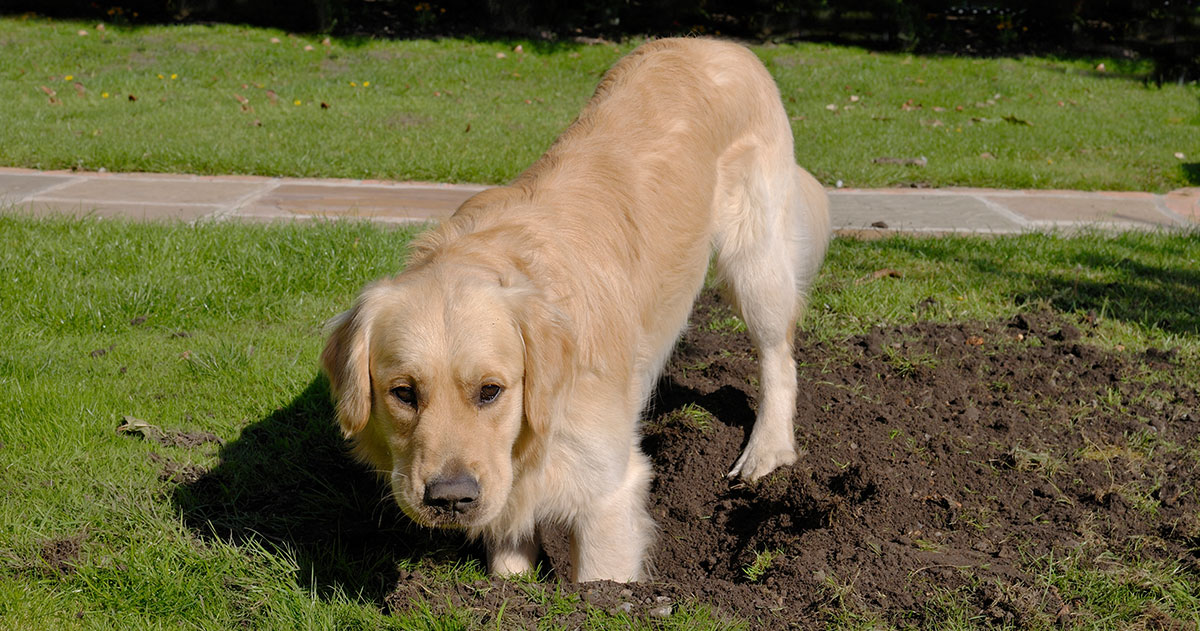
If your dog is digging holes in the artificial grass, your first thought may be, “But I bought fake grass specifically to avoid yard destruction.” Fair. Artificial turf is supposed to be the tidy, mud-free, low-maintenance hero of the backyard. Then your dog strolls in like a tiny excavation contractor, claws at the seams, flings infill like confetti, and proudly reveals a corner of the base layer you never wanted to see again.
The truth is that artificial grass can reduce digging opportunities, but it does not erase a dog’s digging instinct. Dogs dig for comfort, curiosity, boredom, anxiety, prey scent, escape attempts, nesting, toy hiding, and sometimes simply because scratching the ground feels satisfying. When that ground happens to be synthetic turf, the behavior may show up as pulled seams, lifted corners, claw marks, bald patches, loose infill, or holes near the fence line.
The good news? Your dog is probably not plotting against your landscaping budget. Digging is communication. Once you understand what your dog is trying to say, you can protect your artificial lawn, redirect the habit, and keep your backyard from looking like a miniature golf course designed by a raccoon.
Why Dogs Dig, Even When the Grass Is Artificial
Artificial grass changes the surface, but it does not change the dog. Many dogs are hardwired to paw, scratch, burrow, and investigate. Terriers, Dachshunds, Beagles, Huskies, Malamutes, and other high-energy or hunting-influenced breeds may be especially enthusiastic about digging, but any dog can develop the habit.
With natural grass, dogs dig into soil. With artificial turf, they may target weaker spots: edges, seams, joins, corners, drainage gaps, loose infill, or places where smells collect. A dog does not need a shovel to cause damage. Four determined paws and ten quiet minutes are enough.
1. Your Dog Is Bored and Inventing a Job
One of the most common reasons dogs dig in artificial grass is boredom. A backyard is not automatically entertaining just because it is outdoors. To a dog, an empty yard can feel like being placed in a green waiting room with no magazines.
If your dog is left outside for long periods without toys, training, scent games, walks, or human interaction, digging may become the activity of choice. It burns energy, provides sensory feedback, and creates a project. Unfortunately, your turf is the project.
Signs that boredom may be the cause include digging when your dog is alone, digging after a missed walk, chewing patio furniture, barking at nothing in particular, pacing the fence, or suddenly becoming very “creative” in the yard.
2. Your Dog Smells Something Under the Turf
Dogs experience the world through scent. Artificial grass can trap smells in ways humans do not immediately notice. Urine residue, food crumbs, old treats, wildlife scent, soil odor beneath the base, or even insects and small animals nearby can make one patch of turf fascinating.
If your dog repeatedly digs in the same spot, the issue may be scent-driven. The target might be near a tree, fence, drain, patio edge, or shaded area where moisture and odors linger. To your dog, that spot may smell like breaking news.
This is especially common when artificial grass is not rinsed regularly, when drainage is slow, or when the infill has become compacted. The surface may look clean, but the scent story underneath can still be loud.
3. The Turf Edge Is Loose and Too Tempting
Dogs are opportunists. If they find a lifted corner, loose seam, or slightly raised edge, they may paw at it the way a person picks at a peeling sticker. Once the edge moves, the game becomes more rewarding. The turf lifts, the base appears, the texture changes, and suddenly your dog has unlocked a new backyard feature.
This is one reason dogs often dig along borders, seams, gates, patios, and fence lines. The turf may not be securely fastened, the nails or staples may have shifted, the adhesive may have weakened, or the installation may not have been built with a determined dog in mind.
4. Your Dog Is Trying to Cool Down
Natural soil can feel cool beneath the surface, which is why some dogs dig shallow holes and lie in them during hot weather. Artificial grass does not offer the same cooling effect as loose dirt. In direct sunlight, synthetic turf can become warm or even uncomfortable depending on material, infill, shade, and weather conditions.
If your dog digs and then lies on or near the disturbed area, heat may be part of the problem. Your dog may be trying to create a cooler resting spot, even if the artificial grass refuses to cooperate with the physics of dirt.
Provide shaded areas, fresh water, cooling mats, supervised indoor breaks, and avoid long outdoor sessions during peak heat. If the turf feels too hot for your bare hand or foot, it is too hot for relaxed dog lounging.
5. Your Dog Is Anxious or Frustrated
Digging can be a stress behavior. Dogs may dig when they are worried, overstimulated, confined, lonely, or reacting to triggers such as storms, fireworks, construction noise, unfamiliar dogs, or separation from their owner.
Anxiety-related digging often looks frantic. Your dog may target doors, gates, fence lines, corners, or areas close to the house. You may also notice panting, whining, drooling, pacing, barking, trembling, or destructive chewing.
If digging happens mostly when your dog is left alone, separation anxiety may be involved. In that case, simply blocking the turf may not solve the real problem. A veterinarian, certified trainer, or veterinary behavior professional can help you create a safe behavior plan.
6. Your Dog Wants to Escape
Digging near fences, gates, or boundary edges is often about escape. The motivation may be curiosity, boredom, fear, mating instincts, neighborhood dogs, wildlife, or the irresistible mystery of whatever is happening on the other side of the fence.
Artificial grass can hide the early stages of escape digging because the turf may lift before soil becomes visible. Check fence lines carefully. A dog that digs near a boundary should not be left outside unsupervised until the area is secured.
7. Your Dog Is Burying Toys, Bones, or Treasure
Some dogs still carry the ancient instinct to hide valuable items. That expensive chew you bought? Your dog may see it as a priceless family heirloom that must be buried immediately beneath the fake lawn.
If you find toys, bones, treats, or chews near damaged turf, caching may be the cause. Avoid giving outdoor bones or high-value chews on artificial grass if your dog tends to bury things. Offer them indoors, on a mat, or in a supervised area where digging is not available.
Why Artificial Grass Can Make Digging Damage Worse
Natural grass can recover from small scratches. Artificial grass cannot grow back, apologize, and pretend nothing happened. Once a dog lifts a seam or tears the backing, the damage can spread quickly.
Here are the turf-specific reasons a digging habit becomes expensive.
Weak Seams and Poor Installation
Artificial grass is only as strong as its installation. If seams are not properly joined, edges are not secured, or the base is uneven, a dog can find the weakness fast. Dogs do not need an engineering degree. They just need curiosity and paws.
Compacted or Missing Infill
Infill helps support turf blades, improve stability, and protect the backing. When infill becomes compacted, uneven, or washed away, the turf may feel different underfoot. Dogs may scratch at those areas because the texture changes or because odors collect there.
Poor Drainage
Pet-friendly artificial grass should drain well. If urine or rinse water lingers, odor can build beneath the surface. That smell may attract repeated digging, licking, pawing, or marking. Drainage depends on the turf backing, base material, slope, infill, and maintenance routine.
Exposed Corners and Edges
A raised edge is basically an invitation. Dogs notice texture changes. Once they realize the turf can move, digging becomes more rewarding. Secure edges are especially important around gates, patios, walkways, planters, and fence lines.
How to Stop Your Dog Digging Holes in Artificial Grass
The best solution is not one magic spray, one stern lecture, or one dramatic backyard announcement beginning with “Listen here, Bark Twain.” You need to address both the behavior and the surface.
Step 1: Find the Pattern
Before fixing the turf, study the digging. Ask yourself:
- Does it happen when my dog is alone?
- Is the digging always in the same spot?
- Is it near a fence, gate, seam, or corner?
- Does it happen after missed walks or long indoor periods?
- Does my dog dig and then lie down?
- Are there signs of odor, poor drainage, or loose infill?
- Is my dog anxious, panting, barking, or trying to escape?
The pattern tells you the cause. The cause tells you the fix.
Step 2: Increase Exercise and Enrichment
A tired dog is not automatically a perfect dog, but a fulfilled dog is less likely to remodel your lawn. Add daily walks, sniff walks, tug, fetch, training games, puzzle feeders, scatter feeding, hide-and-seek, and safe chew sessions.
Sniffing is especially powerful. A slow twenty-minute scent walk can be more satisfying than a rushed march around the block. Let your dog use their nose. A mentally satisfied dog is less likely to use the turf as a crossword puzzle.
Step 3: Create an Approved Digging Zone
If your dog truly loves digging, give the behavior a legal address. Set up a sandbox, digging pit, or designated corner with sand or loose soil. Bury toys or treats there and praise your dog for digging in the correct spot.
Redirecting works better than constant punishment. When your dog digs the turf, calmly interrupt and guide them to the digging zone. When they dig there, celebrate like they just won a small, sandy Nobel Prize.
Step 4: Clean and Deodorize the Turf
Rinse pet areas regularly, especially after urination. Remove solid waste quickly. Use an enzyme-based cleaner that is safe for artificial grass and pets. Avoid harsh chemicals that may irritate paws or damage turf materials.
If your dog targets one area repeatedly, clean that area deeply. Check whether drainage is slow or whether the infill smells. Sometimes the digging problem is not “bad behavior.” Sometimes the turf smells like a dog message board.
Step 5: Repair Loose Seams and Edges Quickly
Small turf damage becomes big turf damage when ignored. Re-secure lifted edges, repair seams, replace damaged infill, and patch torn backing before your dog discovers that demolition is fun.
For persistent diggers, ask a professional installer about stronger edging, better anchoring, pet-grade turf, improved base preparation, or replacing a damaged section. A well-secured edge gives your dog fewer opportunities to start the habit again.
Step 6: Block High-Risk Areas Temporarily
Use patio furniture, planters, exercise pens, temporary fencing, or decorative barriers to block damaged spots while you retrain. This is not a forever solution, but it prevents rehearsal. Every successful digging session teaches your dog, “Excellent, this works.”
Step 7: Manage Heat and Comfort
If your dog digs to cool down, add shade sails, umbrellas, trees, cooling beds, fresh water stations, and indoor breaks. Spray the turf lightly with water during hot weather if appropriate for your turf system. Never force a dog to stay on hot artificial grass.
Step 8: Address Anxiety, Not Just the Hole
If your dog digs when alone, during storms, near exits, or while showing stress signals, focus on emotional safety. Add predictable routines, safe indoor resting areas, gradual alone-time training, calming enrichment, and professional support when needed.
Punishing anxiety-driven digging can make stress worse. The goal is to help your dog feel secure, not just make the lawn look innocent again.
What Not to Do When Your Dog Digs Artificial Grass
Do not yell after the fact. Your dog will not connect your speech about landscaping investments to the hole they dug twenty minutes ago. Do not use unsafe repellents, hot pepper, toxic chemicals, or anything that could burn paws or noses. Do not leave an escape digger unsupervised near a fence. Do not assume artificial grass is maintenance-free. It is low maintenance, not no maintenance.
Most importantly, do not ignore small damage. Once the turf lifts, the digging becomes easier, more interesting, and more rewarding.
When to Call a Professional
Call a veterinarian or qualified behavior professional if digging is sudden, intense, anxiety-related, paired with self-injury, or accompanied by major behavior changes. Pain, stress, cognitive changes, compulsive behavior, and separation anxiety can all require expert help.
Call a turf installer if the grass is lifting at seams, drainage is poor, odor keeps returning, the base is exposed, or your dog has torn the backing. Behavior training works best when the turf is not practically begging to be shredded.
Experience-Based Tips From Living With a Turf-Digging Dog
Many dog owners discover the artificial grass digging problem in the most dramatic way possible: by opening the back door and finding their dog standing proudly over a wrinkled patch of turf like a contractor waiting for payment. The first reaction is usually disbelief. After all, artificial grass was supposed to stop mud, holes, brown patches, and weekend lawn repairs. Instead, the dog has found the one seam in the entire yard and treated it like buried treasure.
In real life, the fix usually begins with observation. One owner may notice that the dog only digs at 4 p.m., right before dinner, which suggests boredom and anticipation. Another may discover digging after rain, when odors rise from the base layer. Someone else may find that the dog digs only in summer and then flops belly-down in the shade, which points to heat and comfort. The hole is the symptom; the schedule is often the clue.
A practical approach is to keep a simple digging diary for one week. Write down the time, weather, location, what happened before the digging, and what your dog did afterward. Did the dog sniff first? Scratch once and leave? Dig frantically? Try to pull up the corner? Lie down? Run to the fence? These small details matter.
One of the most effective changes is adding a “before-yard routine.” Instead of opening the door and letting the dog self-entertain, spend five minutes on a mini training session: sit, touch, spin, find it, and a short toy chase. Then give the dog a puzzle toy, frozen lick mat, or scatter-fed kibble in an approved area. This changes the yard from “go invent trouble” to “go do this satisfying thing.”
Another helpful trick is building a legal digging box. It does not have to be fancy. A child’s sandbox, raised garden bed, or shallow wooden frame filled with clean play sand can work. Bury a few toys near the surface at first so the dog wins quickly. Then gradually make the game harder. The dog learns that digging is allowed, but only in the place where humans do not make that expensive sighing noise.
For turf protection, owners often underestimate the importance of edges. If your dog has already lifted one corner, simply pressing it back down is not enough. The area needs to be properly re-secured, cleaned, and made boring. Otherwise, the dog returns to the same spot because it has a memory of success. Dogs are excellent at remembering where fun happened.
Cleaning also matters more than people expect. A turf patch can look spotless while still holding odor underneath. Regular rinsing, enzyme cleaning, brushing, and checking infill can reduce repeat digging in scent-heavy zones. If the yard has poor drainage, no amount of training will fully solve the smell problem.
The biggest lesson is that dogs rarely dig artificial grass “for no reason.” They dig because something about the situation works for them. It relieves energy, reveals scent, creates comfort, reduces stress, starts a game, or opens a possible escape route. Once you meet the need in a better way and repair the turf weakness, the behavior usually becomes much easier to manage.
Conclusion: Your Dog Is Not Broken, and Your Turf Is Not Doomed
If your dog is digging holes in the artificial grass, do not panic. The behavior is frustrating, but it is also understandable. Dogs dig because they are bored, curious, hot, anxious, scent-driven, playful, instinctive, or trying to escape. Artificial turf can reduce mud and lawn damage, but it still needs secure installation, regular cleaning, good drainage, and quick repairs.
The winning formula is simple: identify the cause, enrich your dog’s day, provide a better digging outlet, clean odor-prone areas, secure weak turf spots, and get professional help when anxiety or major damage is involved. With the right plan, your dog can enjoy the backyard without turning your artificial grass into a crime scene with paw prints.














