
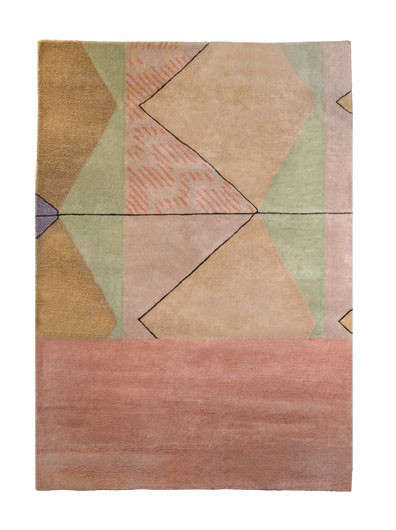
Some rugs politely sit on the floor and mind their business. Alyson Fox’s Landscape Rug is not one of them. This one arrives with the confidence of modern art, the softness of a luxury textile, and the visual intrigue of a satellite image that decided it was too stylish to stay in orbit. Designed in collaboration with Hawkins New York, the rug became memorable for turning abstract geometry into something warm, tactile, and unexpectedly emotional.
At first glance, the piece feels graphic and architectural. Look a little longer, though, and it starts reading like land seen from above: divided fields, shifting terrain, roads you can almost imagine, and the quiet poetry of open space. That tension between order and softness is exactly why the rug still gets design people a little dramatic. Not full Oscar speech dramatic, but definitely “let me tell you why this rug matters” dramatic.
For anyone searching for a designer area rug that feels thoughtful rather than trendy, Fox’s Landscape Rug is a perfect case study. It blends fine-art energy with real-home practicality, proving that a statement rug can still feel grounded, livable, and surprisingly versatile. Even though the original piece was a limited edition and is no longer a mainstream retail staple, its design logic still feels fresh. In other words, it may be discontinued, but it definitely did not retire quietly.
What Alyson Fox’s Landscape Rug Actually Is
The original Alyson Fox x Hawkins New York Landscape Rug was created as a limited-edition piece with a hand-drawn geometric design inspired by aerial views of rural landscapes. It was produced in a 5′ x 7′ format and made with art silk and wool with a cotton backing, giving it both softness and visual depth. It was also marketed as a rug that could work as wall art, which tells you right away that this wasn’t designed to be a quiet background piece.
- Designer: Alyson Fox
- Retail collaboration: Hawkins New York
- Edition: Limited edition of 25
- Size: 5′ x 7′
- Materials: Art silk, wool, cotton backing
- Look: Hand-drawn geometric landscape
- Care: Professional cleaning recommended
Those details matter because they place the rug in a very specific category: not mass-market décor, not casual throw-it-anywhere floor covering, but a collectible modern rug with genuine designer pedigree. It was built to be seen, discussed, and styled with intention.
Why the Design Still Feels So Good
It turns landscape into abstraction
One of the smartest things about this rug is that it does not depict a landscape literally. There are no trees, mountains, barns, or little sheep doing their best pastoral performance. Instead, Fox translates the feeling of landscape into blocks, lines, tonal shifts, and irregular shapes. The result is more sophisticated than obvious nature-inspired décor. It gives you the calm of land without shouting “farmhouse theme” from across the room.
It keeps geometry from feeling cold
Geometric rugs can sometimes feel stiff, especially when the lines are too crisp or the palette is too severe. Fox avoids that trap by leaning into the hand-drawn quality of the design. The shapes feel organic rather than mechanical, which softens the composition and makes it more human. It is modern, yes, but not sterile. Think edited, not icy.
It behaves like floor art
The best statement rugs do more than cover square footage. They anchor the room, set the palette, and give the furniture something meaningful to gather around. That is exactly what Landscape Rug does. It acts like a painting for the floor, except you get to walk on it, which is a very nice perk unless your paintings are unusually durable.
The Alyson Fox Design Language Behind the Rug
Alyson Fox is known for working across multiple creative mediums, from art and illustration to textiles, interiors, and product collaborations. That range helps explain why Landscape Rug feels so layered. It was not designed by someone thinking only about surface pattern. It was designed by someone who understands composition, materials, atmosphere, and the way objects change a room emotionally.
Fox’s broader work often balances restraint with personality. Her interiors and objects tend to feel pared down, tactile, and quietly expressive. That same sensibility is visible here. The rug is bold enough to lead a room, but it still leaves breathing space. It has presence without ego. Frankly, many people should take notes.
This balance also helps explain why the rug works in homes that are not ultra-minimalist. It can sit comfortably in a modern interior, but it can also play well with vintage wood, plaster walls, linen upholstery, ceramic lamps, and collected objects. It does not demand a museum setting. It just asks for a room with a pulse.
Materials, Texture, and Why They Matter
The material mix is a big part of the rug’s appeal. Wool brings warmth, resilience, and body. It is one of the most respected rug fibers because it holds up well and keeps its appearance over time. Art silk adds sheen and a more refined visual finish, helping the design catch light and read with a little more dimension. A cotton backing gives structure and support.
Together, those materials create a rug that looks richer than a flat printed pattern ever could. The surface has movement. Depending on the light, certain shapes appear softer, brighter, or more shadowed. That makes the design feel alive in the room. Morning light may pull out one part of the palette; evening light may make the whole piece moodier and more grounded. It is basically interior design’s version of having range.
That said, this is not the kind of rug you buy if you want zero-maintenance living. Professional cleaning is the right move, and a rug pad is essential. If your lifestyle involves daily chaos, muddy paws, spilled juice, and a strong commitment to pretending coasters are optional, you may want a more forgiving performance rug in high-traffic zones. Landscape Rug is practical enough for real life, but it is still a design piece that benefits from some respect.
How to Style Alyson Fox’s Landscape Rug
In the living room
This is arguably the rug’s natural habitat. In a living room, it can anchor a seating arrangement and do the heavy lifting visually, which means the rest of the room can relax a little. Pair it with a low-profile sofa, a wood or stone coffee table, and upholstery in warm neutrals, clay, muted green, rust, or soft charcoal. If the rug is the hero, let the supporting cast be talented but not needy.
Because the design already contains movement, avoid piling on too many competing patterns nearby. A striped throw pillow or one subtle print is fine. Seven loud patterns fighting for attention? That is not a room. That is a group project gone wrong.
In the bedroom
Landscape Rug works beautifully in a bedroom if you want the space to feel artistic instead of overly precious. Its softer tones and abstract layout can add character without disturbing the calm. Place it under the lower two-thirds of the bed or position it so there is enough visible rug around one side to enjoy the pattern. Bedrooms are also ideal for more tactile, luxurious rugs, so the material story makes sense here.
In a studio, office, or creative room
If you have a home office, library, or studio that needs a little inspiration underfoot, this kind of rug makes a strong case for itself. The pattern feels cerebral without becoming severe. It can help define the room as a creative zone, especially when paired with open shelving, framed artwork, ceramics, and furniture with clean lines.
Hung as art
One of the most interesting facts about the original release is that it was presented as something that could be hung on the wall. And honestly, that tracks. If you are styling a loft, stair landing, or large blank wall and want textile warmth instead of another framed print, a rug like this can create incredible texture. It reads as modern art, but warmer and less intimidating. Nobody whispers in front of it. That helps.
Placement Tips That Make a Big Difference
Even the prettiest rug can fail if the size and placement are wrong. A beautiful rug floating awkwardly in a room is like a great haircut under a bike helmet. The potential is there, but the presentation is suffering.
- In a living room, place at least the front legs of the main furniture on the rug.
- Allow enough rug beyond the sofa and chairs so the composition feels intentional rather than cramped.
- In a bedroom, extend the rug enough so you step onto it when getting out of bed.
- Use painter’s tape to test the footprint before committing.
- Add a rug pad slightly smaller than the rug to improve grip, comfort, and longevity.
Because the original Landscape Rug is 5′ x 7′, it works best in smaller living rooms, bedrooms, offices, reading corners, or as a layered accent in larger spaces. It is not a wall-to-wall giant, and that is part of its charm. It behaves like a focused visual statement rather than a broad neutral backdrop.
Who This Rug Is Perfect For
This rug is a dream for people who like interiors with personality but do not want their homes to look like trend reports in physical form. It is especially well suited to:
- Collectors of modern and artisanal home décor
- People who love geometric rugs but want something softer and more nuanced
- Homeowners who treat rugs as foundational design pieces
- Anyone building a room around art, texture, and a quiet natural palette
- Design lovers who appreciate limited-edition collaboration pieces
It is probably less ideal for someone who wants a purely practical, stain-resistant, kid-proof, dog-proof, life-proof rug in the busiest area of the house. This is a rug to live with, not a rug to neglect. There is a difference.
Why It Still Matters in Today’s Rug Conversation
Current rug trends continue to favor bold pattern, strong geometry, layered texture, and statement-making floor pieces. That makes Alyson Fox’s Landscape Rug feel surprisingly contemporary, even years after its release. In fact, the design feels even more relevant now because today’s interiors are less interested in perfection and more interested in warmth, individuality, and pieces that tell a story.
The rug also fits neatly into a larger shift in decorating: people increasingly want homes that feel collected, not copied. They want a room that looks like it belongs to a person, not a search result. Landscape Rug delivers that. It has narrative. It has authorship. It has enough edge to feel special and enough softness to remain welcoming.
And maybe that is the real secret. The rug does not just decorate a room. It changes the room’s point of view.
Experiences Related to Alyson Fox’s Landscape Rug
Living with a rug like Alyson Fox’s Landscape Rug would be a different experience from living with a plain neutral area rug, and that difference shows up almost immediately. The first thing most people would notice is how often the eye returns to it. A simple solid rug tends to disappear into the room after a few days. This one would not. It would keep offering little visual moments: a shape that suddenly looks like a field boundary, a color transition that feels softer in afternoon light, a corner that reads differently once the furniture is moved a few inches. It would feel less like décor and more like an object you keep discovering.
There is also the emotional experience of decorating around a rug that already has a point of view. With many rugs, you choose the room first and the rug second. With this one, the process often flips. You start thinking, “Okay, what kind of lamp deserves to sit near this?” or “Maybe the coffee table should be wood instead of black metal.” The rug becomes the conversation starter for the room, which can actually make decorating easier. Instead of drowning in endless choices, you are responding to something specific. Design indecision hates a strong lead actor.
Another likely experience is that the room feels calmer without becoming boring. Because the pattern is abstract and landscape-based, it brings movement without noise. That matters more than people think. A loud floral or an overly busy motif can dominate the room and wear on you over time. Fox’s design would probably do the opposite: it would add character while still letting the space breathe. That kind of visual balance is why some rooms feel restorative and others feel like they need a nap.
Guests would almost certainly comment on it, too. Not in the generic “nice rug” way people say when they have run out of things to compliment, but in the more curious way: “Wait, where is that from?” or “Is that supposed to look like a landscape?” That reaction matters because it reveals what the rug does best. It creates engagement. It invites interpretation. It rewards attention. Those are qualities we usually talk about in relation to art, not floor coverings, which is precisely why this piece stands out.
There is also the physical experience. A wool-and-art-silk blend would likely feel warmer and more substantial underfoot than a flatter, cheaper alternative. In a bedroom or sitting room, that can subtly change the way a space is used. People sit on the floor more. They linger longer. The room feels finished in a way bare flooring rarely does. Add a proper rug pad underneath, and the whole setup becomes softer, quieter, and more stable.
Finally, there is the long-term experience of owning something that does not feel disposable. Even if the rug requires more thoughtful care, that effort tends to create attachment. You rotate it, protect it, clean it properly, and keep noticing how well it still works with new objects as the room evolves. That is usually the mark of a successful design purchase: not that it looked good on day one, but that it keeps looking right as your home changes around it.
Final Thoughts
Alyson Fox’s Landscape Rug remains a standout example of what a modern area rug can be when art, materiality, and interior thinking come together. It is graphic without being harsh, natural without being rustic, and expressive without becoming chaotic. The original limited-edition run only adds to its allure, but the deeper lesson is bigger than rarity. This rug works because it understands how people want to live now: surrounded by objects that feel personal, tactile, and quietly unforgettable.
If you love rugs that do more than fill floor space, this one deserves its reputation. It does not whisper. It does not yell. It simply changes the whole room in a voice that knows exactly what it is saying.














