
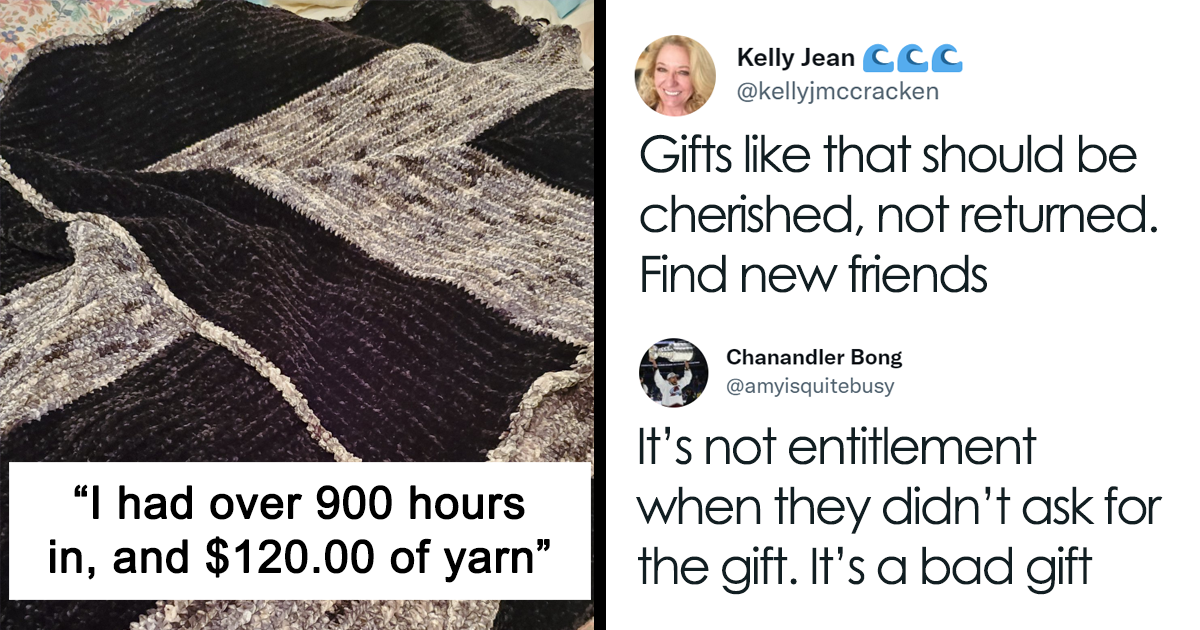
There are ordinary gifts, and then there are handmade giftsthe kind that come bundled with yarn fuzz, sore wrists, and approximately one million tiny decisions. So when a woman shared that she had spent around 900 hours crocheting a blanket for her friend’s son, only to have it returned because he preferred “designer” gifts, the internet did what the internet does best: it turned into a giant, emotionally invested jury with Wi-Fi.
The story struck a nerve because it was never really just about a blanket. It was about effort. Taste. Gratitude. Misread expectations. And that awkward social truth nobody enjoys admitting out loud: sometimes a gift can be deeply thoughtful and still land with the grace of a folding chair. That tension is exactly why this crochet blanket controversy spread so quickly and why people were so divided over who, exactly, had committed the greater offense.
On one side, people saw a handmade labor of love tossed back like a bad department-store candle. On the other, some argued that a recipient is not morally required to adore a surprise gift simply because it took forever to make. And honestly? Both reactions tell us something useful about modern gift-giving, especially when handmade items are involved.
The Viral Crochet Blanket Story, Minus the Internet Foam Finger
According to the woman’s viral post, she was 68, still working full-time, and crocheted in her spare time. She said she made a blanket for a friend’s son on the occasion of his 21st birthday, spending more than 900 hours on the project and about $120 on yarn. She also included $121 in cash. Then came the emotional pothole: the blanket was returned, and she said her friend explained that her son only liked “designer” gifts.
That detail is what launched the whole thing into orbit. Not because everyone suddenly became a crochet expert overnight, but because “designer gifts only” sounds like the kind of phrase that arrives in a movie right before the audience boos. The internet responded with the usual split-screen morality play. Many people called the son rude, spoiled, and wildly ungrateful. Others took a cooler approach and said that while the woman’s hurt was understandable, a handmade giftespecially a big home item like a blanketcan be a mismatch if the recipient never asked for it.
And there it is: the tiny social landmine wrapped inside a giant cozy rectangle. A handmade gift can be heartfelt and high effort, but it is still a gift shaped by the giver’s taste, time, and assumptions. If the recipient does not share that vision, trouble starts quietly and then suddenly everyone is yelling in the comments.
Why The Internet Was So Divided
Team “That Was Incredibly Rude”
This side of the debate is not hard to understand. Handmade gifts carry a kind of emotional weight that store-bought gifts often do not. A crocheted blanket is not something you grab while buying shampoo and batteries. It represents planning, patience, money, and repetitive work that can stretch over weeks or months. Even people who do not crochet understand that 900 hours is not casual hobby time. That is commitment with carpal tunnel potential.
Etiquette experts have long emphasized that receiving a gift gracefully matters. Basic manners are not really about pretending every present is your soulmate in object form. They are about acknowledging effort, thanking the giver sincerely, and not treating their generosity like a returnable inconvenience. That is why so many readers saw the returned blanket as a rejection not just of the item, but of the woman herself.
There is also the handmade factor. In etiquette guidance about regifting, handmade or personalized gifts are usually treated as especially sensitive because they carry sentimental meaning and are more likely to hurt feelings if passed along or rejected. In other words, if somebody made it with their hands, the emotional invoice is attached whether anyone wants to admit it or not.
Team “A Gift Isn’t A Lifetime Contract”
The opposing view is less dramatic, but not unreasonable. Some commenters argued that recipients are allowed to have preferences. A 21-year-old may not want a large crocheted blanket, especially if it does not fit his style, space, or daily life. A gift can be generous and still be impractical. A handmade blanket is not exactly a neutral object; it can dominate a room, dictate a color scheme, and require care that the recipient may not understand or want to manage.
This camp also raised a point crafters sometimes hate hearing: surprise handmade gifts are risky. The more personal and time-intensive the gift, the more dangerous it can be if the giver never checks the recipient’s taste. A handmade present can accidentally become a burden. If the recipient keeps it out of guilt, hides it in a closet, or quietly donates it later, everyone loses and the blanket ends up starring in a completely different drama.
So yes, the son’s response sounded harsh. But the broader debate exposed a truth many makers know deep down: not every labor-intensive gift is automatically a good fit just because it is made with love.
What 900 Hours Really Means In Handmade Terms
Let’s pause for a moment and appreciate the scale here. Nine hundred hours is not “I watched two episodes and finished a scarf.” It is months of spare-time work. It is rows on lunch breaks, rows after work, rows on weekends, and rows while muttering that this better look worth it in the end. For crafters, a large blanket is rarely just a project. It becomes a companion piece in your life while you are making it.
That is one reason handmade gifts can hit harder than store-bought ones when they are rejected. The object absorbs the maker’s time in a very literal way. Crochet is repetitive, tactile, and often meditative. Research on crochet and textile crafts has linked the practice to wellbeing, mindfulness, rhythm, and emotional regulation. So when a long project is dismissed, the sting is not only “they did not like my gift.” It can feel like “they rejected months of my care.”
This is also why people who do not craft sometimes underestimate the emotional value of a handmade blanket. They may see a throw. The maker sees evenings, effort, and an entire private weather system of concentration.
Handmade Gift Etiquette: Where Good Intentions Meet Real Life
For The Giver
If this story teaches one lesson, it is that handmade gifts work best when they are half art and half research. Before sinking hundreds of hours into a blanket, quilt, sweater, or anything that will live in someone’s home, it helps to know what they actually like. Color preferences, style, allergies, fiber sensitivity, washing habits, pets, kids, even whether they live in a tiny apartmentall of it matters.
This does not mean handmade gifts should become joyless focus groups. It simply means you should aim your generosity with a little more precision. A “surprise” is wonderful. A “surprise that matches the recipient’s life” is better. If there is uncertainty, smaller handmade gifts often travel better than giant statement pieces. Think scarves, hats, baby blankets, dishcloth sets, simple throws, or giftable items with practical use and easier care.
Another smart move is to include care information. Many handmade items are not difficult to maintain, but they are not all built for the same laundry routine. Some fibers are machine washable. Others need cold water, gentle detergent, hand washing, or flat drying. A gorgeous gift becomes much more usable when the recipient knows how not to accidentally turn it into a doll-sized tragedy.
For The Recipient
If someone gives you a handmade gift, gratitude is not optional just because the item is not your exact aesthetic. You do not have to fake a lifelong romance with the blanket, but you do have to handle the moment with grace. Thank the person. Acknowledge the time and care involved. Do not turn their gift into a live performance review.
If the item truly will not work for you, there are kinder ways to navigate that reality. Sometimes the best response is simple appreciation in the moment and thoughtful private handling later. In more delicate situations, especially with close relationships, honesty may be necessarybut honesty can still be gentle. “This is beautiful, and I can see how much work went into it” lands differently from “I only like designer stuff,” which is the verbal equivalent of throwing a tomato at a wedding toast.
Thank-you etiquette matters here, too. Whether in person, by note, or by message, acknowledgment goes a long way. People remember gratitude. They also remember indifference. And only one of those memories helps at future birthdays.
The Blanket Care Angle Nobody Talks About Enough
One sneaky reason handmade blankets can feel intimidating is care. Different yarn fibers demand different treatment. Wool often needs hand washing and flat drying to avoid shrinking or felting. Some acrylic and blended yarns are designed for machine washing on a gentle cycle and low drying, which makes them much friendlier for busy households. Cotton, superwash wool, and certain baby-friendly yarns may be more practical depending on the project.
That matters because usability affects appreciation. A handmade blanket that is soft, durable, and easy to clean has a much better chance of becoming a loved everyday object instead of a “special item” nobody touches for fear of ruining it. For crafters making gifts, choosing yarn is not just a style decision. It is a strategy. A beautiful blanket that fits the recipient’s maintenance habits is a gift. A delicate textile requiring a four-step laundry ritual may feel like homework with fringe.
So, Who Was Wrong?
The internet loves a clean villain, but real life is messier than thatand honestly, messier than a yarn basket after someone “just looks for one skein.” The son’s response, as described online, came off as shallow and unkind. Rejecting a painstaking handmade gift because it is not “designer” sounds terrible because, frankly, it sounds terrible.
At the same time, the story also works as a cautionary tale for makers. A massive handmade gift should ideally be guided by the recipient’s preferences, not only the maker’s affection. Love is a beautiful ingredient, but it is not a substitute for fit.
The fairest conclusion is this: the giver was generous but may have misjudged the audience; the recipient was entitled to his own taste but appears to have handled the situation badly. The blanket became the battleground because both truths existed at once. And that is exactly why the story kept people arguing long after the last stitch was made.
What Crafters And Gift-Givers Can Learn From This
If you make gifts, match the project to the person, not just the occasion. Ask quiet questions. Notice what colors they wear. Find out whether they like handmade décor, minimalist interiors, or machine-wash-everything lifestyles. If in doubt, go smaller, softer, and easier to care for.
If you receive gifts, remember that tact costs nothing and saves relationships. You do not need to pretend every present is perfect, but you should honor the goodwill behind it. Kindness is not lying. It is knowing that a human being stands behind the object in your hands.
And if you ever feel tempted to say you only like designer gifts, maybe sit down, drink some water, and let the blanket speak for itself. Chances are it already said more than enough.
Related Experiences That Make This Story Feel So Familiar
Part of the reason this crochet blanket story spread so far is that people have seen versions of it before. Handmade gift conflicts pop up again and again because they sit at the intersection of love, labor, taste, and ego. One crocheter described being stunned when a carefully made blanket for a sister-in-law was criticized over small imperfections and effectively returned for “fixing.” Another viral family dispute centered on a handmade quilt rejected because it did not include a photo of the recipient’s beloved dog. In yet another debate, a woman refused to wear a dress her niece offered to sew for an important work event, sparking arguments over whether honesty was practical or hurtful.
These examples may involve different crafts, but the emotional pattern is weirdly consistent. The maker thinks, “I made this for you with care.” The recipient thinks, “I did not ask for this exact thing.” Then both sides feel misunderstood, and suddenly a blanket, quilt, or dress is carrying enough social tension to qualify for frequent-flyer miles.
Real-life crafters talk about this all the time. Some say they no longer make large gifts unless the recipient explicitly requests them. Others keep handmade presents small and useful to reduce pressure. Baby blankets, dish towels, washcloths, simple throws, hats, and lap blankets often work better because they are easier to store, easier to clean, and easier to appreciate without redesigning your living room around them.
There is also the issue of visibility. Handmade gifts are intimate because they are personal, but they are also public in a strange way. A crocheted blanket draped over a couch says something about the person who owns it. A quilt on a bed becomes part of the room. A sweater announces itself every time it is worn. That is why recipients can feel trapped when they dislike the item. It is not merely “a gift.” It becomes part of their environment and, in some cases, part of how other people see them.
Still, the best stories about handmade gifts tend to have one thing in common: communication. The happiest recipients often know the item is coming, helped choose colors, or at least had preferences considered. The happiest makers are usually the ones who understand that appreciation cannot be forced, but fit can be improved. Handmade gifting works beautifully when the project feels collaborative, even if only a little.
And maybe that is the larger lesson buried under all those stitches. A handmade gift should not be a test of the recipient’s gratitude, and receiving one should not feel like a pop quiz on emotional diplomacy. The sweet spot is somewhere in the middle: thoughtful making, thoughtful receiving, and just enough common sense to keep a blanket from becoming a relationship crisis. Which, let’s be honest, is a sentence nobody expects to write until the internet gets involved.
Conclusion
The story of the woman who crocheted a blanket for 900 hours only to have it returned stuck with people because it touched a universal nerve. Everyone wants to feel appreciated. Everyone also wants the freedom to like what they like. Handmade gifts amplify that tension because they are stitched with meaning before they ever reach the recipient.
In the end, the blanket debate is really a debate about human expectations. The maker hoped her time and care would be recognized. The recipient, rightly or wrongly, did not see the item as something he wanted. The internet supplied the outrage, but the lesson is quieter than that: generosity needs thought, and gratitude needs tact. When both are present, handmade gifts can become treasured keepsakes. When either is missing, even the coziest blanket in the world can start a frost front.














