Imagine lifting a cup, waving hello, or holding a grocery bag with a prosthetic arm that responds not to a complicated harness, not to three sticky electrodes, and not to a lab full of blinking equipmentbut to a tiny sensor picking up a signal from your body. That is the fascinating idea behind moving 3D printed prosthetic arms with a pulse. It sounds like something from a superhero origin story, except the “superpower” is engineering, patience, affordable materials, and a healthy amount of trial and error.
Modern prosthetic technology has come a long way from purely cosmetic limbs and body-powered hooks. Today, many advanced prosthetic arms use myoelectric control, meaning they read electrical activity from muscles in the residual limb. But while myoelectric prosthetic arms can be impressive, they can also be expensive, difficult to fit, and frustrating to control. That is where 3D printing and alternative biosensors enter the room, probably carrying a soldering iron and asking where the coffee is.
The concept of a pulse-controlled 3D printed prosthetic arm grew from a simple but powerful question: can a more accessible sensor help move a robotic hand? In maker and biomedical engineering communities, this question has inspired experiments using pulse sensors, muscle sensors, microcontrollers, servo motors, flexible sockets, and 3D printed components. The result is not a perfect replacement for a human handnothing isbut it points toward a future where prosthetic arms can be more affordable, personalized, repairable, and easier to learn.
What Is a 3D Printed Prosthetic Arm?
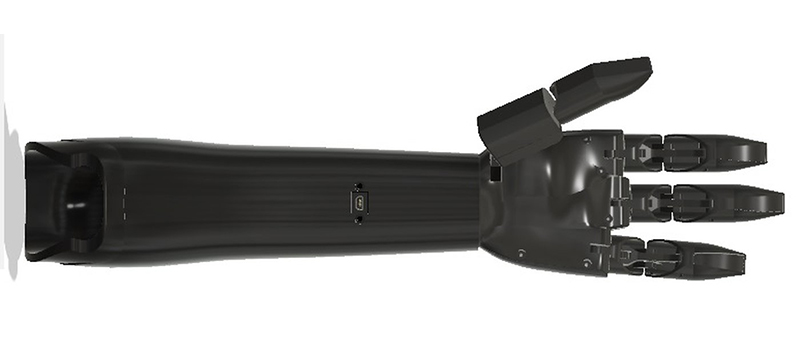
A 3D printed prosthetic arm is an artificial limb or limb component made using additive manufacturing. Instead of carving, molding, or machining every part through traditional methods, a designer creates a digital model, then a 3D printer builds the object layer by layer. The parts may include a hand, fingers, wrist structure, socket, cosmetic cover, sensor housing, or internal mechanical supports.
The biggest advantage is customization. A prosthetic arm is not a one-size-fits-all gadget. It has to match a person’s anatomy, limb difference, comfort needs, activity level, and daily routine. With 3D scanning, photogrammetry, or careful measurement, designers can create a socket and arm shape that better fits the wearer. If a child grows, a part breaks, or the user wants a new design, the file can be adjusted and printed again.
Traditional prosthetic arms can cost thousands to tens of thousands of dollars depending on materials, electronics, fitting, clinical care, and maintenance. 3D printing does not magically erase all costsclinical expertise still mattersbut it can reduce the price of prototypes, replacement parts, and experimental designs. It also gives schools, nonprofits, rehabilitation labs, and community makers a way to build assistive devices without needing a full industrial manufacturing plant.
Why “Moving With a Pulse” Is Such an Interesting Idea
When people hear “pulse-controlled prosthetic arm,” they may picture a device literally reading the heartbeat and opening the hand every time the heart goes thump-thump. That would make grocery shopping extremely dramatic. In practice, the idea is more subtle. A pulse sensor, especially an optical pulse sensor, is designed to detect changes in blood flow. However, when placed in certain locations, it may also pick up motion-related signal changes caused by muscle contraction, skin movement, or pressure changes.
In one well-known maker project, a team working on a 3D printed robotic prosthetic hand had previously used a MyoWare-style muscle sensor. The muscle sensor worked, but it required multiple electrodes and careful placement. For a real user, especially someone who wants to put on a prosthesis quickly and get on with life, that setup can be annoying. The team noticed that a pulse sensor could respond when the wrist moved, and they explored whether that signal could trigger the hand to open or close.
That experiment matters because prosthetic control is not only about advanced technology. It is also about usability. A prosthetic arm that performs beautifully in a lab but takes forever to set up may end up sitting on a shelf. A simpler device that works reliably enough for daily tasks may be far more useful. In prosthetics, convenience is not a luxury feature; it is part of whether the device becomes part of someone’s life.
How Biosensors Help Prosthetic Arms Move
Myoelectric Sensors
Myoelectric prosthetic arms use sensors placed on the skin to detect electrical signals created when muscles contract. The signal is processed by electronics and translated into movement commands, such as opening the hand, closing the hand, rotating the wrist, or switching grip patterns. This approach is widely studied and used in commercial upper-limb prosthetics.
The strength of myoelectric control is that it can feel more natural than pulling a cable or moving a shoulder harness. The challenge is that surface electrodes can shift, sweat can interfere, and users often need training to produce consistent signals. Advanced pattern-recognition systems can improve control, but they also add complexity, cost, and calibration needs.
Pulse Sensors
A pulse sensor is usually smaller, cheaper, and easier to place than a multi-electrode myoelectric setup. Instead of asking the user to attach several electrodes, a pulse-sensor approach may use a compact sensor mounted on a band, socket, or small printed housing. In experimental designs, the sensor signal can be filtered and used as a trigger.
This does not mean pulse sensors are automatically better than muscle sensors. They are noisy, sensitive to movement, and not originally designed to decode complex hand intention. But that is exactly what makes the idea fun and useful for prototyping. Engineers often discover new applications by misusing tools politely. A pulse sensor that “accidentally” detects motion can become a low-cost input method if the signal is cleaned up and mapped carefully.
Force, Pressure, and Flex Sensors
Other low-cost sensors can also support 3D printed prosthetic arms. Flex sensors detect bending. Force-sensitive resistors detect pressure. Small switches can detect contact. In more advanced systems, tactile sensors can help the prosthetic hand avoid crushing delicate objects. After all, nobody wants a robotic hand that treats a paper cup like a villain in an action movie.
The Basic Anatomy of a Pulse-Controlled 3D Printed Prosthetic Arm
A moving 3D printed prosthetic arm usually includes several core elements: the printed structure, a socket or wearable interface, actuators, a control board, a power source, and sensors. Each part has to work with the others. If one piece is uncomfortable, too heavy, too weak, or too power-hungry, the whole design suffers.
1. The Printed Hand and Arm Structure
The hand may be printed from PLA, PETG, nylon, carbon-fiber-filled filament, flexible filament, or other materials depending on the design. PLA is easy to print, but it may not hold up under heat or repeated stress as well as some alternatives. PETG can be tougher. Flexible materials like TPU or NinjaFlex can help with sockets, bands, or joints that need softness.
Designers must think about layer direction, stress points, joint clearance, and repairability. A beautiful part that cracks after a week is not a prosthesis; it is a very emotional paperweight. Strong design often means printing test parts, breaking them, learning why they failed, and printing again.
2. The Socket and Fit
The socket is one of the most important parts of any upper-limb prosthesis. It connects the device to the person. A poor socket can cause pain, skin irritation, slipping, pressure points, and device rejection. A good socket distributes force comfortably and keeps sensors aligned.
For 3D printed prosthetic arms, the socket may be created from scans, photos, or measurements of the residual limb. Some projects use flexible printed sections to improve comfort. Others combine printed parts with padding, straps, liners, or clinical socket-making techniques. Even in maker projects, input from prosthetists and occupational therapists is extremely valuable.
3. Actuators and Motors
To move the fingers, the arm needs actuators. Many prototypes use hobby servos, geared motors, tendons, or miniature linear actuators. A servo can rotate to a specific position, making it useful for opening and closing a finger. A tendon-driven design can mimic the way tendons pull human fingers, although the engineering is much simpler than biology’s deluxe factory model.
Some 3D printed hands use underactuated designs, where one motor controls multiple joints. This reduces weight, cost, and complexity. The tradeoff is less individual finger control. For everyday grasping, however, simple and reliable motion may be better than five perfectly independent robotic fingers that require a software engineering degree to operate.
4. Microcontroller and Code
The microcontroller is the decision-maker. Arduino-compatible boards, Adafruit Feather boards, Raspberry Pi devices, and other small controllers can read sensor input and send commands to motors. The code may include thresholds, filters, timing rules, safety stops, and calibration settings.
In a pulse-sensor design, the raw sensor value may jump around when the user walks, shifts the arm, or changes pressure against the sensor. Filtering helps smooth the signal so the hand does not randomly open and close like it is applauding a ghost. A simple moving average or low-pass filter can make the input more usable.
5. Battery and Power Management
Powered prosthetic arms need batteries. The battery must provide enough current for motors without making the arm too heavy. Designers also need charging circuits, voltage regulation, overload protection, and safe wiring. A reliable power system is not the glamorous part of the project, but it is the difference between “cool prototype” and “device someone can actually use for more than five minutes.”
Benefits of 3D Printed Prosthetic Arms
Lower Prototype Costs
3D printing makes experimentation cheaper. Instead of waiting weeks for a machined part, a team can print a new finger, socket cover, sensor mount, or gear overnight. This rapid iteration is especially helpful for children, whose bodies change quickly, and for users who need task-specific attachments.
Personalized Design
Many users want prosthetic devices that reflect their personality. A child may want superhero colors. An adult may prefer something sleek and subtle. Someone else may want a rugged tool-like appearance. 3D printing allows designers to customize shape, color, texture, and accessories without rebuilding an entire manufacturing process.
Repairability
If a printed finger breaks, it may be possible to reprint the part from a file. This is a major advantage for experimental and educational projects. Replacement parts can be kept digital until needed, reducing inventory and making repairs faster.
Community Innovation
Organizations and communities such as e-NABLE, Limbitless Solutions, university labs, and open-source prosthetic groups have shown how distributed design can expand access. Volunteers, engineers, clinicians, students, and users can collaborate to improve designs. In the best cases, the wearer is not just a recipient; they are part of the design team.
Limitations and Real-World Challenges
It is important not to oversell 3D printed prosthetic arms. They are promising, but they are not automatically medical-grade devices. Many printed prosthetic hands have lower grip strength, less durability, and fewer clinical outcomes than established commercial systems. Some are best understood as assistive tools, training devices, educational prototypes, or low-cost alternatives for specific tasks.
Fit remains a major challenge. A prosthetic arm must be comfortable enough to wear for long periods. Weight also matters. A device can look lightweight on a desk but feel heavy after hours on the body. Motors, batteries, wires, and printed shells add up quickly.
Control is another hurdle. A pulse sensor may be easier to wear than a myoelectric electrode setup, but it may not support complex commands. The device may need careful filtering to avoid false triggers. Walking, sweating, bumping the arm, or shifting the socket can create noisy data. For safety, powered prosthetic arms should also include ways to stop movement, limit force, and avoid pinching the user or others.
Regulation and clinical oversight matter too. In the United States, the FDA recognizes 3D printed medical devices, including external prosthetics, and devices must meet applicable safety and effectiveness requirements when they are marketed for medical use. A homebuilt prototype is not the same thing as a clinically prescribed prosthesis. Anyone considering a functional prosthetic device should work with qualified healthcare professionals, including prosthetists, physicians, and therapists.
Why User Training Is Just as Important as Technology
A prosthetic arm is not simply worn; it is learned. Users often need training to understand control signals, grip timing, device limits, and maintenance routines. With myoelectric arms, training may involve practicing specific muscle contractions. With pulse-triggered designs, training may involve learning what motion reliably activates the sensor without causing accidental movement.
Occupational therapy can help users practice real tasks: picking up keys, holding a cup, opening a drawer, carrying a bag, or stabilizing an object while the other hand works. The goal is not to win a robotics competition. The goal is to make daily life smoother. If the device helps someone cook breakfast, work at a desk, ride public transit, or feel more confident in public, that is a meaningful win.
The Future: Smarter, Lighter, and More Human-Centered
The future of 3D printed prosthetic arms will likely combine several technologies. Better materials will improve strength and comfort. Better sensors will reduce noise. Machine learning may help interpret user intention more accurately. Soft robotics may make fingers safer and more adaptive. Haptic feedback may allow users to feel pressure, texture, or temperature through the prosthesis.
However, the most important future improvement may be design philosophy. Successful prosthetics are not built around technology alone. They are built around people. That means asking users what they need, testing devices outside the lab, designing for maintenance, respecting clinical safety, and accepting that sometimes the “best” prosthetic arm is not the most futuristic one. It is the one someone actually wants to wear.
Experiences Related to Moving 3D Printed Prosthetic Arms With A Pulse
One of the most interesting experiences in working with pulse-controlled 3D printed prosthetic arms is discovering how different the lab is from real life. On a workbench, the sensor may behave perfectly. The hand opens. The hand closes. Everyone smiles. Someone says, “That was easy,” which is usually when engineering karma enters the room carrying a wrench. Then the user walks down a hallway, the sensor picks up vibration, and the fingers start moving when nobody asked them to. Suddenly, the project is no longer about making motion happen; it is about making motion happen only when intended.
This is where the human side of the technology becomes impossible to ignore. A person wearing the prosthetic arm is not a test fixture. They are moving, sweating, turning, talking, sitting, standing, and living. The device has to handle small surprises: a loose strap, a sensor pressed too hard into the skin, a battery running low, a socket rubbing after an hour, or a motor making noise in a quiet room. These details may not sound dramatic, but they decide whether the prosthesis feels empowering or exhausting.
Another common experience is the emotional impact of personalization. A 3D printed prosthetic arm can be designed in colors, shapes, and styles that feel less medical and more personal. For children, that may mean a bright superhero-inspired arm that makes classmates ask curious questions instead of awkward ones. For adults, it may mean a practical, lightweight tool that does not try to hide. In both cases, the prosthetic arm becomes more than hardware. It becomes part of self-expression.
There is also a learning curve for the design team. The first version of a printed socket may not fit well. The second may fit better but crack near a stress point. The third may solve the crack but place the sensor in the wrong spot. This cycle can be frustrating, but it is also the strength of 3D printing. Each failure teaches something quickly. Instead of treating the user as someone who must adapt to a finished device, the team can adapt the device to the user.
The pulse-sensor idea is especially valuable because it reminds designers to question assumptions. Myoelectric sensors are powerful, but they are not always convenient. A pulse sensor may not provide the same rich control, but it may be easier to put on and remove. That tradeoff could matter for someone who needs a simple open-close function more than advanced grip patterns. In assistive technology, elegance often means reducing friction. The best control system may be the one that disappears into the routine.
For users, the first successful movement can be unforgettable. Watching a printed hand respond to a body signaleven a simple triggercan feel like a bridge between person and machine. It is not science fiction. It is a small, mechanical gesture that says, “This can work.” From there, the real journey begins: refining comfort, improving reliability, practicing tasks, and deciding what the device is truly useful for. That experience is the heart of pulse-controlled 3D printed prosthetic arms: not replacing the human body, but creating a tool that listens better, fits better, and helps someone do a little more with less hassle.
Conclusion
Moving 3D printed prosthetic arms with a pulse is a clever blend of biomedical engineering, maker creativity, and human-centered design. The idea is not that a pulse sensor will replace every myoelectric prosthetic system. Instead, it shows how low-cost sensors, 3D printed parts, microcontrollers, and thoughtful problem-solving can open new paths for assistive technology.
The most exciting part is not the gadget itself. It is the shift in possibility. A prosthetic arm can be lighter, more personal, more repairable, and more affordable. A sensor can be easier to attach. A socket can be redesigned after real feedback. A student project can become a useful prototype. A user can help shape the device they wear. That is the real pulse of this technology: not just a signal from the body, but a signal that prosthetics are becoming more accessible, more creative, and more connected to everyday life.
Note: This article is for educational and informational purposes only. Functional prosthetic devices should be designed, fitted, tested, and monitored with qualified medical, prosthetic, and rehabilitation professionals.